What Is a Cossack Squat?
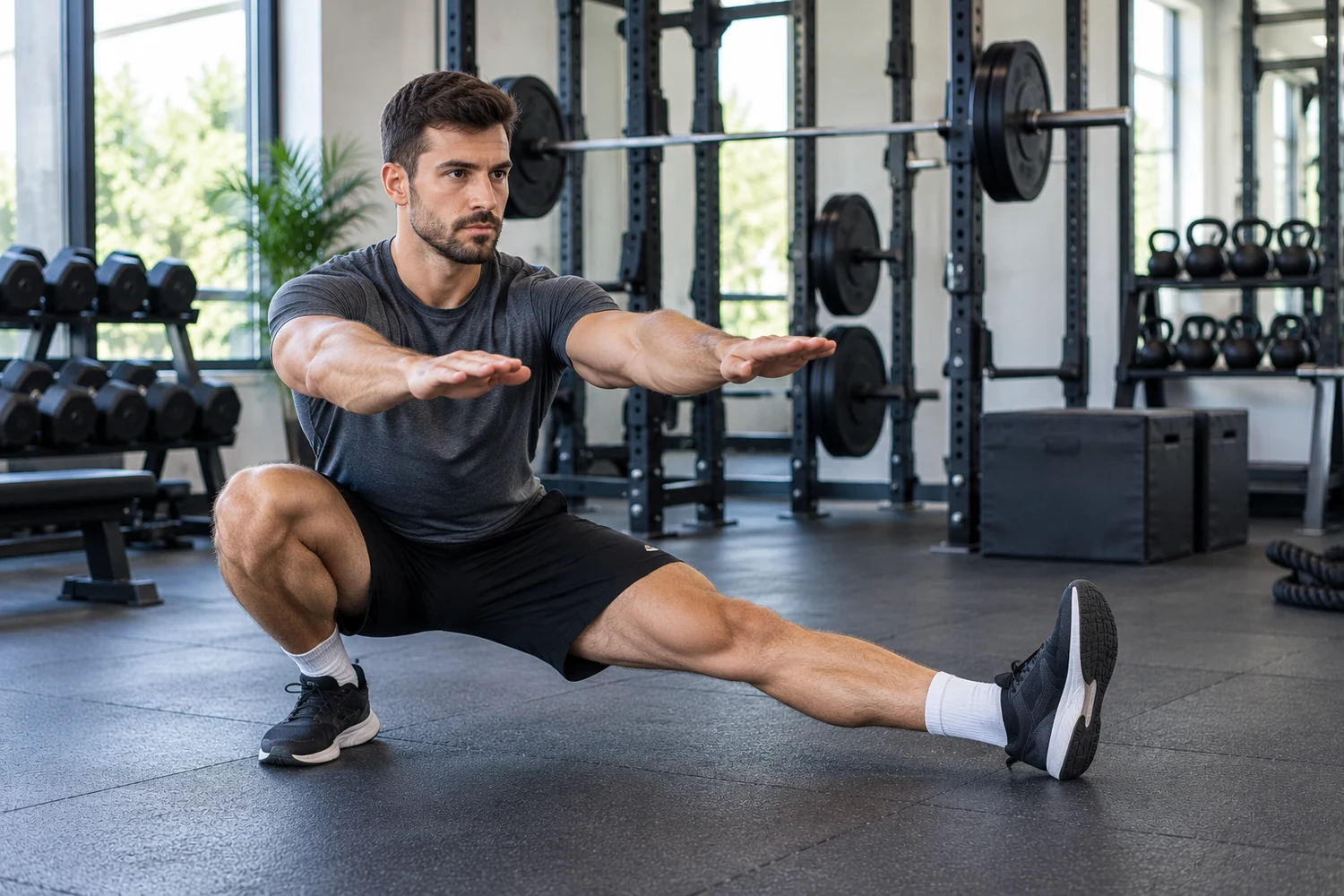
The Cossack squat is a wide-stance lateral squat in which you shift most of your body weight onto one leg while the other leg stays extended to the side. It combines lower-body strength with a large range of motion through the hips, knees and ankles.
Unlike a regular squat, which is mostly up and down, the Cossack squat trains side-to-side movement. That makes it useful for people who want mobility they can control rather than passive flexibility alone.
The exercise is demanding, so you do not need to reach the deepest position on day one. Improving hip mobility and ankle mobility can make the progression more comfortable.
Cossack Squat Benefits
The movement trains the legs in the frontal plane, adding side-to-side work to routines dominated by forward and backward movement. The wide stance challenges hip adductors and rotation as you shift from side to side. The larger goal is not a perfect-looking position; it is a movement option you can use comfortably in training and daily life. Consistency usually matters more than doing a long routine once in a while.
The bent-leg ankle moves through dorsiflexion while the opposite foot may rotate onto the heel. Most of the load shifts to one side, which exposes differences in balance and strength. When mobility and strength improve together, the body has more choices for solving everyday movement tasks.
How to Learn the Cossack Squat: 6 Progressions
1. Wide-stance weight shift
Take a wide stance and slowly shift your hips toward one side without squatting deeply. Keep both feet in contact with the floor. This introduces lateral loading with minimal mobility demand.
2. Supported side squat
Hold a rack, countertop or suspension trainer. Shift toward one leg and bend that knee while the other leg stays straighter. Use the support to control depth and keep the torso tall.
3. Heel-elevated Cossack squat
Place the heel of the bending leg on a small plate or wedge if ankle dorsiflexion limits you. This reduces the ankle demand while you learn the hip and knee pattern. Use only a small elevation.
4. Bodyweight Cossack squat
Take a wide stance, shift toward one side and sit down as far as you can while keeping the bent-side foot planted. The straight leg stays extended and may rotate so the toes point upward. Push through the bent leg to return to center.
5. Counterbalanced Cossack squat
Hold a light plate or kettlebell in front of the chest. The counterweight can help you keep the torso more upright. Keep the load light because the goal is control and range, not maximal strength.
6. Alternating Cossack squat
Move from one side to the other under control, passing through the center. Keep the transitions smooth and avoid bouncing in the bottom position. This variation works well as a mobility-strength drill after you own each side separately.
A Cossack Squat Mobility Routine
Warm up with ankle rocks and hip rotations, then perform two sets of five supported Cossack squats per side. Follow with one or two sets of bodyweight reps through the range you can control. If you need more hip preparation, use hip mobility drills. If the bent-side heel lifts early, spend time on ankle dorsiflexion before chasing a deeper squat.
Keep the first week intentionally easy. Write down the variation, repetitions and how the movement felt. If technique remains consistent and you recover well, add only a small amount the next week. This simple approach makes progress easier to judge and reduces the temptation to change several variables at once.
Common Mistakes to Avoid
Forcing maximum depth
Depth should increase only when you can keep the foot planted and control the knee and hip.
Letting the bent knee collapse inward
Keep the knee generally tracking with the toes instead of dropping toward the midline.
Rounding aggressively through the back
A small forward lean is normal, but use support or a counterweight if the torso collapses.
Bouncing at the bottom
Pause under control rather than using momentum to reach a range you cannot own.
Loading too soon
The Cossack squat is already demanding at bodyweight. Earn comfortable range before adding significant resistance.
Progressions and Practical Training Tips
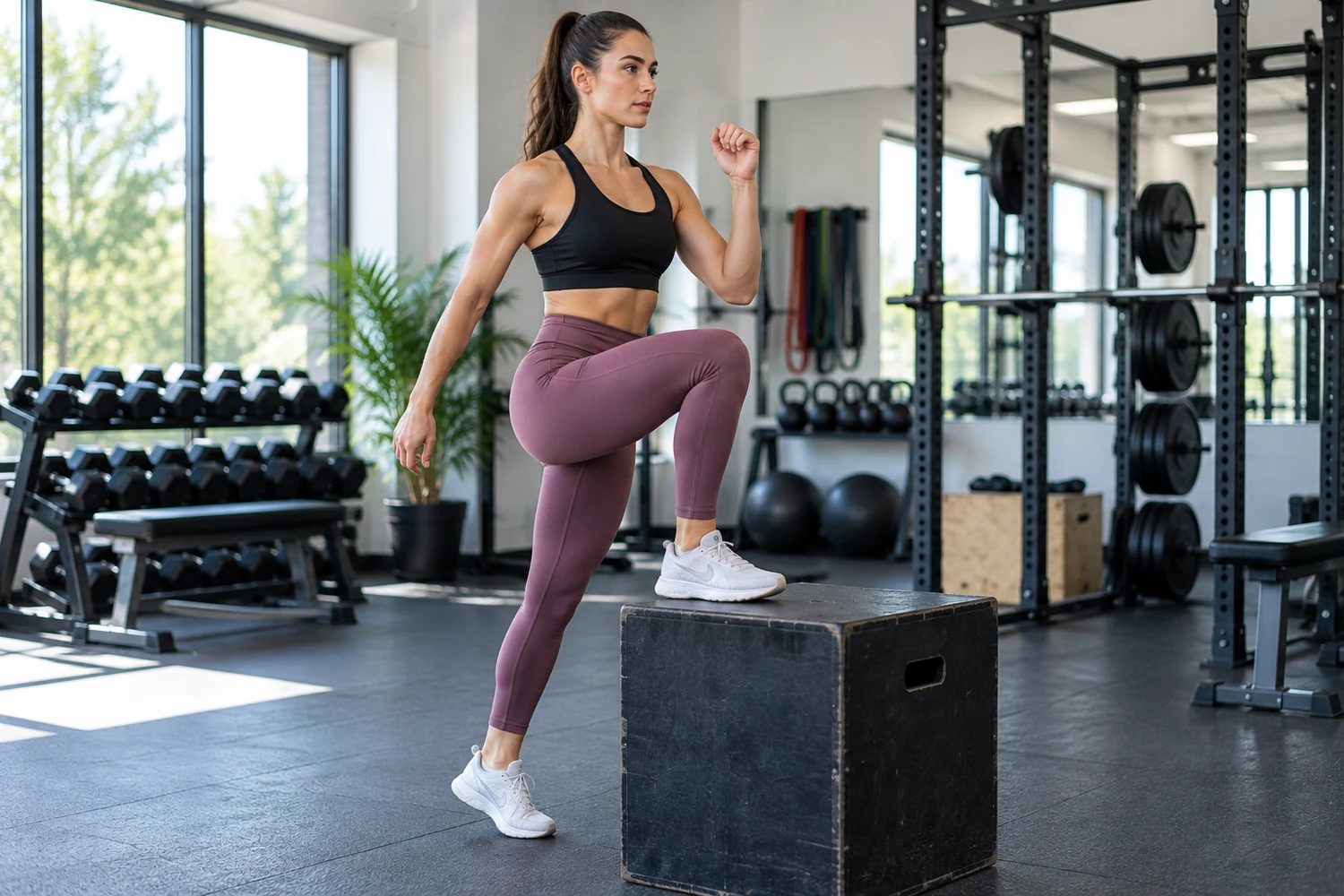
Progress from supported reps to bodyweight, then add a light counterweight. Increase range gradually and keep both sides honest rather than always leading with your stronger side. Once the pattern is comfortable, combine it with step-ups for single-leg strength and knee strengthening exercises for broader lower-body capacity. The goal is usable lateral movement, not simply reaching the floor.
Use the exercise as part of a complete plan rather than an isolated challenge. A balanced week can include strength, aerobic activity, mobility and recovery. The best version is the one that fits your current ability and leaves you able to practice consistently.
Where the Cossack Squat Fits in a Workout
If one side is clearly stiffer, start with the more restricted side but use the same controlled range on both. Do not add extra weight to make up for a mobility difference. Spend time on ankle and hip drills, keep the Cossack squat supported if needed, and let the range improve gradually.
Athletes may like the lateral emphasis because many gym exercises occur mostly forward and backward. Recreational lifters can use it simply to maintain side-to-side options that regular squats do not train as directly. Either way, the movement should feel controlled rather than like a test of how low you can force the hips.
The Cossack squat is usually most useful as a mobility-strength accessory rather than the heaviest exercise of the day. Perform it after a general warm-up and before heavy lower-body work, or use it on a mobility day with controlled bodyweight sets. Because the range is large, a few high-quality repetitions can be enough.
Footwear and surface can change how the movement feels. A flat, stable shoe often makes it easier to feel the whole foot, while a slippery floor can make the wide stance unsafe. Practice near a rack or sturdy support at first so you can focus on hip position and knee tracking instead of worrying about losing balance.
Treat the movement as practice, not a flexibility contest.
Safety Tips
The Cossack squat places the hips, knees and ankles through large ranges. Use support and limit depth if you are new to the movement. Stop for sharp groin, knee or ankle pain. People with recent lower-body injuries or surgery should use individualized guidance. Warm up first, avoid slippery floors and keep enough space on both sides for the extended leg.
If you are unsure whether a movement is appropriate after an injury or with a medical condition, a physical therapist or other qualified clinician can help tailor range, load and exercise selection. General fitness guidance cannot replace individual assessment.
Frequently Asked Questions
It trains the quadriceps, glutes, hamstrings and adductors while challenging the core and mobility of the hips, knees and ankles.
Yes. It combines active strength with large hip and ankle ranges, making it a mobility-strength exercise rather than a passive stretch.
Limited hip or ankle mobility, strength, balance or unfamiliarity with the pattern can all limit depth. Use support and progress gradually.
They often rotate upward as you descend, especially in deeper versions. Keep the heel grounded and use the foot position that allows a comfortable hip and knee path.
Start with two sets of four to six controlled repetitions per side. Quality and range control matter more than high repetition counts.
Key Takeaways
- Cossack squat work best when range and control progress together.
- Start with the easiest variation that lets you move without sharp pain or compensation.
- Progress one variable at a time—range, repetitions, time, support or resistance.
- Combine mobility with strength and balance so new range becomes useful in everyday movement.
- Stop and seek individualized guidance when symptoms include sharp pain, instability, numbness or persistent worsening.