Workout Programs for Women: A 4-Day Upper-Lower Strength Split For the workout programs for women, provides a structured starting point that can be adjusted for individual ability, schedule, equipment, recovery, and qualified professional advice.
The primary keyword is workout programs for women. For the workout programs for women, the guide focuses on repeatable training, realistic progression, safety, and habits that can continue after the program ends.
Why an Upper-Lower Split Is Practical
Workout programs for women are sometimes organized around random daily challenges or an excessive focus on the lower body. An upper-lower split provides a balanced alternative. The upper body is trained twice per week, and the lower body is trained twice per week, with recovery between similar sessions. For a useful comparison, see our Gym Workout Plan for Women.
Four weekly sessions allow enough exercise variety without making each workout extremely long. Upper A and Lower A emphasize foundational strength. Upper B and Lower B use complementary variations and moderate repetition ranges. The program can be completed in a gym or adapted to dumbbells and bands at home.
Women do not require different basic training principles from other adults. Appropriate resistance, progressive overload, recovery, and consistent technique remain central. Exercise selection may still reflect personal goals, comfort, pregnancy or postpartum guidance, menopause-related changes, or clinical restrictions.
Establish a Starting Point
Use the first week to learn the exercise order and select conservative loads. The target weight should allow the stated repetitions with approximately three repetitions available. Record the exercise variation, load, repetitions, and any comfort notes.
Choose a squat pattern, hip hinge, horizontal push, horizontal pull, vertical push, and vertical pull that can be repeated. Machines are valid options, especially when stability or confidence is limited. Dumbbells may allow comfortable hand positions and easy substitutions.
Do not choose loads based on another person’s performance. Training history, limb lengths, sleep, stress, and equipment differ. The purpose of the starting week is to create an individual baseline.
Weekly Schedule and Session Order
A common schedule is Upper A on Monday, Lower A on Tuesday, Upper B on Thursday, and Lower B on Saturday. Wednesday, Friday, and Sunday provide recovery or easy activity. Other weekdays are acceptable when similar sessions are separated.
Each session begins with a compound movement, followed by a second major pattern, then smaller accessories and trunk work. Exercises requiring the most concentration are performed before isolation movements.
Warm up with five minutes of easy activity and one or two light sets of the first exercises. Long general warm-ups are unnecessary when they create fatigue. Preparation should improve movement quality.
Upper A: Horizontal Push and Pull
Begin with a dumbbell bench press, machine chest press, or incline push-up. Follow with a seated row or chest-supported dumbbell row. Use two or three sets of eight to twelve repetitions during the first weeks.
Add a neutral-grip shoulder press, lat pulldown or band pulldown, triceps pressdown, and dumbbell curl. Keep the shoulders relaxed during rows and pulldowns. Press through a comfortable range without forcing the elbows far behind the body.
Finish with a farmer carry or elevated plank. The trunk exercise should support posture and force transfer rather than create excessive fatigue before the next lower-body day.
Lower A: Squat and Posterior-Chain Strength
Start with a leg press, goblet squat, or barbell squat according to experience. Keep the whole foot supported and use a range that maintains control. Follow with a dumbbell Romanian deadlift or machine hip hinge.
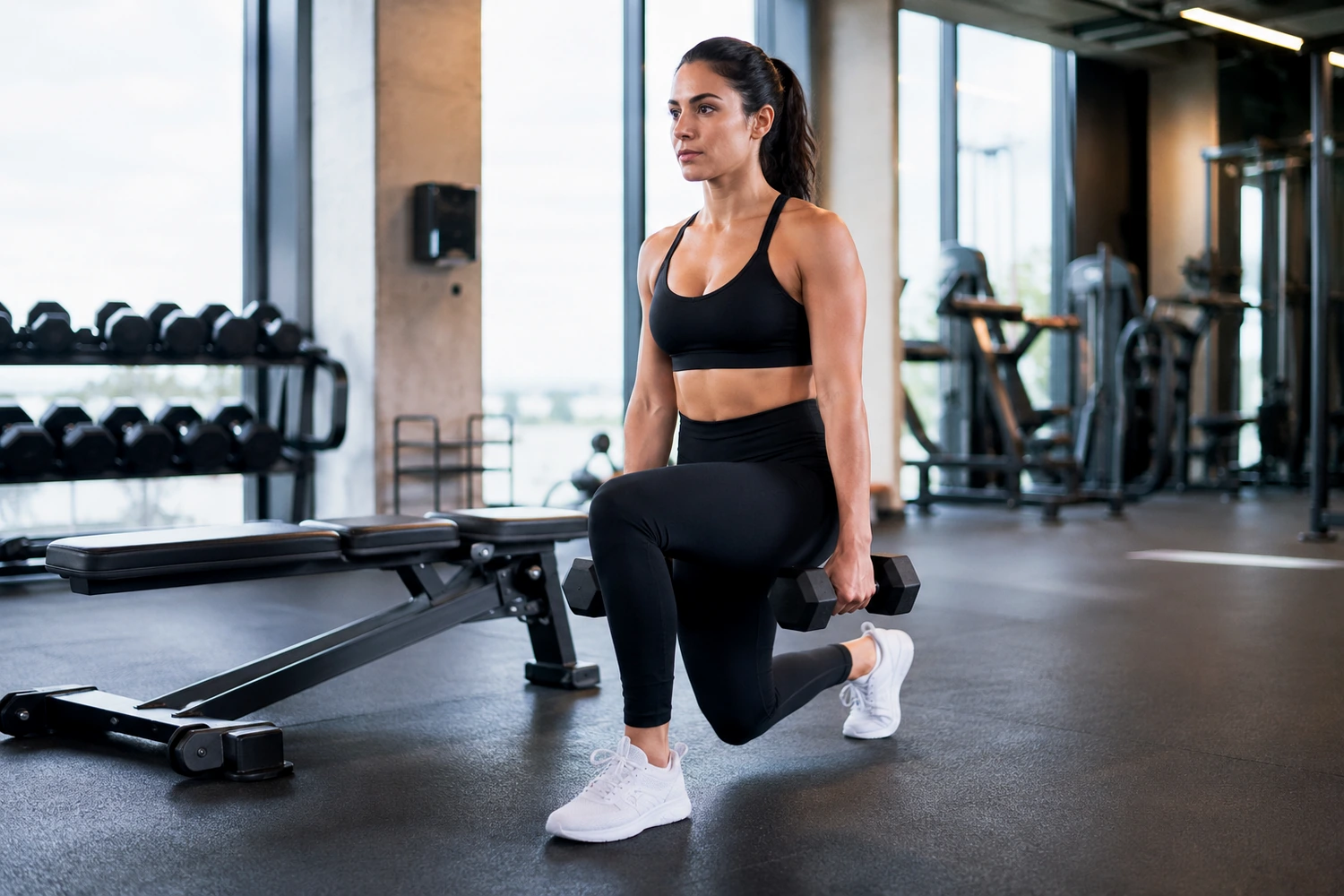
Add a supported reverse lunge, leg curl, calf raise, and a simple core exercise. A chair or rail can be used for balance during lunges. Stability support does not reduce the muscular benefit when it allows better control.
Lower-body training should not be judged by soreness. The goal is enough weekly work to improve strength while preserving normal movement and the ability to complete Lower B.
Sample Weekly Plan
During the workout programs for women, reduce sets or intensity when several recovery signals worsen together. In the workout programs for women schedule, use an easier day to maintain movement without adding fatigue before the next priority session. For the workout programs for women, if you want another way to structure the same goal, compare this approach with our Workout Plans for Women Over 50.
| Day | Session | Main Movements |
|---|---|---|
| Monday | Upper A | Chest press, row, shoulder press, pulldown |
| Tuesday | Lower A | Squat, Romanian deadlift, reverse lunge |
| Wednesday | Recovery | Walking or mobility |
| Thursday | Upper B | Pulldown, overhead press, incline press, row |
| Friday | Recovery | Easy cardio or rest |
| Saturday | Lower B | Hip thrust or hinge, step-up, quadriceps |
| Sunday | Rest | Meal preparation and sleep |
Exercise Guide
Before advancing the workout programs for women, complete two controlled sessions and then make one small increase. To measure progress in the workout programs for women, keep the same core movement long enough to compare repetitions, load, range, and effort.
| Exercise | Sets × Reps | Alternative |
|---|---|---|
| Goblet squat or leg press | 3 × 8–12 | Chair squat at home |
| Dumbbell Romanian deadlift | 3 × 8–10 | Band hip hinge |
| Dumbbell or machine press | 3 × 8–12 | Incline push-up |
| Seated or chest-supported row | 3 × 8–12 | Resistance-band row |
| Lat pulldown | 3 × 8–12 | Band pulldown |
| Supported step-up | 2–3 × 6–10 each side | Split squat to short range |
Upper B: Vertical Push, Pull, and Shoulder Balance
Upper B begins with a pulldown or assisted pull-up and an overhead press or landmine press. Use grips that feel comfortable and avoid pulling behind the neck. A landmine press is a useful alternative when a straight overhead position is uncomfortable.
Add an incline dumbbell press, cable row, lateral raise, rear-delt movement, and arm accessories. The second upper day uses different angles while maintaining the push-pull balance.
Shoulder accessories use lighter loads and controlled repetitions. Momentum may allow more weight but reduces the targeted muscular work. Stop before posture changes.
Lower B: Hinge, Single-Leg Work, and Quadriceps
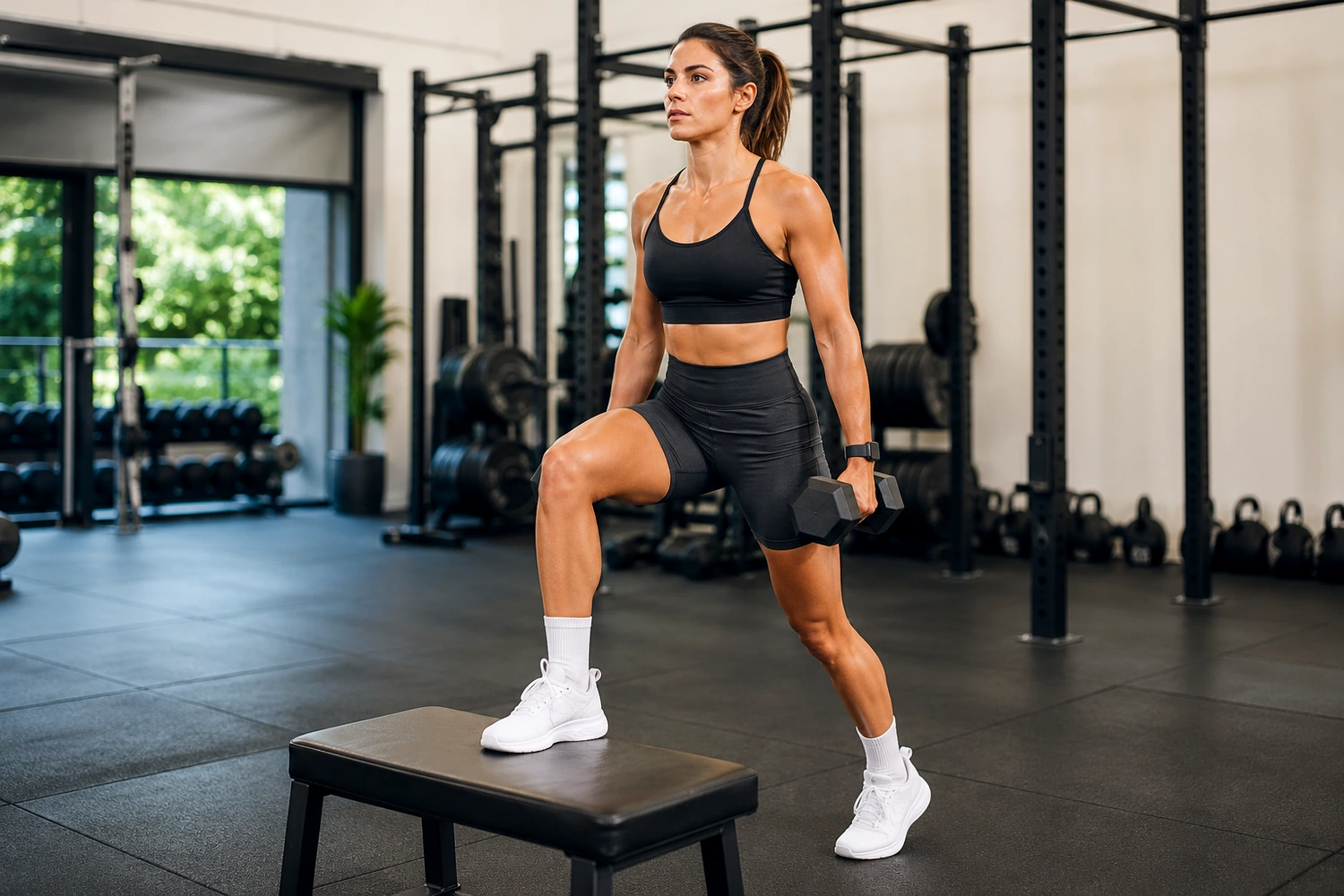
Begin with a hip thrust, trap-bar deadlift, or machine hinge. Follow with a split squat, step-up, or supported single-leg press. Use a range that keeps the pelvis and knee controlled.
Add a leg extension or additional squat variation, hamstring curl, calf raise, and Pallof press. The session should train the hips and legs through different patterns from Lower A without becoming a completely unrelated workout.
When recovery is limited, remove one accessory rather than skipping the major movements. A shorter structured session maintains the weekly pattern.
Sets, Repetitions, and Progression
Use two sets during the first week when returning after a break. Progress to three sets for major exercises and two or three sets for accessories. Compound lifts generally use six to twelve repetitions, while accessories use ten to fifteen.
Add repetitions before load. When all sets reach the top of the range with controlled technique, increase the resistance by the smallest available amount. Another progression is a slightly greater comfortable range or slower lowering phase.
Change one variable at a time. Adding load, sets, cardio, and a fifth workout simultaneously makes recovery difficult to evaluate. Progress should be visible across several weeks, not forced every session.
Cardio and Daily Activity
Adults are generally encouraged to combine aerobic and muscle-strengthening activity. Add two easy or moderate cardio sessions of twenty to thirty minutes, or accumulate walking across the week. Cardio can follow an upper-body day or occur on a separate recovery day.
High-intensity intervals are optional. They may not be appropriate when lower-body training already creates substantial fatigue. A conversational walking or cycling pace supports aerobic health with lower recovery cost.
Increase daily activity gradually from the current baseline. Structured workouts cannot completely offset a week with very little movement, but unrealistic step targets may also reduce adherence.
Variable Energy, Menstrual Symptoms, and Schedule Changes
Energy and comfort may vary across the month and with sleep, stress, work, caregiving, or menopause-related symptoms. Use a flexible effort system rather than abandoning the plan. Complete the planned workload on good days, reduce one set or load on lower-energy days, and use mobility or walking when recovery is clearly poor.
Persistent or severe symptoms require appropriate clinical guidance. General training advice cannot diagnose hormonal, pelvic-floor, bone-health, or pain conditions. Pregnancy and postpartum exercise should follow individualized medical and rehabilitation recommendations.
Track patterns for several weeks before making major conclusions. A single difficult session does not mean the program is unsuitable.
Nutrition, Recovery, and Common Mistakes
Regular meals, adequate protein, hydration, and sleep support strength training. Protein sources may include meat, fish, eggs, dairy, beans, lentils, tofu, tempeh, or other preferred foods. Exact intake is individual. For the workout programs for women, when adjusting your weekly plan, you can also use the Workout Plans for Women as a practical reference.
Common mistakes include doing only lower-body exercises, avoiding progressive resistance, changing the program weekly, and adding excessive cardio to accelerate results. Another mistake is assuming that heavier weight is always better than controlled technique.
Review the program after eight to twelve weeks. Keep exercises that show progress, replace movements that repeatedly cause discomfort, and adjust volume according to recovery and goals.
How to Audit the Plan After the First Month
When scheduling the workout programs for women, place demanding sessions where sleep and preparation are usually most reliable. In the workout programs for women week, separate sessions that directly support the goal from optional work that can be shortened.
While following the workout programs for women, progress only one training variable at a time so the response remains easy to evaluate.
How to Modify a Session Without Abandoning It
When equipment is unavailable during the workout programs for women, replace the movement pattern rather than abandoning the session. For the workout programs for women, choose equipment that supports a stable setup and a repeatable range of motion.
Before a busy day interrupts the workout programs for women, define a shorter fallback session that preserves the habit.
Home and Gym Substitutions for Every Training Day
Upper A can be completed at home with dumbbell floor presses, one-arm rows, seated dumbbell presses, band pulldowns, curls, and overhead triceps extensions. A stable counter provides an incline push-up option. At the gym, machine presses and cable rows may allow easier load changes and greater stability. The session goal remains horizontal pushing and pulling, not a specific piece of equipment.
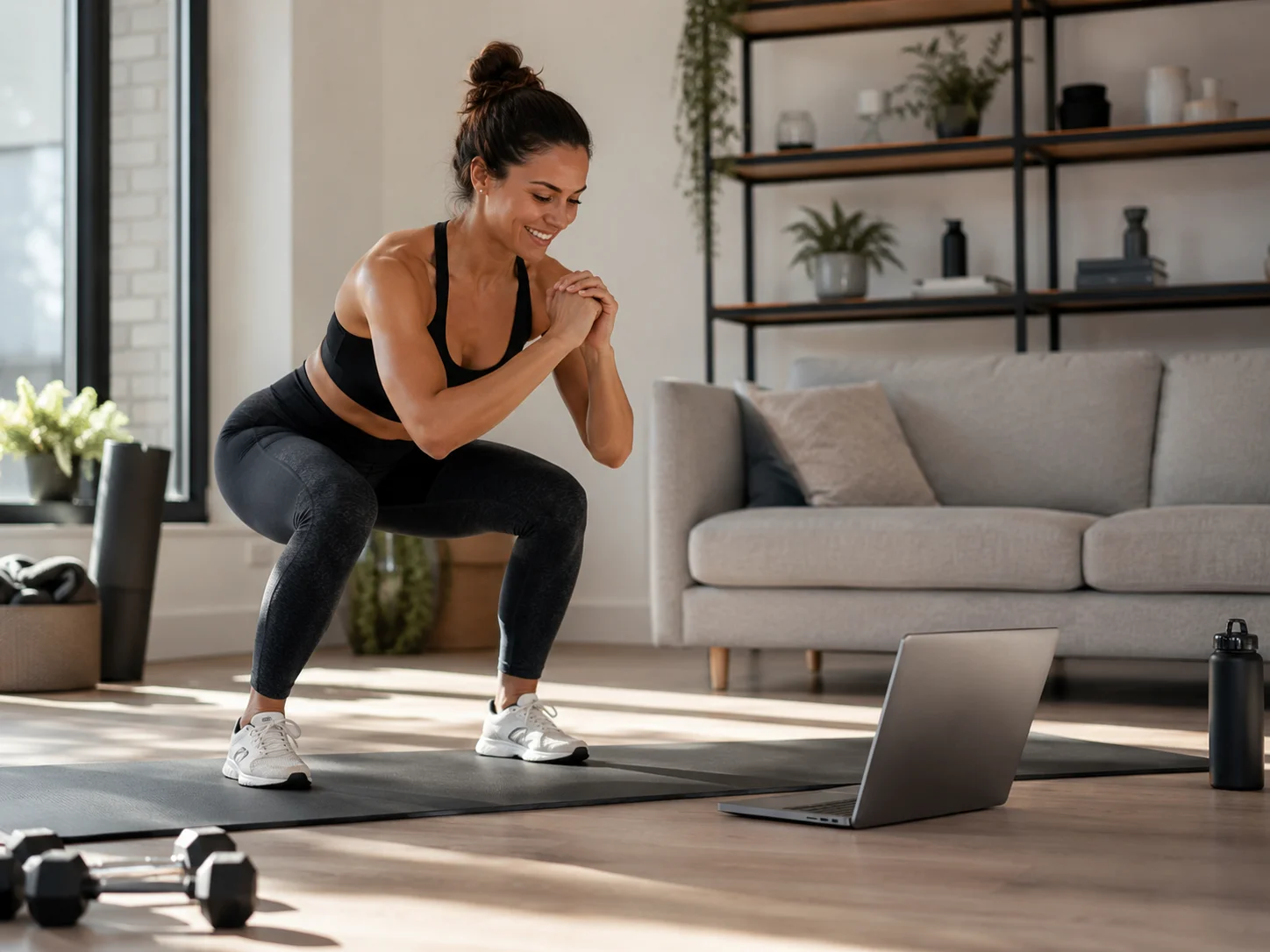
Lower A can use goblet squats, dumbbell Romanian deadlifts, supported reverse lunges, sliding hamstring curls, and standing calf raises. A gym version may use the leg press, barbell or machine squat, leg curl, and cable exercises. Choose the version that can be progressed without repeatedly changing the setup.
Upper B can use a band pulldown, landmine or dumbbell press, incline press, rear-delt raise, lateral raise, and arm work. Lower B can use hip thrusts against a sofa or bench, step-ups, split squats, band leg extensions, and suitcase carries. Home exercises do not need to imitate machines perfectly; they need to train the same movement role.
When moving between home and gym during the same week, record both variations. Progress each version independently rather than comparing a machine number with a dumbbell weight. Consistency is preserved through the weekly pattern even when the exact tools change.
A limited-equipment session can also use tempo. Lower for three seconds, pause briefly, and rise with control. Longer ranges and single-leg variations create challenge without unsafe improvised weights. Never use unstable furniture, loose stacks of books, or objects that cannot be gripped securely.
Building Confidence With Heavier Resistance
Heavier resistance should be introduced through small, planned steps. Before increasing a compound exercise, confirm that the current load can be controlled through the chosen range, the final repetition resembles the first, and recovery is normal by the next scheduled session. A small increase is enough.
Confidence also improves through equipment familiarity. Learn safety pins, bench adjustments, cable attachments, and how to rerack weights without rushing. Ask gym staff for equipment demonstrations when needed. Competence in setup often reduces anxiety more than changing the exercise.
Training alone does not require taking risky sets to failure. Keep several repetitions available, use stable variations, and avoid lifts that depend on an untrained spotter. Progress should make the program feel more capable and predictable rather than more dangerous.
Use the training log to confirm that the chosen schedule supports steady progress and comfortable recovery. For the workout programs for women, for more closely related training ideas, browse our workout guides for women.
Recovery should remain predictable.
Four-Week Implementation Roadmap
For the workout programs for women, learn the schedule, exercise setup, and realistic starting dose.
For the workout programs for women, repeat the structure and improve consistency without adding unnecessary volume.
For the workout programs for women, use one measured progression such as repetitions, load, time, or range.
For the workout programs for women, review recovery and create the next sustainable training block.
Frequently Asked Questions
It can be used with fewer sets, conservative loads, and stable exercise variations.
The basic training principles are similar, although exercise choices and modifications should match individual goals and comfort.
Yes. Dumbbells, bands, a stable chair, and bodyweight variations can cover the main patterns.
Begin with one or two easy or moderate sessions that do not reduce strength recovery.
Use symptoms and recovery to decide whether to complete, reduce, or replace the planned session.
Muscle gain is gradual and depends on training, nutrition, genetics, and time.
Keep productive, comfortable exercises long enough to measure progress and change them when necessary rather than for novelty.
Safety and Scope
This page provides general educational fitness information. It does not diagnose medical conditions or replace individualized advice from a physician, physical therapist, registered dietitian, or qualified exercise professional. Stop and seek appropriate care for concerning symptoms, persistent pain, or clinician-directed restrictions.