
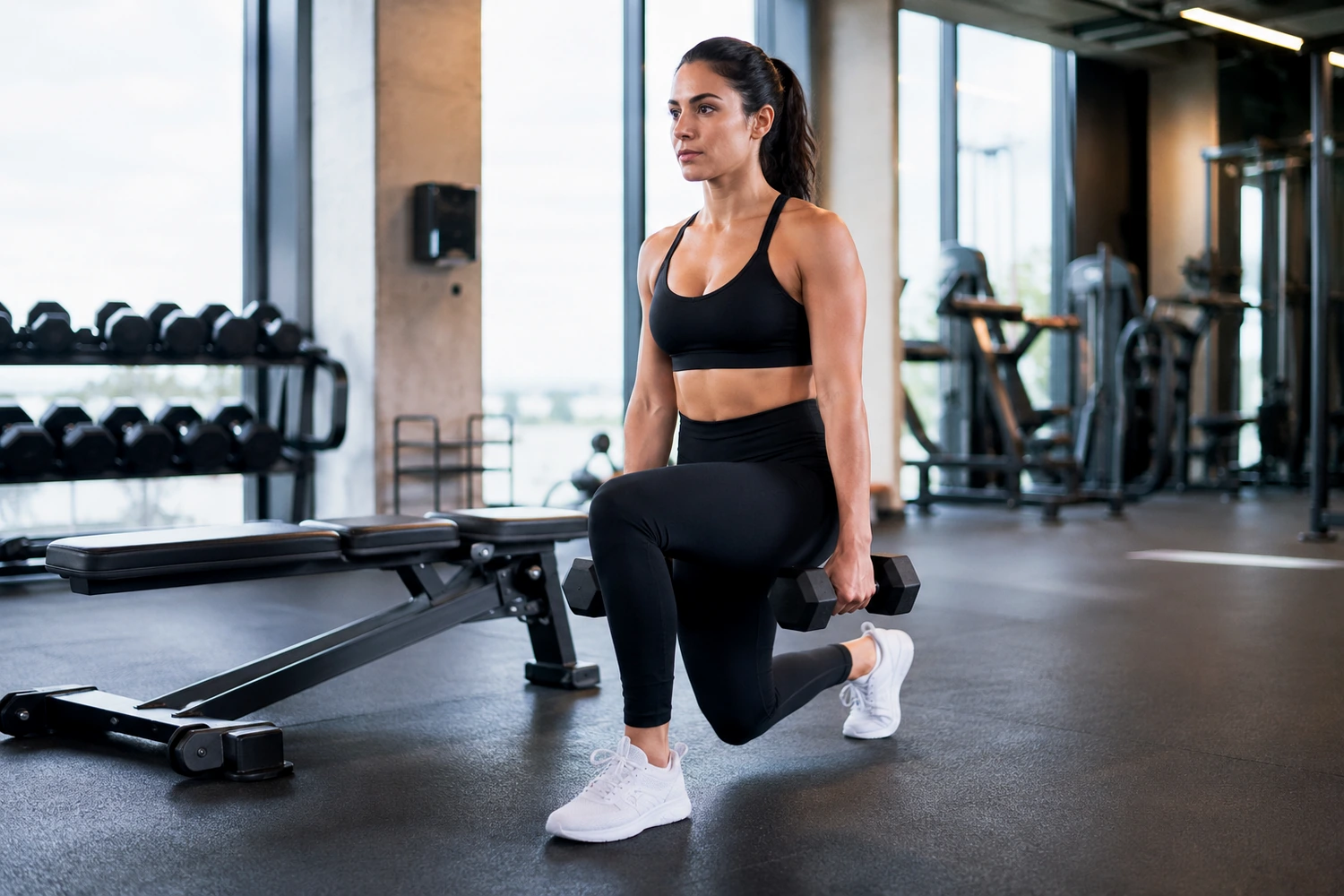
Gym Workout Plan for Women: A 3-Day Strength, Cardio, and Mobility Schedule is designed as a practical, repeatable guide rather than an extreme short-term challenge. It can be adjusted for schedule, experience, equipment, recovery, and qualified professional advice.
The primary keyword is gym workout plan for women. The page also explains progression, exercise substitutions, recovery, safety, and realistic expectations so the plan can be used responsibly.
Why a Three-Day Gym Plan Works Well
A three-day structure also makes it easier to repeat the same exercises long enough to learn them. Strength improves partly because the nervous system becomes more efficient at coordinating a movement. Repeating a squat, press, and row for several weeks provides a clearer training signal than replacing every exercise whenever a new routine appears online. For a useful comparison, see our Workout Plans for Women Over 50.
Women do not need a separate collection of novelty exercises to train effectively. The same basic principles that build strength in any adult still apply: appropriate resistance, controlled range, progressive overload, adequate recovery, and enough consistency to allow adaptation. Exercise selection can still reflect personal comfort, goals, and equipment.
A gym workout plan for women does not need six training days or a complicated body-part split to be effective. Three well-organized sessions provide enough weekly practice to build strength while leaving space for recovery, work, family responsibilities, and optional cardio. The plan is especially practical for beginners and returning exercisers because the main movements repeat often enough to improve technique.
Each workout includes a knee-dominant exercise, a hip-dominant exercise, an upper-body push, an upper-body pull, and trunk training. This balanced structure develops the whole body instead of focusing only on the legs or abdominal exercises. Cardio and mobility are added in small, manageable amounts rather than placed in long separate sessions.
The schedule can support general fitness, muscle development, and weight-management goals, but the results still depend on consistency, nutrition, sleep, daily activity, and appropriate progression. The purpose is to create a repeatable weekly rhythm rather than a short period of exhausting training.
Establish a Starting Point Before Week One
Use the first gym visit to learn machine settings, test comfortable ranges, and record initial weights. Select loads that allow eight controlled repetitions while leaving approximately three additional repetitions available. The last repetition should require attention without changing posture or speed dramatically.
Record the exercise name, machine seat position, weight, repetitions, and one technique cue. This simple log prevents guessing at the next session and makes small improvements visible. It also helps identify exercises that need a different setup or substitution.
Consider current activity, previous injuries, balance, sleep, and any symptoms that occur with exertion. People with significant medical conditions, recent surgery, unexplained dizziness, chest discomfort, or clinician-imposed restrictions should receive appropriate professional guidance before beginning. A starting plan should match the individual rather than an idealized fitness level.
Warm-Up, Movement Patterns, and Exercise Order
Begin with five minutes of easy treadmill walking, cycling, or elliptical work. Follow with bodyweight squats to a bench, hip hinges, wall push-ups, arm circles, and light cable rows. The warm-up should increase temperature and rehearse movement without creating fatigue.
Place the most demanding compound exercise early in the session. Lower-body exercises such as leg presses, goblet squats, split squats, or Romanian deadlifts require more concentration than small isolation movements. Perform presses and rows next, then finish with core work, carries, or short cardio.
The same movement pattern can be trained through several exercises. A leg press and goblet squat both train a squat pattern; a cable row and seated machine row both train horizontal pulling. Substitutions should preserve the role of the exercise while improving comfort or equipment availability.
The Weekly Schedule and Recovery Pattern
A Monday, Wednesday, and Friday strength schedule works well, but any three nonconsecutive days are acceptable. Easy walking, gentle cycling, or mobility can be performed between strength sessions. Avoid turning every day into a demanding workout, especially during the first month.
Workout One emphasizes squat strength, chest pressing, and upper-back work. Workout Two emphasizes the hips, pulling strength, shoulder control, and single-leg stability. Workout Three repeats the major movement patterns with different exercise variations and includes a short conditioning finish.
Recovery days should still include normal movement. Sitting all day after a hard workout may increase stiffness. Short walks, household activity, and light mobility often feel better than complete inactivity. However, sharp pain, illness, or unusual fatigue may require additional rest. For the gym workout plan for women, if you want another way to structure the same goal, compare this approach with our Workout Plans for Women.
Workout One: Lower Body, Chest, and Upper Back
Start with a leg press or goblet squat for two or three sets of eight to twelve repetitions. Use a range that allows the whole foot to remain planted and the knees to track comfortably. Follow with a machine chest press or incline dumbbell press. Keep the wrists stacked and avoid forcing the shoulders into a painful depth.
Use a seated cable row or chest-supported dumbbell row for the upper back. Pull the elbows toward the ribs without leaning backward. Add a supported reverse lunge or low step-up for single-leg practice. Finish with a farmer carry and five to ten minutes of easy cardio.
Rest sixty to ninety seconds between smaller sets and up to two minutes after demanding lower-body work. Longer rest is appropriate when breathing or technique has not recovered. Rushing the session does not create better strength gains.
Sample Weekly Plan
During the gym workout plan for women, reduce sets or intensity when several recovery signals worsen together. In the gym workout plan for women schedule, use an easier day to maintain movement without adding fatigue before the next priority session.
| Day | Main Session | Optional Activity |
|---|---|---|
| Monday | Workout One: squat, press, row, lunge, carry | Five to ten minutes easy cardio |
| Tuesday | Recovery | Twenty-minute walk and light mobility |
| Wednesday | Workout Two: hinge, pulldown, shoulder press, hip thrust, core | Easy cycling if desired |
| Thursday | Recovery | Walking or complete rest |
| Friday | Workout Three: full-body variations and intervals | Short mobility cool-down |
| Saturday | Optional cardio | Twenty to thirty minutes conversational pace |
| Sunday | Rest | Normal activity and preparation for the week |
Exercise Guide
Within the gym workout plan for women approach, treat better technique or a fuller comfortable range as valid progress when adding weight is not appropriate. Before advancing the gym workout plan for women, complete two controlled sessions and then make one small increase.
| Exercise | Sets × Reps | Key Cue |
|---|---|---|
| Leg press or goblet squat | 2–3 × 8–12 | Keep the whole foot planted |
| Dumbbell Romanian deadlift | 2–3 × 8–10 | Move the hips backward |
| Machine chest press | 2–3 × 8–12 | Keep wrists stacked |
| Seated cable row | 2–3 × 8–12 | Pull without leaning |
| Supported reverse lunge | 2 × 6–10 each side | Use support and control the descent |
| Pallof press | 2 × 8–12 each side | Prevent torso rotation |
Workout Two: Hips, Pulling Strength, and Shoulder Control
Begin with a dumbbell Romanian deadlift or cable pull-through. Move the hips backward, keep the load close to the body, and stop before the lower back rounds. Follow with a lat pulldown using a comfortable grip. Pull the bar toward the upper chest without swinging or pulling behind the neck.
Use a neutral-grip machine shoulder press or landmine press. A neutral grip is often comfortable because the palms face each other. Add a hip thrust or glute bridge and a supported split squat. Finish with a Pallof press to train the trunk against rotation.
This session should feel challenging in the muscles rather than stressful in the joints. Reduce range, load, or exercise complexity when control is lost. Progress is built through repeatable quality, not through forcing an uncomfortable movement.
Workout Three: Full-Body Strength and Conditioning
Workout Three combines a squat variation, horizontal pull, push, hip exercise, and a short conditioning block. Use a box squat or hack squat, a chest-supported row, an incline push-up or dumbbell bench press, and a cable pull-through or back extension.
Finish with six to ten minutes of controlled intervals on a bike, treadmill, or rowing machine. Alternate one minute at a moderate pace with one minute at an easy pace. The moderate interval should increase breathing while still allowing a short sentence. Beginners do not need all-out sprints.
The conditioning block is optional during stressful or low-recovery weeks. Strength technique remains the priority. Removing the interval section is better than skipping the complete workout because the session appears too long.
Sets, Repetitions, and Progressive Overload
Use an effort scale when choosing a load. A set that ends with approximately three repetitions available can be described as moderately challenging. During the first weeks, this level allows technique practice without creating unnecessary fatigue. Later sets may finish with one or two repetitions available, but beginners rarely need to reach complete muscular failure.
Small load increases are sufficient. A five-pound jump may feel large on an upper-body exercise, so increasing repetitions first can be more practical. When only fixed-weight machines are available, keep the same weight and improve the tempo, range, or total repetitions before moving to the next plate.
Most exercises use two sets during the first two weeks. Add a third set to selected movements when soreness is manageable and technique remains consistent. Use eight to twelve repetitions for most strength exercises and ten to fifteen repetitions for smaller movements such as lateral raises or leg curls.
When every set reaches the top of the repetition range with two or three repetitions still available, increase the load by the smallest practical amount. Another progression option is improving range, slowing the lowering phase, or reducing support during a stable movement. For the gym workout plan for women, when adjusting your weekly plan, you can also use the How to Stay Consistent With Workouts as a practical reference.
Do not increase load, sets, cardio, and weekly frequency simultaneously. Changing one variable makes recovery easier to evaluate. A training log should show gradual progress across several weeks rather than dramatic jumps in one session.
Cardio, Mobility, and Daily Activity
Cardio can be placed after strength training when the goal is convenience. Keep it easy enough that the main strength work remains the highest-quality part of the session. When endurance is a major goal, a separate cardio day may allow more focused work. The weekly schedule should reflect the main priority rather than attempting to maximize every quality at once.
Mobility needs are individual. A person who can squat comfortably does not need to force a deeper range simply because a social-media exercise appears advanced. Use mobility drills to improve positions that are actually restricted during training or daily life. Strength through a comfortable range often improves usable mobility at the same time.
Add two optional cardio sessions of twenty to thirty minutes at an easy or moderate pace. Walking, cycling, swimming, and elliptical training are all suitable. Cardio should support health and endurance without reducing performance during strength sessions.
Mobility work can be brief. Use ankle rocks, hip flexor stretches, thoracic rotations, wall slides, and gentle calf stretches for five to ten minutes after training or on recovery days. Mobility should improve comfortable movement rather than force extreme positions.
Daily steps and general movement matter because structured workouts occupy only a small portion of the week. Increase the current walking baseline gradually. A realistic increase of five hundred to one thousand steps may be easier to maintain than immediately chasing a fixed ten-thousand-step target.
Recovery, Nutrition, and Common Mistakes
Monitor recovery using several signals rather than soreness alone. Stable motivation, normal sleep, manageable fatigue, and the ability to repeat or slightly improve the previous session indicate that the workload is probably appropriate. Declining performance across several sessions may suggest that training volume, cardio, stress, or calorie restriction is too high.
Women with changing menstrual symptoms, pregnancy, postpartum recovery, menopause-related symptoms, or pelvic-floor concerns may need individualized modifications. General exercise information cannot replace assessment from qualified clinicians who understand the person’s history. The program should always yield to medical restrictions and symptom-guided decisions.
Regular meals, adequate protein, hydration, and sleep support training. Protein can come from poultry, fish, eggs, dairy, beans, lentils, tofu, tempeh, or other preferred foods. Exact requirements vary, and supplements are optional rather than mandatory.
Common mistakes include changing exercises every week, training only the lower body, using weights that are too heavy for controlled range, and treating soreness as the main measure of success. Another mistake is copying advanced online routines that include more volume than the schedule can support.
A successful gym workout plan for women should become more familiar over time. Confidence, improved technique, stable attendance, and better daily function are meaningful results. The plan should be adjusted when recovery, joint comfort, or professional guidance requires it.
Four-Week Implementation Roadmap
Learn setup, comfortable range, pace, and the basic weekly schedule.
Before increasing the gym workout plan for women workload, review sleep, soreness, stress, and recent training demand.
Use one measured progression, such as load, duration, or a short moderate interval.
Consolidate progress, review the training log, and select a sustainable next step. For the gym workout plan for women, for more closely related training ideas, browse our workout guides for women.
Frequently Asked Questions
Yes. Begin with two sets, light loads, stable exercises, and gradual progression.
Muscle development is gradual and depends on training volume, nutrition, genetics, and time. Strength training does not create sudden large muscle gain.
Most sessions take approximately forty-five to sixty minutes, including the warm-up and optional short cardio.
Yes, when the substitute trains the same movement pattern and can be performed with control.
Start with one or two easy sessions and increase gradually without reducing recovery from strength training.
Reduce the load or range, select a more comfortable variation, and seek qualified assessment when symptoms persist or worsen.
It can support a broader weight-management plan when combined with appropriate nutrition, daily activity, sleep, and consistency.
Safety and Scope
This page provides general educational fitness information. It does not diagnose medical conditions or replace individualized advice from a physician, physical therapist, or qualified exercise professional. Stop and seek appropriate care for concerning symptoms, persistent pain, or clinician-directed restrictions.