
Workout Plans for Women Over 50: A Joint-Friendly Strength and Mobility Guide provides a practical framework that can be adjusted to individual experience, schedule, equipment, and recovery. The plan emphasizes repeatable training rather than extreme sessions. It is educational information, not medical treatment, and people with health conditions, recent injuries, or unexplained symptoms should follow qualified professional guidance.
The primary search focus is workout plans for women, but the program also explains technique, progression, recovery, cardio, and realistic scheduling. Use the tables as starting points and adjust the exercises when comfort, equipment, or professional advice requires a different option.
Why Strength Training Matters After 50
Workout plans for women over 50 should protect independence while building useful strength. The goal is not to train like a twenty-year-old or to avoid challenge altogether. It is to practice movements that support stairs, carrying, getting up from the floor, maintaining posture, and staying active. Strength training can be adjusted to nearly any starting level by changing load, range, support, and exercise selection. For a useful comparison, see our Low-Impact Workout Plan for Beginners.
A useful plan combines resistance training with walking or other aerobic activity, balance practice, and mobility. These elements work together. Stronger legs make walking and climbing easier; better balance improves confidence; mobility helps comfortable movement; and regular aerobic activity supports endurance. The schedule below organizes them without requiring daily hard workouts.
Before beginning, consider the current activity level, previous injuries, medications, balance concerns, and any symptoms that appear during exertion. Someone returning after years away should start differently from an experienced exerciser who has trained consistently. Medical clearance may be appropriate for people with significant health conditions, recent surgery, unexplained symptoms, or clinician-imposed restrictions.
Readiness, Safety, and Individual Starting Points
Comparison is especially unhelpful in group classes and social media. Joint structure, training history, sleep, stress, and available time differ between individuals. Use the first two weeks to learn which movements feel stable and which require a smaller range, lighter load, or more support. These adjustments are intelligent training, not failure.
Joint-friendly does not mean effortless. It means the exercise creates a useful muscular challenge without provoking persistent joint pain. Controlled repetitions, stable equipment, and gradual progression are often more important than selecting a supposedly perfect exercise. A box squat may feel better than an unsupported deep squat; a neutral-grip press may feel better than a wide grip; a step-up height can be reduced.
Use a pain-monitoring rule. Mild muscular effort is expected, but sharp pain, catching, instability, or symptoms that worsen afterward require modification. Reduce range, slow the movement, change the load, or replace the exercise. If symptoms persist, seek qualified assessment rather than repeatedly training through them.
A Joint-Friendly Training Framework
Two strength sessions per week are a strong starting point. They provide enough practice to improve while leaving several recovery days. A third shorter session can be added after four to six weeks if recovery is good. Walking may occur on most days, but the pace and duration should vary so every day is not demanding.
A practical week might include full-body strength on Monday and Thursday, easy walks on Tuesday and Saturday, a mobility and balance session on Wednesday, and flexible rest on Friday or Sunday. The schedule can move around family, work, and appointments. Keeping the overall pattern matters more than matching specific weekdays.
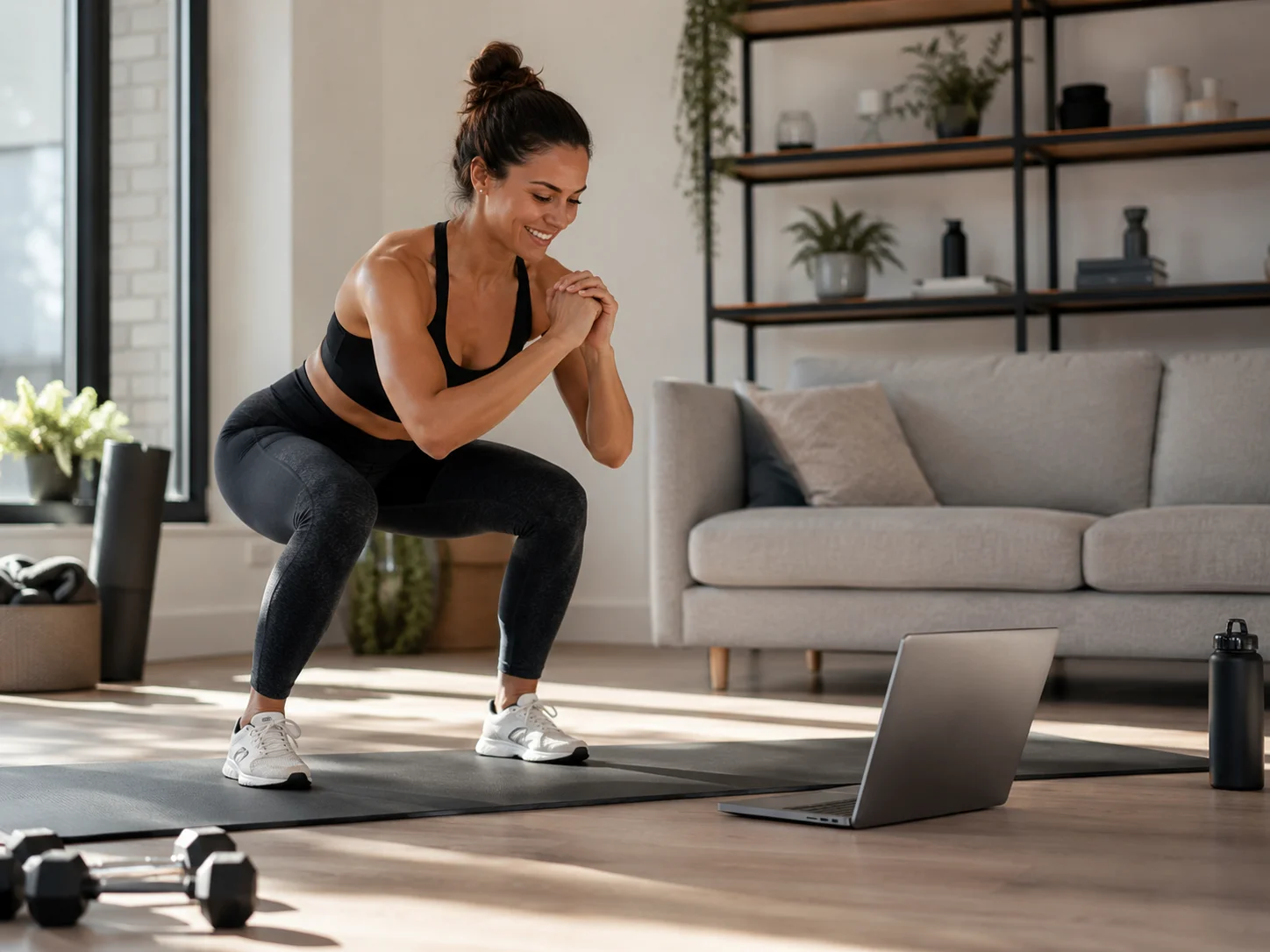
Prioritize a squat-to-chair, supported split squat, low step-up, hip hinge, and calf raise. These movements train the legs through patterns used in daily life. Begin with a height and range that feels controlled. For a chair squat, reach the hips back, touch the chair lightly, and stand by pressing through the feet rather than rocking forward.
Lower-Body Strength for Stairs and Daily Life
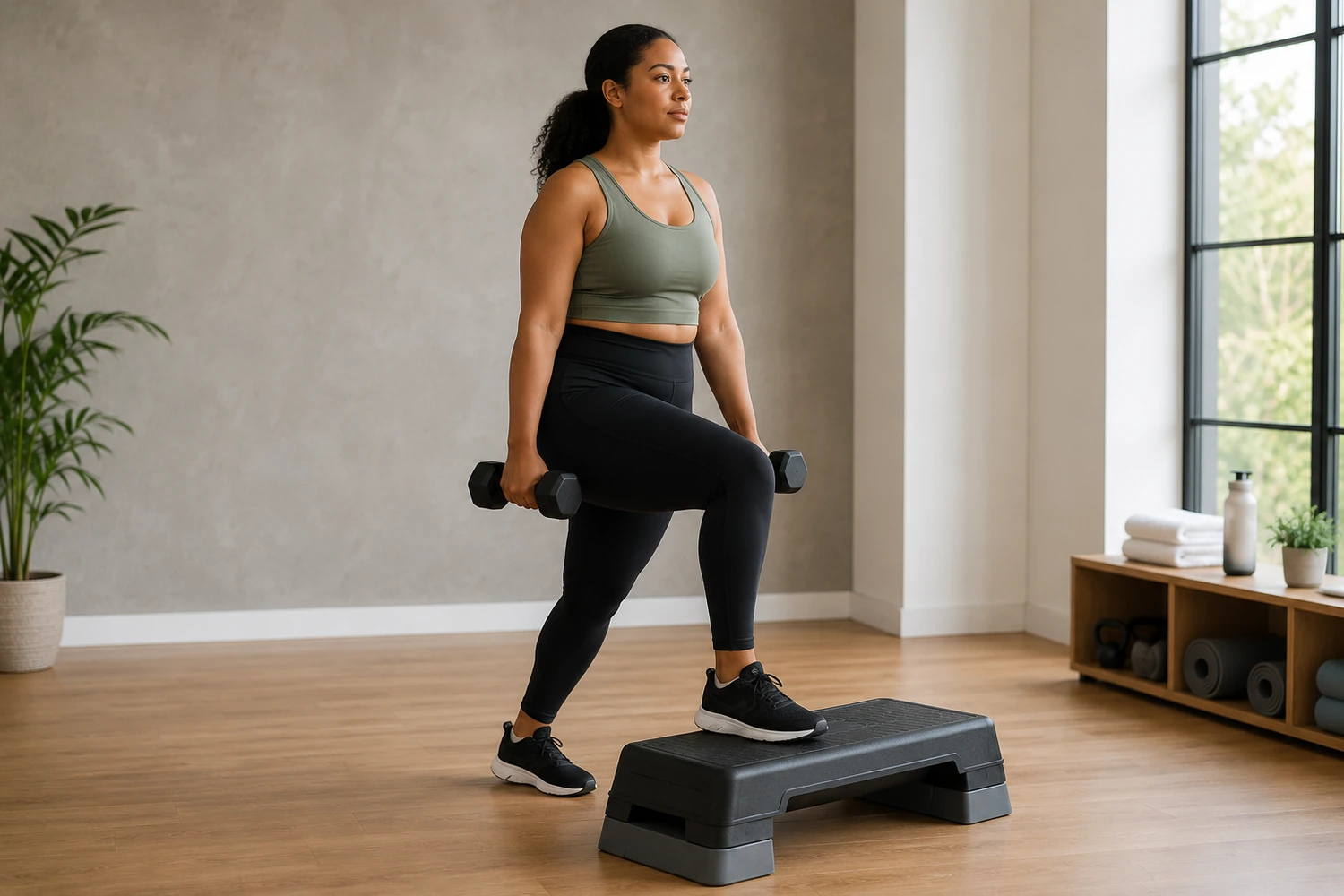
Hip hinges strengthen the back of the legs and hips. Start with a dowel or hands on the thighs to learn the pattern, then add dumbbells. Step-ups should use a low platform at first. Hold a rail if needed and lower slowly. Control during the descent is often more valuable than using a taller step.
A balanced upper-body plan includes a row, press, pulldown, and carry. Rows train the upper back and can support a comfortable upright posture. Presses strengthen the chest, shoulders, and triceps. A neutral grip and moderate range are often comfortable for sensitive shoulders. Pulldowns develop the back and arms without requiring a full pull-up. For the workout plans for women over 50, if you want another way to structure the same goal, compare this approach with our Workout Plans for Women.
Carries are simple and practical. Hold one or two dumbbells, stand tall, and walk slowly for twenty to forty seconds. They challenge grip, trunk stability, and posture at the same time. Start light enough to avoid leaning or holding the breath. Carrying grocery bags may become noticeably easier as this skill improves.
Upper-Body Strength, Posture, and Carrying Capacity
Balance can be trained beside a counter or stable rail. Begin with feet close together, then use a staggered stance, tandem stance, and supported single-leg balance. Ten to twenty seconds of controlled practice is enough. The support is there for safety, not as a sign that the exercise is ineffective.
Core work does not require repeated sit-ups. Standing Pallof presses, suitcase carries, bird dogs, and elevated planks train the trunk while allowing easy modification. The purpose is to resist unwanted movement and transfer force between the upper and lower body. Breathe normally and stop before posture changes.
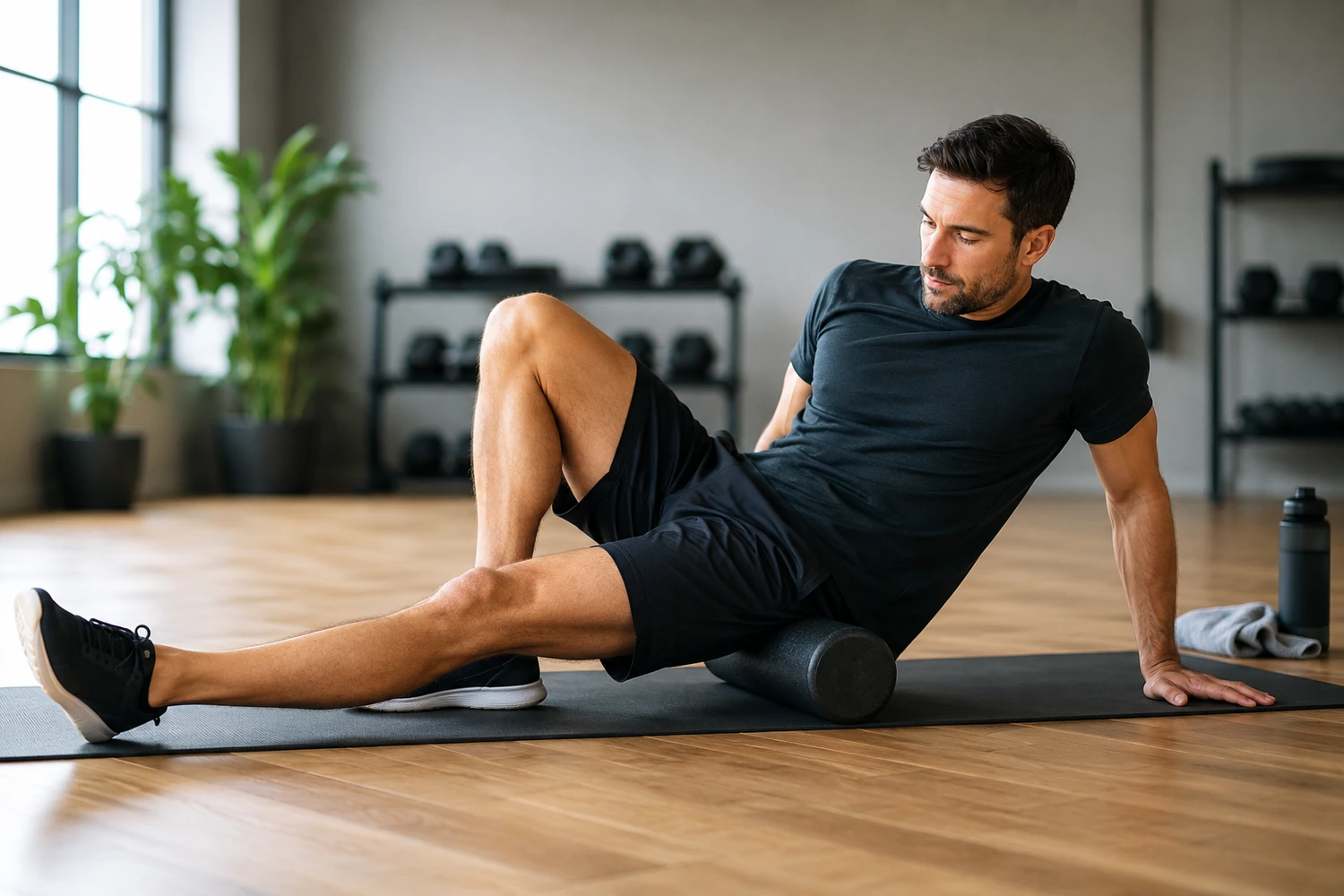
Mobility sessions should target areas that feel restricted without forcing painful range. Useful options include ankle rocks, hip flexor stretches, thoracic rotations, wall slides, and gentle calf stretches. Spend thirty to sixty seconds in a comfortable position and avoid bouncing. Mobility should leave the body feeling easier to move, not irritated.
Sample Weekly Plan
After a disrupted week, return to the workout plans for women over 50 with a manageable workload instead of trying to repay missed sessions. During the workout plans for women over 50, reduce sets or intensity when several recovery signals worsen together.
| Day / Block | Focus | Plan | Time |
|---|---|---|---|
| Monday | Full-body strength | Chair squat, row, chest press, hinge, carry | 40–55 min |
| Tuesday | Easy walking | Conversational pace on a comfortable route | 20–30 min |
| Wednesday | Mobility and balance | Ankle, hip, thoracic, and supported balance work | 10–20 min |
| Thursday | Full-body strength | Step-up, pulldown, shoulder press, bridge, Pallof press | 40–55 min |
| Friday | Recovery | Normal daily movement or rest | Flexible |
| Saturday | Longer easy walk | Increase duration gradually | 25–45 min |
| Sunday | Flexible recovery | Rest, recreation, or light stretching | Flexible |
Exercise Guide
To measure progress in the workout plans for women over 50, keep the same core movement long enough to compare repetitions, load, range, and effort. While following the workout plans for women over 50, progress only one training variable at a time so the response remains easy to evaluate.
| Exercise | Sets | Target | Effort Guide |
|---|---|---|---|
| Chair squat | 2–3 sets | 8–12 reps | Use a higher chair when needed |
| Low step-up | 2 sets | 6–10 each side | Use a rail and reduce step height |
| Seated cable row | 2–3 sets | 8–12 reps | Keep chest tall and shoulders relaxed |
| Neutral-grip chest press | 2–3 sets | 8–12 reps | Use a comfortable range |
| Dumbbell hip hinge | 2–3 sets | 8–10 reps | Practice with hands on thighs first |
| Farmer carry | 2 sets | 20–40 seconds | Walk tall without leaning |
Balance and Core Training Without Floor Difficulty
Pair mobility with strength whenever possible. New range is more useful when the muscles can control it. For example, ankle mobility followed by chair squats, or shoulder mobility followed by light rows and presses, connects flexibility to real movement. Ten focused minutes performed regularly is more effective than an occasional long session.
Walking is accessible, but it should still be progressed gradually. Begin with a duration that allows normal recovery the next day. Add five minutes to one or two walks per week before increasing pace. Hills and intervals can be introduced later, but flat comfortable routes are appropriate at the beginning.
Cardio intensity can be monitored with the talk test. During easy work, full sentences should be possible. Moderate work allows conversation but requires deeper breathing. Most weekly cardio can remain easy to moderate. Hard intervals are optional and should not interfere with strength, sleep, or joint comfort.
Mobility That Supports Comfortable Movement
Use two sets of eight to twelve repetitions for most exercises. When twelve repetitions feel controlled and several repetitions remain available, increase the load slightly. Another option is to add a third set to one or two exercises. Do not increase weight, sets, and frequency at the same time.
Tempo is another progression tool. Lowering for three seconds can make a light weight more challenging while improving control. Range may also increase gradually. Keep a simple training log with exercise, load, repetitions, and a brief note about comfort. This makes patterns visible and helps prevent large, unnecessary jumps.
Recovery needs vary, but strength sessions should usually be separated by at least one day during the early phase. Regular sleep, sufficient food, hydration, and rest support training. A balanced meal containing protein and carbohydrate after exercise can be practical, but exact timing is less important than total daily intake. For the workout plans for women over 50, when adjusting your weekly plan, you can also use the Active Recovery Workout Routine as a practical reference.
Walking, Cardio, and Weekly Progression
Bone health is influenced by many factors, including resistance exercise, weight-bearing activity, adequate nutrition, and medical history. People with osteoporosis or fracture risk may need individualized exercise guidance, particularly for loaded spinal flexion, high-impact work, or balance challenges. General programs should always yield to personal clinical advice.
One common mistake is doing only cardio because strength training feels unfamiliar. Cardio is valuable, but it does not replace resistance work for muscular strength. Another mistake is selecting weights that are too light forever. The muscles need gradually increasing challenge, provided technique and comfort remain good.
Women may also avoid rest because the workouts appear short. Recovery is part of progression, especially when sleep, stress, or caregiving demands are high. Finally, avoid judging the program by rapid scale changes. Improvements in strength, balance, walking comfort, energy, and confidence are meaningful outcomes even when body weight changes slowly or not at all.
Recovery, Nutrition, and Bone-Supportive Habits
Before each session, note energy, unusual pain, dizziness, illness, and recent changes in medication or health. A normal workout should not begin with unexplained chest discomfort, faintness, or symptoms that feel medically concerning. When in doubt, postpone the session and follow appropriate clinical guidance.
Set up the training area before beginning. Keep the floor clear, place a stable chair or rail nearby for balance exercises, and choose shoes that provide reliable traction. At home, avoid loose rugs and crowded spaces. In a gym, learn how to use machine safety pins and adjustment levers before adding resistance.
Confidence, Modifications, and Menopause-Related Changes
Use the first set as a movement check. If the body feels unusually stiff or unstable, reduce the range and load. A modified workout can still be useful. The purpose of a readiness check is to make a sensible decision early rather than discovering halfway through the session that recovery is poor.
Useful progress markers include rising from a chair with less effort, carrying groceries more comfortably, climbing stairs without stopping, walking farther at the same perceived effort, and maintaining balance longer with light support. These outcomes connect training to daily life and can be more motivating than scale changes.
Strength progress can be recorded through repetitions, load, range, or control. A woman may use the same dumbbell but perform slower, smoother repetitions. She may lower a chair height, increase a step-up height slightly, or reduce hand support during balance practice. Each improvement represents a real adaptation. Measure only a few outcomes every four to six weeks. Testing too often creates noise and encourages rushing. Keep the process simple: one lower-body task, one upper-body exercise, one walking measure, and one balance measure are enough to show whether the plan is moving in the right direction. At home, a chair, resistance band, and one or two pairs of dumbbells can cover most of the plan. Chair squats replace leg presses, band rows replace cable rows, wall or counter push-ups replace machine presses, and a loaded tote bag can be used for carries. A staircase can provide a low step when the surface is stable and a rail is available. In a gym, machines may make load changes easier and provide support while technique develops. A leg press, chest press, seated row, pulldown, and cable station create a complete full-body session. Free weights can be added gradually rather than treated as mandatory. When equipment is limited, increase challenge through slower lowering, pauses, additional repetitions, or a slightly greater range. Do not use unstable household objects to create difficulty. Safety and repeatability remain more important than novelty. Group classes can provide structure and social support, but the instructor’s version is not the only valid version. Arrive early, explain important limitations, and choose a position where demonstrations are easy to see. Use lighter weights during the first class and learn the pace before trying to match experienced participants. In a shared gym, confidence grows through familiarity. Visit at a quieter time initially, repeat the same exercise order, and keep the plan visible on a phone or printed card. Most people are focused on their own training, and using a lighter weight is normal. Equipment setup and controlled movement matter more than appearance. A training partner can help with attendance, but each person should use her own load, range, and rest period. Support should not become pressure. The best environment is one where modifications are respected and long-term participation is encouraged. Energy, sleep, temperature regulation, and recovery may vary during the menopause transition. A rigid plan can become frustrating when it ignores these changes. Use a flexible intensity system: complete the planned session on good days, reduce one set or the load on lower-energy days, and choose walking or mobility when recovery is clearly poor. Resistance training, regular activity, balanced nutrition, and sleep habits can support health, but they do not replace individualized medical care for severe symptoms or bone-health concerns. Discuss persistent changes with a qualified clinician, particularly when they affect daily function or exercise safety. Track patterns rather than judging a single day. Notes about sleep, symptoms, training effort, and recovery can reveal which schedules work best. Flexibility makes the program more sustainable and allows challenging work to occur when the body is ready.
Four-Week Implementation Roadmap
Within the workout plans for women over 50 approach, treat better technique or a fuller comfortable range as valid progress when adding weight is not appropriate.
For the workout plans for women over 50, use the log to confirm consistency and recovery, not as a demand for a record every day. For the workout plans for women over 50, compare the same movement under similar conditions before deciding that progress has stalled. For the workout plans for women over 50, for more closely related training ideas, browse our workout guides for women.
Frequently Asked Questions
Many women can begin with appropriate exercises and gradual progression, but medical or rehabilitation guidance may be needed when significant conditions or symptoms are present.
Two full-body sessions per week are a practical starting point; a third session can be added when recovery is consistently good.
Walking supports endurance and health, but it does not provide the same muscular-strength stimulus as progressive resistance exercise.
Reduce the range, use a higher chair, slow the movement, and try a supported variation. Persistent or worsening pain should be assessed.
No. Dumbbells, resistance bands, a chair, and a stable support can cover the main movement patterns at home.
Increase only after the current load is controlled through the full repetition range and recovery remains good.
It can support weight management as part of a broader pattern that includes nutrition, daily activity, sleep, and sustainable habits.
Safety and Scope
This article provides general educational fitness information and is not a medical diagnosis, treatment plan, or substitute for individualized advice. Stop exercise and seek appropriate care for sharp pain, chest discomfort, faintness, unusual shortness of breath, or symptoms that worsen.