Published by Best Fitness Routine. Editorial standards · Report a correction. Educational guidance; no individual clinical review is claimed unless a qualified reviewer is named.
Use the treadmill for a specific hiking task
A treadmill hiking workout for beginners can provide controlled walking practice when outdoor hills are inconvenient. You can adjust time, pace and a modest incline without committing to a distant route. That makes it useful for learning how uphill effort changes breathing. It does not recreate rocks, roots, weather, navigation or the repeated lowering of a trail descent. Plan separate suitable outdoor practice before choosing a more complex hike.
Start with your current walking capacity, not the largest incline the machine offers. Someone comfortable with short level walks may need several familiar sessions before adding elevation. Medical restrictions, balance concerns or symptoms can change the appropriate choice. This guide is a general example for a suitable machine and user; it is not clearance to exercise through pain or proof that treadmill walking suits every person.
Learn the machine before starting the belt
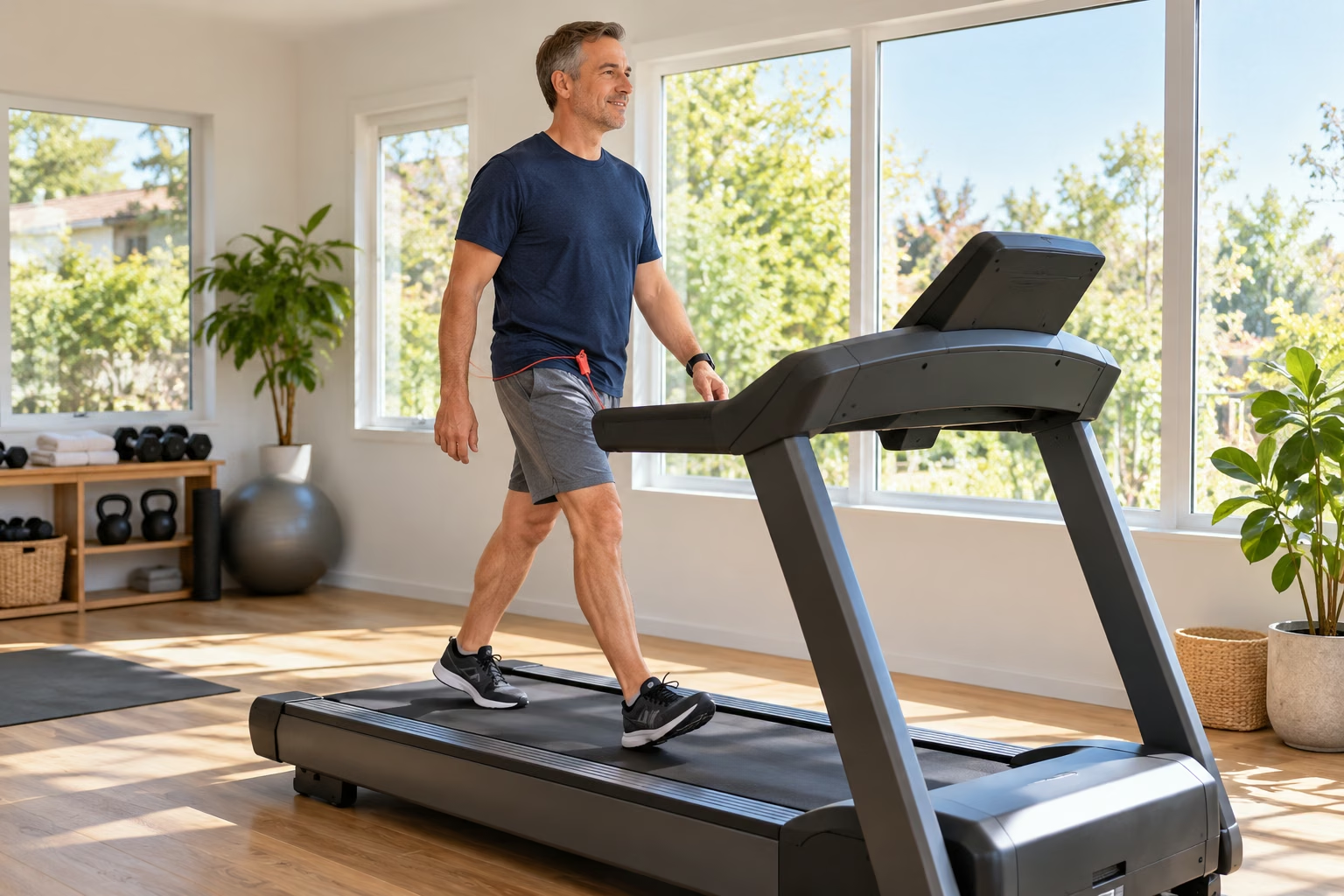
If choosing a treadmill (paid link), check its rated user capacity, belt dimensions, handrail access, safety controls and required operating clearance. A compact walking pad may not have the incline or support features described here. Follow the actual manufacturer instructions. Keep children, pets, loose clothing and objects away from the belt and the space behind it. Learn how to stop normally and how the emergency system works.
Attach the safety clip as instructed before starting. Begin at an easy setting, face forward and avoid stepping on or off a moving belt. Ask facility staff for an introduction if the controls are unfamiliar. Do not try to operate a phone while walking, and avoid carrying loose weights. A light first session that teaches safe use is more useful than reaching a demanding incline without understanding the stopping procedure.
Set up a clear and comfortable environment
Wear familiar suitable footwear with secure laces. Keep the room at a comfortable temperature and position any corded equipment outside the walking and mounting area. If the machine has a holder, place a water bottle (paid link) where it cannot fall into moving parts. Pause and stop safely if you need to retrieve something. A convenient indoor setting still requires attention to equipment and clear surroundings.
Choose a pace that allows a natural walking stride. If you must hold the front rail continuously to keep up, reduce the setting and review whether the activity is suitable. Handrails may be used as directed for transitions or support needs; pulling your body along at an excessive speed changes the task. Seek guidance if balance support is a continuing concern rather than simply choosing a higher incline because the rail is available.
Start with an easy level warm-up
For the twenty-minute example, begin with five minutes of easy level walking. This is part of the session, not an extra workout to rush through. Let your stride settle and check that the controls, clip and footwear feel comfortable. A person using a shorter session can preserve a gradual start while reducing the middle portion. Some people may need more time before any incline change.
A workout timer (paid link) can organize the phases if the console display is difficult to follow. Position it before starting and leave it alone while walking. There is no need to hit a precise speed to make the warm-up count. You should feel able to talk and pay attention to the belt. If the level start feels unexpectedly demanding, continue gently or finish instead of treating the incline phase as compulsory.
Add small incline blocks
After the easy start, one adjustable example is three rounds of one minute at a gentle incline followed by two minutes at a familiar easier setting. Choose the incline by comfortable effort and the machine instructions rather than copying another user's percentage. Make changes gradually using accessible controls. If conversation becomes difficult or your position feels strained, reduce the setting or return to level walking.
The three rounds occupy nine minutes, leaving six minutes in the twenty-minute example for gradually easier level walking and a safe finish. Fewer rounds make a shorter version. Do not combine your first incline session with a heavy backpack, faster speed or unfamiliar footwear. Learning how a small incline feels is already a useful task. The uphill hiking guide provides outdoor practice options when conditions allow.
Keep posture and effort manageable
Look forward and walk in a comfortable position on the belt without crowding the console. Allow natural arm movement when appropriate, while using support according to personal needs and equipment instructions. Avoid bending sharply at the waist or hanging on the rails to preserve a setting. If the incline makes ordinary walking mechanics difficult, lower it. A smaller gradient with steady control is a better starting point.
Optional feedback from a heart-rate monitor (paid link) may help record a session, but no universal heart-rate number defines readiness for hiking. Heat, medication and device limitations affect readings. Use your breathing, symptoms and individual guidance alongside any display. Console calorie estimates are not a reason to extend a session that has become uncomfortable. The practical goal is a controlled walking effort you can repeat, with enough attention left for safe machine use.
Progress the session without chasing a peak incline
Repeat the initial routine until the effort and later response are manageable. Then change one feature, such as extending one gentle incline block slightly or adding a little level walking time. Keep the other settings familiar. You do not need to increase incline every week. The largest display number often says more about the machine than about whether the workout prepares you appropriately for your chosen trail.
Record the machine, actual duration, chosen settings and later response in a training journal (paid link). Include whether you used continuous handrail support and whether the room was unusually warm. Those details make comparisons more meaningful than a single distance total. If the legs feel unusually tired on ordinary stairs afterward, reduce the next session and allow recovery. Persistent pain, dizziness or recurring balance concerns should be assessed rather than trained through.
Be cautious about backpack practice
A pack is not necessary for a beginner treadmill session. It can change balance, heat and the way you walk, while straps may introduce equipment hazards. Do not add it simply because the workout is called hiking preparation. Check the machine rules and obtain suitable guidance if you have a specific need to practice carrying. Learning pack fit on an easy outdoor path may be a more practical separate task.
Keep essential hiking load appropriate for the actual route rather than adding weight as a shortcut to fitness. The daypack and core guide explains controlled preparation without requiring a moving belt. Avoid weighted vests and hand-held loads during this initial routine. Increasing walking time or a modest incline provides enough possible progression before you complicate the setup with additional equipment and competing balance demands.
Fit indoor walking beside outdoor practice
One short incline session can sit beside familiar level walks during the week. Keep a suitable outdoor walk when conditions allow so you can practice natural pacing and foot placement. A real trail requires decisions that a belt cannot supply, including where to pause, when to slow and whether the return remains realistic. Start outdoors with a route easier than the most challenging indoor session suggests you might manage.
Do not add a demanding weekend hike on top of every planned workout without accounting for the extra load. It can replace the week's longer walking session. Place leg strength work where it does not leave you fatigued before a new trail descent. The treadmill is one practical tool within preparation, not a complete hiking program or a test that removes the need for route planning and appropriate supplies.
Finish with a safe transition and a clear review
Reduce the settings gradually and let the final minutes feel easy. Stop the belt fully using the intended procedure before dismounting. Secure the machine as instructed, especially in a home with children. Take a moment afterward to notice whether your walking feels normal and whether any discomfort needs attention. Do not stretch while standing on a moving belt or reach around moving parts to collect equipment.
For the next session, use the response to decide whether to repeat, shorten or modestly extend the routine. Comfort during the workout and manageable recovery are more informative than completing the planned twenty minutes at any cost. When outdoor conditions improve, transfer the practice to a short easy route with a clear return. That combination can make indoor training useful while keeping its limitations visible.
Practical Options at a Glance
| Situation | Practical option | What to consider |
|---|---|---|
| Minutes 0–5 | Easy level walking | Learn controls and settle stride |
| Minutes 5–14 | Three rounds: one gentle incline, two easier | Adjust or shorten as needed |
| Minutes 14–20 | Gradually easier level walking | Stop belt fully before dismounting |
Frequently Asked Questions
There is no universal beginner percentage. Use a small setting that allows comfortable walking on the actual machine, following its instructions and personal guidance. Reduce the setting if posture or breathing becomes strained. Level walking is a valid starting option.
A pack is unnecessary for this introductory routine and can change balance or create strap hazards. Follow equipment rules and appropriate individual guidance. Start pack practice separately on easy ground with the essentials you actually need rather than adding weight to a moving-belt session.
A normal incline treadmill does not reproduce repeated outdoor lowering or changing footing. Add suitable separate strength and outdoor walking practice. Do not use a comfortable treadmill session as proof that a long uneven descent will be appropriate or easy.
Safety and Personal Needs
Stop activity and seek appropriate help for chest pain, faintness, severe unexpected breathlessness or a significant injury. Persistent pain, new swelling, numbness, weakness, dizziness or recurrent instability needs assessment before progression. Follow individual guidance for medical conditions, pregnancy, recent surgery or injury. These adjustable examples are general education, not rehabilitation, medical clearance or guarantees against injury. Check current destination advice, weather, terrain and the whole return route; fitness does not replace hiking skills, navigation or appropriate essentials. Follow the actual equipment instructions and use secure support when needed.
This is general educational information. Individual needs vary with health, medications, fitness and training experience.
Sources and Further Reading
- CDC: Measuring Physical Activity Intensity
- American Heart Association: Warm Up, Cool Down
- National Park Service: Hiking Safety