
Why Strength Training Matters During GLP-1 Weight Loss
Weight loss changes the load your body carries and can reduce both fat and lean tissue. Resistance training gives muscle a direct reason to remain useful. The 2025 joint GLP-1 nutrition advisory specifically emphasizes structured strength training alongside adequate diet when preserving muscle and bone is a priority.
Think of medication, nutrition and training as different tools. Medication can influence appetite and weight; protein supplies building material; resistance training provides the mechanical signal.
Start With a Program You Can Repeat
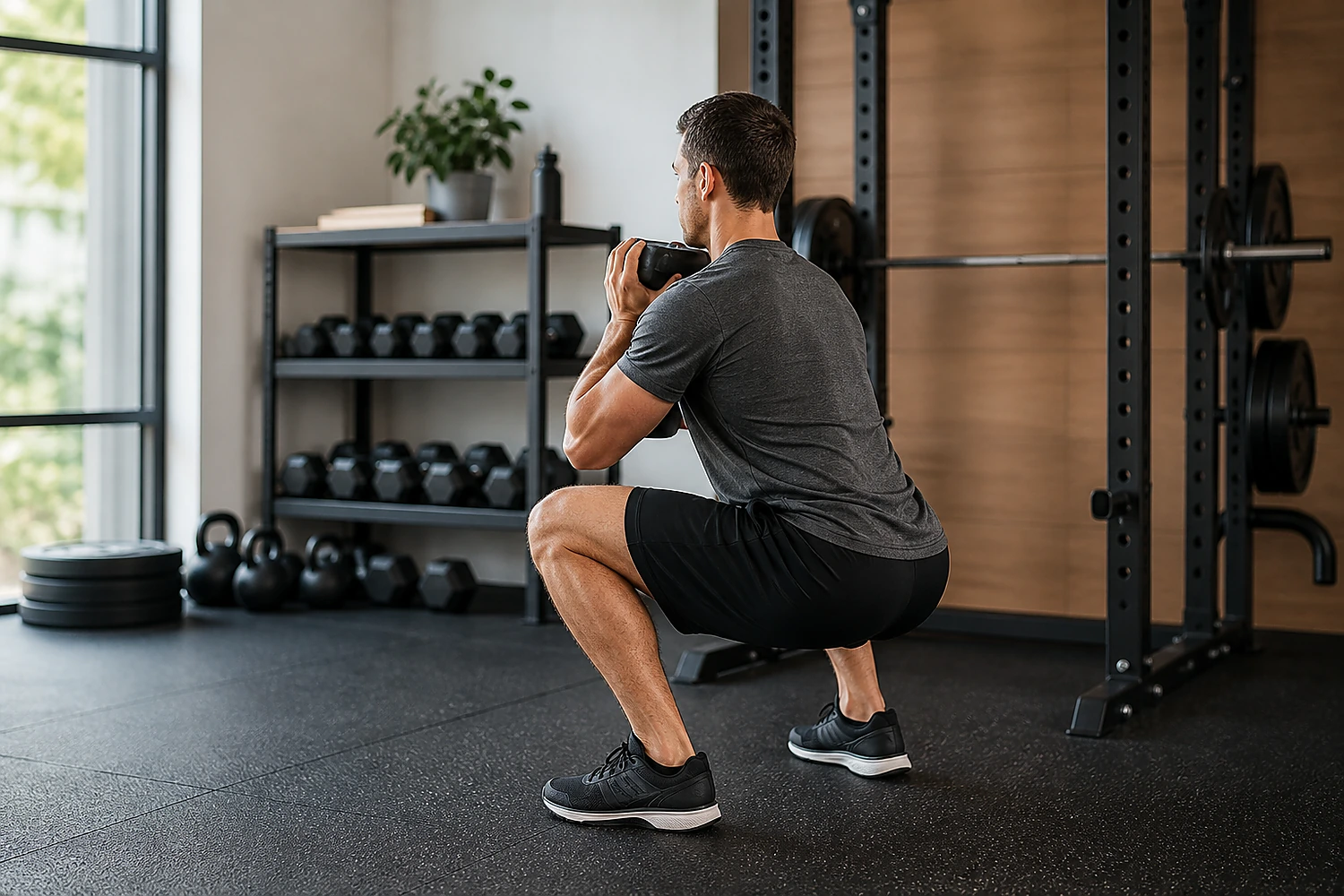
A beginner does not need six gym days. Two full-body sessions per week can cover the major movement patterns and leave time to recover. Choose exercises that feel stable and easy to learn: leg press or squat to a box, chest press or push-up, row, hip hinge, step-up and a simple core or carry exercise.
If you need a general foundation, review our strength training guide for adults.
Use Moderate Sets, Repetitions and Effort
For many beginners, one to three working sets per exercise in a moderate repetition range is enough to start. The final repetitions should feel challenging while technique stays controlled. You do not need to train to absolute failure to preserve muscle.
Keep one or two repetitions “in reserve” on most sets, especially while you are learning. Progress comes from accumulating quality work and gradually doing more over time.
Progress Without Chasing Exhaustion
When you can complete all planned repetitions with stable technique and the set feels easier than it used to, add a small amount of resistance or an extra repetition. This is progressive overload. It can be slow and still work.
Avoid changing every exercise every week. Repeating the same core movements long enough to measure improvement is more useful than constantly “shocking” the body.
Adjust Training on Low-Energy or Nausea Days
Some days, reduced intake or gastrointestinal symptoms may make a hard workout feel unrealistic. Do not confuse flexibility with failure. You can shorten the session, reduce load, perform fewer sets or switch to easy walking and mobility. Persistent severe symptoms should be discussed with the prescribing clinician.
Training through dizziness, faintness or dehydration is not a badge of discipline. Safety comes first.
Fuel Enough to Recover
Strength training works best when the body has enough protein, fluids and total energy to repair tissue. If appetite is low, place a small protein-rich meal or snack near the training window when tolerated. There is no magical 30-minute window; the bigger issue is meeting needs over the day.
Our protein for weight loss guide can help you build a simple eating pattern.
A Simple Weekly Strength Structure
A practical week might use strength sessions on Monday and Thursday, with walking or other aerobic activity on Tuesday and Saturday. Each strength session can include one lower-body push, one hinge, one upper-body push, one pull and one carry or core movement. That is enough to train the major muscle groups without making the plan complicated.
More experienced lifters can use additional days or split routines, but the priority remains recovery and progression.
Combine Strength With Cardio Instead of Choosing One
Cardio supports heart and lung fitness, while resistance work focuses more directly on muscle and strength. Both matter. If long cardio sessions interfere with recovery, spread them across the week or keep easy sessions conversational.
Our cardio and strength weekly plan shows how to combine them without stacking every hard session together.
Track Performance During Weight Loss
Choose two or three exercises and record the weight, repetitions and how difficult the sets felt. If body weight is falling while strength is stable or improving, that is useful information. If strength falls rapidly across several weeks, look at total calories, protein, sleep, training volume and symptoms.
A temporary off day is normal. A persistent downward trend deserves a plan adjustment.
Common Strength-Training Mistakes on GLP-1
The main mistakes are doing too much too soon, using exercise to “earn” food, skipping protein, ignoring dehydration and treating soreness as proof of a good session. Another is avoiding strength training because the scale is already moving. Weight loss and physical capability are different outcomes.
Build the strongest version of the lighter body you are creating.
Home Training Can Work as Well as a Gym for the Basics
You can build a useful program with adjustable dumbbells, resistance bands and body-weight exercises. Chair squats, split squats, band rows, wall or counter push-ups, hip hinges and loaded carries cover major patterns. The advantage of a gym is equipment variety; the advantage of home is convenience.
Choose the environment that makes consistency more likely. Progress resistance, repetitions or range of motion over time instead of assuming home workouts must stay easy.
Technique Matters More Than Impressing Anyone
Weight loss can change leverage, balance and how exercises feel. Use controlled repetitions, stable foot positions and an appropriate range of motion. If pain is sharp, neurological or worsening, stop and assess rather than forcing the movement.
A qualified trainer or physical therapist can help when you are unsure about form, have significant joint limitations or are returning after a long break.
Soreness Is Not the Goal
Mild muscle soreness can happen when training is new, but severe soreness is not required for progress. Excessive soreness can reduce walking, daily movement and the quality of your next session. Increase volume gradually and leave enough recovery between hard workouts.
If you are persistently sore while eating very little, the combination of training stress and low recovery resources may need adjustment.
A 35-Minute Full-Body Session
Warm up with five minutes of easy movement. Then perform a squat or leg press, row, chest press, hip hinge and step-up for two sets each, followed by a short carry or core exercise. Rest long enough to keep technique strong. Finish with a few minutes of easy walking.
This is intentionally simple. The purpose is to create a repeatable muscle stimulus, not to leave the gym exhausted.
Who Should Get Medical Guidance Before Starting
People with unstable heart symptoms, uncontrolled blood pressure, recent surgery, severe neuropathy, major balance problems or other significant conditions may need individualized exercise advice. Medication side effects such as persistent dizziness or dehydration should also be addressed first.
Most adults benefit from movement, but the starting point should match current health rather than a generic program.
Machines, Free Weights and Bands Can All Work
Machines can be helpful when balance is limited, dumbbells allow flexible movement, and bands are inexpensive for home training. There is no single “best” equipment for GLP-1 users. Choose tools that let you train major muscle groups safely and progressively.
A well-designed machine workout can preserve strength just as meaningfully as a complicated free-weight routine when effort and progression are appropriate.
Use an Easier Week When Recovery Falls Behind
If several workouts in a row feel unusually hard, reduce weights or sets for a week instead of quitting. This is sometimes called a deload. It can be useful during periods of low appetite, travel, poor sleep or increased side effects.
Returning refreshed is more productive than repeatedly forcing hard sessions while performance declines.
Use the Minimum Effective Dose When Life Is Busy
During travel, stressful weeks or periods of reduced appetite, keep a shortened routine rather than abandoning strength training. One or two sets of a squat, row, press and hinge can maintain the habit until normal training returns. This “minimum effective dose” approach protects consistency and reduces the all-or-nothing cycle that often turns a temporary disruption into months away from resistance training.
Frequently Asked Questions
For many adults, two or more well-designed strength sessions per week can be a practical starting point, depending on health and experience.
Mild symptoms may call for a shorter or easier session, but significant nausea, vomiting, dizziness or dehydration should be addressed before hard training.
Not necessarily, but it provides a strong muscle-preservation stimulus and works best with adequate nutrition.
It is not required. Moderate-to-hard sets with good technique and gradual progression can be effective.
Yes, if medically appropriate. Start with stable movements, manageable loads and enough recovery.
Safety and Scope
This article is general education, not individualized medical advice. GLP-1 and related weight-management medicines are prescription treatments. Do not start, stop, change dose, change injection frequency or use compounded or unapproved products without appropriate medical guidance. Persistent vomiting, inability to maintain fluids, severe abdominal pain, fainting, chest pain, severe weakness or other concerning symptoms require prompt medical assessment.