Published by Best Fitness Routine. Editorial standards · Report a correction. Educational guidance; no individual clinical review is claimed unless a qualified reviewer is named.
Begin with learning rather than a distance target
Rowing machine workouts for beginners work best when the first goal is learning a repeatable stroke. A rower can feel unfamiliar even if you already walk, cycle or lift weights. The seat moves, your feet stay connected to the footplates, and the handle needs to travel without catching your knees. Give yourself permission to practice those relationships before chasing a fast pace. A short session with control is a useful beginning, not a failed version of someone else's workout.
This four-week starting plan is an adaptable example for generally healthy adults who can use a rower comfortably. It is not a requirement to finish four weeks on a deadline. Repeat a week, shorten a session or ask a qualified instructor for help when needed. Your starting fitness, other workouts and response afterward matter more than the calendar. If a health condition or recent injury affects exercise, discuss the activity with an appropriate health professional before increasing the demand.
Set up the machine before starting the clock
Read the operating instructions for your rowing machine (paid link) or ask gym staff to show you the controls. Check that the rail is clear, the seat moves smoothly and the equipment is stable. Adjust the footplates so the strap sits securely across the broad part of each foot, following the manufacturer's guidance. You should be able to reach the handle without twisting or lunging forward. Choose clothes that cannot catch in the mechanism, and tie loose shoelaces before sitting down.
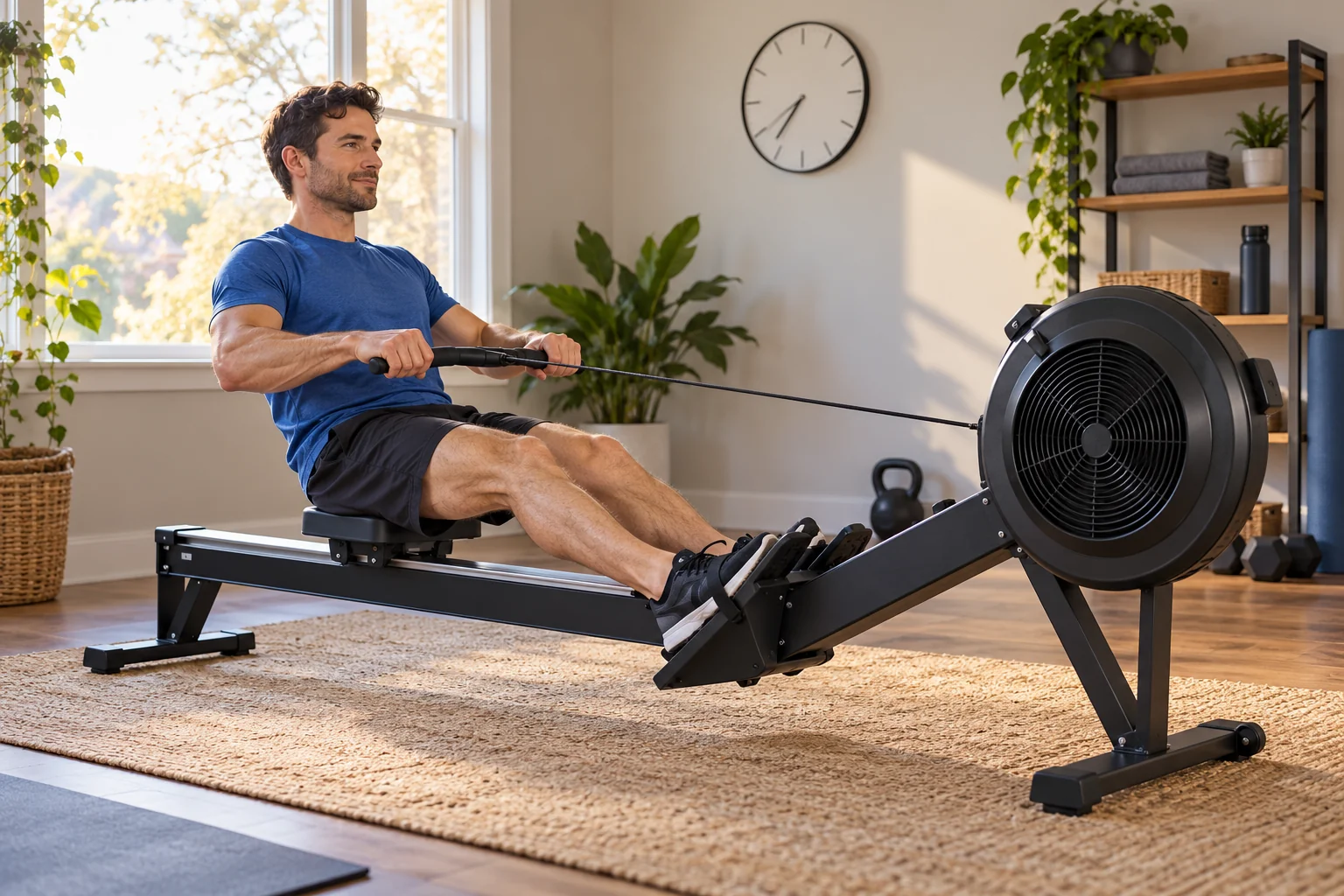
At home, a rowing machine floor mat (paid link) may help protect a suitable floor beneath your machine. Match its dimensions to the rower's footprint and leave the manufacturer's required clearance around it; a mat does not make an uneven floor safe. Keep children, pets and loose objects away from the moving seat and handle. Set the display to show time and stroke rate first. You can learn the other numbers later without turning the first session into a monitor-reading test.
Practice the stroke in a comfortable range
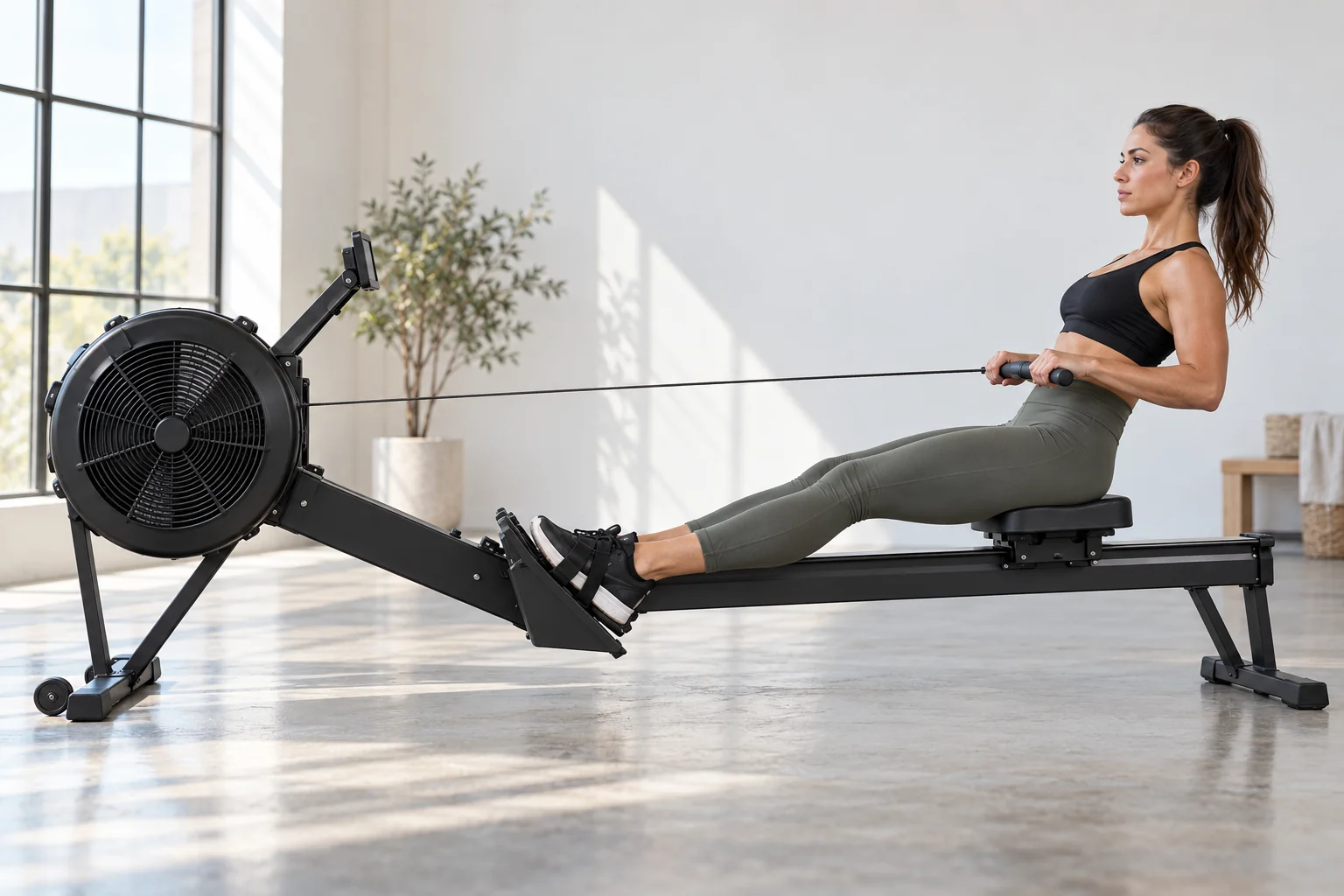
Start with straight arms, relaxed shoulders and a forward lean from your hips that you can control. At the front of the slide, avoid folding yourself into the smallest possible shape. Press through the footplates to begin the drive, let your torso open naturally, and bring the handle toward the lower ribs near the end. Return by sending the hands away, hinging forward and then allowing the knees to bend. Keep the movements connected rather than sharply separated.
Use very easy strokes to explore that order. If your knees rise before the handle clears them, slow the return and let your hands move first. If your arms tire immediately, check whether you are pulling before your legs contribute. A coach can often identify one useful correction faster than a long list of online cues. Work on that single correction for a few strokes, then row normally. Constantly monitoring every body part can make an otherwise smooth movement stiff.
Week one: become comfortable with short bouts
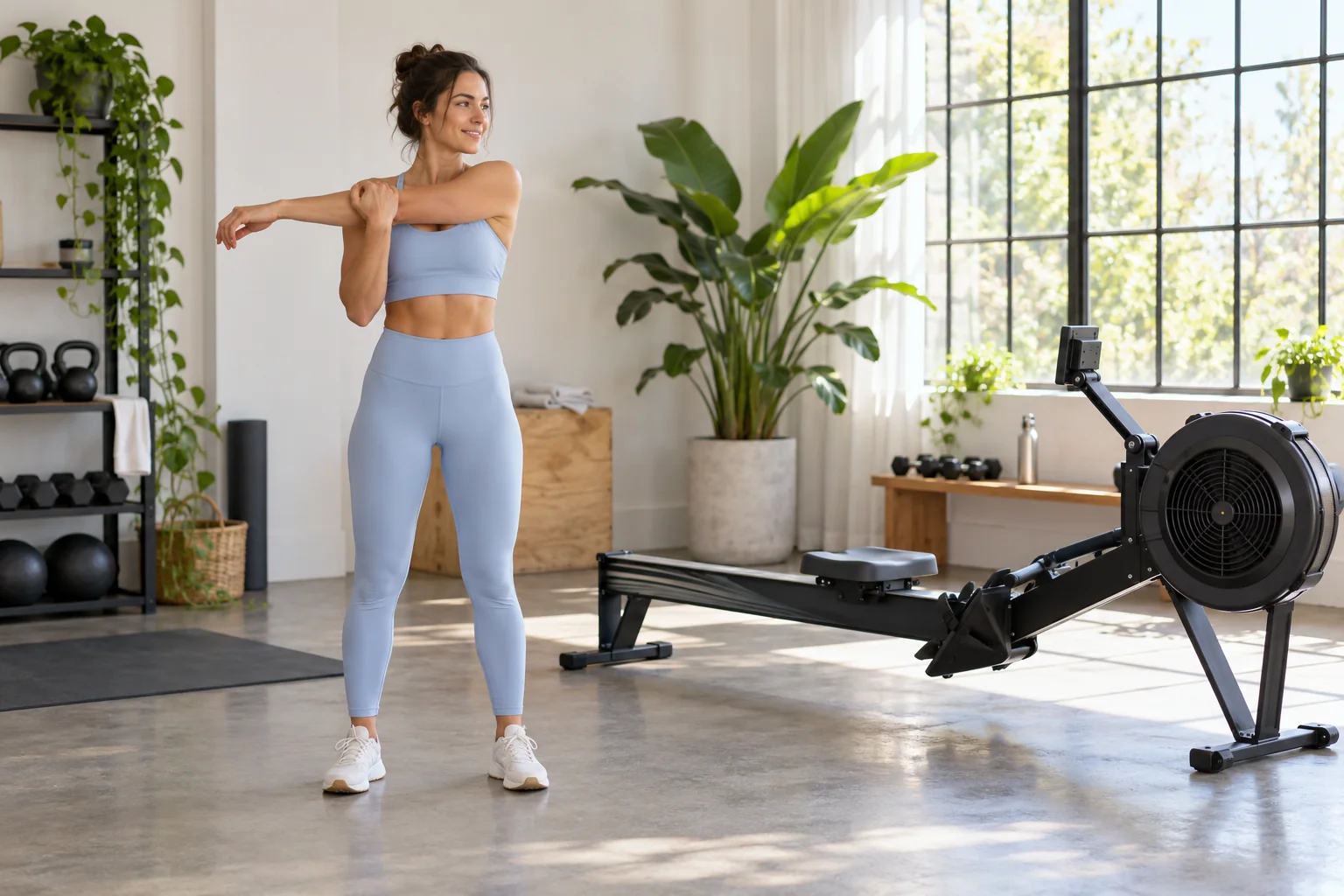
Plan two or three practice opportunities with recovery time between them, rather than insisting on consecutive days. For each opportunity, begin with a few minutes of easy walking or comfortable movement. Try three rowing bouts of two minutes, separated by about one minute of rest or very easy rowing. Finish with a few minutes of easy movement. These are suggested starting durations; use shorter bouts if your technique or comfort needs them. Keep enough control to speak normally throughout.
The session's success measure is whether you can repeat the basic stroke without rushing. Notice how you get onto and off the machine, whether the straps stay comfortable and whether your hands clear your knees. Do not add a sprint at the end simply because the session felt easy. Check how you feel later that day and the following morning. Mild unfamiliar muscle fatigue can occur, but sharp pain, worsening discomfort or unusual symptoms are reasons to stop and seek appropriate advice. Review our rowing form guide for a more detailed stroke explanation.
Week two: extend only the comfortable work
If the first week felt manageable, try three bouts of three minutes with an easy minute between them. Keep the preparation and finish, so the total visit remains longer than the work intervals alone. You may prefer one five-minute bout followed by two shorter ones. The useful change is a little more comfortable rowing, not a simultaneous increase in duration, force and stroke rate. If the return becomes hurried as you tire, reduce the next bout instead of forcing its full length.
Put a water bottle (paid link) somewhere you can reach during breaks without leaning across the rail. Choose a secure lid and keep it away from the mechanism. For these short sessions, an ordinary opportunity to drink usually fits better than buying a specialized recovery drink. Warm rooms and individual needs can change what feels comfortable. A towel and ventilation may be more helpful than a harder setting. Record a practical setup detail so you can begin the next session without repeating every adjustment.
Week three: try a longer steady block
After successful short bouts, test one continuous block of roughly eight to ten minutes at an easy, conversational effort. If you prefer, use two blocks of five minutes with a break. Neither format is automatically superior. Continuous rowing helps you practice rhythm; breaks let you reset technique and assess comfort. Keep the effort familiar, and remember that a steady session does not require identical split numbers on every stroke. Small fluctuations are normal while you learn coordination and pressure.
For a second session, return to shorter intervals rather than making every workout a new endurance test. A simple week might include one longer easy block, one technique session and an optional third easy session if recovery allows. Continue your usual manageable walking instead of replacing all movement with the rower. The four-week plan introduces a skill and a habit. It does not claim to deliver a complete weekly aerobic target immediately, especially for someone beginning after a long period of inactivity.
Week four: choose a repeatable session format
Try either a ten-to-fifteen-minute continuous easy block or three four-minute blocks with easy recovery. Include preparation and a gradual finish in both cases. Choose the version that leaves you feeling you could repeat the session later in the week. If you need a short visit before work, intervals may make the timing clearer. If watching a single clock helps you relax, a steady block may suit you. The right choice is the one you can perform with comfortable technique.
Review your experience in a training journal (paid link): session format, minutes rowed, perceived effort and one sentence about comfort. You do not need a detailed spreadsheet. For example, noting that the last two minutes became hurried is more informative than recording only distance. If the same duration now feels more controlled, that is progress even without a faster pace. Repeat this week's format before adding more. A sustainable next month can build from the routine you actually completed, rather than an ambitious plan you rarely used.
Adjust around real-life interruptions
A missed session does not need to be repaid with double the rowing. After a busy week, resume a familiar shorter format and observe your response. If another workout has left your legs or back fatigued, make rowing easier or take a rest day. Think about the total workload from lifting, sports, walking and physical work. A rower can fit around those activities, but it is still exercise and adds demand even though you remain seated during the session.
When time is limited, preserve a little preparation and easy finishing rather than cramming the planned work into a sprint. If only a brief technique practice fits, use that as the day's session. At a busy gym, ask staff about quieter times instead of switching between unfamiliar machines every minute. At home, schedule around the machine's noise and available space. Removing a practical obstacle often improves consistency more than setting a higher distance goal or buying additional accessories. When short sessions become familiar, our twenty-minute rowing format offers another manageable structure.
Decide what comes after the starting plan
Continue building comfortable minutes gradually once the basic stroke feels reliable. Add a small amount of duration to one session, then assess recovery before changing another part of the week. A faster split, higher stroke rate or harder interval can wait until you have a reason for it. If you enjoy rowing, it can become part of your aerobic activity. Keep strength training and other movement in view, because repeating a rowing stroke does not cover every fitness need.
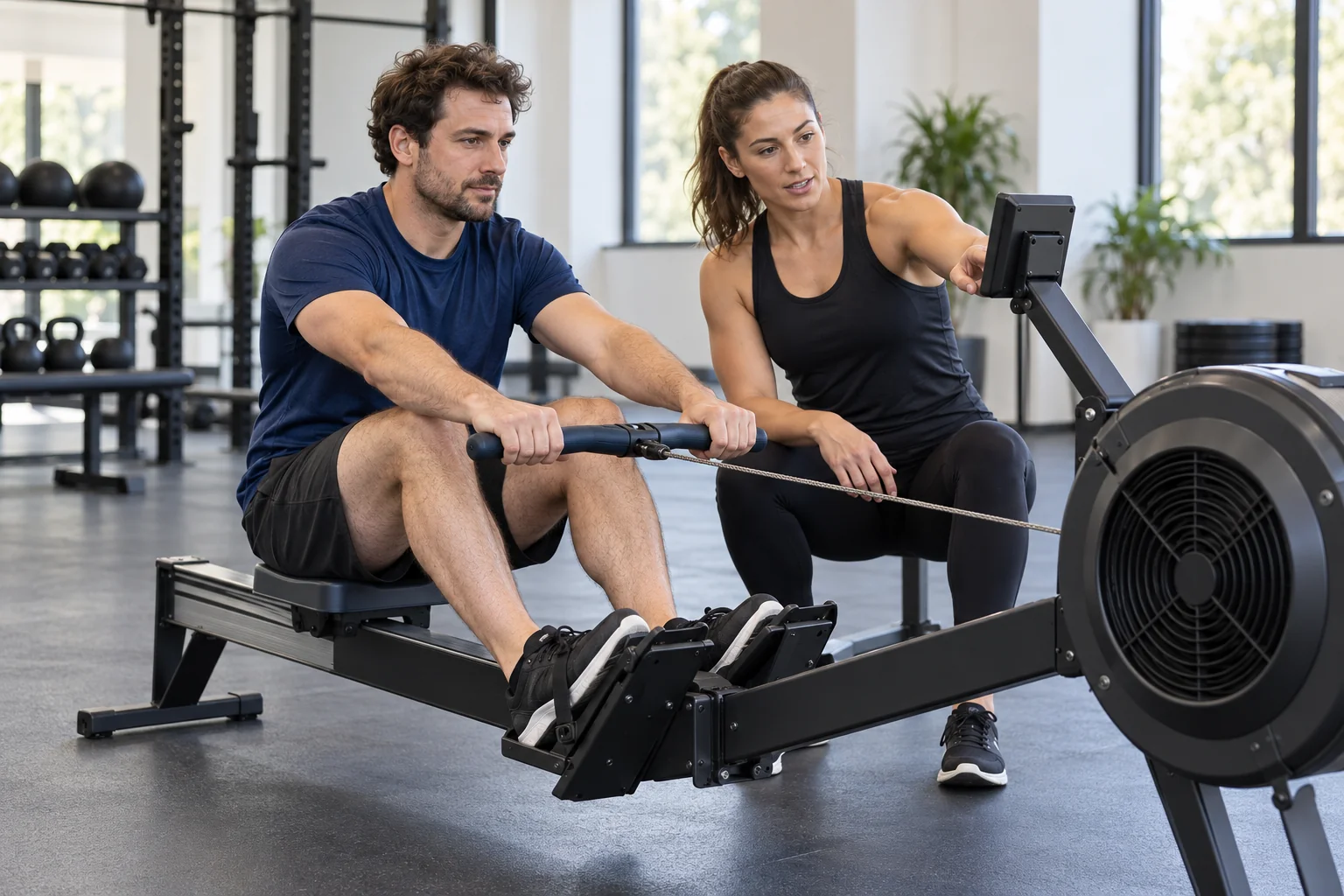
Ask for technique feedback if discomfort persists or the stroke still feels awkward after several practices. Take a specific question to the instructor: whether your hands clear the knees, whether you overreach or whether the foot setting suits you. Practical feedback is easier to apply than asking whether your entire technique is good. The lasting aim is to begin a session confidently, row with control and finish ready to return. Four weeks provide a starting structure; your progress determines the next step.
Practical Options at a Glance
| Situation | Practical option | What to consider |
|---|---|---|
| Week one | Try brief easy bouts | Learn setup and stroke before adding demand. |
| Week three | Test a longer comfortable block | Use a break when rhythm needs resetting. |
| After an interruption | Resume a familiar shorter format | Avoid repaying missed sessions with extra work. |
Frequently Asked Questions
Start with a small number of manageable practice opportunities that leave time for recovery. Two or three may fit some beginners, but there is no universal starting frequency. Consider other exercise and how you feel afterward. A repeatable easy session is a better foundation than daily rowing that leaves technique or recovery struggling.
No. Repeat a week or use a shorter format when that suits your response. The four-week structure organizes practice; it does not establish a deadline for fitness changes. If the stroke remains uncomfortable, seek feedback before adding demand. Missed visits do not need to be repaid with extra rowing.
Use an easy effort that allows comfortable breathing and attention to the stroke. A split borrowed from another person may be inappropriate for your experience or machine. Time and control are useful initial references. Learn what the monitor means before using pace to guide a more specific training goal.
Safety and Personal Needs
Stop rowing and seek appropriate care for chest pain, faintness or unusual shortness of breath. Persistent or worsening joint or back pain needs assessment before progression. Follow individual advice for health conditions, recent surgery or exercise restrictions. Lower impact does not establish that rowing is suitable for every condition.
This is general educational information. Individual needs vary with health, fitness, mobility and training experience.
Sources and Further Reading
- Concept2: Indoor Rowing Technique
- CDC: Measuring Physical Activity Intensity
- Concept2: Beginner Training Resources