Published by Best Fitness Routine. Editorial standards · Report a correction. Educational guidance; no individual clinical review is claimed unless a qualified reviewer is named.
Give preparation and finishing their own purpose
A rowing machine warm-up helps you move gradually from ordinary activity into the demands of the session. A cool-down gives you a gradual transition afterward. Neither needs to become an elaborate performance ritual, and neither guarantees that every injury or uncomfortable symptom will be prevented. The practical goal is to arrive at the main work with comfortable movement and to finish without an abrupt change from hard effort to standing still. Plan these parts before you decide how much demanding rowing fits.
The appropriate preparation depends on the session and your own circumstances. An easy technique practice may need a different approach from harder intervals, and a cold early morning may feel different from an afternoon after plenty of ordinary movement. Use the plan as a guide rather than a stopwatch rule. If you need more time to become comfortable, allow it or shorten the main work. The clock cannot determine readiness on its own.
Check the setup before using movement as a test
Inspect the seat path, foot straps and handle before starting. Set the footplates to a position that lets you reach comfortably, and clear loose objects from the moving area. Use the machine's instructions for controls and adjustments. If a seat sticks or the equipment rocks, deal with that problem first. Warming up cannot make damaged or unstable equipment appropriate to use. At a shared gym, ask staff for help rather than trying to repair a mechanism yourself.
Place a water bottle (paid link) where you can reach it during a pause without leaning over the rail. Check the room's temperature and ventilation, especially if you are arriving from cold outdoor weather or using a small home space. Choose clothing that permits comfortable movement and cannot catch on the machine. When choosing a rowing machine (paid link) for that space, check operating clearance as well as stored dimensions. These checks are part of the preparation even though they do not add exercise minutes. A predictable setup lets you pay attention to the stroke instead of fixing preventable interruptions halfway through it.
Begin off the machine when that helps
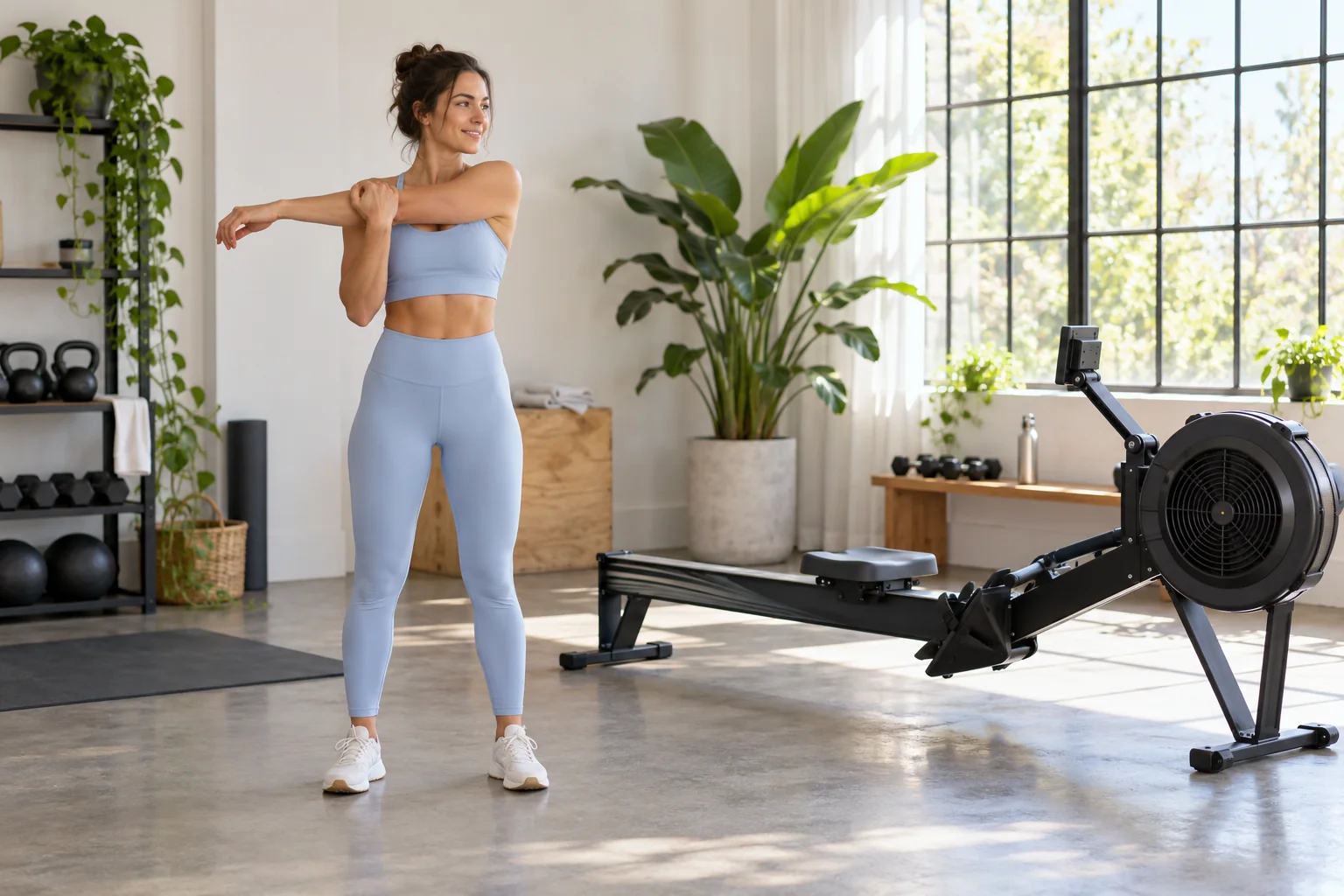
A few minutes of comfortable walking can provide an easy starting transition before sitting down. Some people prefer simple standing movements that gently explore the shoulders and hips, without forcing a stretch or trying to achieve maximum range. Select movements you already know and can perform safely. If the rower itself feels comfortable immediately, easy rowing may provide the main gradual start. There is no requirement to collect many exercises simply because a warm-up should look complicated.
If you use suitable floor mobility work, an exercise mat (paid link) can offer a comfortable nonslip surface. Leave enough room to get down and up without hitting the rower, and skip floor transitions that are difficult or inappropriate for you. The movement should prepare you for the session, not fatigue you before it begins. A long circuit of demanding squats, push-ups and planks is a separate workout. Do not add it automatically to a short rowing visit under the label of preparation.
Use easy strokes to find today's comfortable rhythm
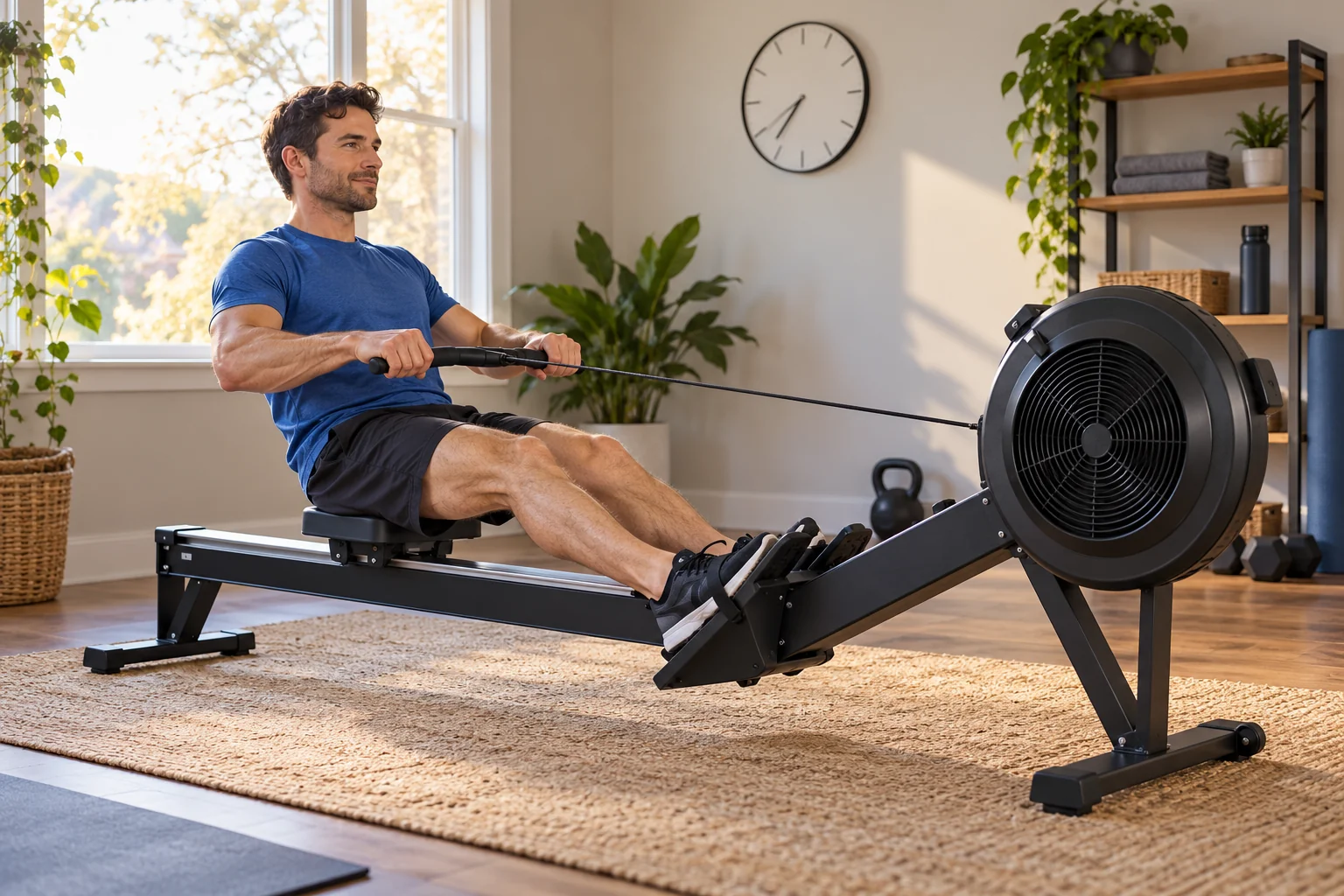
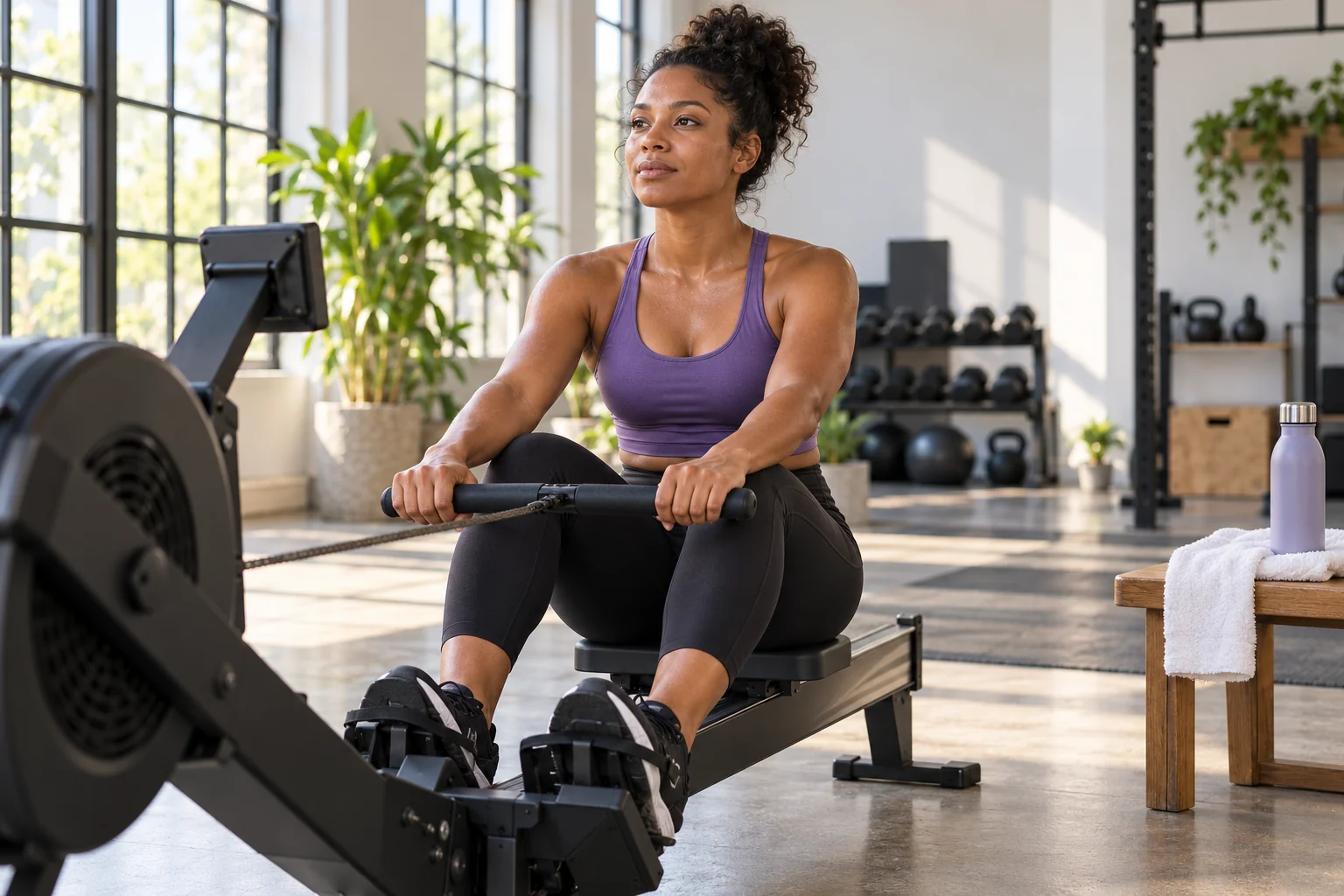
Begin with low-effort strokes and a controlled return. Notice whether the hands clear the knees, whether the grip is relaxed and whether the front position feels accessible. Resist matching your usual workout split immediately. Today may require a little more gradual movement, a shorter slide or technique feedback. The warm-up provides useful information about those choices. If the stroke remains painful or unusually difficult, choose a different appropriate plan rather than escalating effort in the hope that the problem will disappear.
Let pressure increase gently only as comfort allows. A common practical starting window is several minutes of easy rowing, with longer preparation when the planned work is more demanding. Follow any individual guidance that applies to you. Easy means easy relative to your present capacity, not a split borrowed from another rower's training sheet. You should have room to breathe and observe the movement instead of feeling that the first part of the session already requires determination to finish. Use the twenty-minute session example to see how transitions fit a short visit.
Prepare for the actual main block
For a steady session, move gradually toward the comfortable rhythm you expect to maintain. For harder intervals, once the easy stroke feels settled, you may include a few brief controlled increases in pressure separated by easy rowing. Those increases are practice for the planned change, not extra maximum-effort intervals. If they reveal rushed timing or excessive tension, reduce the planned demand. A warm-up should inform the workout rather than serve as an unquestioned introduction to a session that no longer fits.
Use the monitor or an exercise interval timer (paid link) to keep preparation from becoming hurried when the day is busy. Put any external timer on a stable surface away from the mechanism. You do not need alerts for every few seconds; broad landmarks are enough for many sessions. If a timer encourages you to progress before you feel ready, ignore that cue and adjust the schedule. The practical value of timing is making space for preparation, not declaring a precise moment when every person must be ready.
Keep the main session consistent with the preparation
Once you start the main block, preserve the technique you established at low effort. If your grip tightens, the shoulders rise or the seat rushes forward, lower the pressure and reset. You can insert an easier minute without considering the session ruined. Preparation is not a one-time shield that makes later fatigue irrelevant. The way you move during the work still matters, and your response can change as the session continues.
Do not interpret sweating as the only sign that the warm-up worked. Room temperature, clothing and individual differences affect sweating, while a familiar comfortable stroke is more directly relevant to the rowing task. Similarly, a single heart-rate reading does not establish that every movement is now appropriate. Use several practical observations: breathing, coordination, comfort and the demands of the next block. A flexible decision made from those observations is more useful than chasing one temperature, number or sensation.
Ease down rather than stopping from a hard finish
As the work ends, reduce pressure and row easily for a gradual transition. Let breathing settle while maintaining a relaxed stroke. A few minutes may fit an easy session, while harder work or individual guidance can call for more time. Avoid ending with an unplanned sprint just because the monitor shows a nearby distance milestone. That changes the final demand and can make the transition more abrupt than the plan intended.
If you prefer to walk for part of the easy finish, first stop the machine, loosen the straps and stand carefully when you feel stable. Keep the nearby area clear. Do not step directly from demanding rowing into a hurried walk while dizzy or unsteady. Concerning symptoms deserve attention rather than a routine adjustment. A cool-down is an ordinary exercise transition; it is not a treatment for chest pain, faintness or unusual shortness of breath.
Use stretching according to comfort and purpose
Gentle stretching after rowing may feel pleasant and can fit a separate flexibility goal. It is optional, and it should not be presented as a guaranteed way to eliminate soreness or remove all injury risk. Choose positions you can reach comfortably, breathe normally and avoid forcing a painful range. You do not need to stretch every body part because the rower uses several muscle groups. A few relevant comfortable movements can be more practical than a long compulsory list.
Do not claim a stretching sequence flushes lactic acid or cancels the effects of an overly demanding session. Those slogans distract from useful decisions about training load, technique and recovery. If you repeatedly feel a specific painful restriction, get appropriate advice instead of extending the hold every day. The purpose of a cool-down or stretch should be clear enough that you can judge whether it helps, rather than continue it because a generic checklist says you must. The rowing interval guide explains why harder work needs a separate readiness decision.
Make the routine fit your schedule
For a short visit, reserve time for a gradual beginning and finish before assigning the middle block. A twenty-minute appointment might allow five easy minutes, ten manageable minutes and five easy minutes, with adjustments if you need longer transitions. This is a scheduling example, not a universal prescription. If equipment setup must fit inside the appointment, shorten the middle block. Preserving a useful transition is better than cramming the same workload into fewer minutes by rowing harder.
Review which preparation details made the biggest difference. You may need a longer easy start in the morning, a simpler standing routine instead of floor work, or an earlier finish so you do not rush to the next appointment. Keep that information for the next visit. A reliable warm-up and cool-down should make the session easier to organize, not harder to begin. The best routine is one you can repeat while adapting to the planned effort and your actual comfort.
Practical Options at a Glance
| Situation | Practical option | What to consider |
|---|---|---|
| Easy session | Begin with gradual comfortable movement | Preparation does not require a long circuit. |
| Harder planned work | Allow suitable extra preparation | Change the workout if readiness is poor. |
| Finishing | Reduce demand gradually | A cool-down is not treatment for concerning symptoms. |
Frequently Asked Questions
There is no need to perform a long compulsory stretching routine before every session. Gradual comfortable movement and easy rowing can provide useful preparation. Choose mobility work according to your needs and ability, and avoid painful forced positions. More stretching does not establish readiness for a workout that is otherwise inappropriate.
No. Preparation is one part of sensible exercise planning, alongside equipment condition, technique, workload and individual suitability. Do not treat it as permission to ignore symptoms or add excessive demand. Use the beginning of the session to assess comfort and adapt the main work when the original plan no longer fits.
Plan the visit so a gradual easy finish has room. When time is limited, shorten the middle work rather than automatically removing the transition. If you need longer for breathing to settle, allow it. A timer ending is not a reason to rush off the machine while you feel unsteady or unwell.
Safety and Personal Needs
Stop rowing and seek appropriate care for chest pain, faintness or unusual shortness of breath. Persistent or worsening joint or back pain needs assessment before progression. Follow individual advice for health conditions, recent surgery or exercise restrictions. Lower impact does not establish that rowing is suitable for every condition.
This is general educational information. Individual needs vary with health, fitness, mobility and training experience.
Sources and Further Reading
- American Heart Association: Warm Up, Cool Down
- Concept2: Indoor Rowing Technique
- CDC: Measuring Physical Activity Intensity