Published by Best Fitness Routine. Editorial standards · Report a correction. Educational guidance; no individual clinical review is claimed unless a qualified reviewer is named.
Decide what the twenty minutes should accomplish
A 20-minute rowing machine workout can provide a focused opportunity for indoor cardio without requiring a long gym visit. The useful question is what those twenty minutes include. If you begin hard immediately and stop abruptly when the clock ends, the session has become a different workout from one that includes preparation and an easy finish. This guide uses a controlled format with time for both. It is an example you can adjust, not a challenge to complete at any cost.
The session is intended for adults who already understand the basic stroke and can row comfortably at an easy effort. If you are completely new, shorter practice bouts may be more appropriate. If you need longer to prepare or recover, extend the visit or shorten the main block rather than cutting those parts away. Twenty minutes is a scheduling choice, not a physiological threshold. The session should fit your ability, the machine and your response that day.
Prepare the equipment before the workout clock
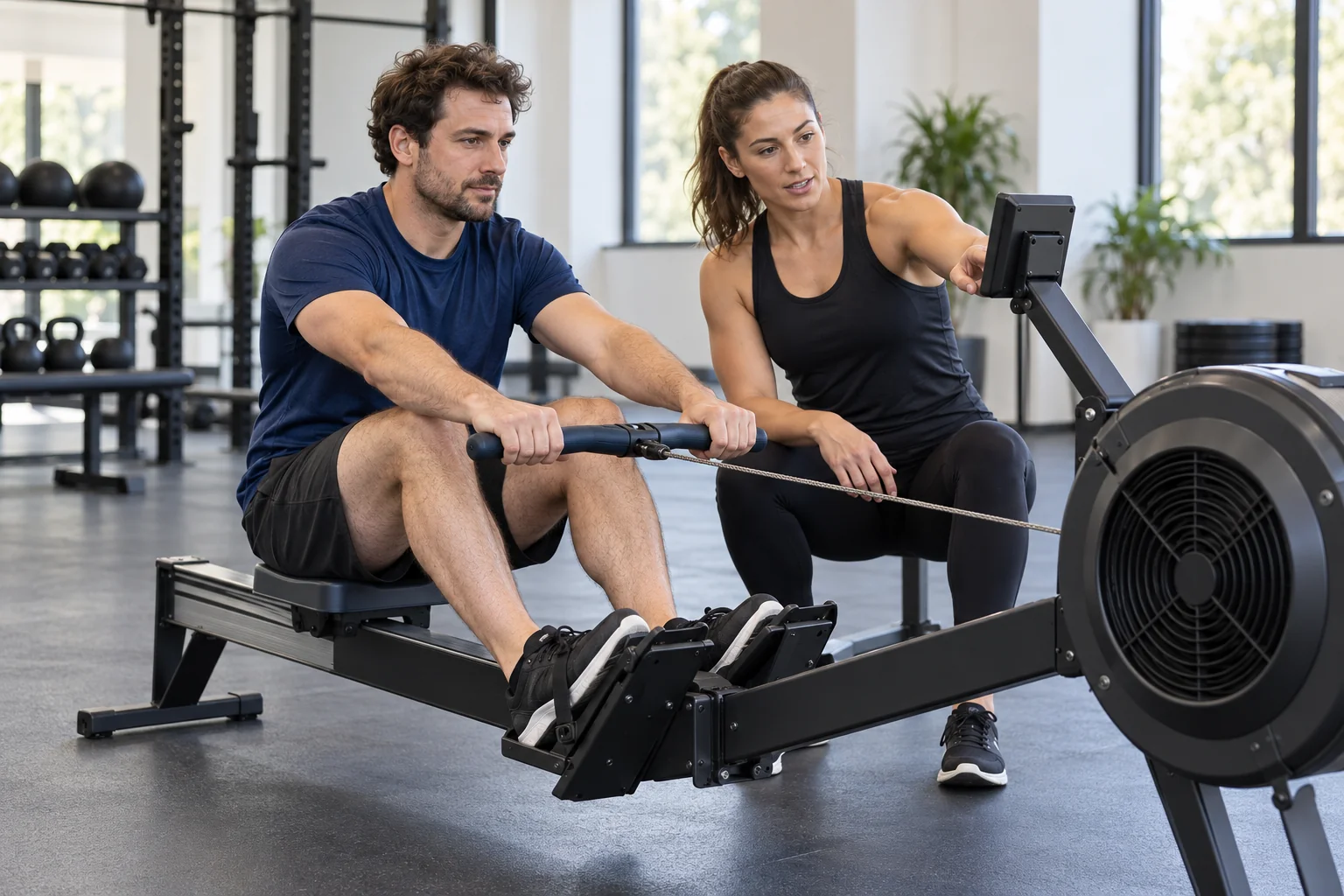
Adjust the footplates and straps, check the seat rail and learn the machine's stop or release procedure before beginning. Set the display to a format you understand, ideally with elapsed time visible. Equipment adjustments and changing clothes can happen outside the twenty-minute movement window. That distinction helps make the session realistic for a lunch break or busy morning. If your gym visit must include everything within twenty minutes, allow less time for rowing and keep the workout correspondingly easier.
Keep a water bottle (paid link) on a stable surface away from the rail so you can take a comfortable drink during a break if needed. A secure lid matters more than a large collection of specialized drink products. Check ventilation and choose clothing that will not catch on the seat or handle mechanism. Clear the space before sitting down. A simple setup you repeat each visit saves time without requiring you to rush the movement or skip a sensible preparation period. If you are choosing a rowing machine (paid link) for home, compare its operating footprint and accessible controls before deciding.
Minutes zero to five: start with easy rowing
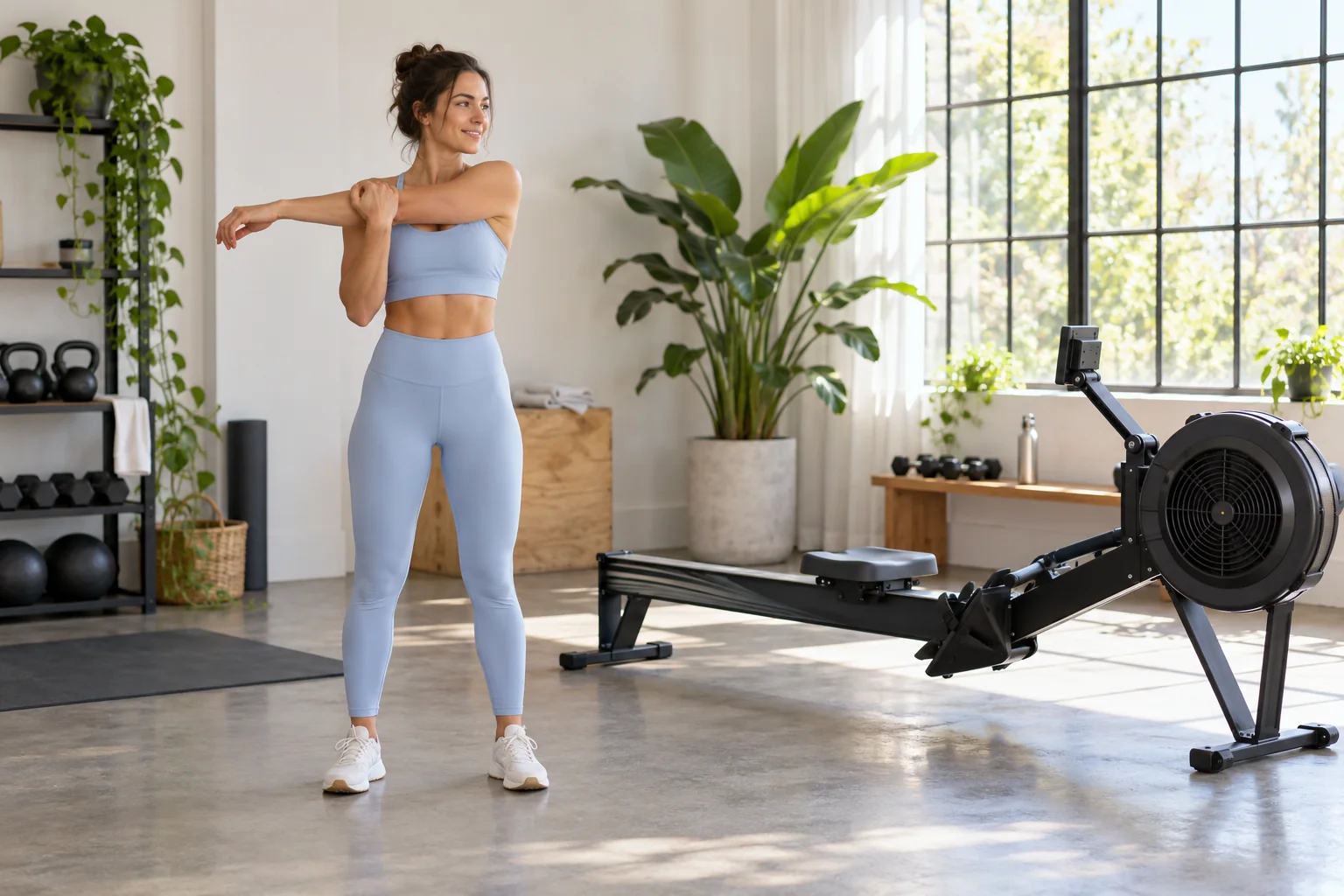
Begin with five minutes of easy strokes. During the first part, let the stroke feel relaxed and avoid chasing a split. Gradually bring the movement toward the comfortable rhythm you expect to use later. Notice whether the hands clear the knees, whether the shoulders remain low and whether the return is controlled. The warm-up is also a check on how you feel. If the movement is uncomfortable today, reduce the range, ask for help or choose a different appropriate activity.
Some people need preparation off the machine first or more than five easy minutes. In that case, use a longer visit or reduce the later work block. Do not make the warm-up faster simply to preserve the planned schedule. The aim is a gradual transition into the session, not a test that must already feel demanding. If you remain stiff, breathless or unsettled, there is no benefit in pretending the clock has established that you are ready to increase effort.
Minutes five to fifteen: use controlled work blocks
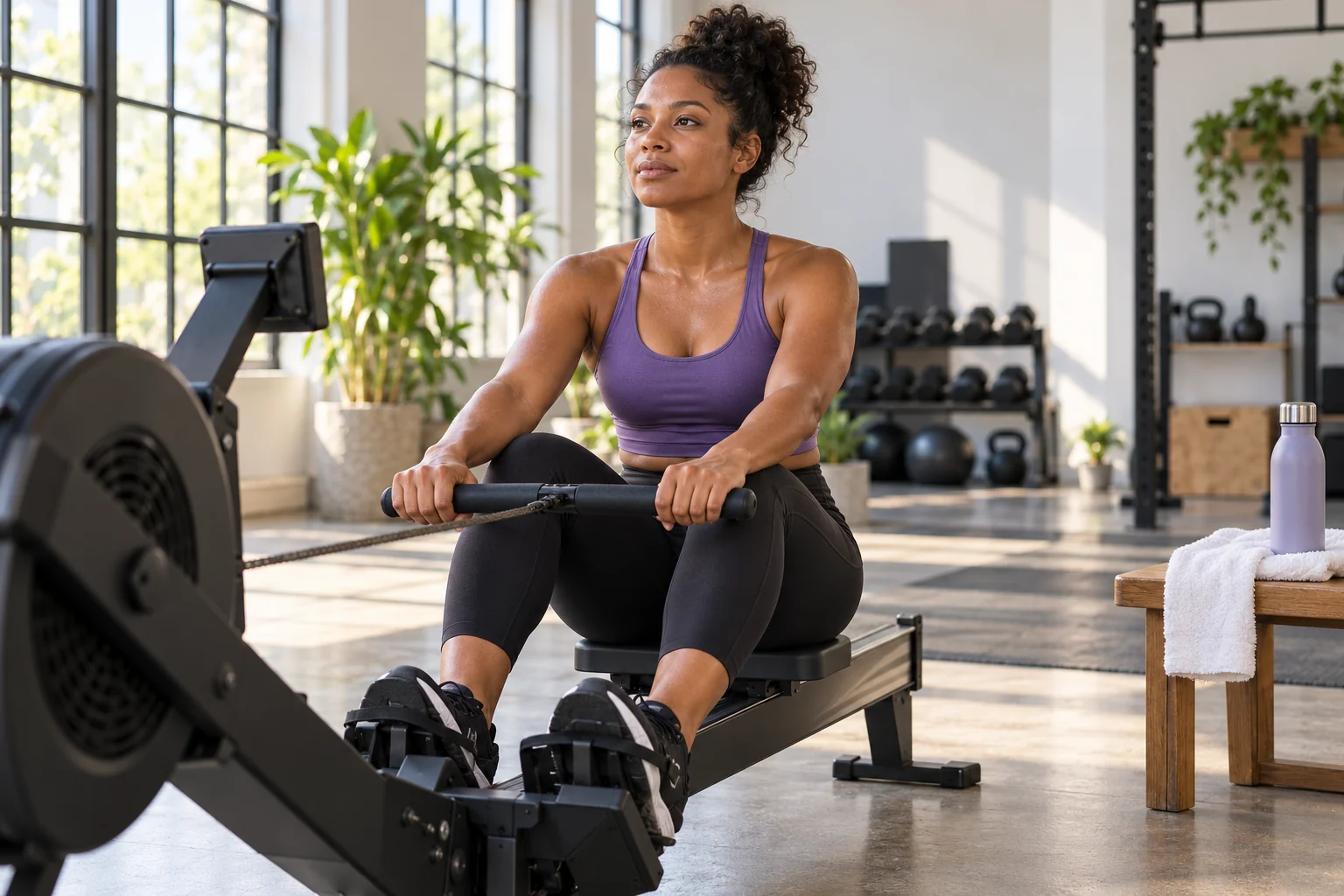
For the middle ten minutes, alternate two minutes at a comfortable steady effort with one minute of easier rowing, completing that pattern three times. Use the remaining minute as steady easy rowing. This gives six minutes of steady work and four easier minutes within the main block. The steady portions are not sprints. Choose a pressure and rhythm you can maintain while speaking in ordinary sentences, and finish each block with the stroke still under control.
There is no required split or stroke rate for everyone. A display number that is moderate for an experienced rower may be hard for a beginner. Judge the intended contrast by feel: the steady portion asks for a little more consistent work, while the easier minute clearly lowers demand. If you cannot recover enough to begin the next portion smoothly, keep the next block easy. Completing the planned minutes is less important than respecting the purpose of a controlled session. For more preparation options, see our rowing warm-up and cool-down guide.
Minutes fifteen to twenty: lower the demand
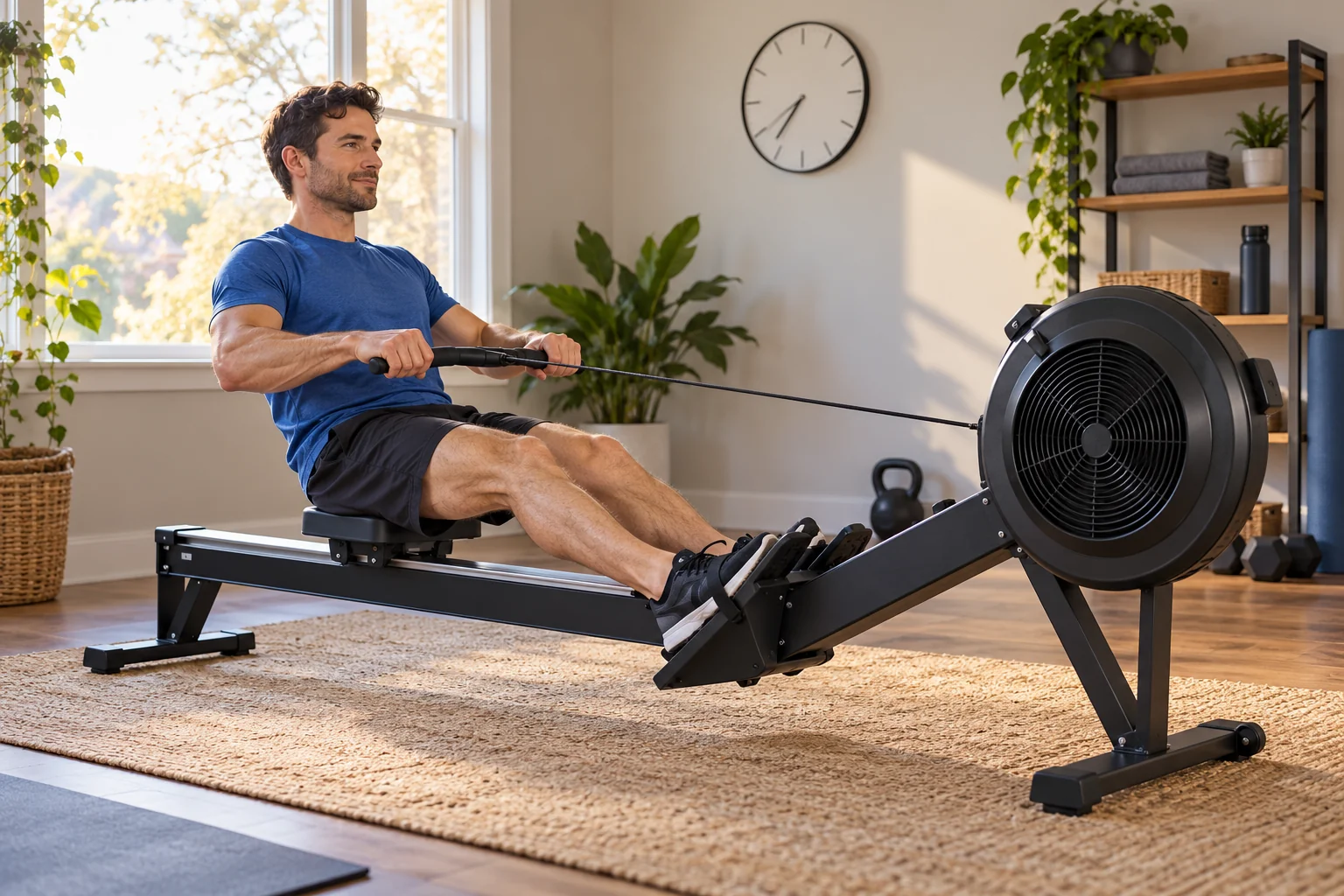
Use the final five minutes to row easily and let breathing settle gradually. Reduce drive pressure and allow a relaxed return instead of trying to set a distance record before the finish. If you prefer an easy walk for part of this period, stop the rower and get off carefully once you feel stable. Do not jump off while still struggling to breathe. Allow more time if you need it, because the end of a timer is not a signal to ignore your response.
After the session, loosen the straps, return the handle appropriately and clean contact surfaces according to gym guidance. A workout towel (paid link) can be useful for drying yourself, but use the supplied equipment-cleaning materials when those are required. Keep cloth away from the moving mechanism. These ordinary finishing habits make a short workout easier to repeat in a shared space. They also prevent the twenty-minute plan from turning into an excuse to leave equipment wet or unready for the next person.
Use the easier version when learning or returning
For a lower-demand option, keep the five-minute easy beginning and finish, but make the middle ten minutes a sequence of short easy bouts with optional pauses. You might row comfortably for one or two minutes, rest as needed and restart without rushing. That format introduces the session's structure while leaving room for technique and recovery. It is not a lesser achievement. The appropriate starting version is the one you can perform without fighting your breathing or the stroke.
If you have recently missed several weeks, start with the easier version rather than recreating your last hard session. Your previous experience helps with familiarity but does not guarantee current readiness. Compare how you feel during the visit and later in the day. Use that information to plan the next session. If comfort improves, first reduce unnecessary pauses or add a little controlled work; do not simultaneously increase every block's pressure and total time.
Make timing clear without watching every second
The rower's interval settings may allow you to program the session, but learn them before the workout rather than experimenting while pulling. A simple external exercise interval timer (paid link) can provide an audible cue if the built-in display is difficult to follow. Place it securely outside the moving area, and keep the sound appropriate for a shared gym. A timer is optional: you can use the monitor clock and straightforward elapsed-time landmarks without purchasing another device.
If technology distracts you, use a continuous easy main block instead of timed changes. Five minutes of preparation, ten comfortable steady minutes and five easy minutes is still a coherent twenty-minute format. The precise interval pattern is not the source of the workout's value. It is there to make the visit manageable and remind you to lower demand. Choose the simpler version when it helps you pay attention to technique, breathing and the practical purpose of the session.
Fit the session into the rest of your week
A short rowing workout can complement walking, resistance training and other activities. It does not automatically complete weekly activity recommendations, particularly because some of its minutes are deliberately easy. Count the work in the context of your wider routine rather than treating every minute on the seat as the same intensity. You can use the format on a day when a longer visit will not fit, while keeping a more complete activity plan across the week.
If you have already lifted heavily or completed a demanding sport session, use the easy version or move rowing to another day. A short duration does not eliminate the effect of intensity. Conversely, do not turn a manageable row into hard intervals just because it lasts only twenty minutes. The session's role may be maintaining a habit and practicing a reliable stroke. That is a valid purpose without requiring an exhausting finish or a promise of rapid body changes. Our four-week beginner plan offers shorter practice formats before this session.
Review one useful detail after each visit
Note whether the steady blocks felt controlled, whether the easier minutes were sufficient and whether the timing fit your schedule. A brief observation such as second block felt rushed gives you a clear next adjustment. You can keep the first block steady and make the next easier, or reduce the pressure throughout. Review several comparable sessions before deciding that a faster split is necessary. Enjoyment, confidence and the ability to return also matter when evaluating a short workout.
When the format becomes familiar, change one feature deliberately. You might use a continuous ten-minute main block, slightly extend one steady portion or keep the same plan with smoother technique. More intense work belongs in a separate decision, especially if your health or training experience makes it inappropriate. The twenty-minute plan succeeds when it gives a busy day a realistic place for movement, with enough flexibility to respect your actual readiness and recovery.
Practical Options at a Glance
| Situation | Practical option | What to consider |
|---|---|---|
| First five minutes | Row easily | Allow longer preparation if needed. |
| Middle ten minutes | Use controlled steady and easier blocks | The work portions are not sprints. |
| Final five minutes | Ease down gradually | Extend the finish if you need it. |
Frequently Asked Questions
Yes. The example reserves five minutes for easy preparation, ten minutes for controlled middle work and five minutes for an easy finish. Adjust those periods when your circumstances need longer transitions. If the whole appointment must include setup and changing, shorten the middle work rather than removing preparation automatically.
No. The steady portions are intended to remain controlled and manageable, with clearly easier minutes between them. Intervals do not automatically make a workout high intensity. If you want genuinely hard work, that is a separate training decision requiring appropriate readiness, technique and recovery rather than a renamed version of this session.
A comfortable continuous ten-minute middle block is a reasonable alternative when it suits your ability. Keep the easy beginning and finish, and reduce demand if technique becomes rushed. The alternating format is there to make pacing manageable; it is not mandatory or inherently superior to every steady session.
Safety and Personal Needs
Stop rowing and seek appropriate care for chest pain, faintness or unusual shortness of breath. Persistent or worsening joint or back pain needs assessment before progression. Follow individual advice for health conditions, recent surgery or exercise restrictions. Lower impact does not establish that rowing is suitable for every condition.
This is general educational information. Individual needs vary with health, fitness, mobility and training experience.
Sources and Further Reading
- American Heart Association: Warm Up, Cool Down
- CDC: Measuring Physical Activity Intensity
- Concept2: Indoor Rowing Technique