Published by Best Fitness Routine. Editorial standards · Report a correction. Educational guidance; no individual clinical review is claimed unless a qualified reviewer is named.
Start from your experience rather than an age label
Rowing machine workouts after 50 can suit some adults seeking an indoor cardio option, but turning fifty does not establish one fitness level or one appropriate routine. A regular exerciser, someone returning after a long break and someone managing a health condition need different starting points. Use your current ability, comfort and exercise history to guide the first session. Age provides context, not a reason to copy another person's pace or assume every low-impact machine will feel suitable.
This guide offers practical considerations for getting started on a conventional indoor rower. It does not promise that rowing prevents every age-related problem or is safe for every joint condition. If illness, recent surgery, persistent symptoms or medical advice affects activity, ask an appropriate professional about the specific movement. Describe the repeated hip and knee bending, seated position and handle pull. A clear description supports a more useful discussion than asking whether exercise in general is allowed.
Choose access and support before intensity
Check how comfortably you can sit on the machine and get off again. Some rowers have low seats, and the access itself may be more difficult than the stroke. Look for equipment and a setup that suit your needs, and ask staff for assistance when trying it. Do not pull on a loose monitor or moving handle for support while standing. Follow the manufacturer's instructions and use an appropriate stable support arrangement when advised.
At home, a rowing machine floor mat (paid link) may protect a suitable floor under the machine, but it cannot correct a low seat, awkward access or structural instability. Measure operating clearance as well as storage space. Keep the path to the machine free of rugs, cords and other objects. If your balance or mobility makes access uncertain, try the rowing machine (paid link) under qualified supervision before buying. A purchase photograph rarely shows the transition into and out of the seat, yet that transition can determine whether regular use is practical.
Learn a comfortable stroke with enough instruction
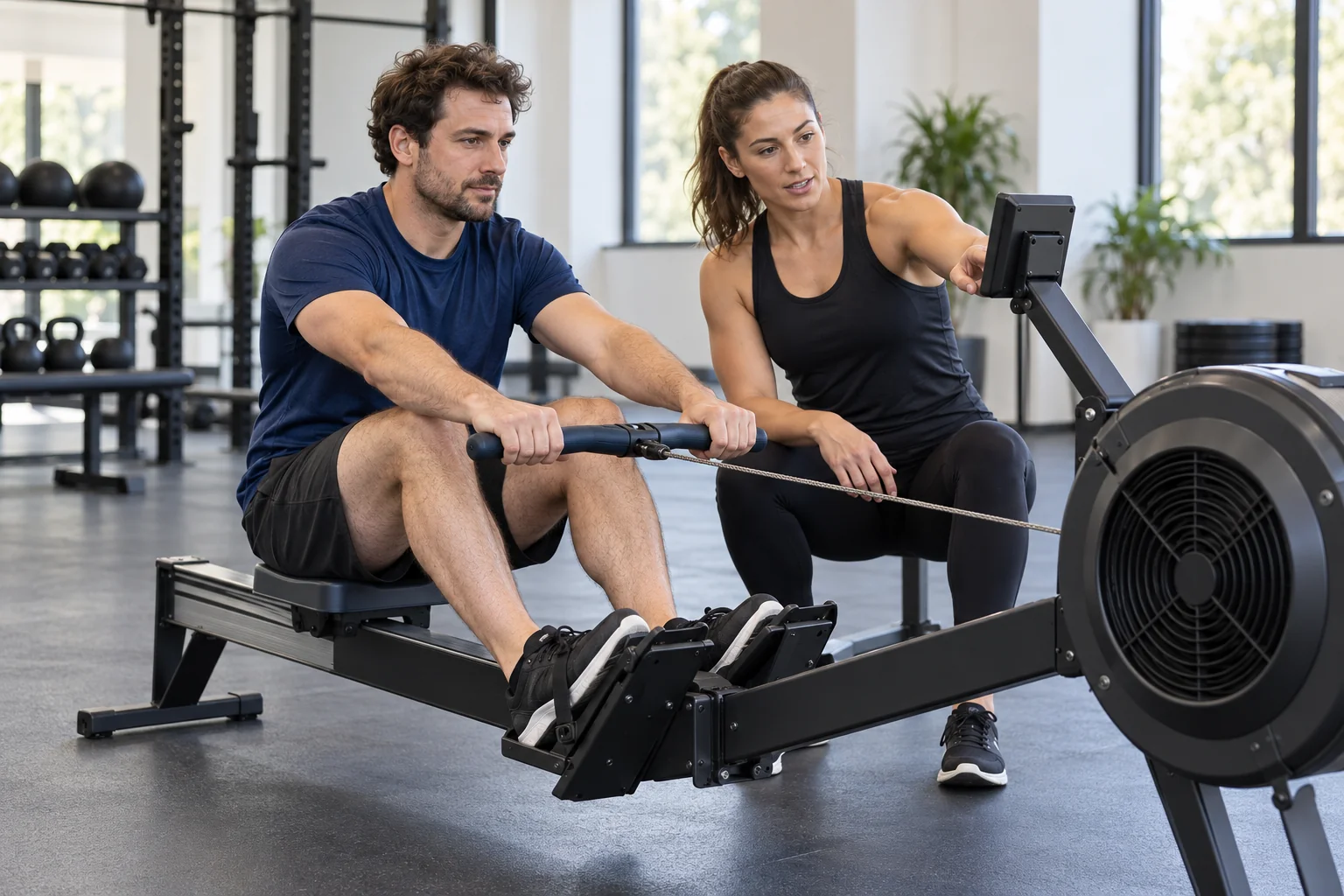
Adjust the footplates and straps to support the feet without pressure that becomes uncomfortable. Row easily and let the legs begin the drive, followed by a controlled torso movement and handle pull. On the return, let the hands clear the knees before sliding forward. Use a range you can manage without forcing the front position. A qualified instructor can help adapt the setup and identify whether one simple timing change makes the stroke more comfortable.
You do not need a competitive stroke or a large backward lean to begin indoor rowing. Avoid forcing extra reach because a video shows a younger athlete moving through a different range. If symptoms persist, stop and seek advice rather than assuming you need more flexibility practice. Lower impact refers to one aspect of the activity, while repeated movement and loading still matter. Comfortable technique and individual suitability deserve attention regardless of how the machine is marketed.
Use short easy bouts as an optional beginning
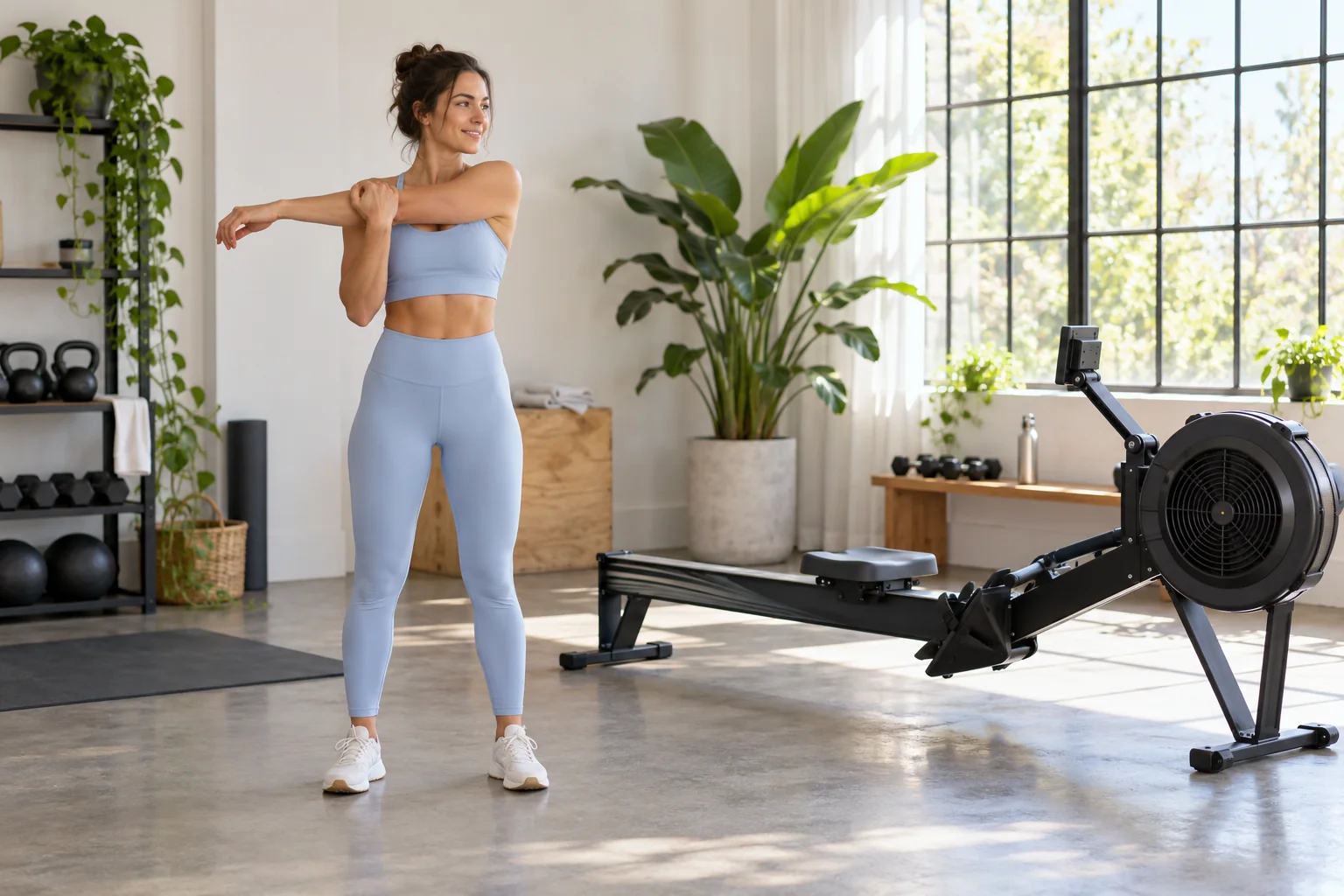
For someone unfamiliar with rowing, a few easy bouts of one or two minutes with comfortable breaks can introduce the movement. Begin with gentle preparation and finish gradually. This is an example of a low-demand familiarization session, not a medical prescription or a requirement to reach a particular total. An experienced adult may begin with a longer familiar block, while someone with individual restrictions may need a different activity or a supervised plan.
Keep the effort low enough to concentrate on the stroke and ordinary breathing. If the last part becomes hurried, shorten the next bout rather than squeezing in more repetitions. Notice how you feel later and the following day before adding time. The first visit is useful for learning foot settings, access, monitor controls and your response. It should not be turned into a test of whether you can still match a workout from a previous stage of life. Our beginner rowing plan offers a flexible structure for learning.
Judge effort in relation to your own capacity
A pace that is easy for one person may be demanding for another. Use how you feel and appropriate individual guidance rather than a universal split target. During generally moderate activity, being able to talk provides a practical check, although it is not a complete safety assessment. Medications and health conditions can also influence how you interpret heart-rate numbers. Ask about those factors if you intend to use a sensor to control training effort.
If a compatible heart rate chest strap (paid link) is useful for your routine, verify its connection to the exact rower or app before purchasing. The monitor is optional, and a reading should not override pain, dizziness or unusual breathlessness. Avoid comparing your heart rate with another gym member's reading as though the higher number represents a better session. A device can help show your own trends under similar conditions, while comfort and professional guidance remain part of the decision.
Progress through consistency before harder sessions
Repeat a manageable format until it feels familiar. Then add a small amount of comfortable rowing time to one visit and review your response. Keep the machine setup and overall effort similar while assessing that change. If you increase duration, resistance and frequency together, it becomes harder to identify what created excessive fatigue. Progress can also mean a smoother return, easier equipment access or greater confidence using the monitor, without any increase in intensity.
Use a training journal (paid link) to keep one or two observations after each visit: time rowed, general effort and comfort during or afterward. A brief record can help you explain a recurring problem to an instructor or health professional. It should not become a rigid scorecard that makes rest feel unacceptable. If appointments, travel or family needs interrupt the routine, resume with a familiar manageable session rather than trying to make up every missed minute in one day.
Keep strength and balance in the wider routine
Rowing is one activity, not a complete substitute for all other movement. Suitable muscle-strengthening work can address demands that a repeated rowing stroke does not cover. For adults 65 and older, U.S. guidance also emphasizes balance activity alongside aerobic and strength work. The age-65 guidance should not be presented as a separate rule triggered at fifty. The useful principle is to plan a range of appropriate activities rather than assuming a seated machine covers every everyday function.
Walking, standing movements, appropriate resistance exercises and balance practice may remain useful according to your ability and needs. If getting on the rower improves but standing tasks remain difficult, that distinction deserves attention. A plan should support what you want to do outside the gym, not just increase distance on a monitor. A qualified professional can help choose the extra activities when conditions or fall concerns make a generic online routine insufficient.
Plan around recovery and ordinary responsibilities
Begin with rowing visits that fit between other demanding activities rather than crowding them into every available day. Physical work, long walks, caregiving and strength sessions can all contribute to fatigue. You do not need to count them as identical workouts to recognize their effect on recovery. An easier row may fit a busy day better than hard intervals. Keep the purpose clear so a short session does not quietly become another demanding task.
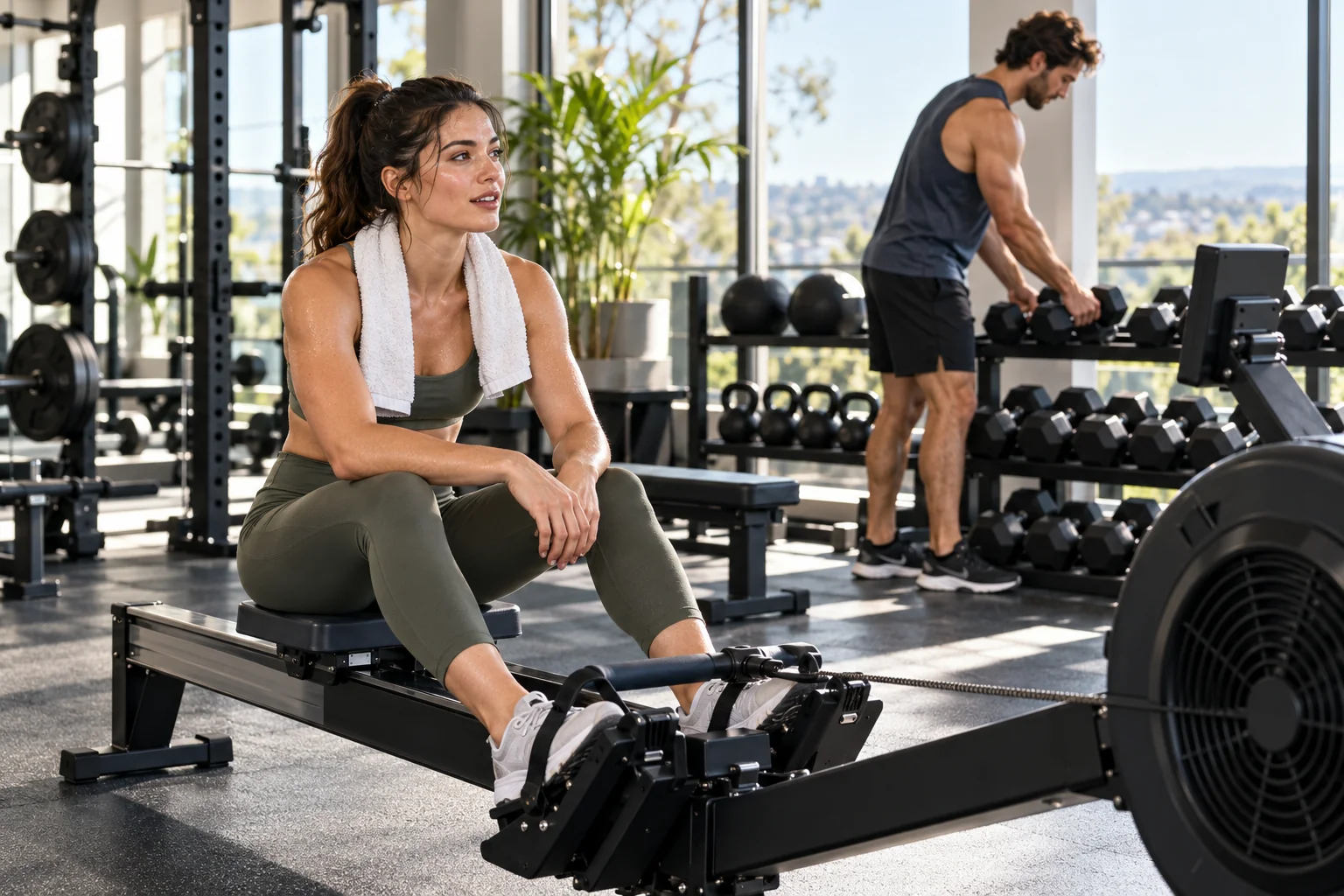
Allow enough time for a gradual start, a comfortable finish and any necessary equipment transitions. Bring appropriate glasses if you need them to read the monitor, and ask staff to explain controls that are unclear. Choose a quieter time if a crowded gym makes setup rushed. These details may sound ordinary, but they can make the difference between a usable routine and a stressful visit. Practical access often matters more than buying a machine with many advanced training features. See the combined-training guide when planning the wider week.
Recognize when to pause and seek help
Stop exercise and seek appropriate care for concerning symptoms, including chest pain, faintness or unusual shortness of breath. Persistent joint or back pain also needs assessment before you keep progressing. Do not use a lower resistance setting as a reason to continue through a symptom that remains unexplained. If you were given specific medical restrictions, follow them and ask how they apply to rowing. The routine should adapt to your health information instead of trying to reinterpret it.
When the issue is ordinary technique uncertainty, seek an instructor's feedback and practice at manageable effort. When the issue is health-related, use the relevant health professional rather than relying on equipment advice. These are complementary kinds of support. The aim of rowing after fifty is a comfortable, useful addition to your activity options. A modest beginning with clear adjustments can serve that aim more reliably than a demanding plan that treats age as either a limitation or a challenge to defeat.
Practical Options at a Glance
| Situation | Practical option | What to consider |
|---|---|---|
| Low seat access | Try the transition with support | Follow equipment instructions. |
| Starting again | Use short comfortable practice bouts | Current ability matters more than age alone. |
| Wider fitness | Include suitable strength and balance work | Seated rowing does not cover every function. |
Frequently Asked Questions
No. Low impact describes one aspect of the movement and does not establish suitability for every condition. Rowing still involves repeated hip and knee movement and trunk control. Discuss persistent symptoms or relevant restrictions with an appropriate professional, and describe the actual machine movement rather than relying on its marketing label.
Age alone does not set one suitable rhythm. Experience, comfort, health and the session purpose matter. Start with a controlled stroke that gives you time for the return, and use instruction if needed. A younger athlete or another adult your age may use numbers that do not fit your circumstances.
Do not assume it covers all balance needs. For adults 65 and older, U.S. guidance includes balance activity alongside aerobic and strengthening work. Consider suitable standing and everyday movement separately, according to your abilities and advice. Improved rowing confidence does not automatically show that every functional or balance goal has been addressed.
Safety and Personal Needs
Stop rowing and seek appropriate care for chest pain, faintness or unusual shortness of breath. Persistent or worsening joint or back pain needs assessment before progression. Follow individual advice for health conditions, recent surgery or exercise restrictions. Lower impact does not establish that rowing is suitable for every condition.
This is general educational information. Individual needs vary with health, fitness, mobility and training experience.
Sources and Further Reading
- CDC: Activity Guidance for Adults 65 and Older
- CDC: Measuring Physical Activity Intensity
- Concept2: Indoor Rowing Technique