The Simple Difference Between Probiotics and Prebiotics
Probiotics are live microorganisms that, when administered in adequate amounts, are intended to confer a health benefit. The important details are the specific organism, strain, dose and condition being studied. “Contains probiotics” is therefore less informative than knowing exactly which strains are present and whether that combination has evidence for the reason you are using it.
Prebiotics are not live organisms. They are compounds that are selectively used by microorganisms and can produce a health benefit. Many prebiotic compounds are fibers or fiber-like carbohydrates, but not every type of fiber meets the technical definition of a prebiotic.
Foods That Can Provide Live Cultures
Yogurt that lists live and active cultures is one of the most familiar probiotic foods. Kefir can also contain a mixture of bacteria and yeasts. Some fermented vegetables and other cultured foods may contain live organisms when they have not been heat-treated after fermentation.
Fermentation does not guarantee a probiotic effect. A fermented food can be nutritious even if the microorganisms are no longer alive, and a food containing live microbes is not automatically proven to treat a health condition. Our fermented foods guide explains these distinctions in practical terms.
Foods That Supply Prebiotic Substrates
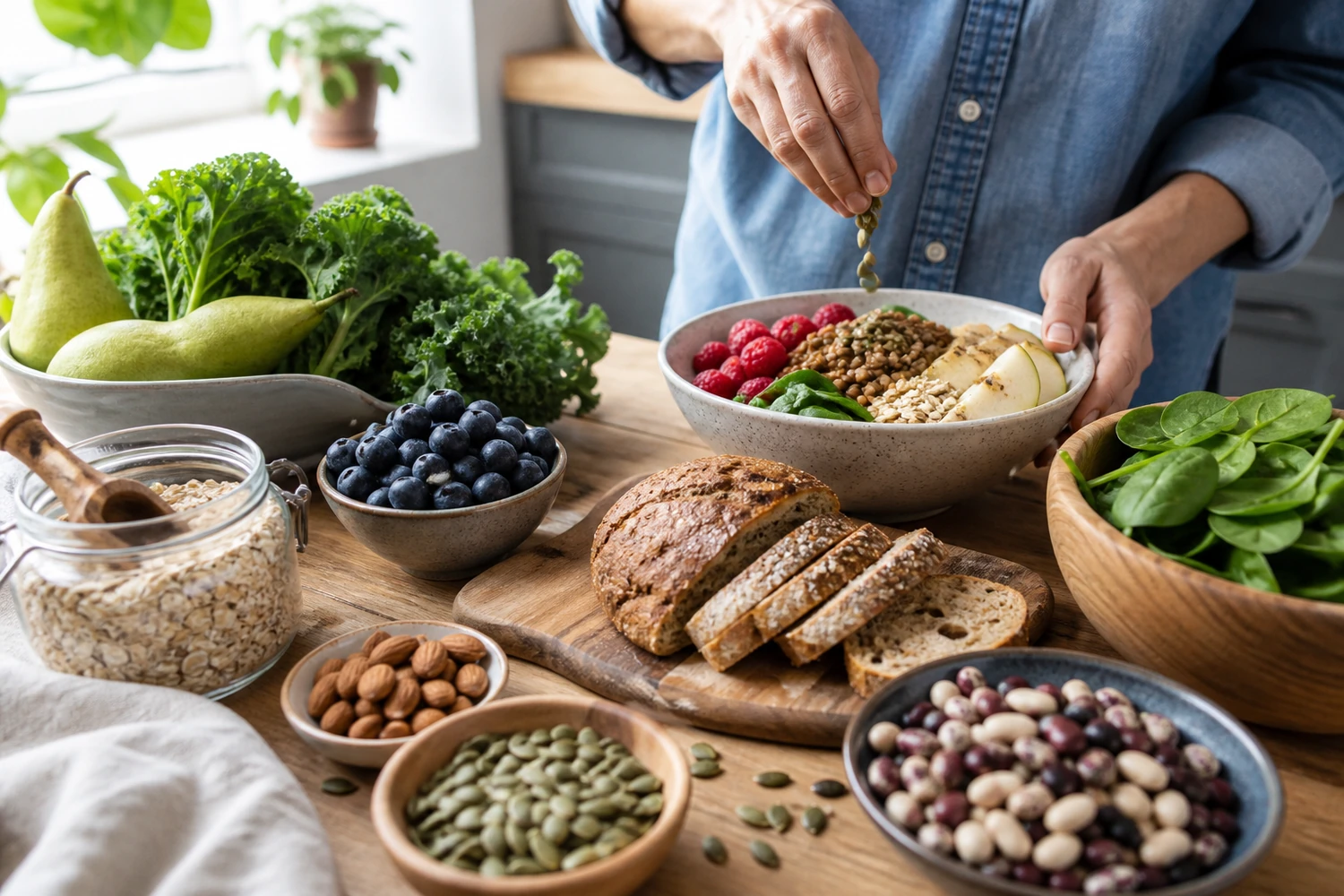
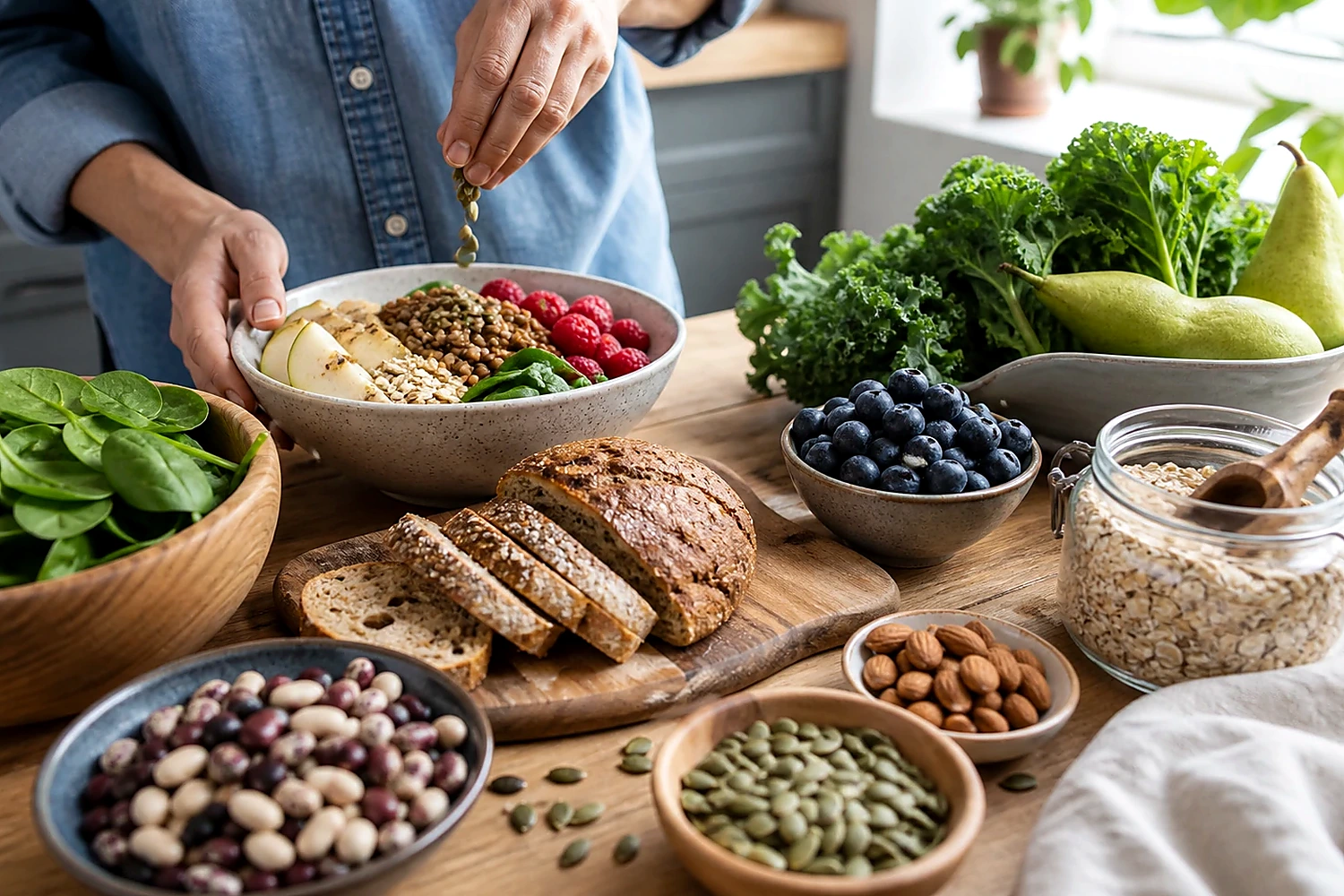
Foods commonly discussed for prebiotic fibers include onions, garlic, leeks, asparagus, oats, barley, bananas, beans and other plant foods. The exact compounds differ by food, and tolerance varies. You do not need to eat every “prebiotic food” daily; diversity across the week is more realistic.
For many people, a broader high-fiber pattern matters more than chasing one ingredient. If you are increasing fiber, do it gradually and use our dietary fiber guide to avoid the common mistake of doubling intake overnight.
Do Probiotics and Prebiotics Need to Be Taken Together?
No. You can eat probiotic foods and prebiotic-rich foods at different meals and still have a nutritious diet. Products that intentionally combine specific probiotics with specific substrates are often called synbiotics, but a true synbiotic is more than simply putting yogurt and fiber on the same plate.
The separate synbiotics guide explains how researchers define complementary and synergistic combinations and why supplement labels can be confusing.
How to Choose Between Food and Supplements
If your goal is general wellness, food is often the simplest starting point because it provides protein, fiber, vitamins, minerals and other nutrients at the same time. A serving of yogurt with berries and oats, for example, contributes more than just microbes or prebiotic fiber.
Supplements may be considered for specific situations, but the evidence is strain- and condition-specific. A product with a very large CFU number is not automatically better. If you are considering a supplement for persistent diarrhea, IBS symptoms, after antibiotics, or another medical reason, ask a clinician or pharmacist whether evidence supports a particular product.
What If Prebiotic Foods Cause Gas or Bloating?
Gas is a normal product of microbial fermentation, so adding large amounts of fermentable carbohydrate can increase symptoms. People with IBS may be especially sensitive to certain fructans, galacto-oligosaccharides and other FODMAPs. That does not mean these foods are unhealthy; it means the dose and individual tolerance matter.
Start with smaller portions and build slowly. If bloating is frequent or painful, our bloating and gas guide explains common causes and red flags that should not be blamed on “bad gut bacteria” without evaluation.
Reading Labels Without Getting Misled
For yogurt and kefir, look for language indicating live cultures and check added sugar if that matters for your overall eating pattern. For supplements, look for the genus, species and strain rather than only a total CFU count. Also check storage instructions and the expiration date.
Prebiotic powders may use ingredients such as inulin, fructooligosaccharides or galactooligosaccharides. These can be useful, but larger doses are more likely to cause gas or cramping. A food-first approach usually makes it easier to adjust portions.
Common Probiotic and Prebiotic Myths
Probiotics do not simply “replace all the good bacteria” in your gut, and prebiotics are not a cleanse. Most probiotic organisms do not permanently colonize the intestine. Their effects, when they occur, may come from temporary interactions with the existing ecosystem.
It is also inaccurate to say everyone needs a probiotic. Evidence varies widely by condition, strain and outcome. General gut health still depends on the larger pattern of diet, sleep, activity, medications and medical conditions.
Easy Ways to Use Both in Real Meals
Try yogurt with oats and berries at breakfast, a bean-and-vegetable soup at lunch, or a dinner with whole grains, onions, garlic and a small side of fermented vegetables if tolerated. These are ordinary meals, which is the point: gut-supportive eating does not need to look like a supplement shelf.
If you want help building meals around several food groups, the balanced plate guide gives a practical structure that works whether or not you are thinking about the microbiome.
A Simple Food-First Checklist
- Choose several different plant foods across the week.
- Add live-culture yogurt or kefir if you enjoy and tolerate dairy.
- Increase onions, garlic, beans, oats and other fermentable foods gradually.
- Do not assume a larger probiotic dose is automatically better.
- Use supplements for a clear reason rather than vague “gut balancing.”
How to Build Probiotic and Prebiotic Variety Across a Week
You do not need to combine every gut-health food in one meal. A practical week might include yogurt or kefir on several mornings, beans or lentils in two or three meals, oats or barley on other days, and onions, garlic, asparagus, bananas or other plant foods throughout the week. This spreads fermentable substrates across different foods instead of relying on one powder or supplement.
Variety also makes the plan nutritionally stronger. Beans provide protein and minerals, oats provide whole-grain carbohydrates, berries add polyphenols, and fermented dairy can contribute protein and calcium. Thinking in terms of food groups prevents “gut health” from becoming a narrow list of special ingredients.
When IBS and FODMAP Sensitivity Change the Plan
Many foods that are naturally rich in prebiotic compounds are also high in FODMAP carbohydrates. For someone with IBS, large portions of garlic, onion, wheat-based foods or certain legumes may worsen pain, gas or urgency. That does not mean the microbiome “hates” those foods. It means symptom tolerance needs to be considered.
A short, structured low-FODMAP trial may be appropriate for some people under professional guidance, but long-term unnecessary restriction can reduce food variety. Reintroduction is important. If IBS is part of the picture, use symptom-based guidance rather than forcing a food simply because it is labeled prebiotic.
A Note for Children, Older Adults and Medically Complex People
Children, older adults and people with chronic disease may have different nutrition needs, medication use and risk factors. A probiotic that is studied in healthy adults may not have the same evidence in another age group. Likewise, aggressive fiber changes can be difficult in people with swallowing problems, poor appetite or certain gastrointestinal conditions.
For these groups, food-first choices are often reasonable, but individualized advice matters more. The goal should be adequate nutrition and symptom control, not maximizing a theoretical microbiome score.
Do You Need Both Every Day?
No. The gut microbiome responds to the broader pattern of eating over time, not to whether every day contains a formally probiotic and prebiotic food. Someone who eats yogurt a few times per week and a varied plant-rich diet on most days can still have a strong nutritional pattern. Missing one category on a busy day does not undo anything.
This matters because rigid gut-health rules can make eating unnecessarily stressful. Aim for repeated exposure to varied plant foods and use cultured foods when you enjoy them. Consistency across weeks is more useful than perfection at every meal.
Practical Takeaway
Probiotics are live microorganisms; prebiotics are compounds used by microbes. Both can fit into a healthy diet, but they are not interchangeable and they are not magic. For most people, a varied food pattern is the strongest foundation, while supplements should be chosen for specific evidence-based reasons rather than marketing claims.
Frequently Asked Questions
Many yogurts contain live cultures, but check the label because processing and heat treatment can affect whether live organisms remain.
No. Many fibers are beneficial, but a prebiotic has a more specific definition involving selective use by microorganisms and a demonstrated health benefit.
Usually yes for healthy adults, but larger amounts of prebiotic fibers can cause gas or bloating. A specific medical condition may change what is appropriate.
Often they do not. Many strains are detected only temporarily, and benefits do not require permanent colonization.
There is no universal winner. Foods are useful for general nutrition; supplements may have evidence for particular strains and conditions.
Safety and Scope
This article is general nutrition education. People with severe illness, significant immune suppression, central venous catheters, or complex medical conditions should discuss probiotic products with a healthcare professional before use.