
What Is the Gut Microbiome?
The gut microbiome is the collection of microorganisms and their genetic material living mainly in the large intestine. It is not a single organ and it does not have one “perfect” composition. Two healthy people can have noticeably different microbial communities because diet, age, medications, geography, genetics, early-life exposures and many other factors shape the ecosystem over time.
These microbes interact with food components that reach the colon, especially fibers and other compounds the body does not fully digest in the small intestine. Some microbes produce metabolites such as short-chain fatty acids that can be used by intestinal cells and can participate in signaling throughout the body. That is one reason gut health is increasingly studied beyond digestion alone.
Why Microbial Diversity Gets So Much Attention
Microbial diversity is often used as a broad description of how many different organisms and functions are represented in a sample. In population research, greater diversity is sometimes associated with favorable health patterns, but diversity by itself is not a diagnosis. A microbiome can change temporarily after travel, illness, antibiotics or a major diet shift without automatically meaning something is wrong.
A more useful goal for everyday life is to support a resilient ecosystem rather than chase a specific diversity score. A varied eating pattern, regular activity, adequate sleep and avoiding unnecessary antibiotics are practical habits that also support health in many other ways. If you want a broader foundation, our daily digestive health guide covers meal timing, hydration and common warning signs.
What Gut Microbes Actually Do
Gut microbes help break down some carbohydrates and plant compounds that human digestive enzymes cannot fully process. They also interact with bile acids, contribute to the production or modification of certain vitamins and metabolites, and communicate with the intestinal immune system. These functions are complex and overlapping, so it is misleading to divide every organism into “good” or “bad” categories.
Researchers are also studying how microbial metabolites may influence glucose regulation, inflammation, the nervous system and other organs. Much of this work is promising, but a biological connection does not automatically prove that changing one bacterial species will treat a disease. For readers interested in the nervous-system side of this field, the gut-brain axis guide explains what is established and what remains uncertain.
Food Patterns That Support the Microbiome
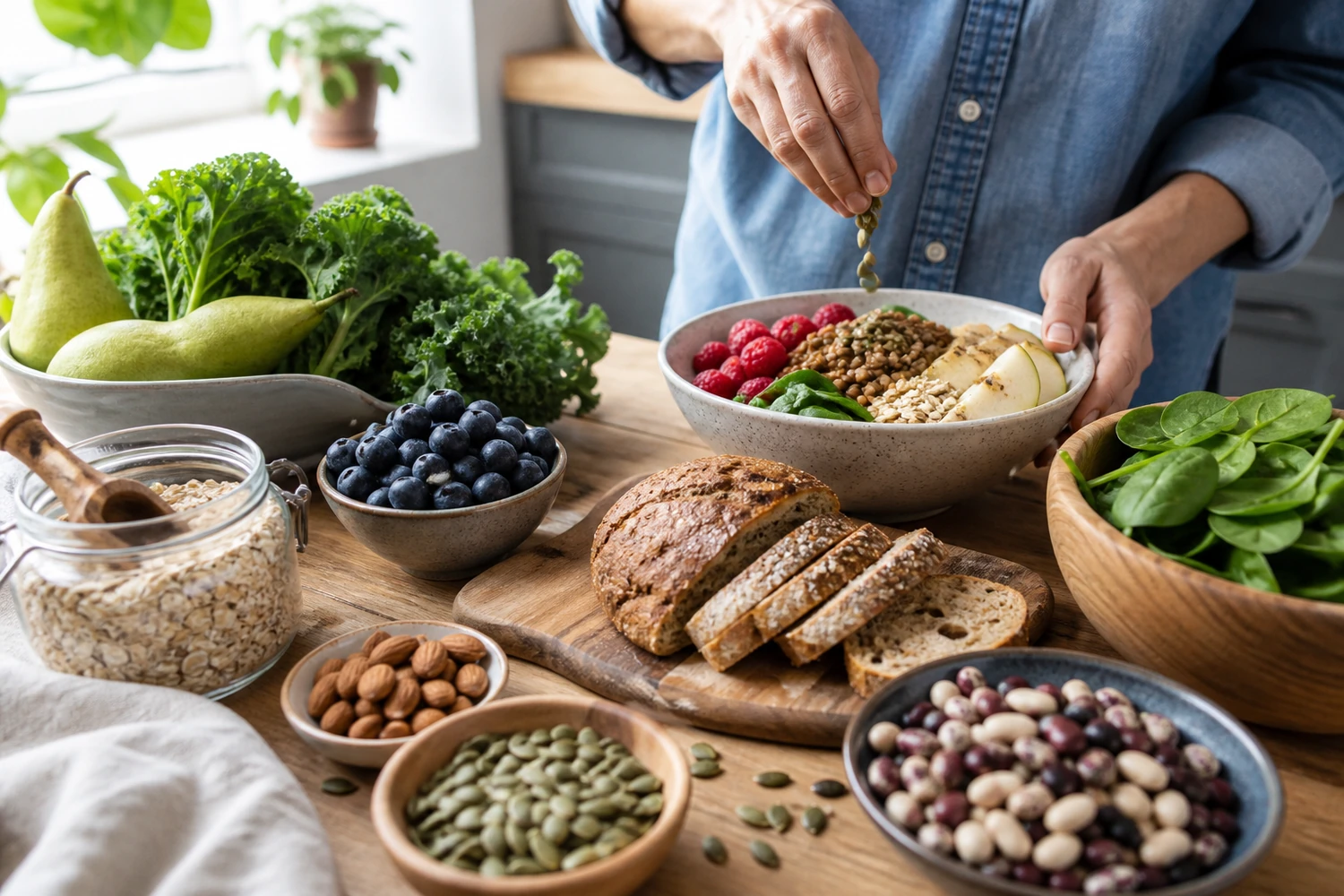
The strongest practical nutrition message is variety. Vegetables, fruits, beans, lentils, whole grains, nuts and seeds provide different fibers and plant compounds, which means they offer different substrates for gut microbes. You do not need an exotic “microbiome diet.” A grocery cart with several colors, several plant families and minimally processed staples is usually more realistic and sustainable.
Increase fiber gradually if your current intake is low. A sudden jump can worsen gas or bloating, particularly in people with irritable bowel syndrome or other digestive conditions. Our dietary fiber guide explains how to increase fiber more comfortably and why hydration matters as intake rises.
Where Fermented Foods Fit
Fermented foods such as yogurt with live cultures, kefir, kimchi and some sauerkraut contain microbes or fermentation products, but the organisms do not always permanently colonize the intestine. Their value is better understood as part of an overall eating pattern rather than as a way to “replace” your microbiome.
Some people tolerate fermented foods well; others may notice symptoms from lactose, acidity, histamine, spice or large portions. Start with normal food portions instead of treating fermented foods like medicine. The dedicated fermented foods guide compares common choices and explains label details that matter.
Sleep, Stress and Physical Activity
Diet is not the only influence on the gut ecosystem. Sleep timing, stress, physical activity, smoking, alcohol use and illness can all affect the digestive environment directly or indirectly. The research is still evolving, but these factors are worth addressing because they have broad benefits even when microbiome effects cannot be predicted for an individual.
Regular movement is a practical example. Walking and resistance training support cardiovascular and metabolic health while helping many people maintain regular bowel habits. Sleep and stress management also reduce the temptation to make extreme food changes based on symptoms that may have several causes.
Common Things That Can Disrupt the Microbiome
Antibiotics are one of the clearest examples because they are designed to suppress bacteria. The size and duration of the effect vary widely depending on the drug, dose, duration and individual. Other medications, acute gastrointestinal infections, severe dietary restriction and major lifestyle changes can also shift microbial composition.
The important point is not to fear necessary treatment. Antibiotics can be lifesaving and should be taken when appropriately prescribed. The goal is to avoid unnecessary use and then return to a normal, nutritionally adequate routine afterward. Our gut health after antibiotics guide explains this in more detail.
Do You Need a Microbiome Test?
For most healthy people, an at-home microbiome report is not required to make sensible diet or lifestyle choices. Commercial tests can identify microbial DNA, but interpretation is difficult because reference ranges, laboratory methods and health claims vary. A result may look precise while still having limited clinical value.
If you have persistent diarrhea, blood in stool, unexplained weight loss, severe abdominal pain or symptoms that wake you from sleep, the priority is medical evaluation rather than a wellness microbiome score. Standard clinical testing is chosen around symptoms and risk factors, not around a single “good bacteria” target.
A Practical Seven-Day Starting Plan
Instead of trying to transform your microbiome overnight, pick a few habits you can repeat. Add one extra plant food to two meals each day, choose a whole-grain or bean-based option several times during the week, and include a fermented food if you enjoy and tolerate it. Keep water available and stay physically active.
At the end of the week, judge the plan by comfort, energy, bowel regularity and whether it fits your life—not by a promise of “detoxing” the gut. If a new food clearly worsens symptoms, reduce the portion and reintroduce more gradually rather than forcing it.
Microbiome Claims to Treat Carefully
Be cautious with claims that one supplement can “reset” the gut, that every symptom proves dysbiosis, or that a commercial stool test can prescribe a perfect diet. The science is moving quickly, but consumer marketing often moves faster. A finding from a small study or an animal model is not the same as a proven treatment for humans.
A healthy microbiome is also not a substitute for routine medical care. Conditions such as celiac disease, inflammatory bowel disease, infections and colorectal disease require specific evaluation and treatment. Gut-friendly habits can support health, but they should not delay diagnosis.
Microbiome-Supportive Checklist
- Eat a wide variety of plant foods across the week.
- Increase fiber gradually and drink enough fluid.
- Use fermented foods as foods, not miracle treatments.
- Move regularly and protect sleep consistency.
- Use antibiotics only when appropriately prescribed.
- Do not use a consumer microbiome score to diagnose disease.
Why Individual Variation Matters
One reason microbiome advice can feel confusing is that the same food does not produce the same microbial response in every person. Baseline diet, genetics, medication use, bowel transit time and the existing microbial community all influence what happens after a dietary change. A food that increases one bacterial group in a study average may have a smaller, larger or different effect in an individual.
This is not a reason to abandon evidence-based nutrition. It is a reason to focus on outcomes you can actually observe—digestive comfort, bowel regularity, energy, sleep and the ability to sustain a varied diet—rather than assuming a single microbiome pattern is required for health.
Practical Takeaway
The gut microbiome is a dynamic ecosystem, not a pass-or-fail health score. The most useful strategy is also the least flashy: a varied plant-rich diet, sensible fiber intake, regular movement, adequate sleep, and appropriate medical care when symptoms are persistent or concerning. Those habits support the microbiome while improving health even if you never measure a single bacterial species.
Frequently Asked Questions
Diet can shift the microbiome, but the response varies and some changes may be temporary. Long-term eating patterns are more important than a short “reset.”
Not necessarily. Diversity can be a useful research marker, but it is not a stand-alone measure of health and should not be interpreted without context.
No. Some probiotics have evidence for specific uses, but healthy people can support gut health without routinely taking a probiotic supplement.
Some changes can occur within days after a major diet or medication change, while other patterns are more stable. Rapid change does not automatically mean lasting benefit or harm.
Seek medical advice for persistent or severe symptoms, blood in stool, unexplained weight loss, recurrent vomiting, fever, dehydration, or symptoms that wake you from sleep.
Safety and Scope
This article provides general education about the gut microbiome. It does not diagnose dysbiosis, infection, inflammatory bowel disease, food intolerance or any other condition. Persistent or severe gastrointestinal symptoms require individualized medical assessment.