
Overview
Stress is a normal physical and emotional response to challenge. Short-term activation can help a person respond, but ongoing stress may affect sleep, concentration, mood, digestion and health behaviors. Stress management is not pretending problems are positive. It combines practical problem-solving, recovery skills, supportive relationships and professional care when symptoms exceed what self-help can safely address.
Identify the Stressor and the Stress Response
Name what is happening as specifically as possible: a deadline, conflict, financial uncertainty, caregiving load or health concern. Then notice the response—racing thoughts, tight shoulders, shallow breathing, irritability or avoidance. Separating the problem from the body’s alarm helps you choose an appropriate action.
Some stressors can be changed, some can be influenced, and some must be endured or accepted for now. Write each concern in one of those categories. Spend energy on the next controllable step while using recovery skills for what cannot be solved immediately.
Use Slow Breathing as a Brief Reset
Sit comfortably and let the breath become slower without forcing a huge inhalation. Try breathing in gently through the nose and allowing a slightly longer relaxed exhale. Continue for one to five minutes while keeping the shoulders and jaw loose. Stop if the exercise causes dizziness or panic.
Breathing does not remove the stressor, but it may reduce physical activation enough to make the next decision clearer. Practice during a neutral time so the method feels familiar in a difficult moment. People with respiratory or panic conditions may prefer guidance from a clinician or therapist.
Use Movement to Support Recovery
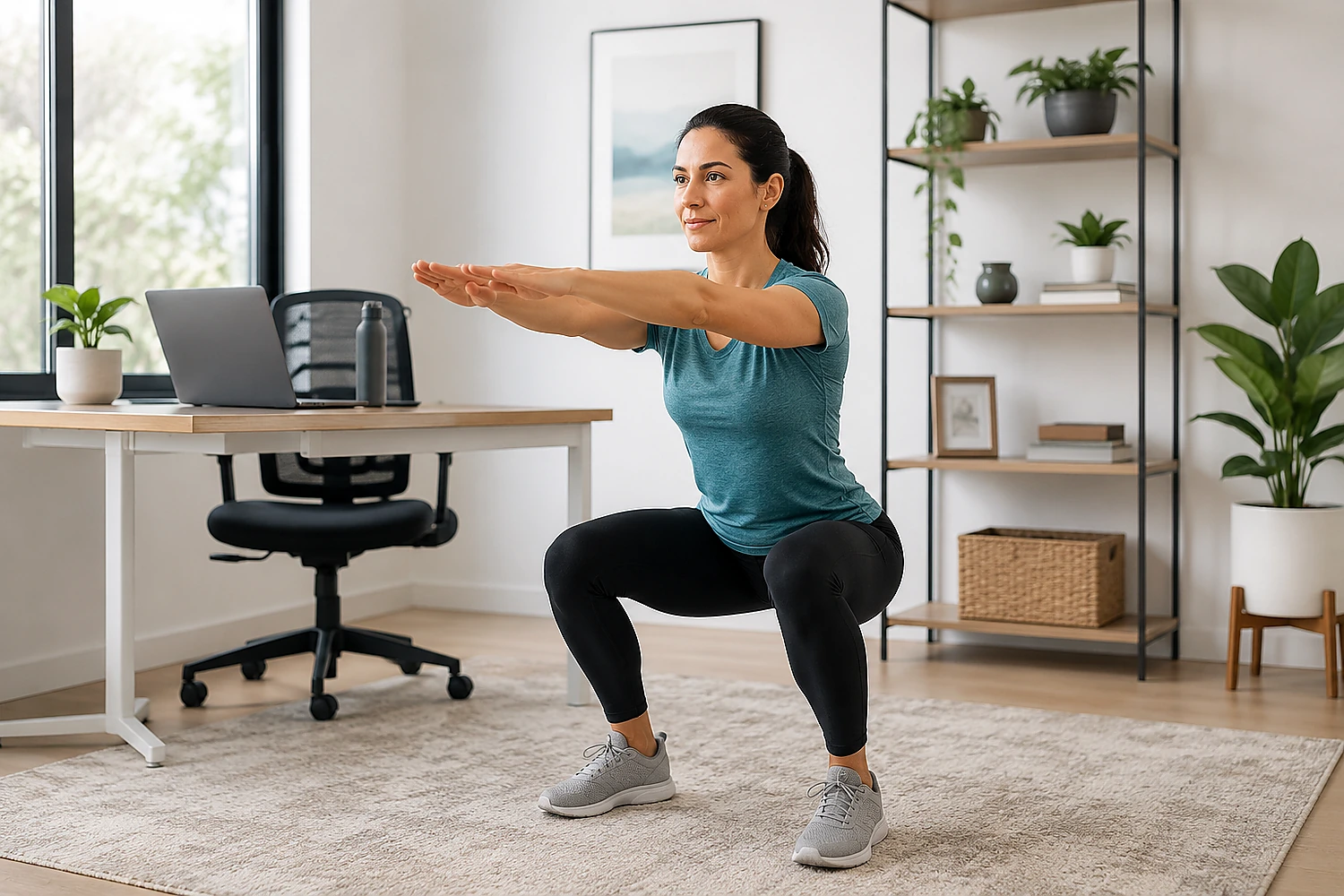
A walk, gentle cycling session, mobility break or strength workout can interrupt prolonged sitting and provide a change of focus. Regular physical activity is associated with mental and physical health benefits. Choose an amount that restores rather than punishes you.
On high-stress days, use the exercise snacks guide for five- to ten-minute options. If intense exercise leaves you more agitated or sleep-deprived, reduce intensity and protect recovery.
Protect Sleep Without Demanding Perfection
Stress can delay sleep, and poor sleep can reduce coping capacity the next day. Keep a consistent wake time, reduce late work and create a brief wind-down. Write tomorrow’s tasks before bed so the brain does not need to rehearse them repeatedly.
Use the healthy sleep habits guide for a complete routine. Persistent insomnia, severe daytime sleepiness, gasping or breathing pauses deserve professional assessment rather than stronger self-imposed rules.
Reduce Cognitive Load With a Small Plan
Turn an overwhelming project into the next visible action. Instead of writing “fix finances,” schedule 20 minutes to list bills. Instead of “get healthy,” choose tomorrow’s walk time. Limit the daily priority list to what can realistically fit, and keep a separate list for later tasks.
Build margins between commitments when possible. Constantly estimating the minimum travel, preparation and recovery time creates preventable pressure. A plan should clarify choices, not become another standard used to criticize yourself.
Set Boundaries Around Time and Information
Repeated notifications, news checking and work messages can keep the stress response active. Choose specific times to check information, silence nonessential alerts and protect at least one screen-free transition each day. Communicate response-time expectations when your role allows it.
A boundary is not complete until behavior supports it. Put the phone outside the meal, close the work application and use an automatic reply when appropriate. If safety or caregiving requires availability, create a priority channel so urgent contacts can still reach you.
Keep Meals Regular and Review Caffeine
Skipping meals and relying on caffeine can mimic or intensify shakiness, irritability and poor concentration. Keep simple balanced options available during demanding weeks. The balanced plate guide provides quick combinations without requiring elaborate cooking.
Caffeine affects people differently. If anxiety or sleep worsens, reduce the dose gradually or move it earlier. Energy drinks and pre-workout products may contain high amounts plus other stimulants. Do not use alcohol as a stress or sleep treatment.
Use Social Support Intentionally
Support can mean being heard, receiving practical help, sharing a walk or solving a problem together. Tell the other person what would help: “I need you to listen,” “Can you help with this task?” or “Would you walk with me?” Specific requests reduce misunderstanding.
If your network is limited, consider community groups, faith communities, classes, peer support or professional counseling. Online spaces can help, but use caution with groups that encourage harmful behavior or present unqualified advice as treatment.
Experiment With Relaxation Techniques
Options include progressive muscle relaxation, guided imagery, mindfulness, gentle yoga and quiet time in nature. Evidence and personal response vary. Choose one technique, practice briefly for two weeks and judge whether it improves function rather than expecting a dramatic feeling every time.
Relaxation practices should complement, not replace, medical or psychological care. Trauma survivors or people who feel worse when focusing inward may prefer eyes-open grounding, walking or professionally guided methods.
A Seven-Day Stress-Management Practice
Each morning, select one controllable priority. Midday, take a five-minute movement or breathing break. In the evening, write down unfinished tasks and prepare one item for tomorrow. Protect a consistent wake time and arrange one supportive conversation during the week.
At week’s end, rate which action improved clarity, sleep or follow-through. Keep the smallest effective habit. If no habit helps because the stressor is unsafe, overwhelming or traumatic, the appropriate next step may be external help, workplace action, legal support or healthcare—not more relaxation practice.
| Moment | Brief action | Purpose |
|---|---|---|
| Morning | Choose one controllable priority | Reduce decision overload |
| During tension | Slow breathing or a short walk | Lower physical activation |
| After work | Close tasks and change environment | Create a recovery boundary |
| Before bed | Write tomorrow’s next steps | Reduce mental rehearsal |
Know When to Seek Professional Help
Seek help when stress is persistent, causes major sleep or appetite change, impairs work or relationships, triggers panic, increases substance use or feels impossible to manage. A primary-care clinician can review physical contributors and refer to mental-health care; therapists can provide structured treatment and coping skills.
If you are in immediate danger, unable to stay safe or thinking about harming yourself or someone else, use local emergency services or a crisis line now. Do not remain alone while waiting for symptoms to pass.
Reduce Avoidable Stress at Work
Clarify priorities and deadlines instead of silently treating every request as equally urgent. Batch messages, protect focus periods and document workload when demands exceed capacity. Ask what can be delayed or reassigned. These actions address the source rather than asking relaxation to make an impossible workload harmless.
Use breaks before exhaustion. A short walk, meal away from the screen or conversation can improve recovery. Harassment, unsafe conditions and exploitation require organizational, legal or external support; they are not personal resilience failures.
Manage Stress During Caregiving
Caregiving can combine physical tasks, uncertainty, grief and limited time. Make a list of help others can actually provide—transport, meals, paperwork, an hour of supervision—and accept specific offers. Keep your own medicines, appointments, meals and sleep visible on the calendar.
Respite services, caregiver groups and social workers may provide practical support. Feelings of anger, sadness or exhaustion do not make someone uncaring. If you fear losing control or cannot provide safe care, seek urgent assistance.
Track Function Instead of Chasing Constant Calm
Rate sleep, concentration, irritability and ability to complete necessary tasks once daily. Note the stressor and which response helped. Progress may mean recovering in 20 minutes instead of two hours, asking for help earlier or sleeping more consistently—not never feeling tense.
If scores worsen for two weeks, substance use increases or daily responsibilities become unmanageable, arrange professional care. A simple record can make the clinical conversation clearer without requiring you to remember every difficult moment.
Create a Personal Stress Toolkit
Choose one tool for the body, one for the problem and one for connection. The body tool might be slow breathing or walking. The problem tool might be a written next step or boundary. The connection tool might be calling a friend, therapist or support service. Store the list where it is visible during difficult moments.
Match the tool to the need. Breathing cannot solve unpaid bills, while planning alone may not settle a racing body. A conversation may provide emotional support but not replace urgent medical care. Using the correct category prevents self-help from becoming another reason to blame yourself.
Practice the tools during an ordinary week and review which improved function. Remove techniques that create more distress and add professional options. If the environment is unsafe, prioritize protection, advocacy and emergency resources instead of asking yourself to tolerate more.
Frequently Asked Questions
Slow breathing may modestly reduce physical stress responses for some people. It is a brief tool, not a solution to every stressor.
Short daily practice is often easier to learn than using a technique only during a crisis.
Regular appropriate activity can support mood and health. Excessive training or using exercise as punishment can add stress.
Focusing inward can be uncomfortable for some people. Try walking, eyes-open grounding or professionally guided approaches instead.
Seek professional help when symptoms persist, impair daily life, increase substance use, cause panic or involve safety concerns.
Safety and Scope
Stress can overlap with medical and mental-health conditions. Possible cardiac or neurological symptoms should not be dismissed as anxiety. Use emergency or crisis services immediately when safety is at risk.