Published by Best Fitness Routine. Editorial standards · Report a correction. Educational guidance; no individual clinical review is claimed unless a qualified reviewer is named.
Exercise Snacks: What This Guide Is Designed to Do
Use short 5- to 10-minute exercise snacks to break up sitting, accumulate activity, and keep a fitness habit alive on busy days.
This guide is written for office workers, parents, beginners, older adults, and anyone who struggles to find one long workout block. Its main purpose is to use short bouts of movement to reduce all-or-nothing thinking and accumulate useful activity across busy days. Treat the first few weeks as a learning phase rather than a test. The aim is to build skill, confidence, and a sustainable workload.
For a closely related starting point, see our walking for health. Use that guide only where it fits your current ability and goals.
Key Priorities for Exercise Snacks And Movement Breaks
When an approach feels confusing, simplify the number of decisions before adding more detail. Keep the priorities above visible for several weeks before deciding that the plan needs a complete redesign.
Start With a Realistic Baseline
Before you increase difficulty, record what you can currently do with good control. Note your schedule, recent activity, relevant symptoms, available equipment, and how quickly you recover. A baseline is not a judgment; it is the reference point that makes future progress measurable.
If you are returning after illness, injury, surgery, pregnancy, a long inactive period, or a major change in health, the safest starting point may be different from a healthy person with years of training experience. Individual restrictions from a clinician or rehabilitation professional take priority over general online guidance.
A Practical Weekly Structure
| Day / Block | Focus | Practical Plan |
|---|---|---|
| 8:30 AM | 2–5 minutes | Easy walk or mobility after starting work. |
| 10:30 AM | 5 minutes | Stairs or brisk walk. |
| 12:30 PM | 10 minutes | Walk after lunch. |
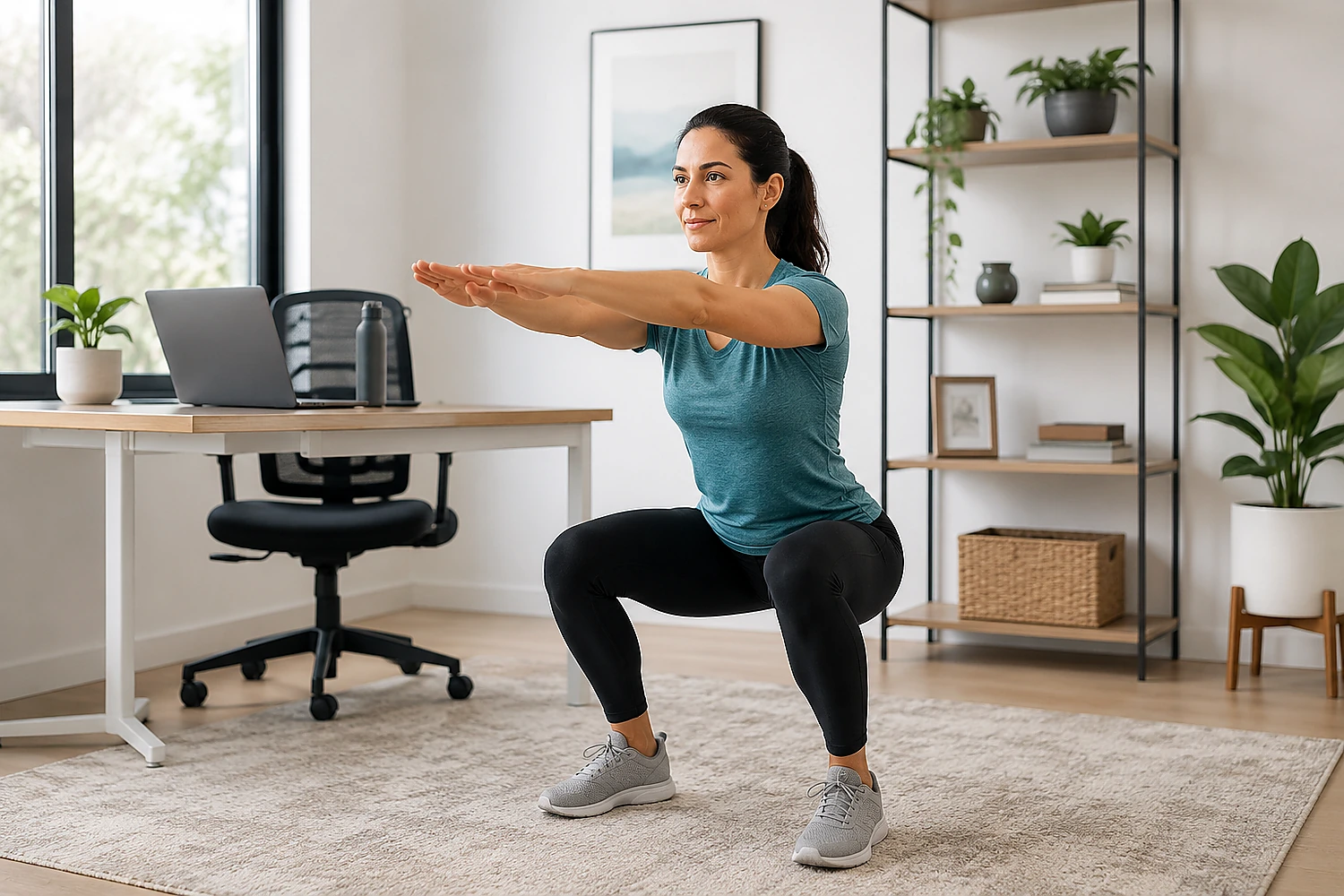
| 3:00 PM | 5 minutes | Chair squats, wall push-ups, or band rows. |
| 5:30 PM | 5–10 minutes | Walk, bike, or mobility before dinner. |
| Evening | Optional | Regular workout if planned and recovery is good. |
| Weekend | Longer activity | Use more time for a full strength or aerobic session. |
The table is an example, not a prescription. Rearrange days around work, school, caregiving, weather, and recovery. Keep the same overall purpose even when the exact calendar changes.
Pick the Barrier First: Time, Sitting, Energy, or Motivation
If the problem is long sitting, use frequent two- to five-minute movement breaks. If the problem is missing cardio, use brisk 10-minute walks.
If the problem is strength consistency, use a short circuit on a day when a full workout will not happen. The snack should solve the actual barrier.
Walking Snacks Are the Simplest Starting Point
A brisk five- or ten-minute walk requires no equipment and can be repeated without much planning. Add it after meals, during phone calls, or between meetings.
The pace should match the purpose: easy walking can interrupt sitting, while brisk walking can contribute to moderate-intensity activity.
For another useful comparison, read our daily mobility.
Strength Snacks Need Enough Challenge to Matter
A short strength snack can include chair squats, incline push-ups, band rows, and calf raises. The session does not need many exercises.
If you already follow a structured strength plan, avoid adding so much extra hard work that it harms recovery.
Short Workouts Can Scale Up When You Have More Time
On a normal week, exercise snacks can coexist with full workouts. Use short breaks for daily movement and longer sessions for goals that require more training volume.
This approach helps prevent the all-or-nothing pattern where one busy day becomes a completely inactive day.
If you want to place this topic inside a broader routine, compare it with our weekly activity guidance.
How to Progress Without Losing the Purpose
Progress one variable at a time. Depending on the topic, that may mean a little more time, a few more repetitions, slightly more resistance, a more challenging balance position, or a more consistent weekly schedule. Changing several variables together makes it harder to tell what your body is responding to.
Use two or three successful sessions as evidence before progressing again. If technique, comfort, sleep, or recovery is clearly worse, hold the current level or reduce the demand. Progress is not only “more.” Better control, easier breathing at the same pace, a larger comfortable range, or improved confidence are all valid forms of improvement.
A Four-Week Implementation Roadmap
Week 1
Learn the routine and keep the workload conservative. Record what actually happens rather than what you planned to do.
Week 2
Repeat the same structure and improve consistency. Make only small technical adjustments.
Week 3
If recovery is good, progress one variable on the most important part of the plan. Keep your session notes in a workout logbook (paid link) so you can compare the activity and recovery discussed here.
Week 4
Review the month. Keep the elements that improved function, confidence, or consistency and remove unnecessary complexity.
Recovery, Food, Hydration, and Sleep
Recovery needs depend on the total workload, not the title of the workout. Hard strength sessions, long cardio, intense intervals, poor sleep, heat, illness, and life stress can all change how much training is appropriate. Use easier days before fatigue becomes a pattern.
Regular meals, adequate fluids, and enough sleep support activity, but this article does not provide an individualized diet or medical treatment plan. People with medical nutrition needs should use qualified guidance. For a recovery-focused discussion, see beginner workout plan.
Track What Helps You Make Decisions
- Sessions or activity bouts completed
- How the main task or metric changes over several weeks
- Perceived effort and breathing
- Sleep and general recovery
- Pain-free movement and confidence
- Whether the routine fits a normal week
Tracking should reduce guesswork, not create pressure. If a metric does not change what you do, it may not deserve daily attention.
Common Mistakes and Better Replacements
- Making every snack a HIIT workout: Most breaks can be easy or moderate.
- Choosing complicated exercises: Use movements you can start immediately.
- Adding snacks to an already exhausting program: Protect recovery.
- Relying only on reminders: Connect movement to existing routines.
- Believing five minutes is pointless: Small amounts contribute to weekly activity. An optional exercise interval timer (paid link) can help you time the activity and rest periods described here.
- Using snacks to avoid progressive training forever: Longer structured sessions still matter for some goals.
How to Adapt This for Different Ages and Ability Levels
Children and adolescents should follow age-appropriate physical activity guidance rather than automatically using adult targets. Healthy adults can use the general framework here and adjust volume to training history and goals. Older adults often benefit from the same core principles with greater attention to balance, stable setups, medication effects, and recovery.
People with disabilities or chronic conditions may use seated, supported, assisted, or lower-impact alternatives. The best version is the one that preserves the purpose of the activity while respecting individual ability. General guidance cannot replace a personalized assessment when symptoms or medical restrictions are involved.
A Simple Decision Rule for Real Life
If the problem is consistency, simplify the schedule. If the problem is fatigue, reduce volume or intensity. If the problem is lack of progress and recovery is good, progress one variable. If the problem is pain, dizziness, chest symptoms, or another concerning change, stop trying to “train through it” and seek appropriate assessment.
Review the plan after several weeks rather than after one bad day. Health and fitness are built from repeatable weeks, not perfect individual sessions.
If nothing is improving, first check consistency and whether the plan is specific enough to the goal. Then review progression, sleep, recovery, and whether the starting level was too easy or too hard. Change one thing, test it for several sessions, and evaluate again rather than rebuilding the entire routine at once.
Success does not require perfect adherence or a dramatic transformation. A useful result is that the plan feels more predictable, your chosen metric or movement improves, and you can continue without accumulating excessive fatigue. For exercise snacks and movement breaks, the best evidence is a repeatable improvement that matters to daily life or the goal you selected.
What Success Looks Like After Four to Eight Weeks
Do not try to repay a missed session by doubling the next one. Resume the next practical step and protect sleep and recovery. For office workers, parents, beginners, older adults, and anyone who struggles to find one long workout block, the most sustainable version is usually the one that can survive work deadlines, travel, family obligations, and ordinary fluctuations in motivation.
A busy week is where a useful plan proves itself. Keep one or two anchor sessions or actions that directly support the goal to use short bouts of movement to reduce all-or-nothing thinking and accumulate useful activity across busy days. Shorten the session before you cancel the habit completely: reduce the number of sets, use an easier route, shorten the walk, or choose the simplest version of the movement. This keeps the week connected without pretending that every day has the same time and energy.
How to Use Exercise Snacks And Movement Breaks on a Busy Week
Frequently Asked Questions
Yes. Short bouts of activity can contribute to weekly movement totals.
Start with one or two per day and adjust based on total activity and recovery.
They can support health and consistency, but some strength or performance goals need longer sessions.
A short walk, chair squats, wall push-ups, calf raises, and shoulder mobility are simple options.
No. Some breaks simply interrupt sitting and restore movement.
Yes, with stable, ability-appropriate movements and support when needed.
Professional coaching can also be useful without a medical problem when technique, progression, confidence, or equipment setup is the main barrier. The goal is not to make everyone dependent on supervision; it is to use expertise where it meaningfully improves safety or clarity.
General fitness information works best when the main question is how to organize ordinary healthy activity. Individual help becomes more valuable when exercise snacks and movement breaks is limited by persistent pain, repeated falls, fainting, chest symptoms, unexplained shortness of breath, a recent operation, pregnancy complications, medication effects, or a medical condition that changes exercise tolerance. A qualified clinician or rehabilitation professional can evaluate factors that a webpage cannot see.
When Professional Guidance Is Worth It
Safety and Scope
This guide provides general educational health and fitness information. It does not diagnose injuries or medical conditions, replace medical care, or provide an individualized exercise prescription. Stop or modify activity that causes sharp, worsening, or concerning symptoms, and seek qualified guidance when appropriate.