Published by Best Fitness Routine. Editorial standards · Report a correction. Educational guidance; no individual clinical review is claimed unless a qualified reviewer is named.
Overview
Added sugars are used in drinks, desserts, sauces and many packaged foods. Reducing them does not require treating fruit as candy or banning every celebration food. The highest-value approach is to identify frequent sources, compare realistic alternatives and lower the amount gradually while keeping meals satisfying. Use suitable food-storage containers (paid link) for the prepared food, following safe storage and reheating instructions.
Separate Added Sugars From Naturally Occurring Sugars
Total sugars on a label include sugars naturally present in milk and fruit plus any sugars added during processing. The “Includes Added Sugars” line identifies the added portion. Whole fruit also provides water, fiber and nutrients, so its sugar is not interpreted the same way as added sugar in a sweetened drink.
Honey, maple syrup, raw sugar and coconut sugar still count as added sugars when used as sweeteners. A natural-sounding name does not remove the sugar. This does not make those ingredients forbidden; it means they belong in the same overall calculation as other sweeteners.
Find Your Largest Regular Sources
Sweetened drinks, desserts, candy, sweet bakery foods and flavored dairy products are common contributors. Coffee additions, breakfast cereal, granola bars, sauces and flavored oatmeal may add smaller amounts that accumulate. Keep a three-day note of what you normally eat without changing it, then identify the two sources that occur most often.
Prioritize frequency and amount. Replacing a daily large sweetened drink usually changes more than worrying about a teaspoon of sauce used occasionally. A targeted plan feels less restrictive and is easier to evaluate.
Use the Label for Fast Comparisons
Compare similar serving sizes and read grams plus % Daily Value for added sugars. FDA guidance uses 5% DV or less as low and 20% DV or more as high per serving. The Nutrition Facts label guide explains why serving size must come first.
Do not select solely on one line. A plain high-fiber cereal with a little added sugar may fit better than a sugar-free product with little nutritional value. Consider fiber, protein, sodium, saturated fat, ingredients, price and how the food fits the meal.
Change Drinks First When They Are a Major Source
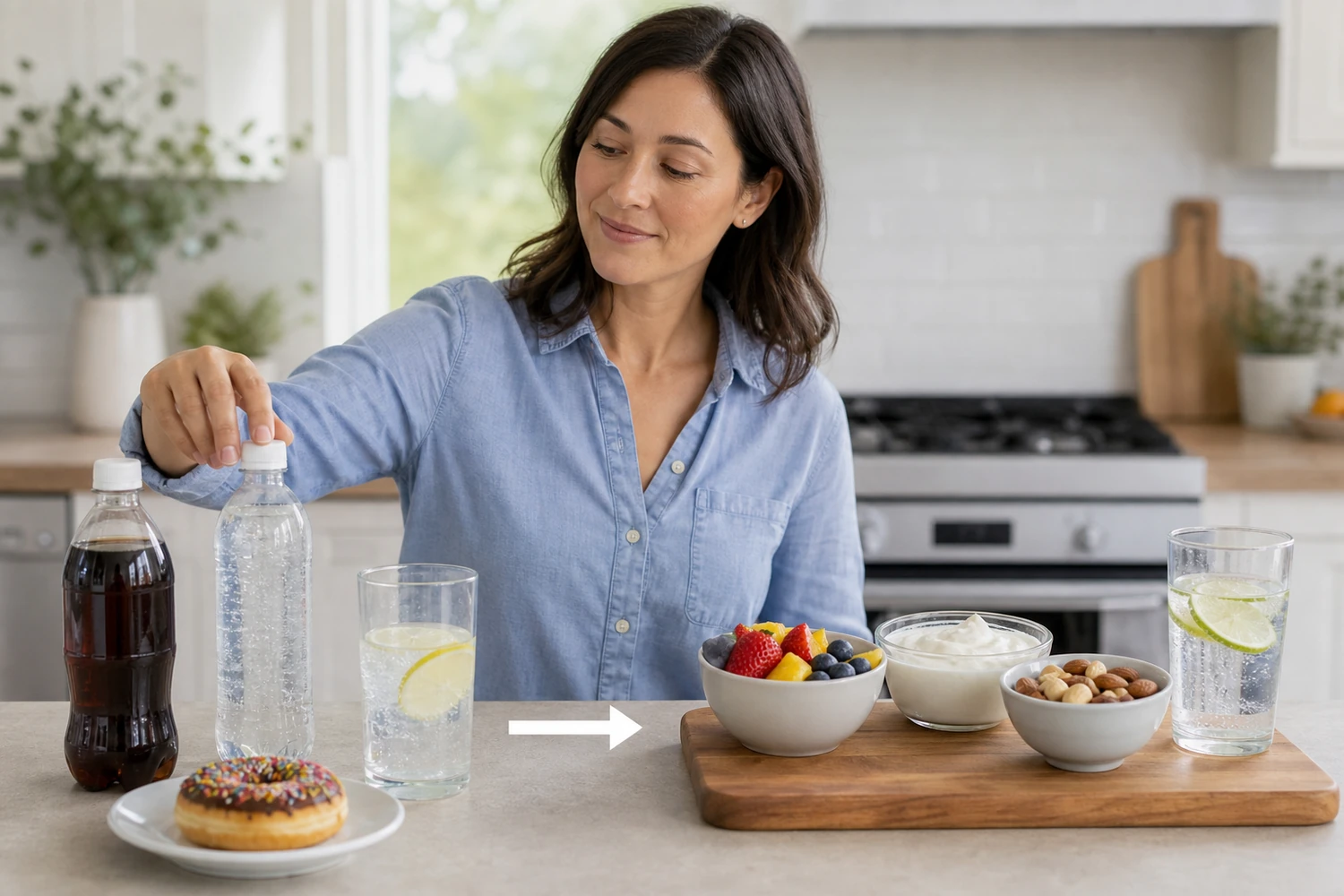
Liquid sugar can be easy to consume quickly. Try water, sparkling water, unsweetened tea, coffee with less sweetener, or a smaller size. If an abrupt switch is unpleasant, dilute the drink, alternate sweetened and unsweetened choices, or reduce syrup pumps over several weeks.
Sports drinks are not required for every workout. Water is suitable for many ordinary sessions, while long, hot or demanding activity may require individualized fluid and carbohydrate planning. The hydration guide explains how needs change with heat and exercise.
Reduce Sugar at Breakfast Without Losing Convenience
Mix sweetened cereal with a lower-sugar whole-grain cereal, choose plain oatmeal and add fruit, or combine flavored yogurt with plain yogurt. These transition strategies preserve familiar taste while reducing added sugar gradually. Include protein and fiber so breakfast remains useful rather than simply smaller.
Prepare two quick defaults: overnight oats with berries, or eggs with whole-grain toast and fruit. The site’s protein overnight oats offers a complete example; adjust sweeteners to preference and health needs.
Keep Snacks and Desserts in Proportion
Dessert can fit within a healthy pattern. Choose a portion you will enjoy, eat it intentionally and avoid turning one choice into a reason to abandon the day. Frequency and portion are more useful levers than labeling yourself good or bad.
For everyday snacks, pair fruit with yogurt, nuts or cheese; try vegetables with hummus; or choose popcorn and whole-grain crackers. A snack does not need to imitate dessert. If you want dessert, eating the desired food in a reasonable amount may be more satisfying than chasing several substitutes.
Adjust Home Recipes Gradually
Many baked recipes tolerate a modest sugar reduction, but sugar also affects moisture, browning and structure, so large changes may fail. Reduce in steps and keep notes. In sauces, dressings and smoothies, taste before adding sweetener; ripe fruit, spices, vanilla or acidity may provide enough flavor.
Avoid assuming that dates, juice concentrate or syrups create a sugar-free recipe. They may add flavor and nutrients depending on the food, but they still contribute sugars. Describe the recipe accurately and focus on the complete portion.
Respond to Cravings With Better Meal Structure
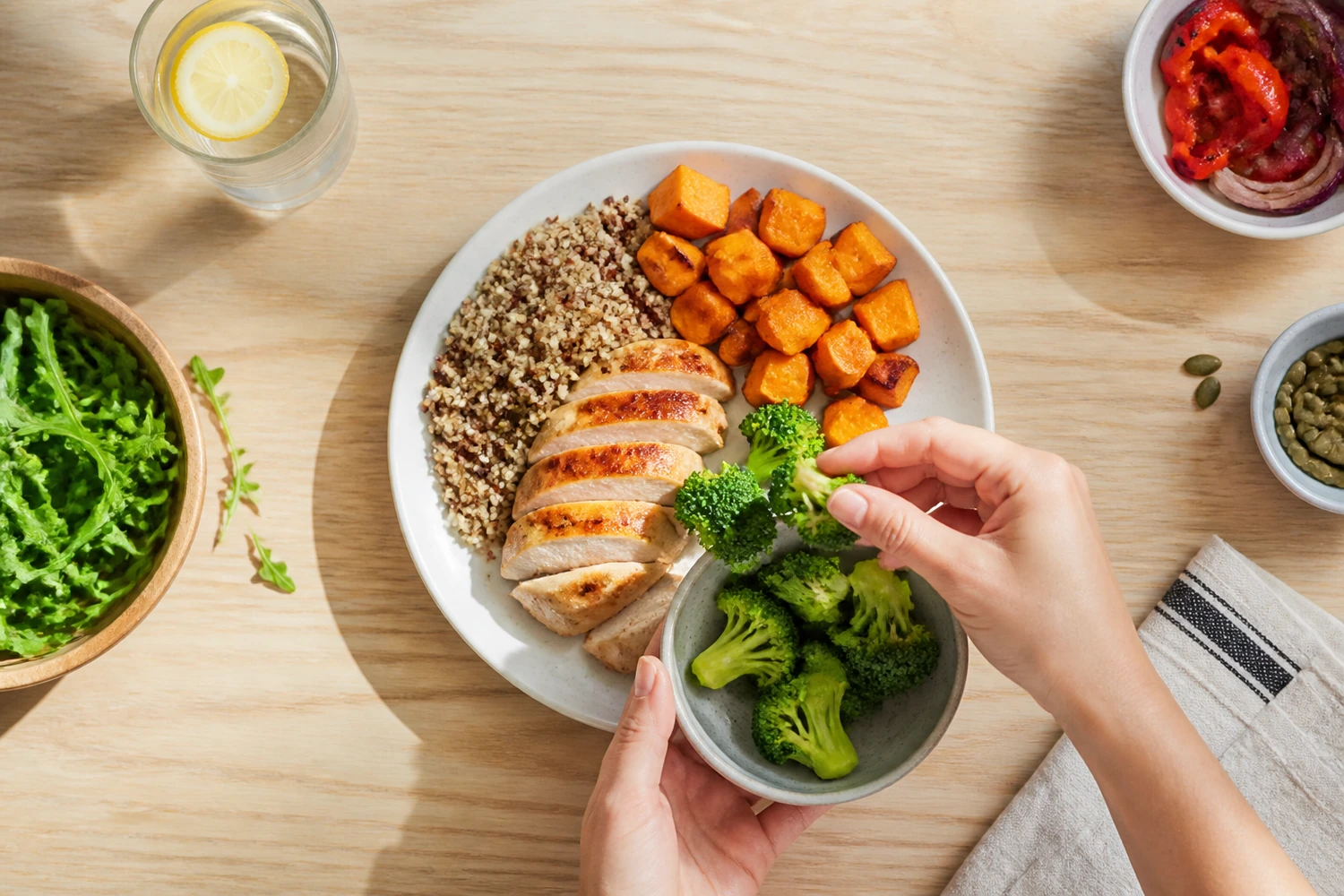
Strong cravings can reflect hunger, habit, stress, poor sleep or environmental cues. Ensure meals contain adequate protein, carbohydrate, fiber and fat. The balanced plate method can prevent the cycle of an overly light meal followed by continuous snacking.
Change the cue as well as the food. Store everyday drinks at eye level, buy single portions of occasional sweets if large packages are difficult to manage, and pause before automatic snacking. If restriction leads to bingeing, guilt or compensatory behavior, seek qualified eating-disorder support rather than tightening rules.
Follow a Two-Week Reduction Plan
During week one, track added-sugar sources and change one daily drink. Compare two breakfast or snack products and choose the version you genuinely like. During week two, reduce one recurring dessert or sauce portion and add a satisfying replacement food where needed.
Review taste, hunger, cost and convenience—not just grams. Keep changes that feel normal. A sustainable reduction may be smaller than an extreme short-term cut, but it is more likely to remain part of everyday life.
| Situation | First step | Gradual option |
|---|---|---|
| Sweetened soda | Choose a smaller serving | Alternate with sparkling water |
| Flavored yogurt | Compare added sugars | Mix flavored and plain |
| Sweet cereal | Use a smaller portion | Blend with higher-fiber cereal |
| Coffee drink | Reduce syrup or size | Step down sweetness over several orders |
Avoid Common Added-Sugar Mistakes
Do not replace sugar automatically with large amounts of saturated fat, sodium or expensive specialty products. Sugar-free does not mean calorie-free, nutrient-rich or suitable for everyone. Sugar alcohols and some sweeteners can cause digestive symptoms in sensitive people.
Do not count obsessively when it harms your relationship with food. The goal is an overall pattern that leaves room for nutrition, pleasure and culture. People with diabetes should follow individualized carbohydrate and medication guidance, because “no added sugar” does not necessarily mean low carbohydrate.
Give Taste Preferences Time to Adjust
Foods can taste less sweet when sugar is reduced abruptly. Step down gradually so the palate adapts: mix sweetened and unsweetened yogurt, reduce coffee syrup one level, or dilute juice with water. After several weeks, the previous amount may taste unusually sweet. This approach can feel easier than relying on willpower at every meal.
Do not force replacements you dislike. If plain yogurt remains unpleasant, use a smaller amount of a flavored version and build the meal with fruit, nuts or oats. The goal is a lower overall pattern that remains enjoyable, not a competition to tolerate bland food.
Make Family Changes Without Food Fear
Offer water regularly, keep fruit accessible and serve sweets without using them as a reward for eating vegetables. Restrictive language can increase preoccupation with forbidden foods. Children have different energy and growth needs, so adult dieting rules should not be imposed on them.
Change the shared environment: buy smaller drink sizes, serve dessert with a meal, and let family members help choose lower-sugar breakfasts they enjoy. Discuss pediatric nutrition with a qualified professional when growth, diabetes, allergies or selective eating are concerns.
Maintain the Change During Holidays and Travel
Decide which sweet foods are meaningful and enjoy them intentionally. Keep ordinary drinks mostly unsweetened and maintain regular balanced meals so celebration food is not eaten after extreme hunger. One holiday does not determine the yearly pattern.
During travel, choose one default breakfast or drink that is easy to repeat. When normal routines return, resume them without a detox or compensatory workout. Sustainable health habits include flexibility and recovery after unusual days. Write the meals and shopping list in a meal-planning notebook (paid link) before your next grocery trip.
Use a 30-Day Added-Sugar Reduction Plan
For the first week, record the added-sugar grams in one frequent drink, breakfast and snack. Change only the drink. In week two, compare two versions of the breakfast and use a gradual mix if the lower-sugar option tastes unfamiliar. Keep meals adequate so hunger does not drive constant grazing.
During week three, plan dessert rather than eating it automatically. Choose the occasions that matter and serve a satisfying portion. In week four, review sauces, coffee additions and convenience foods, but change only a source that occurs often enough to matter. Preserve favorite cultural and celebration foods.
At day 30, keep the changes that improved taste, energy, cost or convenience. Do not compensate for an unusually sweet day with fasting. Return to the normal pattern at the next meal. A flexible routine is more durable than a perfect streak.
Frequently Asked Questions
No. Sugars naturally present in whole fruit are included in total sugars but not added sugars. Whole fruit also supplies fiber, water and nutrients.
Yes when used as sweeteners. Their natural origin does not remove their contribution to added-sugar intake.
No. A limited amount can fit an overall healthy pattern. Frequency, portion and the rest of the diet matter.
No. Review the complete label, ingredients, portion, cost and how the product affects digestion and eating habits.
If you regularly drink sweetened beverages, reducing their size or frequency is often a practical high-impact first step.
Safety and Scope
This article is general education. Diabetes, hypoglycemia, pregnancy, eating disorders and other medical conditions can change appropriate carbohydrate and sweetener choices; follow individualized professional guidance.