
Published by Best Fitness Routine. Editorial standards · Report a correction. Educational guidance; no individual clinical review is claimed unless a qualified reviewer is named.
Overview
A Nutrition Facts label is a comparison tool, not a scorecard for whether a food is morally good or bad. The most useful reading order starts with the amount you will actually eat, then looks at calories and the nutrients that matter for your goals or health needs. Reading the whole label in context is more informative than choosing a product because of one claim on the front.
Begin With Serving Size and Servings per Container
Every number on the panel applies to the listed serving. If a package contains two servings and you eat the whole package, most calories and nutrients are doubled. The serving size is designed to reflect an amount people typically consume; it is not automatically a recommendation for how much you personally should eat.
Compare the serving unit with your portion. A cereal may be listed by cups and grams, while a sauce may use tablespoons. When comparing two products, check that the serving amounts are reasonably similar. A lower sodium number may simply reflect a much smaller labeled serving rather than a meaningful difference in the food.
Put Calories in the Context of the Whole Meal
Calories describe energy per serving. They do not describe fullness, nutrient quality or how the food fits the rest of the day. A higher-calorie food can provide protein, fiber and useful nutrients, while a lower-calorie product may be less satisfying. Use calories as one piece of information instead of the only selection rule.
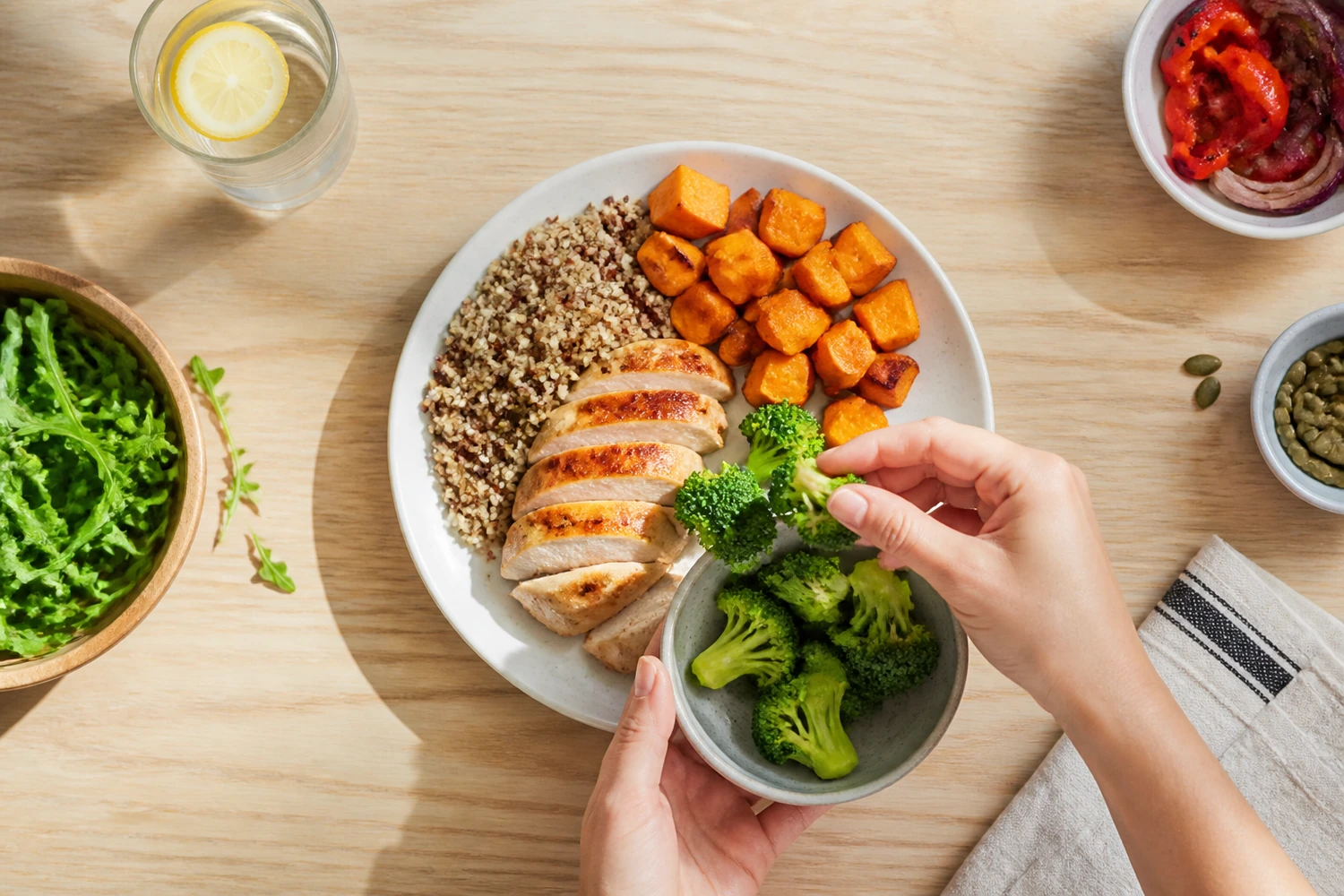
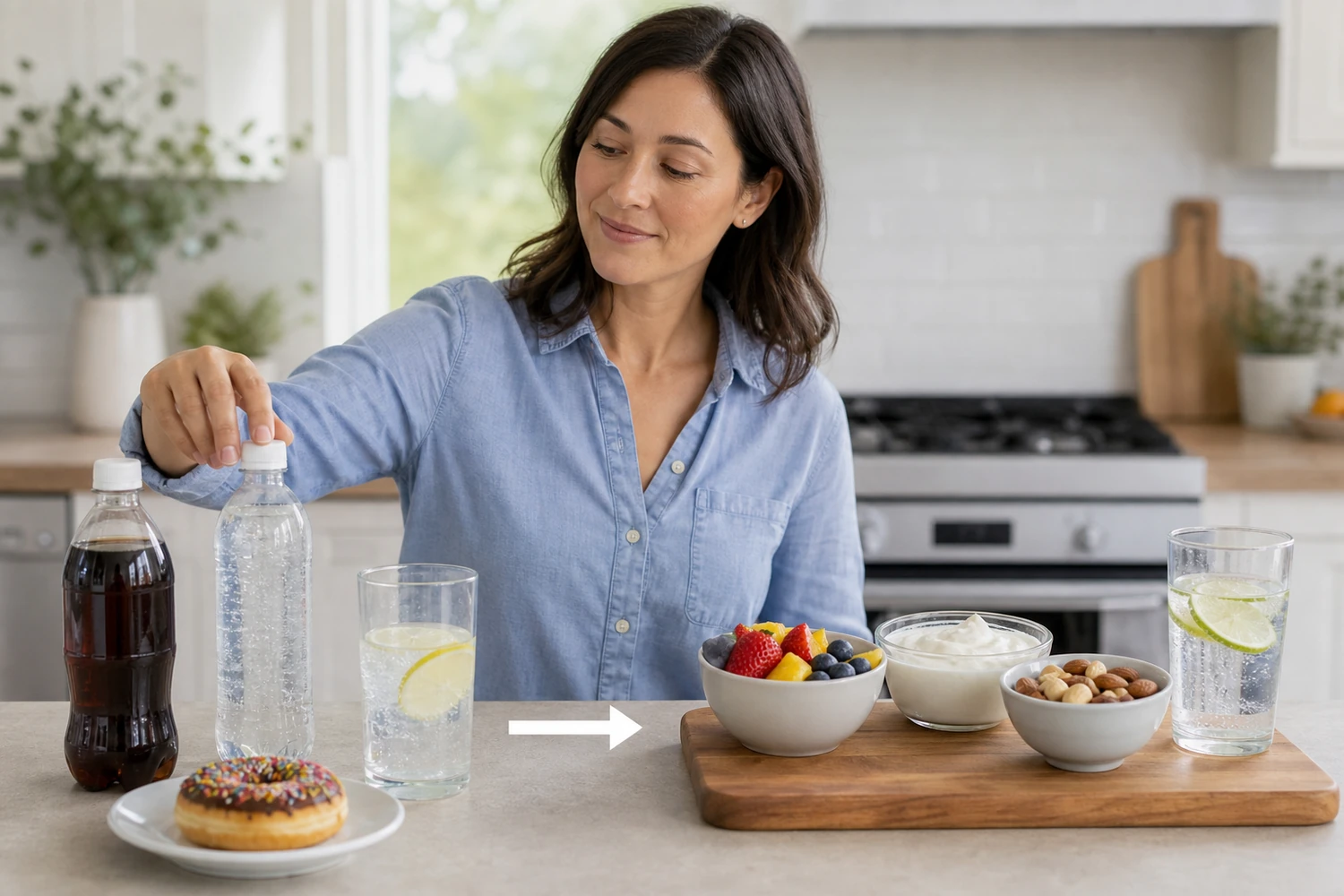
If weight management is a goal, compare foods you would realistically substitute for each other and consider the portion you will eat. Pairing foods also matters. Plain yogurt with fruit and nuts creates a different meal from yogurt alone. Our balanced plate guide shows how individual foods work together.
Understand Percent Daily Value
Percent Daily Value, written as %DV, shows how much one serving contributes to a reference daily amount. FDA guidance uses 5% DV or less as a general indication that a serving is low in a nutrient and 20% DV or more as high. These are comparison guides based on a 2,000-calorie reference, not individualized prescriptions.
Use %DV to compare similar products quickly. You may look for more dietary fiber, vitamin D, calcium, iron and potassium, or less sodium, saturated fat and added sugar, depending on the food and your needs. A middle value is not a failure; daily patterns are built across many meals and snacks. This approach also works well alongside How to Reduce Added Sugar Without Giving Up Everything.
Look Beyond Total Fat
Total fat includes different types. Saturated fat is listed separately, and trans fat is shown in grams. A food can be higher in total fat because it contains nuts, seeds or oils while remaining relatively low in saturated fat. The ingredient list helps identify the sources and the overall eating pattern gives the number meaning.
Do not assume a product labeled low-fat is automatically better. Some low-fat foods contain more refined starch or added sugar, and some full-fat foods may be used in a smaller satisfying portion. Compare the complete label and choose the version that fits your health advice, preferences and meal.
Use Sodium Numbers to Compare Similar Foods
Sodium can add up in breads, sauces, soups, frozen meals, snacks and restaurant-style foods even when a product does not taste extremely salty. Compare milligrams and %DV between similar serving sizes. A modest difference repeated across frequently eaten foods can be more practical than trying to eliminate salt from every item.
People with high blood pressure, kidney disease, heart failure or other conditions may receive individualized sodium advice. Follow that advice rather than a generic internet target. Flavor lower-sodium choices with herbs, spices, citrus and vinegar, and remember that portion size changes the amount consumed.
Separate Total Carbohydrate, Fiber and Sugars
Total carbohydrate includes starches, fiber and sugars. Dietary fiber appears beneath it. Total sugars include sugars naturally present in foods such as milk and fruit as well as any added sugars. The separate “Includes” line identifies added sugars within the total. It is incorrect to treat fruit’s naturally occurring sugar as identical information to added sugar in a sweetened drink.
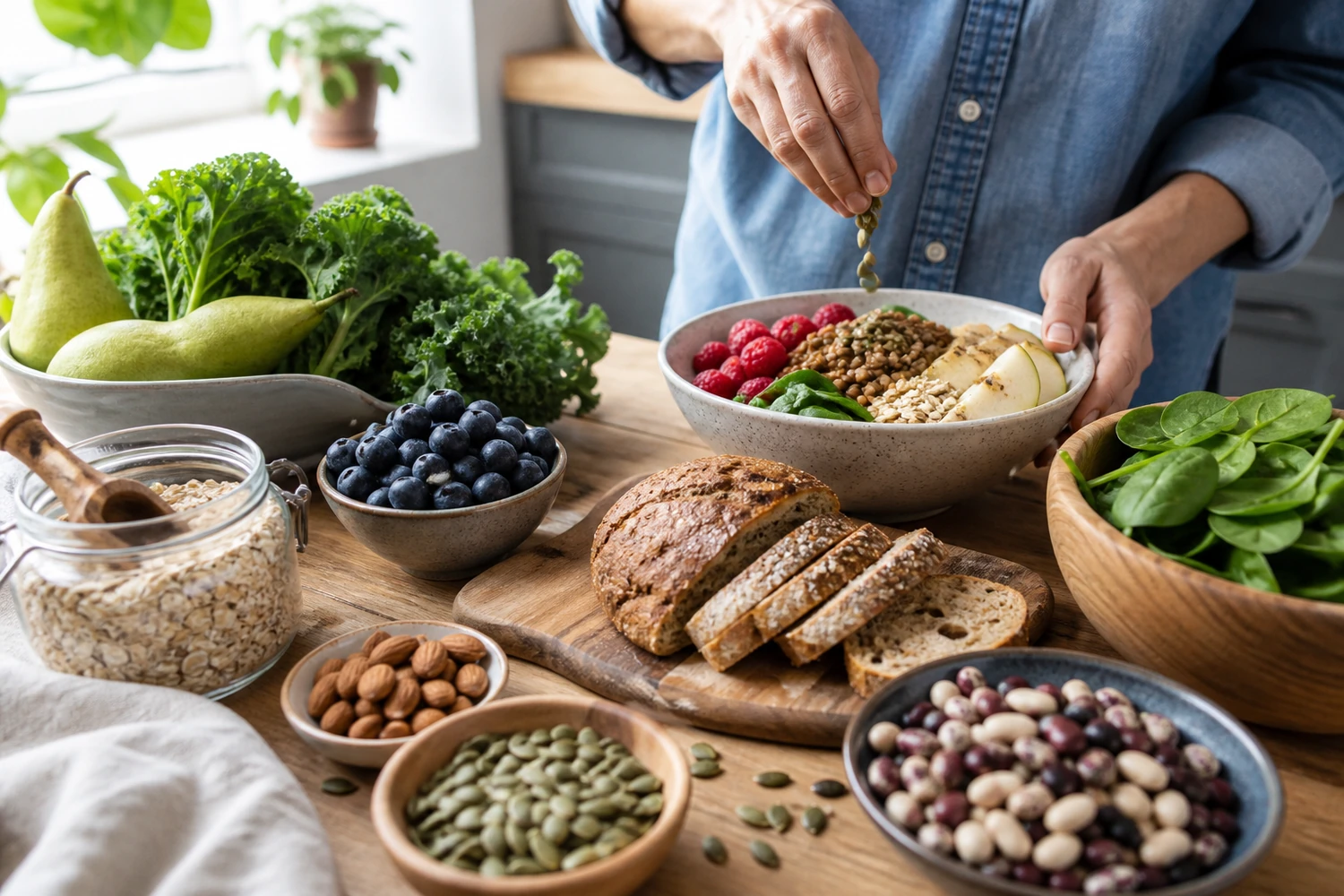
For foods that can reasonably provide fiber—such as bread, cereal, beans or grain products—compare fiber per similar serving. Our dietary fiber guide explains how to increase fiber gradually and obtain it from varied foods.
Read Protein in Relation to the Food
Protein is listed in grams, but a %DV is not always displayed for ordinary adult foods. More protein is not automatically better in every product. A fruit snack does not need to compete with a main-dish protein, and adding isolated protein can change price or texture without improving the meal you intended.
Ask what role the food plays. For a main meal, a meaningful protein source may improve balance and satisfaction. For a snack, pairing fruit or whole-grain crackers with yogurt, beans, eggs or nuts may be more useful than searching for a single packaged product that does everything.
Check the Listed Vitamins and Minerals
Current U.S. labels commonly list vitamin D, calcium, iron and potassium with amounts and %DV. These nutrients were selected because many people do not consume enough. A fortified food can help in some situations, but a high number does not automatically make a highly processed food the best everyday choice.
Use these values to compare products within a category and consider your overall diet. Someone avoiding dairy may value calcium and vitamin D in a fortified alternative, while another person may obtain those nutrients elsewhere. Supplements and medical nutrition require individualized guidance when deficiency or disease is involved.
Read the Ingredient List and Ignore Front-Label Hype
Ingredients are listed by weight from greatest to least at the time of manufacture. The list can reveal whole grains, types of oil, added sweeteners and allergens. It also helps explain a label: a product high in fiber because it contains beans and whole grains differs from one relying mainly on an isolated fiber additive.
Front claims such as natural, multigrain, light or made with vegetables can sound impressive without explaining the whole product. Turn the package around. Check serving size, the nutrient panel and ingredients, then decide whether the food fits your purpose, budget, taste and frequency of use.
Use a 60-Second Comparison Routine
When two products serve the same purpose, first align serving sizes. Second, compare the two or three nutrients that matter for that choice. For breakfast cereal, that might be fiber, added sugar and sodium. For yogurt, it may be protein, added sugar and saturated fat. For soup, sodium, fiber and protein may be more useful.
Finally, read ingredients and price per usable serving. Choose the option you will actually eat and can afford consistently. A theoretically perfect item that is wasted or disliked is not a practical improvement. Use the site’s healthy meal ideas to see how packaged basics can support complete meals.
| Food type | Useful first checks | Context question |
|---|---|---|
| Breakfast cereal | Serving, fiber, added sugar, sodium | Will I add milk, yogurt, fruit or nuts? |
| Bread | Serving, whole-grain ingredients, fiber, sodium | What will the sandwich or toast contain? |
| Yogurt | Serving, protein, added sugar, saturated fat | Is this a snack, ingredient or meal component? |
| Soup | Serving, sodium, fiber, protein | Will I eat one serving or the full container? |
Adapt the Label to Your Health Needs
The standard panel cannot account for allergies, diabetes, kidney disease, digestive disorders, pregnancy, eating-disorder recovery or medication interactions. The most important line varies by person. Allergen statements and ingredients may be critical even when the nutrition numbers look suitable.
If a clinician or registered dietitian has given you a target, use the label to apply that plan rather than replacing it. Product formulations also change, so recheck labels on familiar foods. Contact the manufacturer when allergen or ingredient information is unclear.
Work Through a Complete Label Example
Imagine a soup label lists one cup as a serving and two servings per container. If you eat the container, double calories, sodium, carbohydrate, fiber and protein. Next compare sodium %DV with another soup using the same cup measurement. Then check whether beans, vegetables or a protein source make it a more complete meal.
The decision is not simply which number is lowest. A lower-sodium soup with little protein may work when paired with a sandwich, while a bean soup may stand alone with fruit. Label reading supports the meal decision; it does not replace it.
Translate Common Package Claims Into Questions
When a package says “multigrain,” ask whether a whole grain appears prominently in the ingredients and how much fiber is listed. When it says “light,” check what changed—calories, fat, sodium, color or texture. When it says “no added sugar,” remember that total carbohydrate and naturally occurring sugars may still be present. Use suitable food-storage containers (paid link) for the prepared food, following safe storage and reheating instructions.
A claim may be regulated yet still incomplete for your purpose. Turn each headline into a question the back panel can answer. This habit is especially useful for breakfast foods, drinks, breads and snacks where health-oriented packaging can distract from serving size and the complete nutrient profile.
Use Labels to Build a Better Shopping List
Select a few categories that matter most rather than comparing every item in the store. Save a preferred whole-grain bread, lower-sodium canned bean, yogurt and breakfast cereal. Recheck occasionally because formulations and serving sizes can change. Keep affordable options that meet the purpose, even if another product has a slightly better number.
Plan how each item will be used. Canned beans can become a bowl or soup, yogurt can pair with fruit and oats, and bread can carry protein and vegetables. A useful list connects individual labels to complete meals, reducing waste and decision fatigue. For planning ahead, an optional meal-planning notebook (paid link) can keep your meals and grocery lists together.
Frequently Asked Questions
Start with serving size and servings per container because every other number depends on the amount listed.
As a general FDA guide, 5% DV or less is low and 20% DV or more is high for a nutrient per serving.
No. Total sugars include naturally occurring and added sugars. The added-sugars line identifies the portion added during processing or preparation.
Not automatically. Length alone does not measure nutrition. Read what the ingredients are and consider the complete label and intended use.
No. Serving size standardizes the label and reflects customary consumption; personal portions depend on the meal, appetite, needs and health guidance.
Safety and Scope
Nutrition labels provide standardized information but not a personalized medical diet. People managing allergies, diabetes, kidney disease, heart conditions, digestive disorders or eating disorders should follow appropriate professional guidance.