Published by Best Fitness Routine. Editorial standards · Report a correction. Educational guidance; no individual clinical review is claimed unless a qualified reviewer is named.
Plan recovery as part of the hiking day
Recovery after a long hike begins with choosing an outing that fits your preparation and leaves a realistic return. It is easier to manage the evening when you have not used every reserve to reach the trailhead. Bring appropriate supplies, allow enough daylight and account for the drive or transit home. A recovery routine cannot make an unsuitable route or a dangerous level of exhaustion harmless afterward.
This guide covers ordinary recovery planning for generally healthy adults, not treatment for an injury or serious illness. Severe symptoms, unusual weakness or a significant fall can require prompt assessment. Do not assume that every problem after a hike is normal muscle soreness. Your next exercise decision should respond to what actually happened on the trail, including heat exposure, food and fluid access, falls and any new pain.
Finish at an easier pace when practical
If the final route section allows it, ease the pace during the last several minutes instead of racing to beat an app's arrival estimate. Keep attention on footing, since tired legs can make a familiar descent feel less controlled. A gradual finish organizes the transition out of the walk; it does not guarantee that soreness will be prevented or treat symptoms that need urgent help.
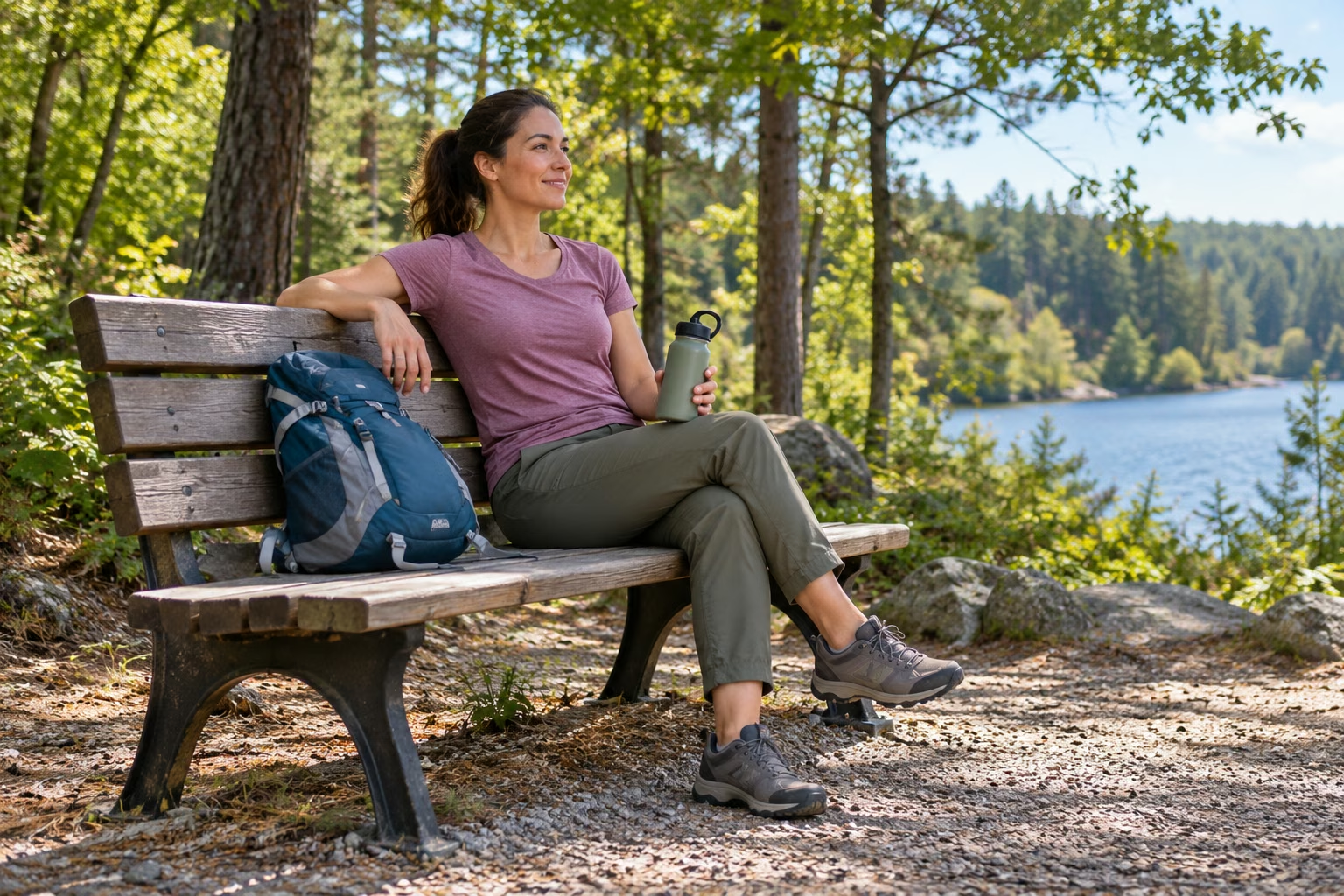
Once safely stopped, remove the daypack (paid link) deliberately and check whether straps or footwear have caused rubbing. Move out of the path of other hikers and vehicle traffic. If you feel faint or unwell, seek appropriate assistance rather than walking extra laps to complete a cool-down target. Take time to organize belongings before the journey home, especially if a long drive immediately follows a demanding day.
Make drinks available without forcing a target
Use the water bottle (paid link) or supplies you planned for the conditions, and follow ordinary needs and any individual fluid advice. A long hot outing may require more preparation than a short cool walk, but the right response is not to force the largest possible volume at once. Drinking plans depend on the person, duration and environment. Medical conditions and medications can change what is appropriate.
If the hike involved unusual heat, follow official local health guidance and seek help for concerning symptoms. A drink does not solve every cause of headache, weakness or nausea. Avoid treating the color of one urine sample or an app's estimate as a complete assessment of recovery. The practical aim is access to suitable fluids and a calm review of the day, not a competition to replace an assumed amount before leaving the parking area.
Choose an ordinary meal you can manage
Plan a familiar meal or snack so that a late finish does not leave you with no practical food option. Include a normal combination of foods that suits your preferences, dietary needs and appetite. There is no requirement for a branded recovery supplement or an exact minute-by-minute feeding deadline after an ordinary recreational hike. Think about safe storage when food has been carried or left in a vehicle.
An insulated food bag (paid link) can help transport suitable food when used with appropriate cold sources and food-safety practices. It is not a guarantee that perishable food remains safe in heat. Check storage guidance and discard food when its handling is uncertain. A simple planned option that you enjoy is more useful than buying unfamiliar products because the hike felt demanding. Keep food choices connected to ordinary recovery and the practical trip home.
Check feet and address minor problems early
Once in a suitable place, inspect the feet for rubbing, damp socks or a developing blister. Change into clean dry clothing or socks when available and avoid putting pressure on a sore spot unnecessarily. Do not cut into a blister or ignore spreading redness, increasing pain or signs of infection. People with diabetes, impaired sensation or circulation concerns may need specific foot-care advice rather than a generic hiking routine.
Familiar hiking socks (paid link) can be useful for the next outing when fit, material and footwear work together, but buying a particular sock does not treat an injury. Review what caused the problem: shoe fit, moisture, route duration or a seam can all matter. Test changes on a short local walk before another long hike. Prevention planning and the response to an existing wound are different tasks and may require different advice.
Keep the evening simple and comfortable
After the immediate meal, drink and clothing needs are addressed, leave room for an ordinary quiet evening. Gentle comfortable movement around the home may suit you, while a demanding workout to loosen the legs usually adds another load. Do not force deep stretches into a painful area. If a familiar easy stretch feels pleasant, use a stable position and a comfortable range without bouncing.
An exercise mat (paid link) can provide cushioning for optional gentle floor movement when getting down and up is suitable. A seated or standing alternative is fine if the floor is inconvenient. No specific mobility sequence is compulsory. The useful question is whether the activity feels comfortable and leaves symptoms settled, not whether you completed a recovery checklist. Increasing pain or a changed walking pattern should lead to a review of the plan and appropriate help.
Protect the chance for adequate sleep
Schedule the hike and journey home so that a late finish does not routinely reduce the night's sleep. Prepare simple food and essential tasks ahead of time when possible. A long day outdoors can make it tempting to stay up reviewing photos or route statistics, but ordinary rest deserves space too. Sleep needs vary, and no gadget can certify that you have recovered enough for a harder session.
If a travel schedule makes good recovery unlikely, choose a shorter route rather than assuming the next day's workout can fix fatigue. Avoid using alcohol as a recovery strategy or relying on extra caffeine to conceal how tired you feel. Persistent sleep disruption, unusual exhaustion or recurring symptoms may need individual assessment. Recovery planning works best when it is part of the whole trip, not a collection of products added after a difficult outing.
Review the next morning before exercising
Notice getting out of bed, walking around the home and using ordinary stairs. Some muscle soreness can follow unfamiliar activity, especially descents, but not every painful symptom should be accepted as normal. Look for whether movement remains comfortable and whether symptoms are improving. A joint that is swollen, unstable or persistently painful deserves a different response from mild general muscle fatigue.
Choose a rest day or a short easy walk according to the response, and postpone demanding leg work when fatigue changes movement control. The downhill preparation guide may be useful later, but it is not a treatment for an acute problem. Do not use another steep descent as a test of whether soreness will disappear once you warm up. Return decisions should respect symptoms and any professional advice.
Adjust the following week's workload
A long hike counts as training even if it was a social outing. Reduce other planned leg-demanding sessions when necessary rather than adding the hike to an already full schedule. If the route was much longer or steeper than usual, repeat a familiar easy walking pattern before progressing again. Missing a hard workout after a demanding trail day is not a debt you need to repay.
Review the beginner hiking plan for a manageable structure, then adapt it to the outing you actually completed. Keep notes on duration, elevation, surface, pack comfort and the later response. If recovery repeatedly disrupts several days of ordinary life, the route or weekly load may need to be smaller. More aggressive recovery products are not a substitute for matching the activity to your current preparation.
Use the experience to choose a better next outing
Identify the main difficulty rather than making every part of training harder. If the descent left the legs exhausted, consider a shorter gentler route and controlled strength practice later. If food access or footwear caused the problem, solve that practical issue. If the group pace was too quick, agree on a different plan before the next hike. A specific adjustment is easier to evaluate than a complete overhaul after every outing.
Seek appropriate care for persistent or concerning symptoms instead of assuming the solution is more fitness. When the response was manageable, repeat a similar outing before adding another challenge. Recovery has served its purpose when it helps you return to ordinary activity and make a sensible next decision. It does not need to produce a perfect score or erase every trace of effort to support a sustainable hiking routine.
Practical Options at a Glance
| Situation | Practical option | What to consider |
|---|---|---|
| Finish | Ease pace where safe | Attend to concerning symptoms |
| Evening | Ordinary food, fluids and rest | Handle carried food safely |
| Next day | Review daily walking comfort | Adjust or postpone harder exercise |
Frequently Asked Questions
Base the choice on symptoms, ordinary walking and the overall workload. Rest or a short easy walk may be more suitable than demanding leg training. Persistent pain, swelling, unusual weakness or altered movement should change the plan and may need assessment.
An ordinary meal or snack that suits your needs is a practical starting option after recreational hiking. No branded product is required by this guide. Plan access and safe storage, and follow individual dietary or medical advice where relevant.
No. Some muscle soreness can follow unfamiliar activity, but joint pain, instability, worsening symptoms or a significant injury should not be dismissed. Review what happened on the trail and seek appropriate care. Another hard hike is not a test for whether a concern will resolve.
Safety and Personal Needs
Stop activity and seek appropriate help for chest pain, faintness, severe unexpected breathlessness or a significant injury. Persistent pain, new swelling, numbness, weakness, dizziness or recurrent instability needs assessment before progression. Follow individual guidance for medical conditions, pregnancy, recent surgery or injury. These adjustable examples are general education, not rehabilitation, medical clearance or guarantees against injury. Check current destination advice, weather, terrain and the whole return route; fitness does not replace hiking skills, navigation or appropriate essentials. Follow the actual equipment instructions and use secure support when needed.
This is general educational information. Individual needs vary with health, medications, fitness and training experience.
Sources and Further Reading
- National Park Service: Hiking Safety
- FoodSafety.gov: Four Steps to Food Safety
- American Heart Association: Warm Up, Cool Down