Published by Best Fitness Routine. Editorial standards · Report a correction. Educational guidance; no individual clinical review is claimed unless a qualified reviewer is named.
Overview
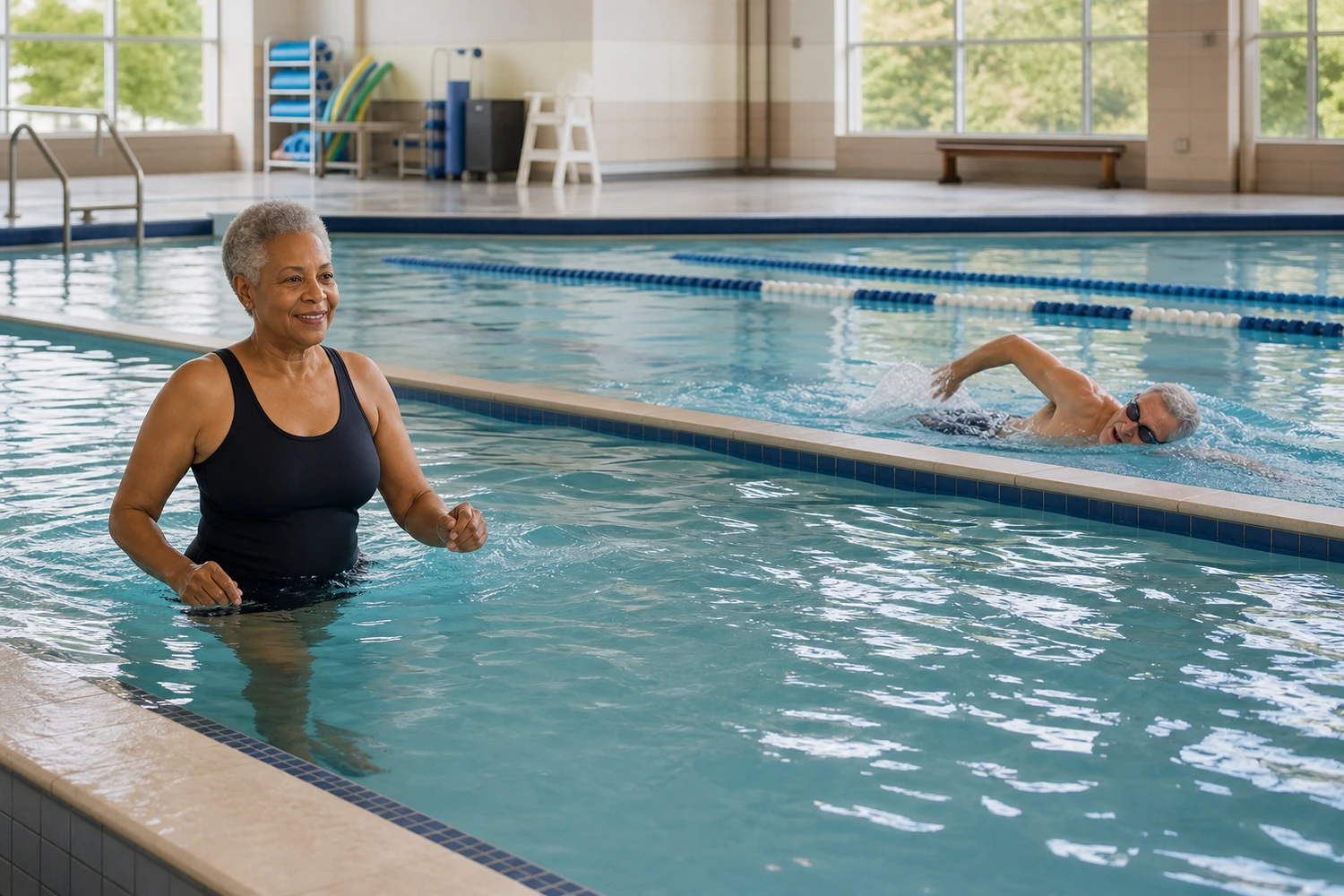
Swimming and water exercise can provide aerobic activity while water supports the body and adds resistance. Options range from lap swimming to water walking and structured aqua classes. The environment can feel comfortable for joints, but water safety, supervision, swimming skill, pool access and individual medical conditions remain important. You can put this idea into practice with Health Benefits of Cycling: A Beginner’s Guide.
Build Cardiovascular Fitness in the Water
Continuous swimming, water jogging and brisk water walking can raise heart rate and breathing. Intensity is adjusted through pace, stroke, depth, resistance and rest intervals. Beginners can accumulate short bouts rather than trying to swim nonstop.
Heart rate may respond differently in water than on land, so use breathing and perceived effort along with any device. At moderate effort, you should be working but still able to communicate.
Use Buoyancy to Reduce Weight-Bearing Stress
Water supports body weight, which can make movement more comfortable for some people with joint pain, larger bodies or limited land tolerance. Deeper water generally provides more support. Water resistance also lets effort increase without adding heavy equipment.
Joint-friendly does not mean appropriate for every condition. Pool entry, slippery decks and certain strokes may create challenges. People with arthritis, surgery or significant mobility limitations may benefit from a physical therapist or qualified aquatic instructor.
Train Multiple Muscle Groups
Swimming coordinates arms, legs and trunk against water resistance. Water walking, side steps, leg swings and arm pushes also train balance and muscular endurance. Technique determines which areas work and whether the neck or shoulders become overloaded.
Water training does not fully replace land-based strength or weight-bearing activity for bone health. Combine it with appropriate resistance exercise using the strength training benefits guide.
Choose Lap Swimming, Water Walking or a Class
Lap swimming suits people who can breathe comfortably and use a sustainable stroke. Water walking requires less swimming skill and can be performed in chest- or waist-deep water. Aqua classes add instruction, music and social support but vary widely in intensity.
Pick the option you can access safely and repeat. A confident swimmer may still prefer water walking during shoulder irritation, while a beginner may use a kickboard only under supervision because flotation equipment is not a substitute for water competence.
Learn Technique Before Adding Large Volume
Efficient body position and breathing reduce unnecessary effort. A few lessons can be more useful than repeatedly practicing a stressful stroke. Keep the neck aligned, rotate rather than lifting excessively to breathe, and avoid forcing a range that causes shoulder pain.
Use short distances with generous rest. Stop before form breaks down. If freestyle is uncomfortable, try backstroke, water walking or another professionally advised option rather than pushing through pain.
Try a 25-Minute Beginner Pool Session
Begin with five minutes of easy water walking or relaxed lengths. Complete eight rounds of one minute of swimming or brisk water movement followed by one minute easy. Finish with four to five minutes at a comfortable pace. Rest at the wall whenever needed.
Repeat twice weekly for two weeks. Then add two rounds or extend selected work periods. The stamina guide explains why duration should increase before too much intensity.
| Part | Time | Effort |
|---|---|---|
| Warm-up | 5 minutes | Easy movement |
| Main set | 8 × 1 minute work / 1 minute easy | Moderate and controlled |
| Skill practice | 3–5 minutes | Relaxed technique |
| Cool-down | 4–5 minutes | Easy |
Treat Water Safety as Non-Negotiable
Use a supervised facility, follow posted rules and swim within your ability. Never swim alone in open water. Pool skill does not automatically transfer to currents, waves, cold water or low visibility. Learn local open-water hazards and use appropriate flotation and supervision.
Children and inexperienced swimmers need close active supervision. Alcohol and drugs impair judgment and coordination. Learn CPR where possible, and know the location of rescue equipment without attempting a rescue beyond your training.
Protect Skin, Eyes and Respiratory Comfort
Shower before entering, avoid swallowing pool water and follow facility hygiene rules. Properly maintained pools reduce infection risk, but chlorine can irritate skin, eyes or airways. Goggles (paid link), showering after and changing out of wet clothing may improve comfort.
Do not swim with diarrhea, open infected wounds or when facility rules advise against it. People with asthma or chemical sensitivity should notice whether a particular pool environment worsens symptoms and discuss management with a clinician.
Adapt Water Exercise for Medical Conditions
Heart disease, uncontrolled blood pressure, seizure disorders, diabetes, pregnancy and recent surgery may require specific precautions. Water temperature and pressure affect circulation, and getting out of the pool can cause lightheadedness. Enter and exit slowly using rails.
If you use insulin or glucose-lowering medicine, plan monitoring and treatment for low blood sugar. Keep medicines and identification accessible on deck according to facility policy. Tell a companion or instructor about relevant risks.
Recover and Hydrate After Pool Exercise
You still sweat in water even when it is less noticeable. Drink according to the session, heat and medical advice. The hydration guide covers fluid and electrolyte context without prescribing a universal amount.
Rinse, dry thoroughly and eat a balanced meal after demanding sessions. Shoulder soreness should settle rather than worsen. Alternate strokes or water walking and include rest days if repeated overhead movement accumulates fatigue.
Track Useful Swimming Progress
Track comfortable minutes, lengths completed with good form, shorter rest at the same effort, or improved confidence in a skill. Pace differs by pool length and stroke, so compare similar sessions rather than other swimmers. Keep your session notes in a workout logbook (paid link) so you can compare the activity and recovery discussed here.
Increase total distance modestly and keep most work comfortable. One technique focus per session—such as relaxed exhalation or body position—is more manageable than correcting everything at once.
Treat Open Water as a Different Activity
Lakes, rivers and oceans add currents, waves, cold shock, low visibility, boats and changing weather. Swim only in designated supervised areas, use a visible swim buoy where permitted, stay with a capable partner and understand local hazards. Pool distance does not prove open-water readiness.
Enter cold water gradually according to safety guidance and leave before coordination or judgment declines. Check weather and water-quality advisories. Never assume a familiar location is safe after storms or seasonal changes.
Choose an Appropriate Water Exercise Class
Ask about water depth, swimming skill, pace, instructor qualifications and how movements are modified. A beginner or arthritis-focused class differs from a vigorous deep-water workout. Arrive early to discuss balance, shoulder, heart or joint concerns.
Use the pool wall or approved equipment as instructed, and do not copy jumps or resistance levels that cause pain. A good class offers alternatives and allows participants to control intensity without embarrassment.
Solve Common Pool-Access Barriers
If cost is a concern, check municipal pools, community centers, insurance benefits or off-peak passes. If changing facilities are difficult, visit in advance and ask about private stalls, accessible lifts and deck assistance. Plan transport and enough time so the session is not rushed.
For body-image concerns, choose comfortable secure swimwear and a quieter session. Most participants are focused on their own activity. Starting with water walking or a lesson can build confidence before joining a busy lane.
Build a Six-Week Pool Routine
During weeks one and two, attend twice weekly and alternate easy water movement with rest. Learn pool entry, lane etiquette and one breathing skill. In weeks three and four, add several minutes to the main set or practice a second movement such as backstroke or water walking.
In weeks five and six, extend one session while keeping the other focused on technique. Add land-based strength and balance work appropriate to your health. If shoulder, neck or back discomfort changes your stroke, reduce volume and ask for instruction rather than practicing the painful pattern.
Progress can mean calmer breathing, fewer rests, better confidence or more comfortable daily movement. It does not require racing another swimmer. Choose a long-term schedule that fits pool access, transport, changing time and recovery.
Frequently Asked Questions
Swimming uses many muscle groups and trains aerobic fitness, but land-based strength and weight-bearing exercise still provide distinct benefits.
Supervised shallow-water walking or an appropriate aqua class may be options. Stay within your ability and never rely on flotation equipment as a substitute for supervision.
Water support may make movement more comfortable, but the best depth, stroke and exercises depend on the condition.
Two short sessions weekly can be a reasonable start, with gradual additions when technique and recovery remain comfortable.
Fluid needs still exist because sweating occurs in water. Amount depends on duration, intensity, conditions and medical advice.
Safety and Scope
Drowning can occur quickly. Use supervised facilities, never swim alone in open water and stay within your skill. Medical conditions, cold water, currents and pool chemicals may require additional precautions.