Overview
Cycling can provide aerobic exercise, build local muscular endurance and make transportation more active. It is usually lower impact than running, but it still requires a suitable bicycle, gradual workload, traffic awareness and attention to hands, knees, back and saddle comfort. Indoor cycling offers an alternative when roads, weather or balance are barriers.
Build Aerobic Fitness at a Comfortable Pace
Pedaling raises heart rate and breathing while allowing the rider to control resistance and speed. At a moderate effort, you can speak in sentences while breathing faster. Regular sessions can contribute to weekly aerobic activity and the broader health benefits associated with physical activity.
Do not chase speed at the beginning. Wind, hills, tire pressure and bicycle type change pace. Use time and effort instead: 15 to 25 minutes at a conversational pace is a meaningful start.
Develop Leg Endurance Without Treating Cycling as Complete Strength Training
Cycling repeatedly uses the quadriceps, glutes, calves and supporting trunk muscles. Hills and resistance increase muscular demand, but the movement range is limited and does not train every major pattern. Include separate pushing, pulling, hinging and weight-bearing work.
The cardio and strength plan shows how to combine both without making every day hard. Strengthening hips and trunk may also improve comfort and control on the bicycle.
Use Cycling as a Lower-Impact Cardio Option
Because body weight is supported by the saddle, cycling often produces less impact than jogging. This can help people who prefer not to run. Lower impact does not mean zero stress: a poor setup or sudden high volume can irritate knees, neck, hands or the saddle area.
People with joint pain, balance problems, osteoporosis or recent surgery should choose the type of cycle and supervision carefully. A recumbent stationary bike may feel more stable, while outdoor riding adds fall and traffic risk.
Set Up the Bicycle for Basic Comfort
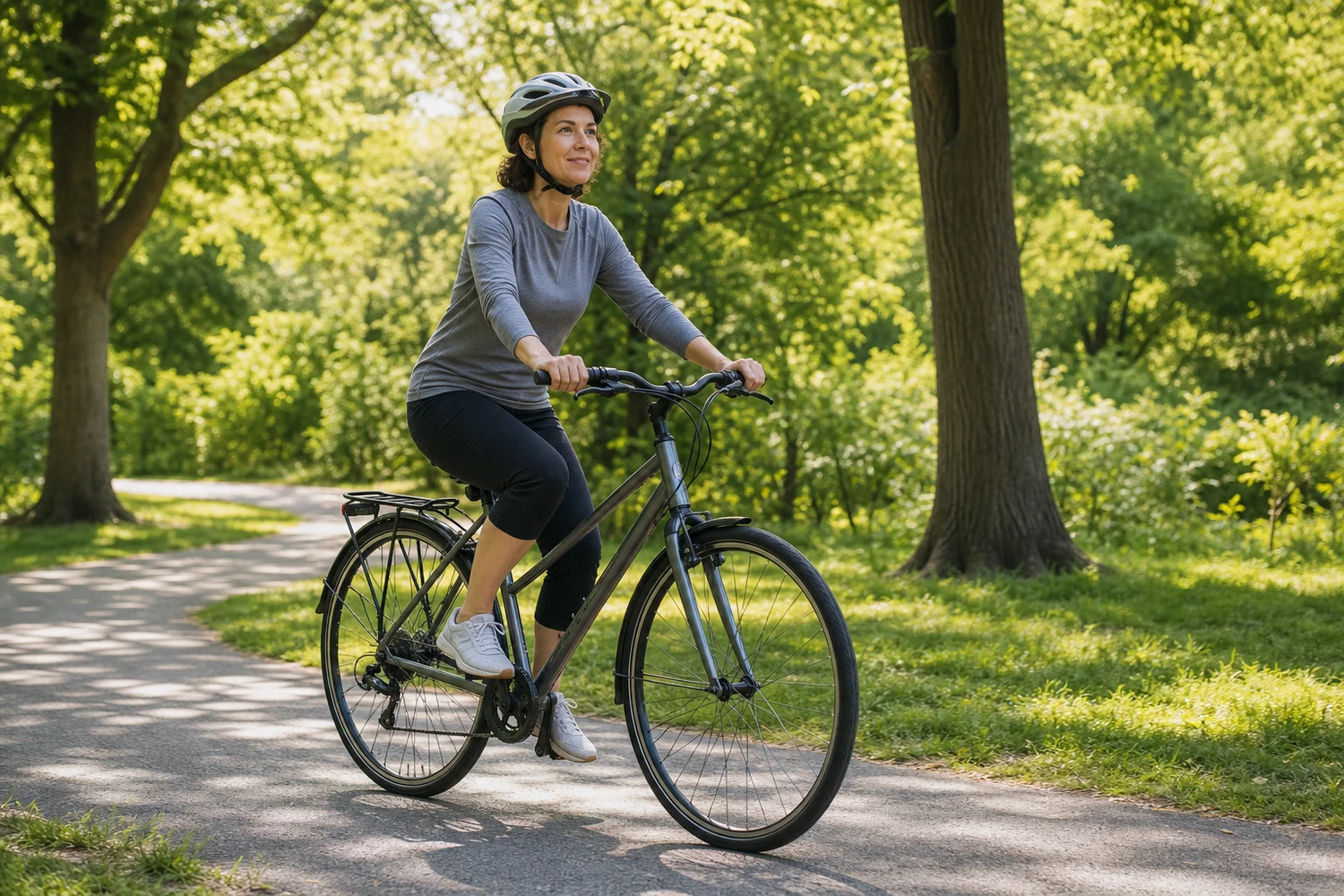
At the bottom of the pedal stroke, the knee should retain a slight bend rather than locking or remaining deeply bent. The rider should reach the handlebars without excessive rounding or shoulder tension. Adjust saddle height in small steps and test in a safe area.
Persistent knee pain, numb hands, severe saddle discomfort or back pain is not something to push through. A qualified bike fitter or physical therapist can help when basic adjustments fail. Padded shorts and gradual exposure may improve saddle comfort, but numbness needs attention.
Prioritize Helmet, Visibility and Route Safety
Wear a properly fitted bicycle helmet and follow local traffic laws. Use lights and reflective elements when visibility is limited. Check tires, brakes, chain and quick-release or axle security before riding. Carry identification, a phone and basic repair supplies appropriate to the route.
Begin on a protected greenway, quiet street or traffic-free area. Practice starting, stopping, signaling and looking behind without swerving. Avoid headphones that block awareness and never ride impaired. Road rules vary, so learn local requirements.
Use Indoor Cycling When It Improves Safety or Consistency
Stationary bicycles remove traffic, weather and balance concerns and make resistance easy to control. Adjust the saddle and handlebars before class, and tell the instructor you are new. You do not need to match the room’s resistance or cadence.
Indoor sessions can become intense quickly. Keep early rides mostly comfortable and use the heart-rate zones guide to understand why device targets are estimates. The talk test remains useful.
Follow a Four-Week Beginner Cycling Plan
Week one: ride twice for 15 to 20 minutes. Week two: add a third easy ride or extend one by five minutes. Week three: include four one-minute brisk periods separated by easy pedaling. Week four: repeat the schedule or extend the longest comfortable ride by five to ten minutes.
Keep at least one recovery day after the most demanding session. If soreness changes your pedaling or persists, reduce volume and review fit. Progress only after the current week feels repeatable.
| Week | Sessions | Focus |
|---|---|---|
| 1 | 2 × 15–20 minutes | Comfort, braking and cadence |
| 2 | 2–3 easy rides | Add only a little time |
| 3 | 2 easy + 1 with short brisk efforts | Controlled intensity |
| 4 | Repeat or extend one ride | Consolidate before progressing |
Fuel and Hydrate for the Ride You Are Actually Doing
Many short recreational rides require only normal meals and water. Longer sessions may need carbohydrate and a plan for fluids, particularly in heat. Do not copy an endurance athlete’s intake for a 20-minute ride.
Carry water and know refill points. The hydration guide explains heat, sweat and electrolyte context. For longer rides, practice foods in training rather than trying an unfamiliar product far from home.
Recover From Cycling Without Becoming Inactive
Easy walking and mobility can relieve stiffness after time in one position. Eat a normal balanced meal with carbohydrate and protein, replace fluid losses and sleep adequately. Severe soreness is not required for improvement.
Alternate hard and easy days. A gentle spin is recovery only if resistance and duration stay easy; a competitive class may add fatigue. Use the rest-day guide to decide between rest and light movement.
Turn Cycling Into Useful Transportation Safely
A short commute or errand can accumulate activity without a separate workout. Test the route on a quiet day, identify protected lanes and secure parking, and leave extra time so traffic does not pressure you into unsafe decisions.
Carry loads in a rack or secure bag rather than an unstable handlebar package. Plan clothing, lighting and weather alternatives. An e-bike can expand range and still provide activity, but higher speed and heavier weight require handling practice.
Know When to Stop or Get Help
Stop for chest discomfort, faintness, severe unusual breathlessness, sudden weakness or loss of control. Seek urgent care as appropriate. After a fall, do not continue if there may be head, neck or significant limb injury.
Gradual muscle fatigue is expected, but sharp joint pain, persistent numbness or worsening saddle symptoms need fit changes or assessment. People with cardiovascular disease or uncontrolled blood pressure should get individualized exercise guidance.
Use Gears to Keep Pedaling Comfortable
Shift to an easier gear before a hill so cadence remains smooth and the knees are not forced to push a very heavy resistance. Beginners often stay in one gear until pedaling becomes uncomfortable. Practice shifting on flat, traffic-free ground and learn how the bicycle responds.
A very high or very low cadence may feel awkward. Choose a rhythm that keeps breathing controlled and hips steady. Noise, skipping gears or a chain that falls repeatedly suggests maintenance is needed rather than a fitness problem.
Adapt Riding for Weather and Visibility
Wet roads increase stopping distance and make painted lines, leaves and metal surfaces slippery. Reduce speed, brake earlier and avoid sharp turns. In heat, shorten rides and plan water access. In cold, protect hands and feet while keeping clothing clear of moving parts.
If visibility, air quality, ice or wind creates unacceptable risk, ride indoors or choose another activity. Consistency does not require proving toughness in dangerous conditions. Check local advisories before leaving.
Perform a Basic Pre-Ride Check
Confirm that tires are appropriately inflated, brakes engage, wheels are secure, the chain moves smoothly and the saddle has not shifted. Squeeze each brake separately while stationary and inspect for obvious damage. A quick check can prevent a small mechanical problem from becoming a fall.
Schedule professional service when braking, steering or shifting is unreliable. Learn how to repair a flat only in a safe setting, and carry a transit or pickup backup for routes beyond walking distance. Mechanical preparedness supports confidence.
Build a Six-Week Cycling Routine
Spend weeks one and two practicing starts, stops, gears and two short comfortable rides. In weeks three and four, add a third ride or extend one ride by ten minutes. Keep the route predictable and review hand, knee, back and saddle comfort after each session.
During weeks five and six, add four to six short brisk efforts on one ride while keeping the others easy. Include two basic strength sessions and at least one noncycling recovery day. Increase only when normal movement feels comfortable the following day.
At the end, choose whether the next goal is transportation, longer recreation or fitness. That choice determines route practice and equipment. Avoid buying major upgrades until the current bicycle, fit and routine reveal a real need.
Frequently Asked Questions
Yes. Resistance and duration can be adjusted, making cycling a scalable aerobic option.
It builds endurance, but separate resistance training provides a fuller strength stimulus and trains other movement patterns.
At the bottom of the pedal stroke, the knee should usually retain a slight bend. Make small adjustments and seek fitting help for persistent pain.
No. A safe, functional bike that fits and suits the route is more important than premium equipment.
An e-bike can still involve pedaling and support active transportation. Effort depends on assistance level, terrain and duration.
Safety and Scope
Outdoor cycling adds traffic and fall risk. Wear a fitted helmet, follow local laws, use visible lighting and maintain the bicycle. Concerning symptoms or significant injuries require appropriate medical care.