Published by Best Fitness Routine. Editorial standards · Report a correction. Educational guidance; no individual clinical review is claimed unless a qualified reviewer is named.
A Practical Starting Point
As an Amazon Associate I earn from qualifying purchases. This guide includes paid Amazon links.
A 20 minute elliptical workout for beginners should leave room to learn the movement. This original session uses four easy minutes, twelve minutes alternating comfortable steady work with easier pedaling, and four easy minutes to finish. You can shorten it or keep every minute easy. The goal is a session you can control and repeat, rather than a particular distance, resistance number or calorie reading. An elliptical is also called a cross-trainer; the plan works by effort, so it does not depend on a particular console.
Prepare before the clock starts
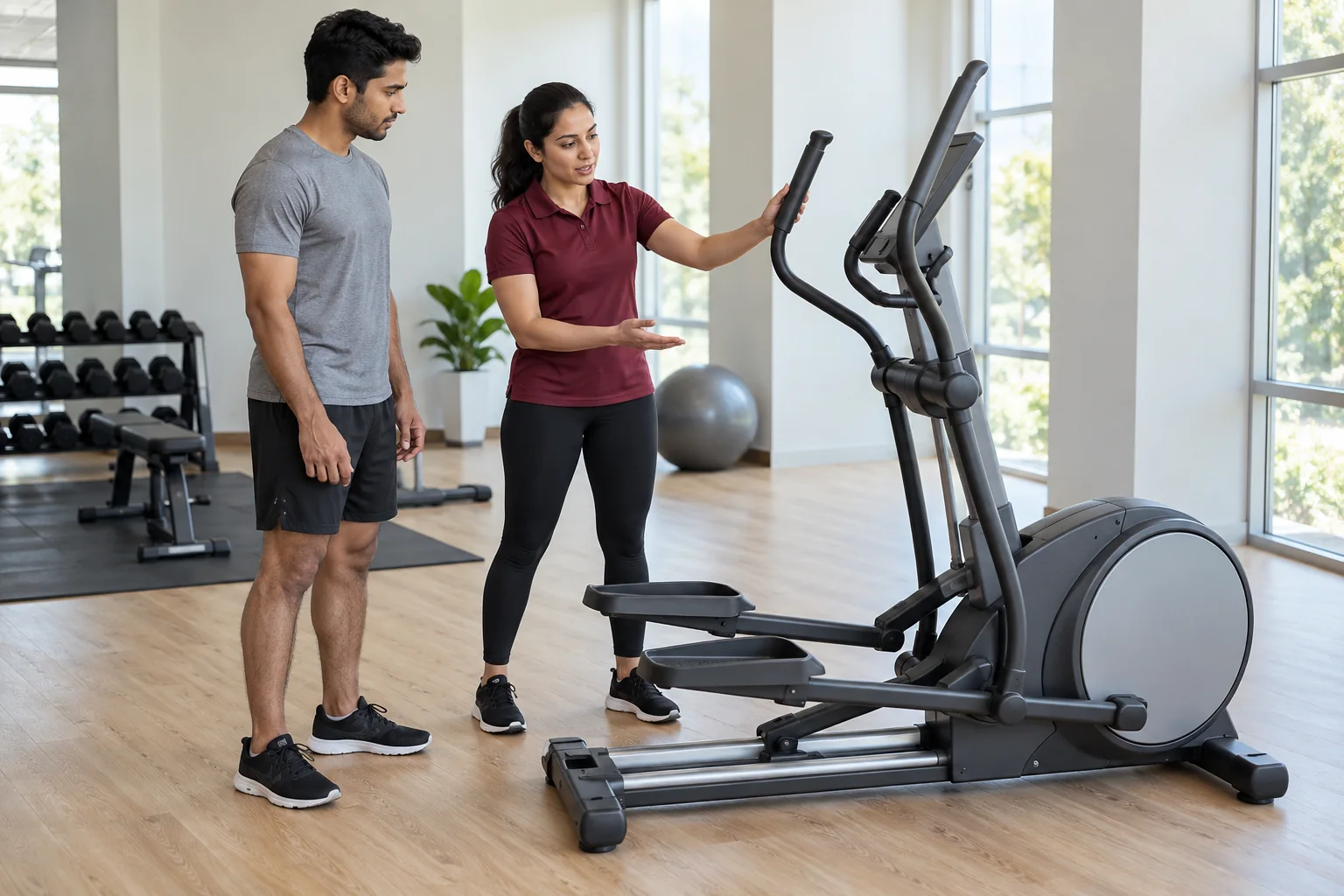
Find the manual or ask gym staff to show you the controls, fixed handrails and correct way to get on and off that model. Allow enough time for this before starting the workout timer. Check that your shoelaces and clothing cannot reach moving parts, and put your bottle where you can reach it without leaning across the console. Keep the floor around the machine clear.
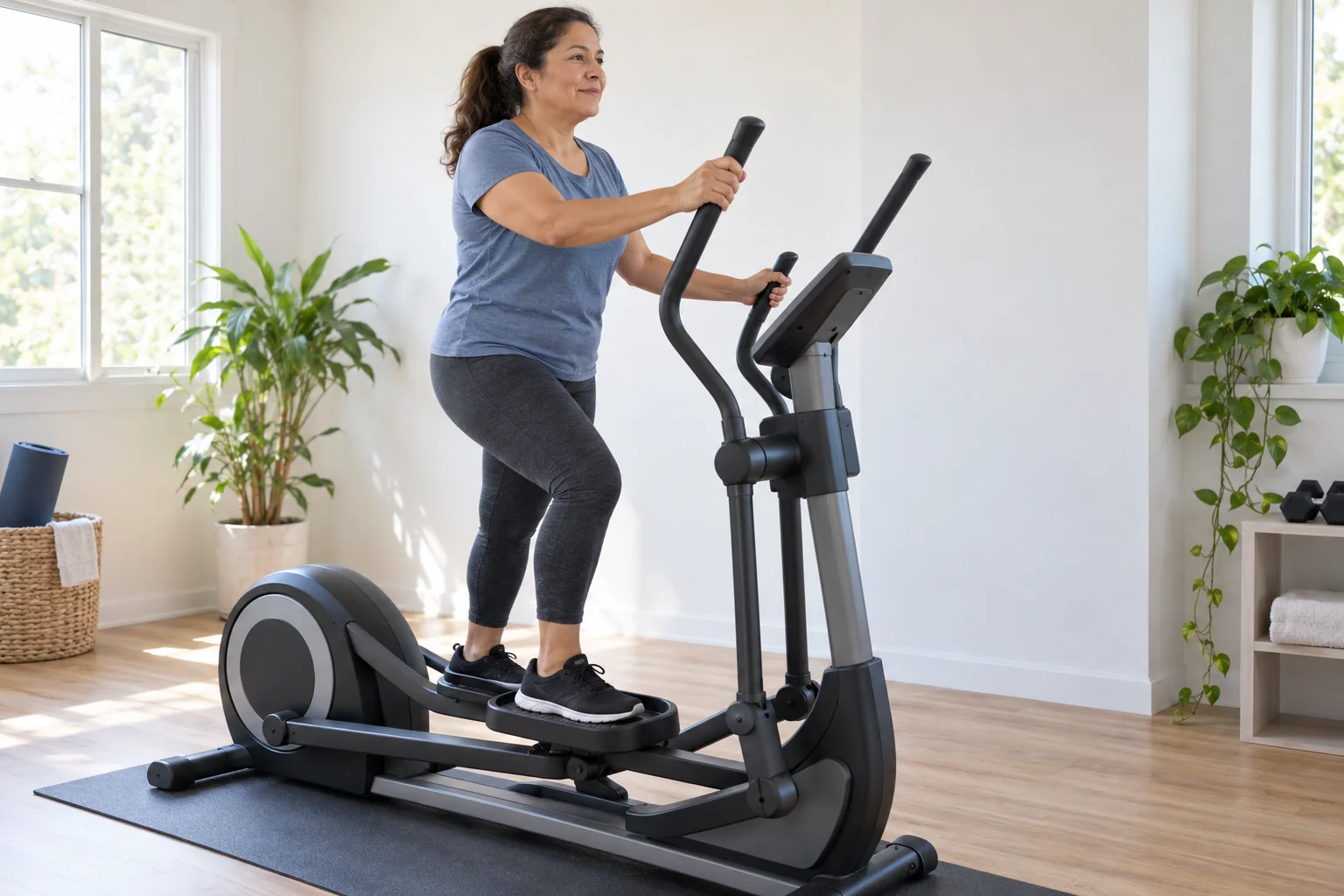
Use stable fixed rails while learning. Follow the manufacturer's mounting sequence, remembering that a pedal can move as your weight transfers. Begin with gentle forward pedaling in a manual or simple-start mode, if available. Preparation is successful when you can adjust effort and finish safely, even if a few minutes of practice is enough today. For a fuller orientation, see how to use an elliptical machine correctly.
Minutes zero to four: find an easy rhythm
Start at a setting that allows smooth, unhurried pedaling. Keep your gaze generally ahead and your shoulders comfortable. You should be able to talk easily. Resist raising resistance because the opening minute feels undemanding; this part is an opportunity to notice how the stride fits and whether you feel steady.
During the second half of the opening, practise one small control adjustment and return to easy effort. Know which button lowers resistance before you need it. If you are still concentrating hard on balance or the console at four minutes, stay easy. The planned steady segments are optional. A machine that feels awkward at every setting may be a poor fit, rather than evidence that you need to force a longer session.
Minutes four to sixteen: repeat three comfortable cycles
Complete three cycles of two minutes at a comfortable steady effort followed by two minutes easy. The changes are 4–6 steady, 6–8 easy, 8–10 steady, 10–12 easy, 12–14 steady and 14–16 easy. You can mark those changes on a simple timer before getting on, so you do not have to calculate while pedaling.
For each steady segment, make only a small change in pace or resistance. Keep enough control to complete the full segment without leaning heavily on the rails. The CDC's talk-test guidance describes moderate effort as being able to speak but finding singing difficult. Treat that as an upper reference for this beginner example; the steady parts can be gentler. Easy segments should feel clearly easier, even if that means lowering the setting below where you began.
An optional simple interval timer (paid link) can mark the two-minute changes without handling a phone; the console clock may already be enough.
Minutes sixteen to twenty: finish deliberately
Return to easy pedaling for the final four minutes. Let the final minute be quieter than the first one of this block if that feels comfortable. This is not a last chance to chase a console target. Notice whether you can maintain an ordinary conversation and whether your feet and legs feel comfortable as you slow.
At the end, follow the machine's stopping instructions and wait for a controlled halt before stepping off. Hold the fixed rails through the manufacturer's dismount sequence. Life Fitness's Atmos mounting and dismounting guide illustrates why moving pedals require care; use your own model's instructions rather than assuming its exact sequence applies. Allow extra time for putting equipment away and leaving the area without rushing.
Choose a shorter version before technique fades
You do not have to complete all three cycles. A twelve-minute version is four easy minutes, one four-minute steady-and-easy cycle and four easy minutes. A sixteen-minute version uses two cycles between the same opening and ending. These versions preserve the structure without asking you to speed through recovery.
You can also keep the full twenty minutes easy, or end earlier if even the short version feels excessive. Stop for pain, dizziness or abnormal breathlessness; a timer is not a reason to continue through symptoms. This guide is ordinary healthy-adult exercise education, not a rehabilitation prescription. Severe or persistent chest discomfort, fainting during exercise or severe breathing difficulty calls for urgent medical help. Seek individual advice if a health condition or unexplained symptoms make the appropriate starting point uncertain.
Record enough to make the next visit simpler
After stepping off, write down the machine identifier, the version completed and a brief description of effort. A note such as 'sixteen minutes, steady parts conversational, last cycle skipped because legs felt tired' is more useful than recording only distance. A small notebook can keep these observations together without needing to handle your phone during exercise.
Repeat a comfortable version before changing it. If you finish in control and ordinary movement feels normal afterward, the next visit might use the same plan again or add the missing cycle. If the session disrupted the rest of your day, choose a shorter or easier repeat. The four-week beginner elliptical plan shows how individual sessions can fit into a week. It does not require an increase every time you arrive at the gym.
A small workout notebook (paid link) can hold the duration, model and effort notes after dismounting; any notebook or phone note works.
Practice and Setup Checklist
- Check the model's controls and mounting instructions.
- Pedal easily for four minutes.
- Repeat two steady minutes and two easy minutes three times, if comfortable.
- Finish with four easy minutes and stop the pedals as instructed.
- Record the version completed and how it felt afterward.
Practical Options at a Glance
| Time | Task | Adjustment |
|---|---|---|
| 0–4 minutes | Easy opening | Stay here longer if learning the stride |
| 4–16 minutes | Three cycles: 2 steady + 2 easy | Use one or two cycles for a shorter session |
| 16–20 minutes | Easy finish | Follow the machine's stopping and dismount instructions |
Common Mistakes and Useful Adjustments
The change should be small enough to preserve control and conversation; a brisk finish is not part of this example.
If time runs short, remove a whole cycle instead of removing the opening or rushing the finish.
Different consoles and stride systems make distance and resistance poor universal targets. Compare your own effort and control.
Frequently Asked Questions
No. It is a convenient example length. Use twelve or sixteen minutes, stay easy, or stop sooner when appropriate.
Begin with fixed rails. Ask staff or consult the manual before adding moving arms, and use them only when stable and comfortable.
Choose a setting that permits smooth movement at the intended effort. There is no beginner level number that transfers between brands.
No. Easy practice and preparation can be light activity. Judge the working portions by their actual effort rather than counting the whole clock automatically.
Safety and Personal Needs
This is general fitness education, not a personalized exercise or rehabilitation plan. Learn the actual model’s entry, controls, supports and stopping procedure with gym staff or the manufacturer’s instructions. Stop for pain, dizziness, instability or unusual breathlessness. Chest pain, fainting or severe unexpected breathlessness needs urgent appropriate help. Follow individual guidance for a medical condition, pregnancy, recent surgery or injury. A written guide and illustrative image cannot assess your movement or establish whether a machine suits you.
Sources and Further Reading
- CDC: Measuring physical activity intensity
- Life Fitness: Atmos mounting and dismounting
- NHS: Chest pain warning signs
- NHS: Severe breathing difficulty
Prepared by the Best Fitness Routine Editorial Team. The example sessions are educational frameworks; they have not been individually tested for every reader. Images are AI-generated illustrations.