Published by Best Fitness Routine. Editorial standards · Report a correction. Educational guidance; no individual clinical review is claimed unless a qualified reviewer is named.
A Practical Starting Point
As an Amazon Associate I earn from qualifying purchases. This guide includes paid Amazon links.
A 4 week elliptical workout plan for beginners is a framework for deciding when to practise and when to repeat. It is different from a single twenty-minute workout. This original example starts with two nonconsecutive sessions, keeps the first visits easy and allows an optional third visit later only if recovery is comfortable. Weeks are checkpoints, not deadlines. You can repeat any week, use shorter sessions or choose another suitable activity when an elliptical or cross-trainer does not fit your needs.
Set two realistic appointments and a smaller fallback
Choose two days with at least a day between them, such as Tuesday and Friday. Add travel, setup and changing time to the appointment so planned exercise minutes do not become a rushed gym visit. If the week becomes crowded, use a shorter familiar session rather than squeezing several missed visits into consecutive days.
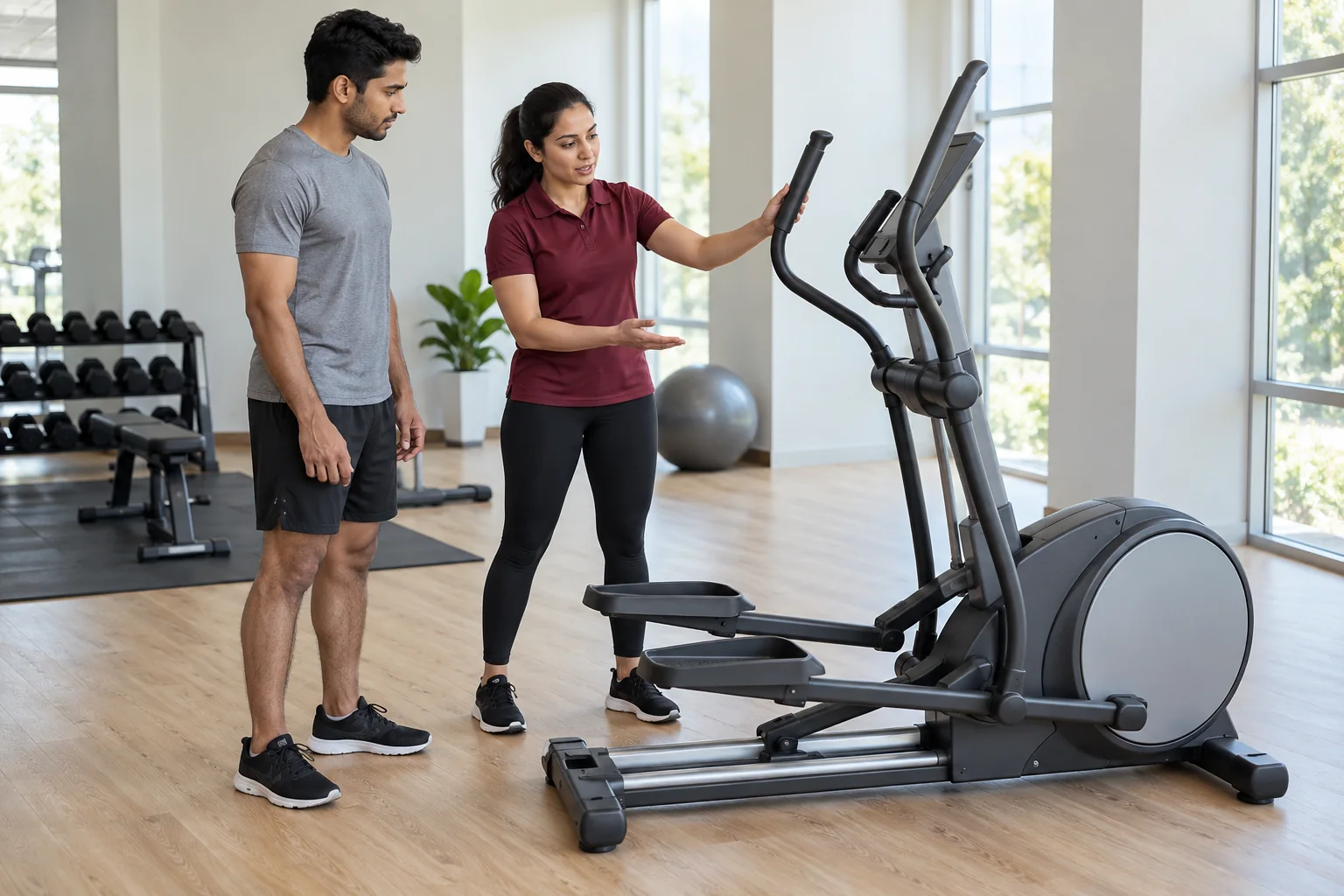
Keep a simple calendar note for the intended session and the smallest version you are willing to attempt. For example, 'easy practice, up to twelve minutes; shorter if needed' removes the pressure to earn a tick only by finishing a long workout. These starting amounts are practical examples rather than minimum effective doses. Read the elliptical setup guide before the first visit and learn the manufacturer's fixed-support mounting and controlled dismounting procedure.
A simple workout calendar (paid link) can reserve two realistic appointments and a smaller fallback; a phone calendar works equally well.
Week one: make the sequence familiar
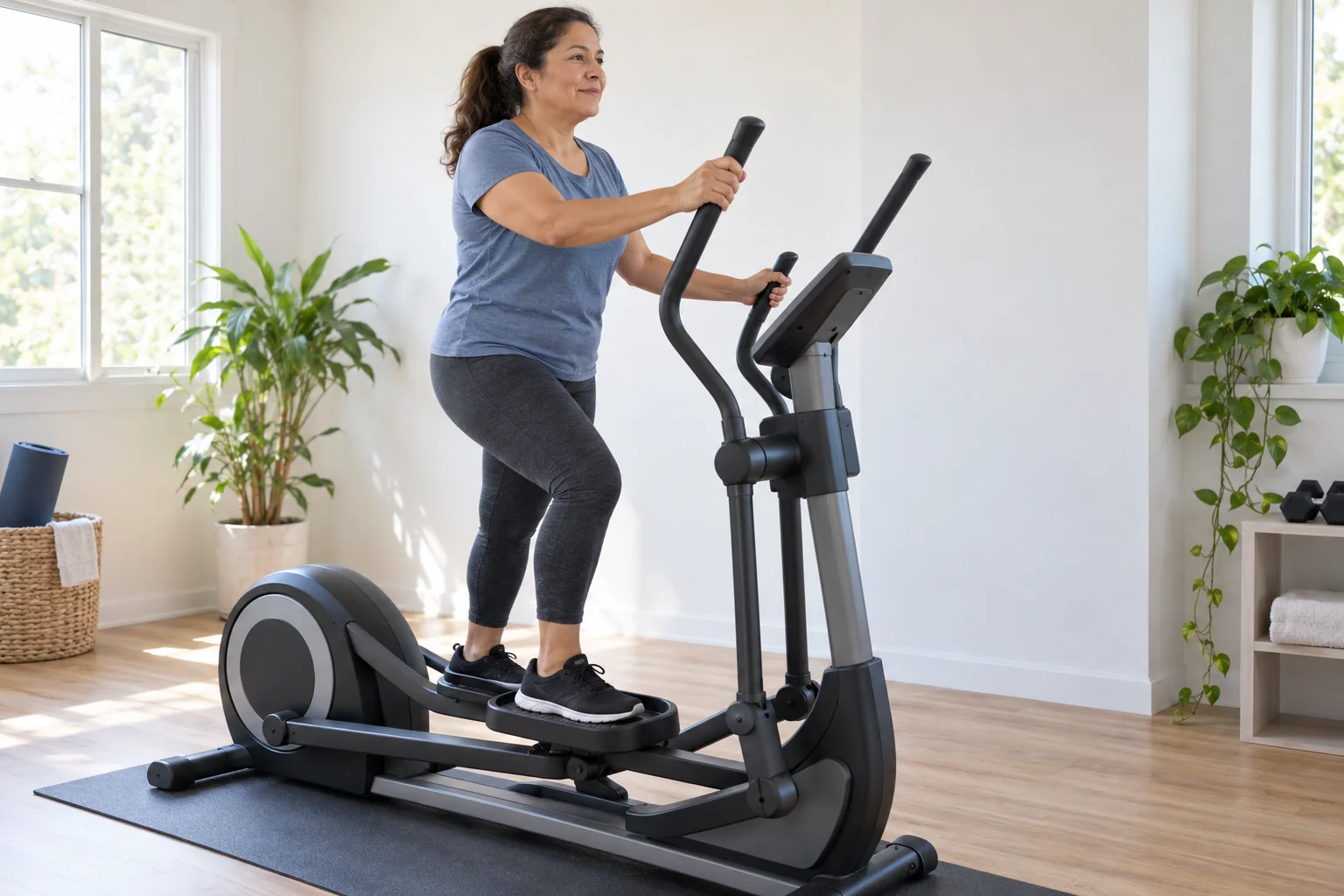
Use two nonconsecutive easy sessions. An example is eight to twelve minutes each, beginning gently and finishing with several easy minutes. If that is already too much, reduce the time; if you are new to the machine, familiarisation may take most of a visit. Keep fixed rails available and practise gentle forward pedaling, adjusting effort downward and stopping as instructed.
Judge the week by whether the second visit feels less confusing and whether ordinary movement afterward remains comfortable. Do not add intervals simply because the first few minutes feel easy. A short session can do the intended job of establishing a manageable routine. Write a note about any awkward control, unsuitable stride or scheduling obstacle, since solving those problems may be more useful than extending the next session.
Week two: repeat first, then consider a little more time
Keep the same two nonconsecutive appointments. If week one was comfortable during exercise and afterward, you might use twelve to sixteen minutes at mostly easy effort. Otherwise repeat the previous duration or shorten it. Progression depends on your response, not the number printed at the top of the calendar.
One possible sixteen-minute session is four easy minutes, two cycles of two comfortable steady minutes plus two easy minutes, and four easy minutes. It is a shorter version of the 20-minute beginner workout. Keep the steady portions gentle enough to maintain control. If you spend the whole session easy, that remains a valid choice; the weekly objective is a repeatable pattern, rather than proving every visit must feel harder.
Week three: choose between longer familiar sessions and an optional extra visit
If the previous week was manageable, choose one change. You could keep two sessions and use sixteen to twenty minutes, or keep their familiar length and consider a third, shorter easy visit. An illustrative three-day pattern is Monday, Wednesday and Saturday. Do not add the extra visit and lengthen both existing sessions at the same time.
The third visit is optional, including for someone who completes the first two comfortably. Work, walking, sport and strength sessions all belong in the recovery picture. A busy week may be a good time to repeat two familiar visits. If a third session makes the following appointment feel unusually difficult, remove it and reassess. A planner can help you see the whole week, but the record should support decisions rather than turn every empty day into an invitation to exercise harder.
An optional weekly training planner (paid link) can show elliptical sessions beside other activity and rest; empty days need not be filled.
Week four: consolidate the version that works
Keep the previous week's successful pattern, or return to an earlier one if needed. If two twenty-minute sessions feel sustainable, there is no obligation to make them longer this week. Someone comfortable with effort changes might replace one session with a shortened brisk-and-easy format, but should avoid adding interval intensity and extra weekly sessions together.
Review a few concrete questions: did appointments fit, did movement stay controlled, and were you ready for ordinary activity afterward? If uncertain, repeat the week with one adjustment. Public-health targets are a longer-term context, not a four-week graduation test. The NHS adult activity guidance includes aerobic activity and muscle strengthening; these introductory elliptical visits do not automatically supply the entire weekly recommendation.
Decide what belongs in the next month
Continue the smallest routine that fits consistently before adding complexity. You might repeat week four, add a few comfortable minutes to one visit, or include another suitable activity you enjoy. The cardio and strength weekly plan can help organise different kinds of training without treating the elliptical as the whole programme. Record actual effort as well as minutes; light practice time should not automatically be labelled moderate exercise.
Stop for pain, dizziness or abnormal breathlessness. Severe or persistent chest discomfort, fainting during exercise or severe breathing difficulty warrants urgent medical help. This plan is general healthy-adult education, not a personal medical prescription. A health condition, injury or unexplained symptom may call for individual guidance. If several attempts leave you unusually fatigued or uncomfortable, reduce the plan and investigate the cause rather than assuming the calendar requires you to push through.
Practice and Setup Checklist
- Reserve two nonconsecutive appointments and a shorter fallback session.
- Use week one for easy familiarisation and a controlled exit.
- Repeat or modestly extend in week two only if recovery is comfortable.
- Consider a third easy visit later instead of increasing everything together.
- Review the month and repeat the most manageable pattern.
Practical Options at a Glance
| Checkpoint | Illustrative pattern | Decision rule |
|---|---|---|
| Week 1 | 2 nonconsecutive visits; 8–12 easy minutes if suitable | Shorter practice is acceptable |
| Week 2 | 2 visits; repeat or consider 12–16 minutes | Increase only if the previous week was manageable |
| Week 3 | 2 familiar visits; optional third short easy visit | Choose extra time or frequency, not both together |
| Week 4 | Keep the successful pattern or repeat an earlier week | Consolidation is a useful outcome |
Common Mistakes and Useful Adjustments
The plan offers a checkpoint. Symptoms, fatigue and recovery matter more than the date.
Return to a manageable schedule. Missed visits do not require consecutive hard days.
Preparation, easy practice and cooldown can be light activity. Record actual effort rather than assigning one label to the entire visit.
Frequently Asked Questions
No. Two manageable nonconsecutive visits can remain your pattern. A third visit is optional and depends on recovery and other activity.
No. This guide schedules activity across four weeks. A twenty-minute workout is one possible session within that schedule.
Restart with a familiar easier version and reassess. You do not need to complete the missed week before continuing.
Not necessarily. These are introductory elliptical examples. Total activity, actual intensity and muscle-strengthening work all matter in a broader routine.
Safety and Personal Needs
This is general fitness education, not a personalized exercise or rehabilitation plan. Learn the actual model’s entry, controls, supports and stopping procedure with gym staff or the manufacturer’s instructions. Stop for pain, dizziness, instability or unusual breathlessness. Chest pain, fainting or severe unexpected breathlessness needs urgent appropriate help. Follow individual guidance for a medical condition, pregnancy, recent surgery or injury. A written guide and illustrative image cannot assess your movement or establish whether a machine suits you.
Sources and Further Reading
- NHS: Physical activity guidelines for adults
- CDC: Measuring physical activity intensity
- NHS: Chest pain warning signs
- NHS: Severe breathing difficulty
Prepared by the Best Fitness Routine Editorial Team. The example sessions are educational frameworks; they have not been individually tested for every reader. Images are AI-generated illustrations.