Published by Best Fitness Routine. Editorial standards · Report a correction. Educational guidance; no individual clinical review is claimed unless a qualified reviewer is named.
A Practical Starting Point
As an Amazon Associate I earn from qualifying purchases. This guide includes paid Amazon links.
The most useful elliptical resistance settings for beginners are the ones that let you move smoothly at the effort you intended. Level three can feel different on another model, and the same level can feel different when you change pace. Start with an easy setting, make small adjustments and check your response before adding more. This guide helps you build a repeatable method for an elliptical or cross-trainer without pretending that a single resistance or cadence number suits every user.
Separate resistance from the effort you feel
Resistance describes one way the machine loads the movement. Your experience also depends on pace, stride design, any ramp or incline adjustment, use of the handles and how you feel that day. A setting that was comfortable when fresh might be demanding after a long walk or a weights session. Treat the number as a local reference rather than a score.
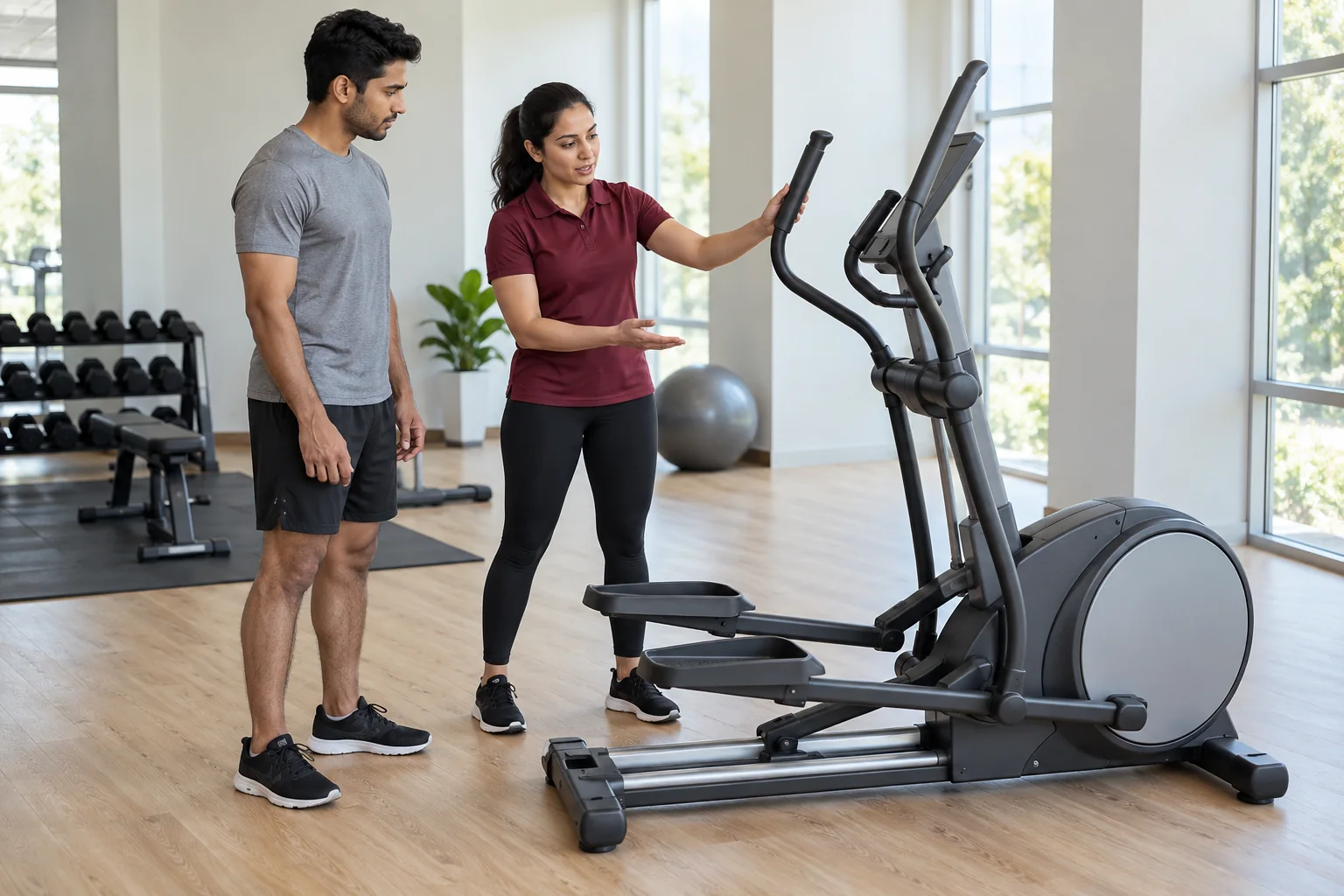
Before getting on, identify the controls that raise and lower resistance. If the console offers automatic programmes, choose a manual option for this practice where available. Check the model's manual so you understand what each control changes. The official Life Fitness manuals hub is an example of a manufacturer resource; find the corresponding guide for your own equipment instead of copying settings from an unrelated cross-trainer.
Establish an easy baseline before adjusting
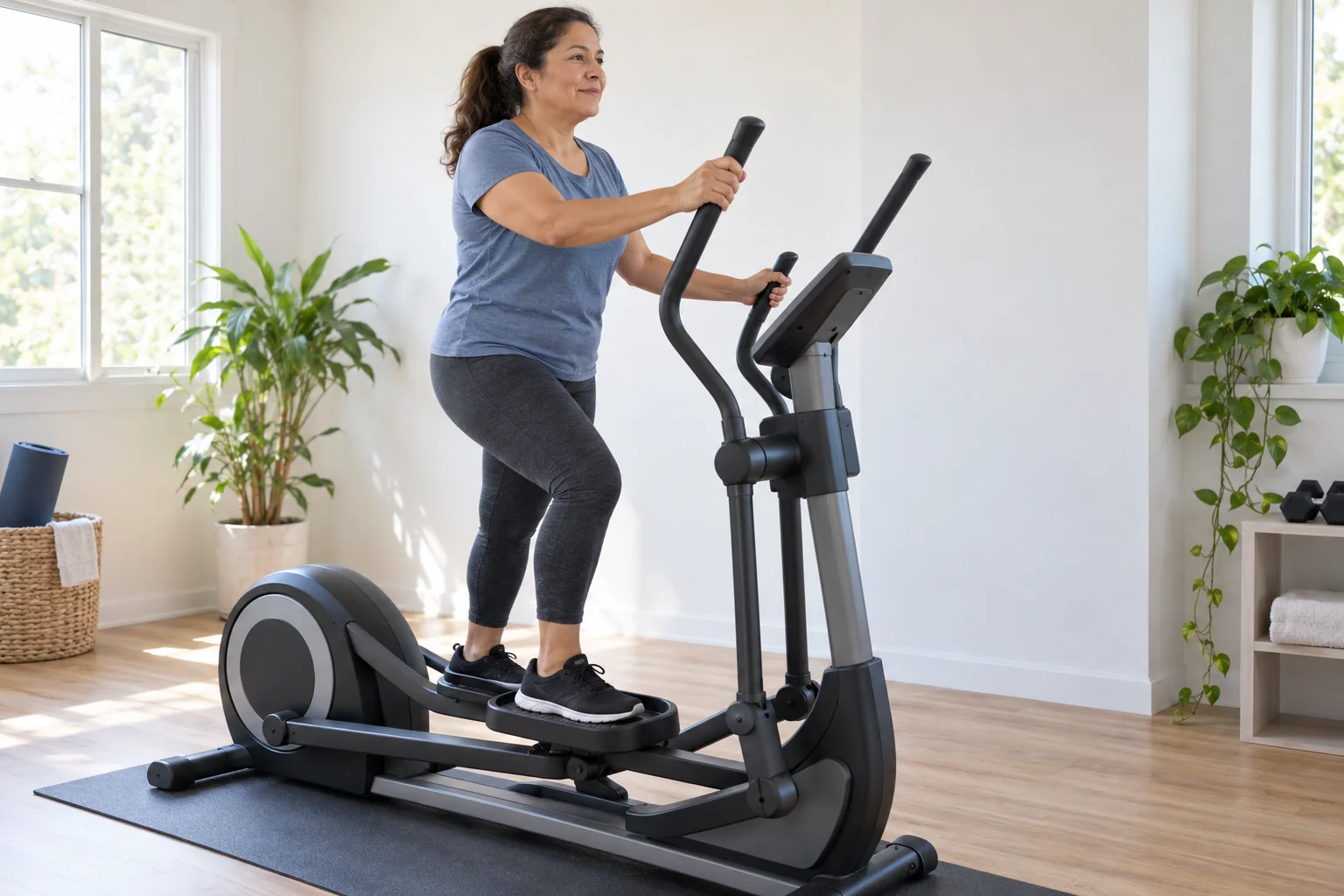
Follow the manufacturer's supported mounting procedure, use fixed rails initially and begin gentle forward pedaling. Spend a few minutes finding a rhythm that does not require you to rush or force the pedals. Choose the lowest comfortable setting that allows controlled movement; the lowest numerical level is not automatically the smoothest experience on every model.
At this baseline, conversation should feel easy and your hands should not be bearing most of your weight. Check that you can lower effort promptly. If the machine has a ramp, leave that unchanged while you learn resistance. Starting each visit with the same brief observation helps you recognise whether today's ordinary setting already feels unusually demanding. That is useful information, not a reason to fight the machine until it matches an old log entry.
Make one small change and wait long enough to judge it
Increase resistance by the smallest practical step while keeping your pace roughly similar. Give yourself a comfortable observation period, such as around a minute, before deciding whether another change is necessary. This is an original calibration example, not a physiological test with a required measurement interval. Notice breathing, leg effort and whether movement remains smooth.
If your feet stall, you start rocking or you need a strong pull on the handles, reduce the load. If the change feels barely noticeable, you can leave it there for this session; a beginner workout does not need to discover the highest tolerable setting. A simple watch can help mark the observation period, but the console clock works too. Keep attention and hand support available for movement rather than repeatedly operating a separate device.
A simple workout watch (paid link) can time a brief observation period; the console timer can do the same job without another device.
Use breathing and perceived effort together
Use a short sentence as a practical check when deciding whether effort remains suitable. The CDC's intensity guidance uses talking and singing to distinguish moderate activity from harder work. You can also describe effort in ordinary words such as easy, steady or too demanding. Neither method requires chasing a heart-rate zone on a hand sensor.
For an easy day, keep breathing comfortable. For a steady beginner block, allow a modest rise in breathing while preserving control. If the plan calls for easy recovery and you remain too breathless to speak comfortably, lower pace, resistance or both. The purpose is to match the task, not keep a screen number unchanged. A console's estimated calories should not decide whether resistance is high enough.
Record a setting with its context
After dismounting, note the machine model or gym station, resistance, approximate duration, use of ramp settings and how the effort felt. Add whether you used fixed support or moving arms. 'Level four, eight comfortable minutes after a short warm-up, conversational throughout' tells you much more than 'level four'. A small training log is sufficient; you do not need software that turns every session into a competition.
On another machine, begin calibration again. Even similarly numbered models may have different consoles, stride paths or maintenance histories. Use the 20-minute beginner elliptical workout for a timed session once you can find easy and steady settings. If learning controls still occupies all your attention, the elliptical setup guide is a better next step than more resistance.
Use a small training log (paid link), if helpful, to record the model and effort rather than treating resistance levels as universal scores.
Progress by changing one part of the task
When your current session feels comfortably repeatable and you recover well, choose one small change: a little more time at the same effort, an extra short steady block, or a small resistance adjustment. Keep other parts familiar. There is no need to increase resistance every week, and no universal percentage rule establishes the right change for every beginner.
Repeat or reduce the session after poor sleep, unusual fatigue or a difficult previous workout. Stop for pain, dizziness or abnormal breathlessness. Persistent discomfort at otherwise easy settings may indicate a fit or health question that a number cannot solve. This is healthy-adult exercise education, not medical advice. Severe or persistent chest discomfort, fainting during exercise or severe breathing difficulty warrants urgent medical help. Seek individual advice for unexplained symptoms or a condition that changes what exercise is suitable.
Practice and Setup Checklist
- Learn what the machine's resistance and ramp controls change.
- Find several minutes of easy, supported forward pedaling.
- Adjust resistance by one small step while keeping pace familiar.
- Check breathing, movement quality and ability to return to easy effort.
- Record the machine, setting, duration and perceived effort after finishing.
Practical Options at a Glance
| What you notice | Likely next action | What to record |
|---|---|---|
| Smooth stride and easy conversation | Keep the setting while learning | Easy baseline and machine identifier |
| Steady breathing with comfortable control | Use for a planned steady segment | Duration and how it felt |
| Rocking, stalling or heavy arm support | Lower effort and reassess | Where control changed |
| Old setting feels harder today | Choose today's easier version | Fatigue or prior activity if relevant |
Common Mistakes and Useful Adjustments
A higher level is useful only when it serves the session while preserving control. It does not make every workout better.
You lose the ability to tell which change caused the new effort. Keep the first calibration simple.
Their body and equipment may differ. Copy the process of checking effort, rather than their number.
Frequently Asked Questions
No. Begin gently and find a controlled, comfortable setting on that model. Level labels are not a universal exercise dose.
No. Repeat a manageable setting until the session and recovery are comfortable. More time or consistency may be the more useful next step.
Pace is another part of the task. Resistance alone does not describe the work you are doing.
Only as context for the specified equipment. Cadence displays and stride mechanics differ, so breathing and movement control remain more transferable checks.
Safety and Personal Needs
This is general fitness education, not a personalized exercise or rehabilitation plan. Learn the actual model’s entry, controls, supports and stopping procedure with gym staff or the manufacturer’s instructions. Stop for pain, dizziness, instability or unusual breathlessness. Chest pain, fainting or severe unexpected breathlessness needs urgent appropriate help. Follow individual guidance for a medical condition, pregnancy, recent surgery or injury. A written guide and illustrative image cannot assess your movement or establish whether a machine suits you.
Sources and Further Reading
- CDC: Measuring physical activity intensity
- Life Fitness: Official manuals and resources
- NHS: Chest pain warning signs
- NHS: Severe breathing difficulty
Prepared by the Best Fitness Routine Editorial Team. The example sessions are educational frameworks; they have not been individually tested for every reader. Images are AI-generated illustrations.