
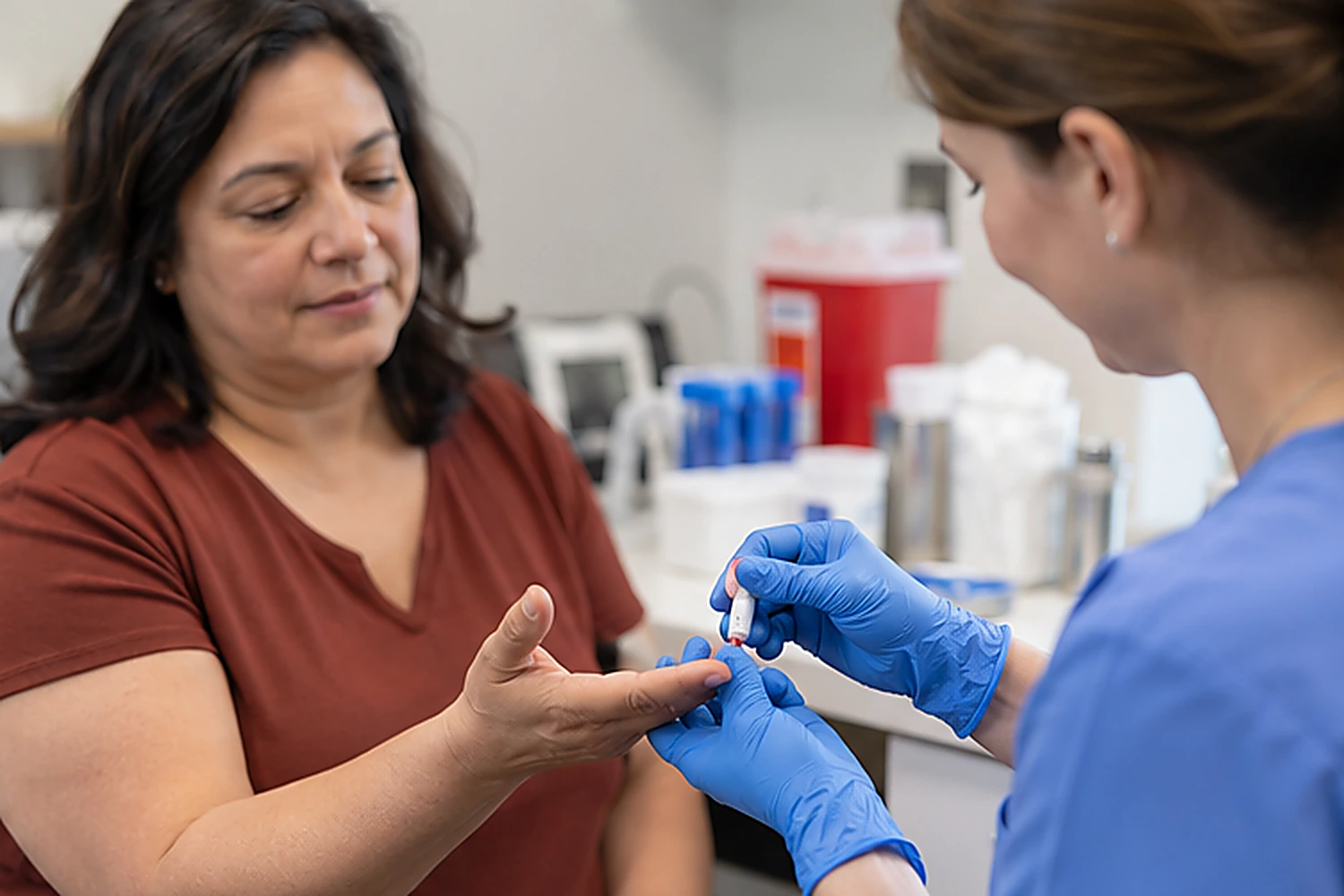
What the A1C Test Measures
Glucose attaches to hemoglobin in red blood cells. The A1C test measures the percentage of hemoglobin with glucose attached, which provides a longer-term view than a single finger-stick or fasting glucose result.
Because it reflects an average, A1C does not show every high or low glucose episode. Our healthy blood sugar habits guide explains daily behaviors that can influence glucose patterns over time.
What Common A1C Ranges Mean
NIDDK lists an A1C below 5.7% as normal for diagnosis, 5.7% to 6.4% as the prediabetes range, and 6.5% or above as the diabetes range in nonpregnant adults. Diagnosis generally requires confirmation unless there are clear symptoms and other appropriate clinical findings.
These diagnostic cutoffs are not the same thing as an individualized treatment target for someone who already has diabetes. Treatment goals vary with age, health history and hypoglycemia risk.
Why A1C and Glucose Tests Can Disagree
A fasting glucose or oral glucose tolerance test can sometimes point in a different direction than A1C. This does not automatically mean one test is “wrong.” Early glucose abnormalities may not show on every test at the same time.
If you are near a cutoff, a clinician may repeat testing or use another method. Our prediabetes guide provides the broader context for what an abnormal screening result can mean.
Important Limitations of A1C
Conditions that affect red blood cell lifespan or hemoglobin can change A1C results. Recent blood loss or transfusion, some anemias, kidney disease, liver disease and certain hemoglobin variants are examples. Pregnancy also changes how glucose testing is approached.
Tell your clinician about relevant medical history rather than interpreting the number in isolation.
Do You Need to Fast?
A1C itself does not require fasting. If your clinician orders fasting glucose or a lipid panel at the same visit, those tests may have separate instructions. Follow the laboratory directions for the entire set of tests.
If Your A1C Is Above the Healthy Range
The next step is not to panic or start an extreme diet. Confirm what the result means, ask whether repeat testing is needed and review realistic changes in activity, food, sleep and weight if relevant. The balanced approach in How to Build a Balanced Plate can be a useful starting point.
If diabetes has already been diagnosed, use the treatment plan from your healthcare team and see our type 2 diabetes daily self-care guide for general educational support.
Questions to Ask About Your Result
Ask whether the A1C is being used for screening, diagnosis or treatment monitoring; whether anything in your medical history could affect accuracy; and when the test should be repeated. If the result conflicts with home glucose readings, mention that specifically.
How to Prepare for a Useful Follow-Up Visit
Bring the actual laboratory report rather than relying on memory. Write down whether the test was done for routine screening, because of symptoms, or as part of diabetes follow-up. List recent illnesses, blood loss, transfusions and conditions that might affect red blood cells, because those details can change how an A1C is interpreted.
If you use a home glucose meter or CGM, bring a concise summary rather than hundreds of isolated readings. Ask whether the A1C matches the overall pattern and whether another test would add useful information. The goal is a consistent clinical picture, not forcing every test to give exactly the same answer.
What can affect A1C accuracy
The A1C test is useful, but it is not perfect for every situation. Conditions that affect red blood cells—such as recent blood loss, some forms of anemia, certain hemoglobin variants, kidney disease, or recent transfusion—can change the result or make it less representative of day-to-day glucose patterns. That does not make the test “bad”; it simply means clinicians sometimes pair it with fasting glucose, an oral glucose tolerance test, or home readings.
If you receive an unexpected result, it is reasonable to ask whether anything in your medical history could affect interpretation and whether repeat testing is needed. People who are also working on diet quality can pair this topic with our article on reducing added sugar or the newer guide to continuous glucose monitors without diabetes.
How A1C Compares With Fasting Glucose and the OGTT
A1C, fasting plasma glucose, and the oral glucose tolerance test all provide information about glucose regulation, but they answer slightly different questions. A1C estimates average glucose exposure over roughly the previous three months. Fasting glucose is a single measurement after a period without food. The OGTT measures how the body handles a standardized glucose drink over time. Because the tests look at glucose from different angles, one may be abnormal while another is still in the normal range.
That disagreement is not necessarily a laboratory mistake. Day-to-day variation, recent illness, red-blood-cell conditions, medications, and differences in how an individual handles fasting versus post-meal glucose can all matter. Clinicians may repeat the same test or use another test when results are close to a diagnostic threshold or do not match the clinical picture.
Why an A1C Can Change Even When Your Routine Feels Similar
A1C reflects an average, so small changes in many ordinary days can accumulate. A period of less activity, poorer sleep, illness, steroid treatment, weight gain, or more frequent high-calorie meals can shift the result. The opposite can happen when a person becomes more active, improves meal quality, loses weight when appropriate, or follows treatment more consistently.
Because newer red blood cells contribute more heavily to the result than older ones, A1C is not simply a perfectly even three-month average. That is one reason clinicians often look at recent habits and other glucose measurements rather than treating the value as a permanent grade. A single result should start a conversation about trends and context, not trigger panic or a crash diet.
How to Use an A1C Result Productively
Start by asking what category the result falls into and whether the diagnosis needs confirmation. If the result is above the healthy range, ask whether fasting glucose, an OGTT, or repeat A1C would add useful information. If you already have diabetes, the question changes from diagnosis to whether the result matches the treatment target chosen with your healthcare team.
Then translate the result into a few practical priorities. Those might include replacing sugary drinks, adding walking after meals, improving sleep, taking prescribed medicine consistently, or scheduling resistance exercise. Avoid trying to “hack” the next A1C with a short period of extreme restriction. The best changes are those that improve the pattern of daily glucose exposure and overall health over the long term.
What A1C Does Not Show About Daily Glucose
Two people can have the same A1C while experiencing different day-to-day glucose patterns. One person might have relatively steady glucose, while another has larger highs and lows that average to a similar number. A1C also cannot tell you exactly which meal, activity, or time of day is driving a problem. That is where fasting glucose, home monitoring when indicated, or a CGM prescribed for diabetes management can add context.
This is another reason to avoid treating A1C as the only measure of metabolic health. Blood pressure, lipids, kidney health, symptoms, medication use, fitness, and overall nutrition still matter. The result is most useful when it is interpreted alongside those factors and compared with previous measurements.
Practical Takeaway
A1C is a useful screening and monitoring tool, but it is not a complete picture by itself. Interpret the number in the context of why the test was ordered, whether anything could affect red blood cells or hemoglobin, and whether a fasting glucose or another test is needed to confirm the clinical picture.
Questions to Ask a Healthcare Professional
- Is this A1C being used for screening, diagnosis, or diabetes monitoring?
- Could anemia, blood loss, transfusion, kidney disease, pregnancy, or a hemoglobin variant affect my result?
- Does this result need confirmation with another A1C, fasting glucose, or OGTT?
- If I already have diabetes, what A1C target is appropriate for my individual situation?
Frequently Asked Questions
No. It reflects a longer-term average and is not a substitute for a current glucose measurement.
No, not for A1C itself. Other tests ordered at the same visit may require fasting.
Diagnosis is usually confirmed with repeat testing unless the clinical situation clearly meets diagnostic criteria.
Yes. Conditions that change red blood cell lifespan or hemoglobin can make A1C less reliable.
The interval depends on whether the test is for screening or diabetes management and on your individual treatment plan.
Safety and Scope
This article explains A1C testing in general and does not diagnose diabetes. A1C can be misleading in some medical situations, so unexpected results should be discussed with a clinician. Symptoms of severe hyperglycemia or hypoglycemia, confusion, fainting, or other urgent problems require prompt medical care.