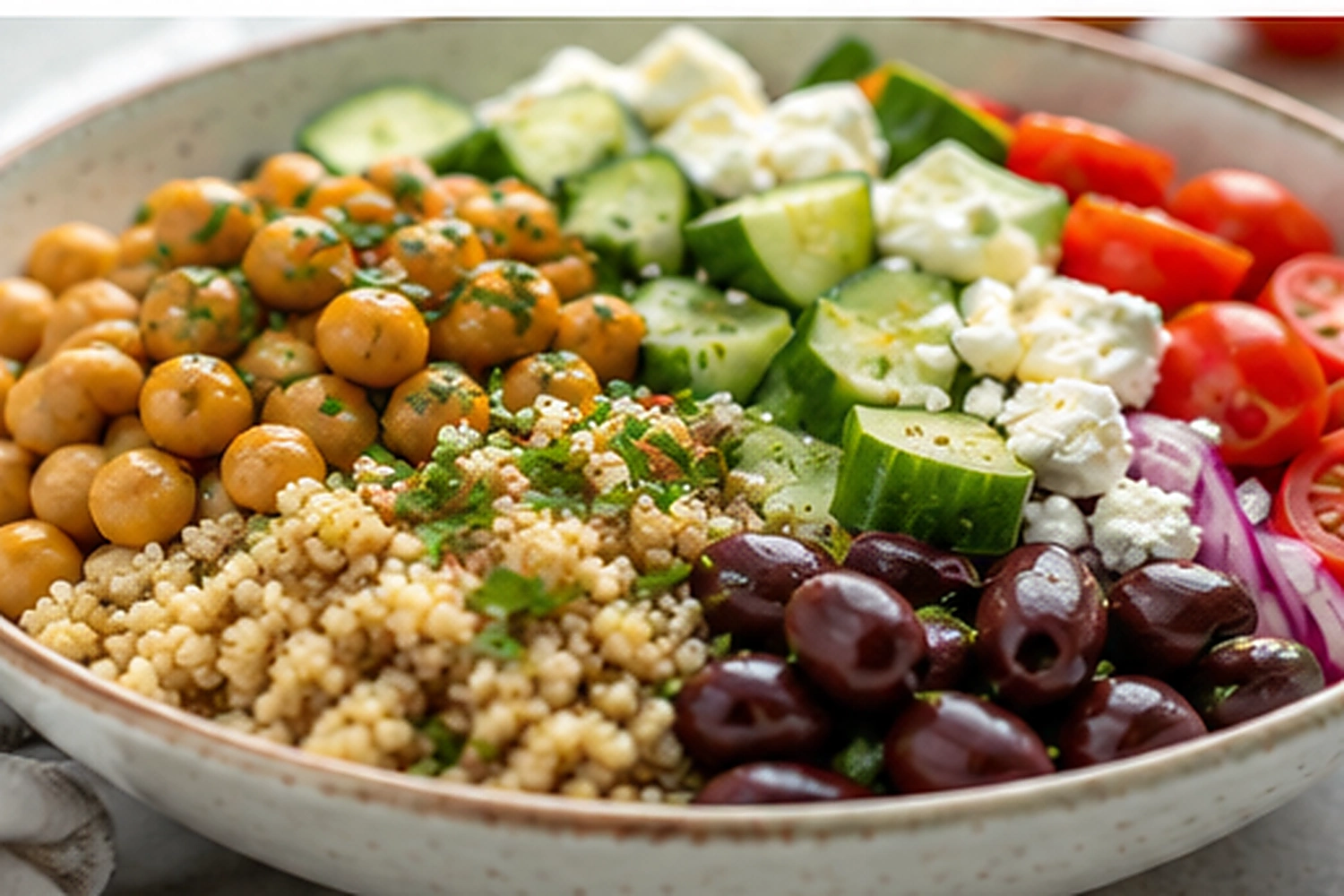
High-protein vegetarian recipe

High Protein Low Calorie Mediterranean Chickpea Quinoa Bowl

Make a high protein low calorie Mediterranean chickpea quinoa bowl with Greek yogurt herb dressing, feta, cucumber, tomatoes, olives, and fresh herbs.

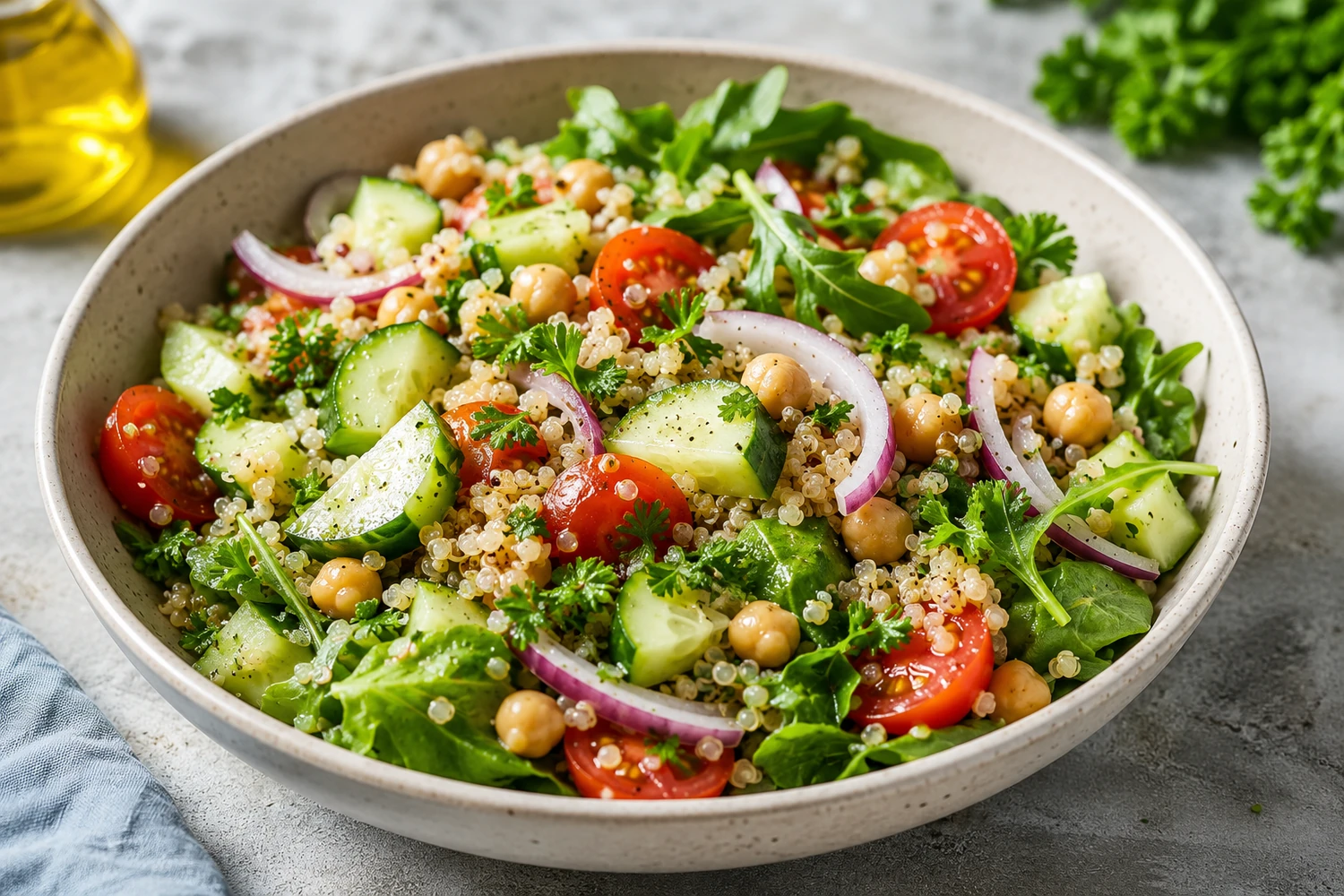
Mediterranean chickpea quinoa bowl with cucumber tomatoes feta olives and herbs
Total Time30 minutes
DifficultyEasy
Servings2 servings
Estimated Protein24 g

About This Healthy Meal

This Mediterranean-inspired bowl is designed for people who want a satisfying vegetarian lunch without turning meal prep into a complicated weekend project. Chickpeas and quinoa create the base, while cucumber, tomatoes, red onion, feta, olives, and herbs keep the bowl fresh and colorful. A lemon-herb Greek yogurt dressing adds creaminess and raises the protein content without requiring a heavy sauce.

The recipe fits naturally into a collection of high protein low calorie recipes because it combines measured portions of calorie-dense ingredients with a large amount of vegetables. The goal is not to make the smallest possible meal. It is to create a practical portion that provides protein, fiber, carbohydrate, flavor, and enough volume to feel like a real lunch or dinner.

If you already enjoy the site's Low Calorie High Protein Vegetarian Chickpea-Cucumber Salad, this bowl takes the same convenient chickpea idea in a different direction. Quinoa makes it more substantial, feta and olives give it a Mediterranean character, and the yogurt dressing changes the texture from a crisp salad to a composed grain bowl.

The components are intentionally kept separate until serving. Quinoa and chickpeas can be prepared ahead, the vegetables can be chopped and chilled, and the dressing can stay in a small sealed container. That separation matters because tomatoes release moisture, cucumber softens when heavily salted, and yogurt dressing can make quinoa dense if everything is mixed too early.

For busy workdays, the bowl can be assembled in a few minutes from refrigerated components. It is also flexible enough to scale up for family lunches, office meal prep, or a quick dinner after training.

Why This Recipe Works With a Fitness Routine

A balanced fitness meal does not need to be built around protein alone. Quinoa and chickpeas contribute carbohydrate that can support activity, while Greek yogurt, chickpeas, quinoa, and feta contribute protein. Vegetables add volume and texture, and the measured olives, feta, and olive oil provide flavor without overwhelming the nutrition profile.

People using low calorie high protein vegetarian meals often run into one of two problems: the meal is too small to be satisfying, or it relies on large amounts of cheese, nuts, oil, or avocado that quickly increase calories. This recipe uses a different strategy. Most of the bowl is made from grains, legumes, vegetables, and yogurt, while richer ingredients are used in smaller amounts for impact.

The recipe also works well as a meal-prep alternative to the Southwest Quinoa and Black Bean Bowl. Both use a grain-and-legume foundation, but the seasoning, vegetables, dressing, and toppings are different enough to prevent the weekly menu from feeling repetitive.

There is no single meal that guarantees weight loss, muscle gain, or better performance. Results depend on the whole eating pattern, training, sleep, medical needs, and energy balance. This bowl is simply one practical meal that can make consistency easier.

  • Uses ordinary supermarket ingredients rather than specialty powders.
  • Provides a clear vegetarian protein base.
  • Keeps oils, cheese, and olives measured for predictable portions.
  • Can be packed for lunch without reheating the entire meal.

Recipe Summary and Estimated Nutrition

CaloriesAbout 430 kcal
ProteinAbout 24 g
CarbohydratesAbout 56 g
FatAbout 12 g

Nutrition values are estimates. Ingredient brands, drained weights, exact vegetable portions, feta, olives, yogurt, and quinoa can change the final numbers.

The estimated nutrition is intended as a planning reference rather than a laboratory measurement. If precise tracking matters, weigh the ingredients you actually use and calculate the recipe from their package labels. A different Greek yogurt or a generous pour of olive oil can change the final result more than small differences in cucumber or herbs.

Ingredients With Exact Quantities

  • 1 cup canned chickpeas, drained, rinsed, and patted dry
  • 3/4 cup cooked quinoa, cooled slightly
  • 1 cup chopped cucumber
  • 1 cup halved cherry tomatoes
  • 1/4 small red onion, very thinly sliced
  • 1/4 cup reduced-fat feta cheese, crumbled
  • 8 Kalamata olives, sliced
  • 1 cup plain nonfat Greek yogurt
  • 2 tablespoons fresh lemon juice
  • 1 teaspoon extra-virgin olive oil
  • 1 tablespoon chopped fresh dill
  • 1 tablespoon chopped fresh parsley
  • 1 small garlic clove, finely grated
  • 1/2 teaspoon dried oregano
  • 1/4 teaspoon black pepper
  • Pinch of salt, adjusted to taste

What Each Main Ingredient Contributes

Chickpeas give the bowl substance, fiber, and plant protein. Rinsing canned chickpeas removes the packing liquid and produces a cleaner flavor. Patting them dry is worth the extra minute because wet chickpeas dilute the dressing and make the bottom of a meal-prep container watery.

Quinoa creates a soft, slightly nutty base and makes the meal more substantial than a vegetable salad. Cook it until the grains are tender but not mushy, then cool it before packing. If you prefer a similar grain-focused meal with a different flavor profile, the Quinoa Vegetable Power Salad is another useful option to rotate into the week.

Greek yogurt is doing two jobs: it is part of the protein strategy and it becomes the dressing. Lemon, dill, parsley, garlic, oregano, and pepper turn plain yogurt into a bright sauce. The result is creamy without depending on a large quantity of oil.

Feta and Kalamata olives are used as accents. Their salty, concentrated flavor means a small portion can season the whole bowl. Cucumber and tomato provide freshness and volume, while red onion adds a sharp contrast. If raw onion tastes too strong, soak the slices in cold water for ten minutes and drain them well.

Equipment and Preparation Setup

You need a small saucepan if the quinoa is not already cooked, a fine strainer for chickpeas, a cutting board, a sharp knife, a mixing bowl or jar for dressing, and two containers for meal prep. A kitchen scale is optional but useful when you want consistent portions.

Prepare the dressing first if the bowl will be served immediately, or prepare it while the quinoa cooks. Chop vegetables on a clean board and keep them dry. Water clinging to cucumber or tomatoes can thin the dressing and shorten the crisp texture of a packed lunch.

If you are cooking quinoa specifically for meal prep, spread it on a clean plate or shallow tray after cooking so steam can escape. Pack the bowl only after the grain has cooled enough that it will not create condensation in the container.

Step-by-Step Preparation

  1. Cook the quinoa according to package directions if it is not already prepared, then spread it on a plate so it cools without becoming steamy.
  2. Drain and rinse the chickpeas thoroughly, then pat them dry so the bowl stays fresh rather than watery.
  3. Whisk Greek yogurt, lemon juice, olive oil, dill, parsley, garlic, oregano, pepper, and a small pinch of salt until smooth.
  4. Divide quinoa and chickpeas between two bowls or meal-prep containers.
  5. Add cucumber, tomatoes, red onion, feta, and olives in separate sections so the vegetables keep their texture.
  6. Spoon the lemon-herb yogurt dressing over the bowls just before eating, or pack it separately for meal prep.
  7. Finish with extra parsley, dill, black pepper, or lemon zest if desired and serve chilled or at cool room temperature.

Detailed Cooking and Texture Guide

Quinoa should be tender with distinct grains. Too much liquid or aggressive stirring can make it pasty. Follow the package ratio because different products can vary, then rest the cooked quinoa briefly before fluffing it with a fork.

Chickpeas do not need additional cooking when canned, but they should be rinsed well. If you prefer warm chickpeas, heat them briefly with oregano and black pepper, then allow them to cool slightly before combining them with chilled vegetables.

The dressing should be spoonable rather than runny. Start with the stated lemon juice and add a teaspoon of water only if the yogurt is exceptionally thick. Adding too much liquid at once can turn the dressing into a thin coating that collects at the bottom of the bowl.

Cucumber should remain crisp and tomatoes should hold their shape. For meal prep, choose firm cherry tomatoes and keep the dressing separate. Feta can be packed with the vegetables, while olives can be sliced or left whole depending on preference.

When serving, toss only the portion you plan to eat. This lets the remaining meal-prep components stay fresh for another day.

Pros and Possible Limitations

Practical Advantages

The bowl is vegetarian, easy to pack, rich in produce, and made mostly from ingredients that are available year-round. It can be eaten chilled, so it works well when a microwave is not convenient. The dressing is also made from an ingredient that contributes meaningful protein.

Possible Limitations

People who do not tolerate legumes or dairy may need substitutions. The meal is not low carbohydrate because it contains both chickpeas and quinoa. Sodium can vary because feta, olives, and canned chickpeas differ by brand, so labels matter when sodium intake needs close attention.

Best Time to Eat It

This bowl works as lunch, dinner, or a post-workout meal when the portion suits your needs. Because it contains both carbohydrate and protein, many people will find it more useful as a complete meal than as a snack.

For an office lunch, keep the dressing chilled in a small leakproof container and add it immediately before eating. For dinner, serve the bowl with extra greens or a side of roasted vegetables when you want more volume.

If you train shortly after eating, a full chickpea-and-quinoa bowl may feel heavy for some people because of its fiber. In that situation, eat it earlier or use it after the session instead of immediately before training.

Who This Meal May Suit

The recipe may suit vegetarians, meal-prep beginners, students, office workers, and households that want a meatless meal with a defined protein source. It can also help people who want to use beans more often without relying on soup or chili.

People with medical nutrition needs should adjust the recipe with appropriate professional guidance. Those who need lower sodium can use no-salt-added chickpeas, fewer olives, and a smaller amount of feta. People with dairy intolerance can use alternatives, recognizing that the protein estimate may change.

Goal-Based Adjustments

For a higher-protein version, increase the Greek yogurt dressing or add a measured serving of cottage cheese or edamame. Keep the vegetables generous so the bowl still feels balanced rather than becoming mostly dairy or legumes.

For a lighter version, reduce quinoa slightly and increase cucumber, tomatoes, greens, or roasted peppers. Do not automatically remove every fat-containing ingredient; a small amount of feta, olives, and olive oil contributes a lot of flavor.

For higher activity days, increase quinoa or add a whole-grain pita. The right portion depends on the rest of the day and the training session, not on a universal serving size.

If you are specifically collecting high protein low calorie recipes for weight loss, compare meals by how well they fit your full-day pattern rather than judging a recipe from its title alone. Sustainable portions should still support energy, training, and normal hunger.

Substitutions and Dietary Adjustments

Replace quinoa with brown rice, farro, bulgur, or cauliflower rice. Each option changes texture and nutrition. Use cannellini beans instead of chickpeas for a softer bowl, or use lentils when you want smaller legumes.

For a dairy-free bowl, replace the yogurt and feta with suitable alternatives. Choose a yogurt with enough body to make a dressing and check the protein on the label if that is an important part of your meal plan.

Fresh basil can replace dill, parsley can replace both herbs, and roasted red pepper can replace tomato. The recipe should remain recognizable as a Mediterranean-style bowl even when you adapt it to what is available.

Meal Prep, Storage, and Reheating

Pack quinoa and chickpeas together, vegetables in a separate section if possible, and dressing in a small sealed cup. Keeping the sauce separate is the single best way to preserve the texture of the bowl.

Refrigerate prepared components promptly. Current FoodSafety.gov guidance says perishable leftovers should generally be refrigerated within two hours, or within one hour when exposed to temperatures above 90°F. Use clean, shallow containers so food chills efficiently.

Refrigerated leftovers are generally best used within three to four days. If the cucumber or tomatoes begin releasing excess liquid sooner, use the remaining bowl promptly rather than waiting for the maximum storage window.

The meal does not need reheating. If you want a warm base, heat only the quinoa and chickpeas, then add cold vegetables, feta, olives, and dressing afterward.

Freezing the assembled bowl is not recommended because cucumber, tomatoes, feta, and yogurt dressing lose texture. Cooked quinoa and chickpeas can be frozen separately for future meals.

Common Mistakes and How to Avoid Them

Do not pack hot quinoa under raw vegetables. Steam creates condensation and softens the produce. Cool the grain first and dry rinsed chickpeas before assembly.

A second common mistake is treating olive oil, feta, and olives as unlimited because they are associated with Mediterranean eating. They can absolutely fit the meal, but measuring them keeps the nutrition estimate useful and prevents the dressing from becoming unnecessarily heavy.

Finally, avoid over-salting before tasting. Feta and olives already bring sodium, so the yogurt dressing may need only a small pinch of salt or none at all.

Budget and Shopping Strategy

Canned chickpeas are convenient, while dried chickpeas can reduce cost when you routinely cook legumes. Quinoa is often cheaper in larger bags, but brown rice is an easy substitute when budget matters more than using the exact grain.

Store-brand Greek yogurt usually works well for dressing. Buy a larger container only when you have another use planned, such as breakfast, smoothies, or another sauce. The site's Greek Yogurt Berry Parfait is one simple way to use the same ingredient in a different meal.

Cherry tomatoes can be replaced with diced regular tomato when they are in season. Fresh dill can be replaced with parsley and dried dill if needed. A small block of feta is often more economical than pre-crumbled feta and can have better texture.

Plan the recipe around ingredients you can reuse. Cucumber, tomatoes, yogurt, lemon, and herbs can move into salads, wraps, breakfast bowls, and sauces so the meal does not require buying items for only one purpose.

How to Use This Meal During a Busy Week

Cook quinoa once and prepare enough chickpeas for several meals. Keep the yogurt dressing in a jar and chop only the amount of tomato and cucumber you expect to use within a few days.

For variety, turn the components into a pita filling on another day. Spoon chickpeas, quinoa, vegetables, and feta into a whole-grain pita and use the yogurt sauce as the spread. The flavor stays consistent while the eating experience changes.

You can also serve the bowl over greens when you want more volume, or omit quinoa and add leftover roasted vegetables. Flexible meal components reduce the temptation to discard food simply because you are tired of the same presentation.

Label meal-prep containers with the preparation date. This simple habit makes it easier to use older food first and stay within safe refrigerated storage times.

Food Safety and Nutrition Notes

Keep yogurt, feta, cooked quinoa, chickpeas, and cut vegetables refrigerated. When taking the meal to work or school, use a refrigerator or an insulated bag with a cold pack rather than leaving it in a warm car or backpack.

Use clean utensils when portioning dressing and feta. If you double the recipe, divide it into smaller containers instead of storing one large warm batch that takes longer to cool.

The nutrition values are estimates, not medical targets. A person managing diabetes, kidney disease, gastrointestinal conditions, food allergies, or another health issue may need different ingredient amounts or substitutions.

Flavor and nutrition can both remain practical. The goal is a repeatable meal that fits the person's needs, not a rigid definition of a perfect lunch.

Frequently Asked Questions

Yes. Use cauliflower rice, brown rice, farro, or extra vegetables depending on your preference and nutrition goals.

Increase the Greek yogurt, add a little more chickpea, or include a measured serving of edamame or cottage cheese.

Yes. Replace feta and Greek yogurt with suitable dairy-free alternatives, but check the label because protein amounts can differ substantially.

The components are best within three to four days when refrigerated promptly, with the dressing stored separately for the best texture.

Yes. Warm only the quinoa and chickpeas, then add the cold vegetables, feta, olives, and yogurt dressing after heating.

No. Chickpeas and quinoa provide carbohydrate. For a lower-carbohydrate variation, reduce quinoa and increase cucumber, tomato, greens, or cauliflower rice.

No. They are estimates and change with ingredient brands, drained weights, serving size, feta, olives, and yogurt.

General Nutrition and Food-Safety References

Related Healthy Meals