
Published by Best Fitness Routine. Editorial standards · Report a correction. Educational guidance; no individual clinical review is claimed unless a qualified reviewer is named.
Overview
Ultraviolet radiation from the sun and tanning devices can damage skin and raise skin-cancer risk. Protection works best as a combination of shade, clothing, hats, sunglasses and correctly used sunscreen. Skin cancer can occur in every skin tone, and appearance varies. A changing, bleeding or non-healing spot deserves professional assessment; photographs and online comparisons cannot establish whether a lesion is cancer.
Understand Ultraviolet Exposure
UVA and UVB contribute to skin damage, and clouds do not remove all exposure. Water, sand, snow and elevation can increase intensity. A useful decision considers symptom pattern, medical history, access, culture and personal priorities. Population guidance is a starting point rather than an individual prescription.
Check an official local UV index and plan shade during high-exposure periods. Prepare the environment in advance and decide on a smaller backup action for difficult days. Progress can be gradual without becoming meaningless. A cool day or darker skin tone does not eliminate risk.
Use Clothing and Shade First
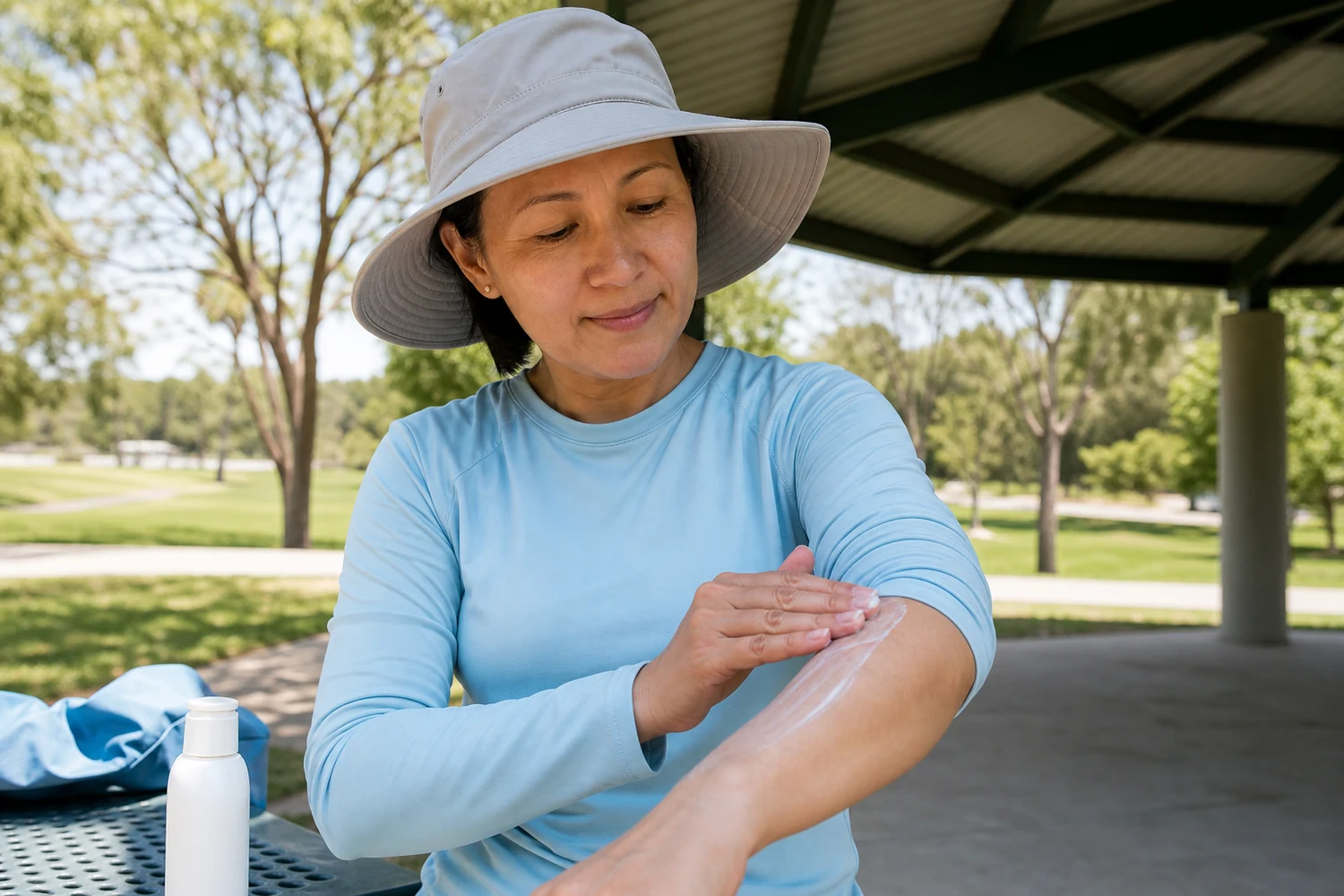
Long sleeves, tightly woven fabric, a broad-brim hat and shade reduce the amount of skin requiring sunscreen. Consistency makes this step easier to evaluate. A small version that works on an ordinary weekday is often more informative than an extreme change that lasts only a few days.
Keep a sun kit near outdoor gear and use the healthy-habits guide to make it automatic. Make the next step specific enough to place on a calendar or checklist. Reassessment is appropriate when the expected improvement does not occur. Do not rely on a baseball cap alone for ears, neck and face.
Apply Sunscreen Correctly
Choose a broad-spectrum product with suitable SPF and water resistance for the activity. Adequate amount, coverage and reapplication matter. Write down the result in plain language: what happened, when it happened and whether the action was comfortable enough to repeat. This creates better information for the next decision.
Apply before exposure, cover commonly missed areas and follow label directions after swimming or sweating. Prepare the environment in advance and decide on a smaller backup action for difficult days. Progress can be gradual without becoming meaningless. Sunscreen does not make prolonged midday exposure harmless.
Avoid Indoor Tanning
Tanning beds and sunlamps emit ultraviolet radiation. A base tan is skin injury and does not provide reliable protection. The safest option respects current ability, diagnosed conditions and prescribed care. Change one variable at a time so benefits, side effects and barriers are easier to identify.
Choose sunless cosmetic color if desired and continue normal sun protection. Make the next step specific enough to place on a calendar or checklist. Reassessment is appropriate when the expected improvement does not occur. Never use indoor tanning as a source of vitamin D.
Check Skin Without Diagnosing It
New growths, sores that do not heal, changing moles, bleeding and unusual color or shape deserve attention. Melanoma can appear differently across skin tones and locations. A useful decision considers symptom pattern, medical history, access, culture and personal priorities. Population guidance is a starting point rather than an individual prescription.
Perform a periodic head-to-toe check with good lighting and photograph a concern for change documentation. Prepare the environment in advance and decide on a smaller backup action for difficult days. Progress can be gradual without becoming meaningless. Do not delay care while waiting for an app to classify a lesion.
Exercise Outdoors More Safely
Outdoor activity supports health, but sun protection must match duration, sweating, water exposure and medication-related photosensitivity. Consistency makes this step easier to evaluate. A small version that works on an ordinary weekday is often more informative than an extreme change that lasts only a few days.
Move a walk to a lower-UV time, use the walking guide and drink appropriately with the hydration guide. Make the next step specific enough to place on a calendar or checklist. Reassessment is appropriate when the expected improvement does not occur. Stop for heat-illness symptoms and do not exercise through severe sunburn.
Use Preventive Care for Personal Risk
Prior skin cancer, many or unusual moles, immunosuppression, family history and extensive UV exposure may change examination needs. Write down the result in plain language: what happened, when it happened and whether the action was comfortable enough to repeat. This creates better information for the next decision.
Discuss risk and medication photosensitivity using the preventive-checkup guide. Prepare the environment in advance and decide on a smaller backup action for difficult days. Progress can be gradual without becoming meaningless. A normal self-check cannot replace recommended professional follow-up. A health appointment notebook (paid link) can keep your questions and routine observations together for a planned visit.
Prepare for a Useful Healthcare Visit
A short, accurate history helps a clinician evaluate skin cancer prevention: sun protection and changes that need checking without relying on guesses. Record when symptoms began, how often they occur, what changes them and how they affect sleep, work, movement or eating. Include diagnosed conditions, pregnancy possibility, allergies and relevant family history.
Bring a complete list of prescriptions, over-the-counter medicines, vitamins and herbs with doses and timing. Write down two or three questions before the visit, and ask what warning signs, follow-up interval or tests apply to you. Repeat important instructions in your own words so misunderstandings can be corrected.
- Symptom onset, duration, frequency and change over time
- Current medicines, supplements, allergies and recent changes
- Relevant test results, diagnoses and family history
- The daily activity or decision that is hardest right now
Common Cancer Prevention Mistakes to Avoid
Common mistakes around cancer prevention include making several restrictions at once, treating one measurement as a diagnosis, stopping prescribed care after a good day, or waiting too long with a warning sign. Health information is most useful when it supports a clear next step rather than fear or false certainty.
Review the cautions below before changing the routine. A setback is information, not failure. Simplify an action that cannot be repeated, and seek professional help when the issue involves diagnosis, medicines, major symptoms or a condition that changes what is safe.
- A cool day or darker skin tone does not eliminate risk.
- Do not rely on a baseball cap alone for ears, neck and face.
- Sunscreen does not make prolonged midday exposure harmless.
- Never use indoor tanning as a source of vitamin D.
- Do not delay care while waiting for an app to classify a lesion.
- Stop for heat-illness symptoms and do not exercise through severe sunburn.
- A normal self-check cannot replace recommended professional follow-up.
A Practical Two-Week Action Plan
During the first week, choose two low-risk actions from this cancer prevention guide. Attach each to an existing routine and keep the minimum version manageable. Once daily, note completion, comfort, symptoms and any medicine or schedule factor that could explain a change.
In the second week, keep the action that worked best and adjust one barrier to the other. Improvement may mean better understanding, fewer disrupted tasks, more consistent movement, an easier meal routine or a useful question for the care team—not a cure or an instant change in a single number.
- Days 1–2: Check an official local UV index and plan shade during high-exposure periods.
- Days 3–4: Apply before exposure, cover commonly missed areas and follow label directions after swimming or sweating.
- Days 5–6: Perform a periodic head-to-toe check with good lighting and photograph a concern for change documentation.
- Days 7–8: Discuss risk and medication photosensitivity using the preventive-checkup guide.
- Days 9–10: Keep a sun kit near outdoor gear and use the healthy-habits guide to make it automatic.
- Days 11–12: Choose sunless cosmetic color if desired and continue normal sun protection.
- Days 13–14: Move a walk to a lower-UV time, use the walking guide and drink appropriately with the hydration guide.
Measure Progress Without Chasing Perfection
Choose one behavior measure and one real-life outcome for skin cancer prevention: sun protection and changes that need checking. A behavior measure might be completing a planned action. An outcome might be sleep continuity, confidence, daily function, symptom interference or better preparation for an appointment. Trends are more useful than judging a single day. For scheduled care, an optional medical-record organizer (paid link) can keep reports and appointment notes together.
Review the record weekly. Illness, travel, menstrual changes, heat, stress and medicines can temporarily alter results. If tracking creates anxiety or compulsive checking, reduce the detail or stop and discuss it with an appropriate professional. A health routine should make life more manageable, not narrower.
Know When to Get Professional Help
This guide cannot diagnose a skin lesion. Seek professional assessment for a new, changing, bleeding, painful or non-healing spot. Severe blistering sunburn, confusion, fainting or other heat-illness signs require prompt care. Check medication photosensitivity before outdoor exercise. For non-emergency concerns, contact an appropriate clinician or pharmacist and share the concise record you prepared. That context helps determine whether examination, testing, treatment, rehabilitation or reassurance is appropriate.
Use local emergency services for severe, sudden or rapidly worsening symptoms, danger to safety, loss of consciousness, major breathing difficulty or another medical emergency. Online education should never be used to delay urgent care or to change prescribed treatment without the responsible professional.
Frequently Asked Questions
Yes. Skin cancer occurs in every skin tone, and delayed recognition can be dangerous.
No single method prevents all cases; combine sunscreen with shade and protective clothing.
No. A tan reflects UV-related skin injury and provides little protection.
No. A changing or concerning lesion needs assessment by a qualified professional.
A new, changing, bleeding, painful or non-healing spot should be evaluated.
Safety and Scope
This guide cannot diagnose a skin lesion. Seek professional assessment for a new, changing, bleeding, painful or non-healing spot. Severe blistering sunburn, confusion, fainting or other heat-illness signs require prompt care. Check medication photosensitivity before outdoor exercise.