
Overview
A lasting habit is a behavior that becomes easier to repeat in a stable context; it is not proof of perfect motivation. Health changes often move through thinking, preparation, action and maintenance. The practical task is to make the next action clear and small enough for an ordinary day. Tracking, social support and environmental design can help, while setbacks provide information about the system rather than a moral verdict. For a closely related next step, see our How to Stay Consistent With Workouts: A Practical Fitness Habit System.
Choose One Specific Behavior
Goals such as get healthy are too broad to perform. A behavior states what you will do, when and where. Individual responses differ, so observe the result over time. Cost, schedule, symptoms and preferences are legitimate parts of the decision. A plan that cannot survive busy days needs a simpler version. You can put this idea into practice with 20-Minute Morning Workout Routine for Busy Adults.
Change exercise more into walk for ten minutes after lunch on Monday, Wednesday and Friday. Record what you tried and whether it was comfortable enough to repeat. Review the pattern after one or two weeks before changing several variables. This keeps useful cause-and-effect information visible. Do not start five demanding habits on the same date.
Connect It to a Reliable Cue
A cue can be a time, place or existing routine. Stable cues reduce the need to remember from scratch. Look at the full pattern rather than judging one day. Personal needs, access, culture and medical history can change the most useful choice. A repeatable baseline makes later adjustments easier to interpret.
Place the new action after something dependable, such as brushing teeth, closing a laptop or finishing dinner. Use the action as a starting experiment, not a rigid rule. If it creates pain, anxiety, significant symptoms or conflict with professional advice, stop and choose an appropriate alternative. A cue that frequently changes will produce an unreliable routine.
Make the First Version Small
A small habit lowers the starting barrier and produces evidence that the routine fits real life. This step is useful because it connects everyday decisions with a clear health purpose. It should fit the person’s current ability and resources, not an idealized routine seen online. Progress can be gradual and still be meaningful.
Use five minutes, one prepared vegetable or one glass of water as the minimum, then do more when appropriate. Record what you tried and whether it was comfortable enough to repeat. Review the pattern after one or two weeks before changing several variables. This keeps useful cause-and-effect information visible. Small does not mean medically sufficient forever; it is the entry point.
Change the Environment
Visible, accessible tools support action, while extra steps protect unwanted defaults. The practical value comes from consistency and context. A small action repeated through ordinary weeks usually teaches more than an extreme short challenge. Keep the parts that improve comfort, function or follow-through. This approach also works well alongside How to Improve Sleep Quality: 12 Healthy Sleep Habits.
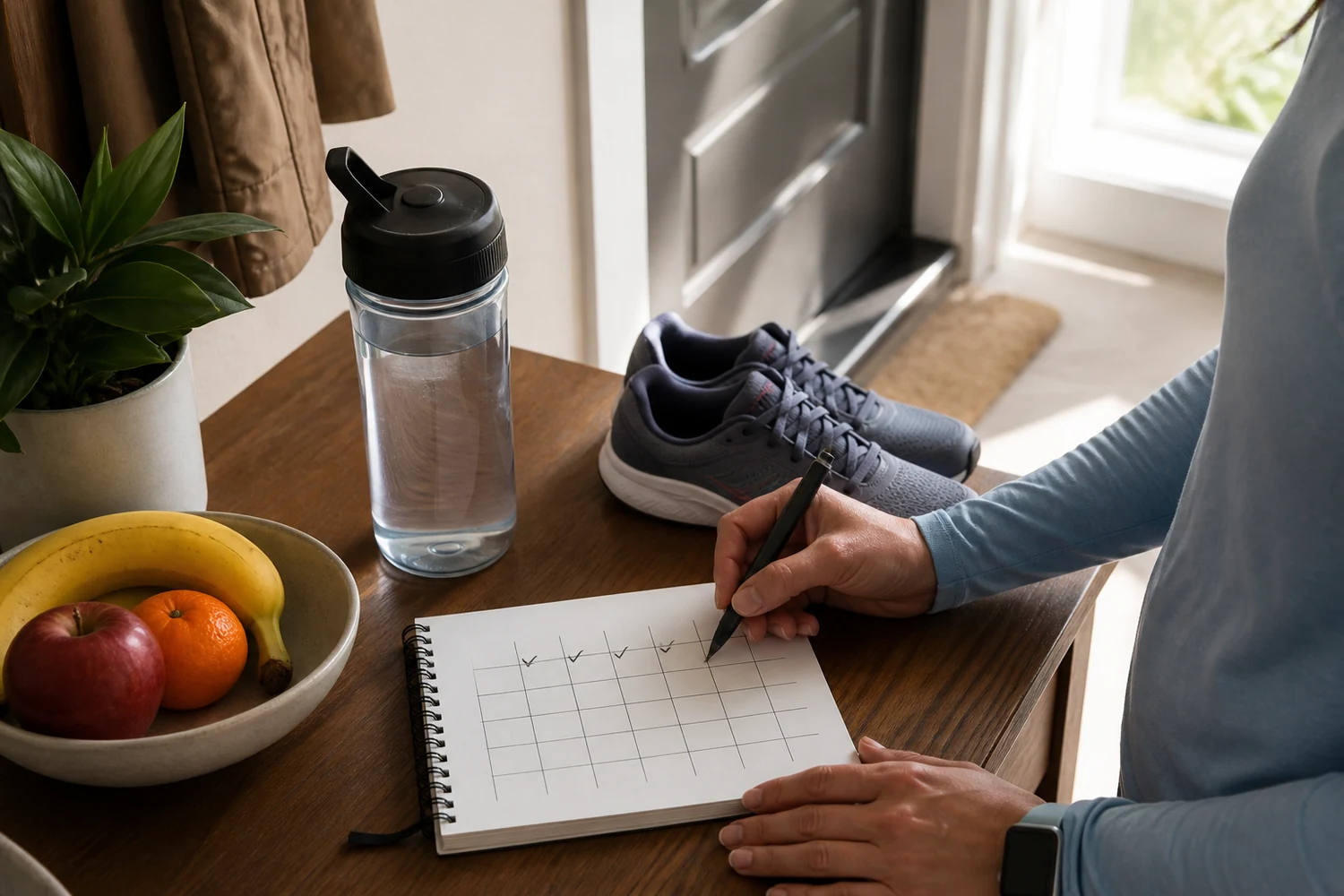
Place walking shoes by the door, prepare a bottle, keep fruit visible and silence nonessential late notifications. Use the action as a starting experiment, not a rigid rule. If it creates pain, anxiety, significant symptoms or conflict with professional advice, stop and choose an appropriate alternative. Environment design cannot solve unsafe work, poverty or untreated illness by itself.
Track the Behavior Simply
A check mark can show consistency without turning health into constant measurement. Track the action you control, not only outcomes. Individual responses differ, so observe the result over time. Cost, schedule, symptoms and preferences are legitimate parts of the decision. A plan that cannot survive busy days needs a simpler version.
Mark each completed session and review weekly rather than judging every day. Record what you tried and whether it was comfortable enough to repeat. Review the pattern after one or two weeks before changing several variables. This keeps useful cause-and-effect information visible. Stop or simplify tracking if it creates anxiety or compulsive behavior.
Plan for Predictable Barriers
Weather, travel, fatigue and schedule changes recur. A backup keeps the identity of the routine alive. Look at the full pattern rather than judging one day. Personal needs, access, culture and medical history can change the most useful choice. A repeatable baseline makes later adjustments easier to interpret.
Write an if-then option: if outdoor walking is impossible, I will do ten minutes indoors. Use the action as a starting experiment, not a rigid rule. If it creates pain, anxiety, significant symptoms or conflict with professional advice, stop and choose an appropriate alternative. The backup should be genuinely easier, not another ideal plan.
Use Support and Accountability
A friend, group or professional can offer reminders, skill and encouragement. Support should increase autonomy. This step is useful because it connects everyday decisions with a clear health purpose. It should fit the person’s current ability and resources, not an idealized routine seen online. Progress can be gradual and still be meaningful.
Share the exact behavior and ask for a specific check-in or invitation. Record what you tried and whether it was comfortable enough to repeat. Review the pattern after one or two weeks before changing several variables. This keeps useful cause-and-effect information visible. Shame, public punishment and unsafe competition are not healthy accountability.
Recover Quickly From Setbacks
Missing once is normal. The important skill is restarting at the next reasonable opportunity and learning what failed. The practical value comes from consistency and context. A small action repeated through ordinary weeks usually teaches more than an extreme short challenge. Keep the parts that improve comfort, function or follow-through.
Reduce the step, repair the cue or move the time, then resume without compensation. Use the action as a starting experiment, not a rigid rule. If it creates pain, anxiety, significant symptoms or conflict with professional advice, stop and choose an appropriate alternative. Do not pair a missed workout with food restriction or an extreme make-up session.
Common Healthy Habits Mistakes to Avoid
Mistakes around healthy habits usually come from doing too much too quickly, treating a population guideline as a personal prescription, or following one number without context. The goal is not flawless behavior. It is a safer system that helps a person notice a problem, correct it early and continue with less friction.
Use the cautions below as a review before changing the routine. Several of them involve symptoms, medicines or diagnosed conditions that need professional input. Internet advice should never be used to delay appropriate care.
- Do not start five demanding habits on the same date.
- A cue that frequently changes will produce an unreliable routine.
- Small does not mean medically sufficient forever; it is the entry point.
- Environment design cannot solve unsafe work, poverty or untreated illness by itself.
- Stop or simplify tracking if it creates anxiety or compulsive behavior.
- The backup should be genuinely easier, not another ideal plan.
- Shame, public punishment and unsafe competition are not healthy accountability.
- Do not pair a missed workout with food restriction or an extreme make-up session.
A Practical Two-Week Action Plan
For the first seven days, choose two actions from this healthy habits guide and place them into existing routines. Keep the minimum version easy enough for a busy day. Note completion, comfort and any symptoms once daily; avoid constant checking or trying to perfect every related behavior at once. The site’s Exercise Snacks: 5- to 10-Minute Movement Breaks for Busy Days explains this connected topic in more detail.
During the second week, keep the action that worked best and adjust the main barrier to the other. Improvement might mean greater consistency, better understanding, easier preparation or a useful clinical question—not an instant change in appearance or a single measurement. Continue only changes that remain safe and realistic.
- Days 1–2: Change exercise more into walk for ten minutes after lunch on Monday, Wednesday and Friday.
- Days 3–4: Use five minutes, one prepared vegetable or one glass of water as the minimum, then do more when appropriate.
- Days 5–6: Mark each completed session and review weekly rather than judging every day.
- Days 7–8: Share the exact behavior and ask for a specific check-in or invitation.
Measure Progress Without Chasing Perfection
Choose one behavior measure and one real-life outcome for how to build healthy habits that actually last. A behavior measure could be the number of planned actions completed. A real-life outcome could be comfort, confidence, energy, function, fewer missed tasks or a clearer conversation with a professional. These are more informative than daily self-criticism.
Review the record weekly and compare several weeks rather than reacting to one unusual day. Illness, travel, sleep and stress can temporarily change results. If tracking causes anxiety or compulsive checking, simplify it or stop and seek appropriate support. Sustainable health work should make life more manageable, not narrower.
Know When to Get Professional Help
Behavior strategies do not replace medical, mental-health or eating-disorder care. Choose habits compatible with your conditions, medicines, safety and professional advice. Keep a short record of onset, duration, triggers, related symptoms, medicines and what has already been tried. Clear context helps a qualified professional decide whether examination, testing, treatment or reassurance is appropriate.
Use urgent or emergency services for severe, sudden or rapidly worsening symptoms, danger to safety, loss of consciousness, major breathing difficulty or another local emergency. Routine lifestyle guidance is most useful after immediate danger has been ruled out. When uncertain, contact an appropriate local healthcare service rather than waiting for an article to answer an individual diagnosis.
Frequently Asked Questions
There is no fixed number of days. Complexity, context and repetition differ, so focus on a workable system.
Motivation helps start, but cues, preparation and small actions make repetition more reliable.
They can motivate some people, but a broken streak should not erase progress.
Shrink the action, change the cue, remove friction and assess whether the goal fits your current life.
Seek qualified support when pain, mental health, eating concerns, chronic disease or repeated injury affects the plan.
Safety and Scope
Behavior strategies do not replace medical, mental-health or eating-disorder care. Choose habits compatible with your conditions, medicines, safety and professional advice.