Published by Best Fitness Routine. Editorial standards · Report a correction. Educational guidance; no individual clinical review is claimed unless a qualified reviewer is named.
Identify your rower before copying a number
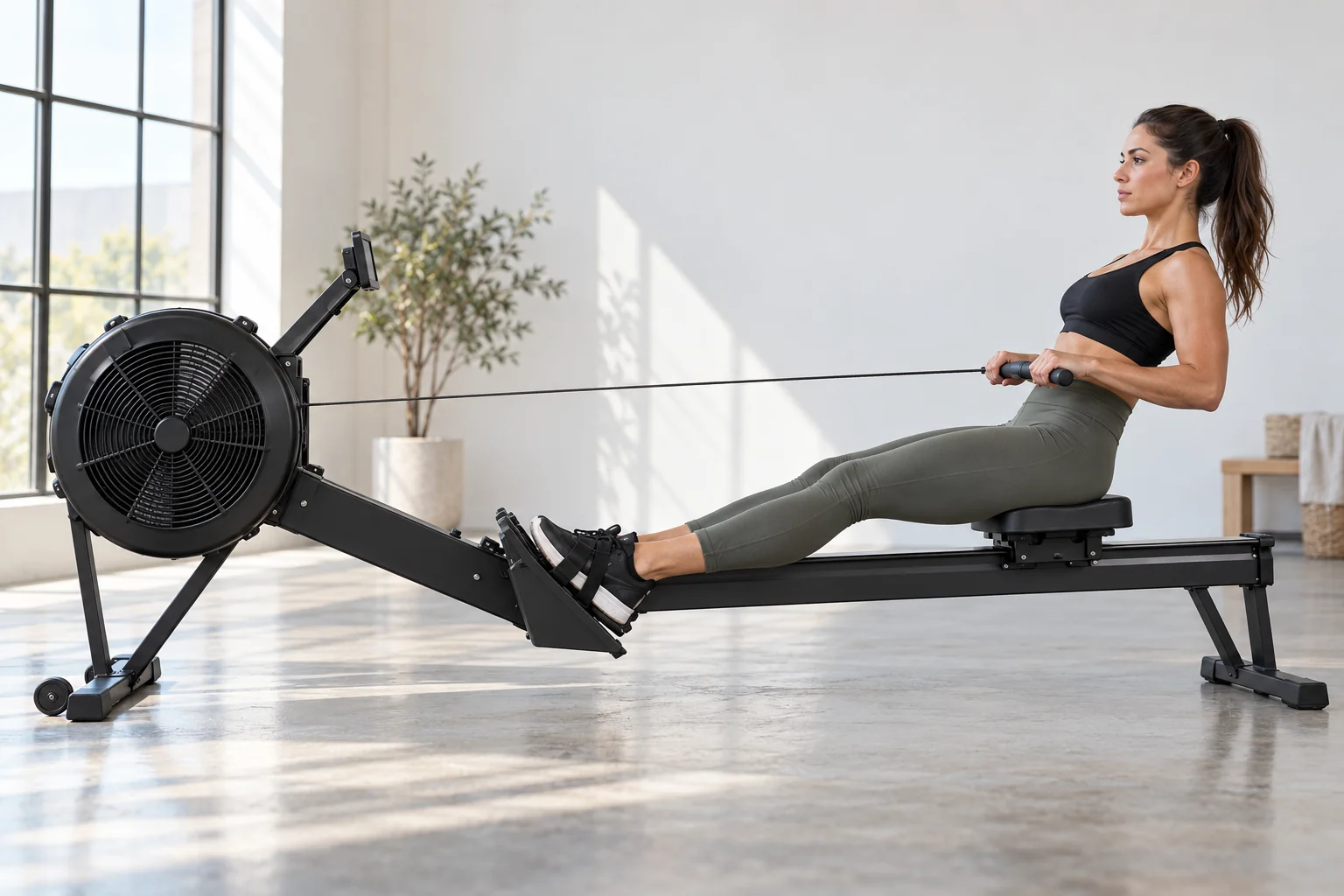
Rowing machine resistance settings are not standardized across equipment. A number five on an air rower can mean something different from level five on a magnetic model, and one machine may not use a numbered control at all. Before copying a setting from a workout, identify the mechanism and read the manufacturer's guidance. The useful objective is a setup that allows a comfortable stroke and the intended effort, not a high number that looks impressive on the display.
Separate three questions: what changes the machine's feel, how hard you are working and what the monitor measures. Those questions overlap, but they are not identical. On some machines, greater pulling effort changes the resistance response. On others, a control changes a braking level. A monitor may account for certain settings when calculating output, but that does not make results interchangeable between brands. Knowing the model prevents many confusing comparisons before you even begin rowing.
Understand an air rower's damper
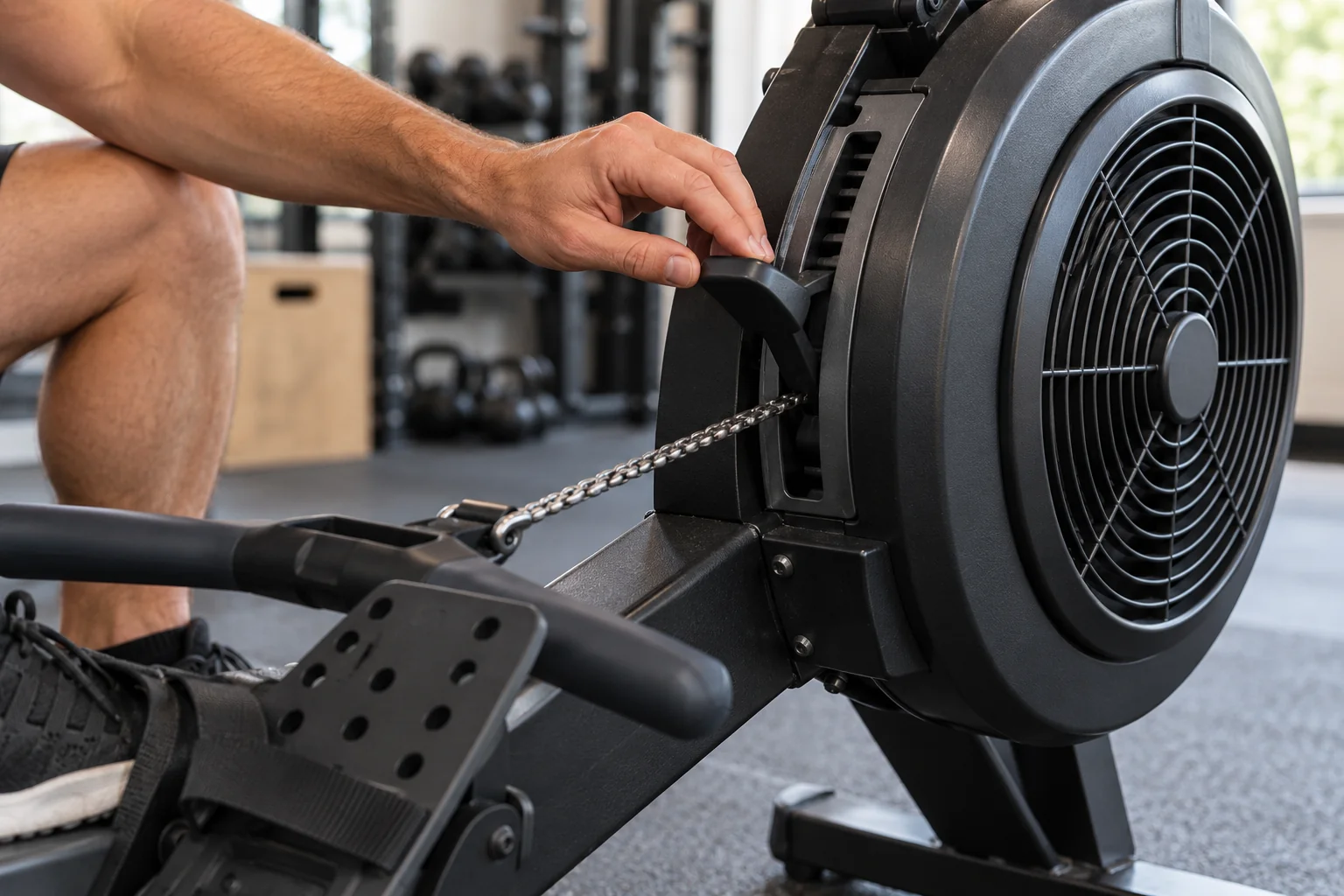
On a Concept2-style air rower (paid link), the damper changes airflow around the flywheel and affects how the stroke feels. It is not simply an intensity switch. You can work harder or easier at different damper positions by changing coordinated effort. Think of the control as selecting a different feel rather than assigning a universal workout difficulty. A heavier feel may tire you sooner without making the session more appropriate or helping you sustain the intended aerobic work.
Use the manufacturer's suggested starting range and explore comfortable strokes before settling on a setting. Avoid defaulting to the maximum because you assume it burns the most calories. If the handle feels so heavy that you yank with the arms or lose the connection to the legs, ease the demand and review technique. A suitable setup should support the stroke. It should not require you to change the movement into something less controlled just to keep the flywheel turning.
Treat drag factor as machine-specific information
On compatible Concept2 monitors, drag factor describes the flywheel's deceleration and helps explain why the same damper position can feel different on two machines. Equipment condition and the surrounding environment can affect that relationship. Learn where your monitor displays drag factor if you want a more repeatable setup across similar rowers. The number does not represent your personal fitness level, and there is no reason to make it higher solely to demonstrate progress.
Write the model, a comfortable setting and any relevant drag reading in a training journal (paid link). This is more useful than recording only a dial position without knowing the equipment. Compare similar sessions on similar machines rather than assuming the number transfers to every rower you encounter. If the feel changes unexpectedly, ask staff to inspect the equipment. Do not open a shared machine's housing or attempt maintenance yourself because an online tip suggests that cleaning might alter the drag.
Recognize how magnetic settings differ
Many magnetic rowers offer numbered resistance levels selected through a knob, buttons or an electronic control. The exact levels and adjustment procedure depend on the model. Start with a manageable level and test the full comfortable stroke before increasing it. A label such as eight levels or sixteen levels describes that machine's available steps; it does not establish a universal scale or mean one brand's higher count always creates a better workout.
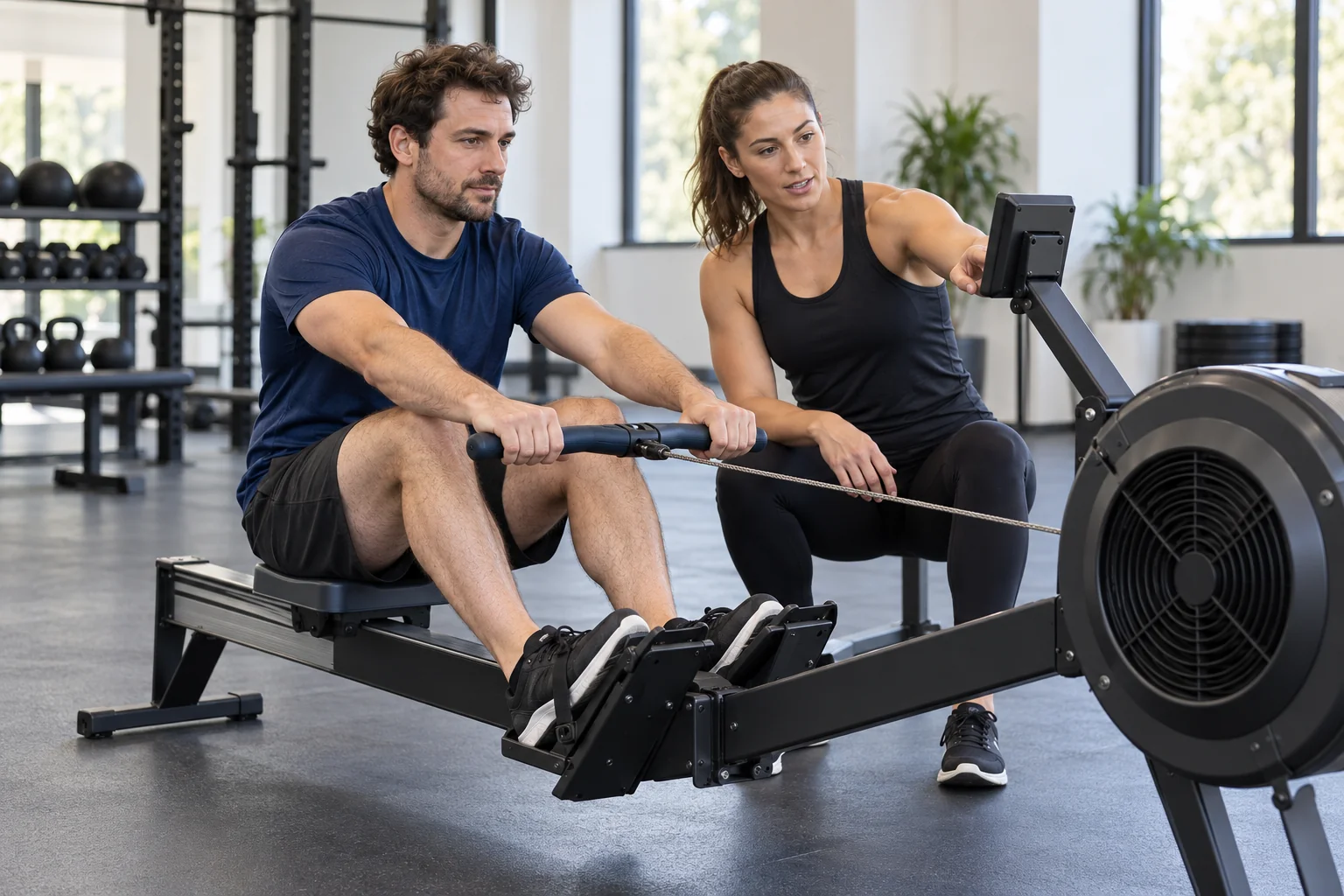
When following a class, translate the instruction into an appropriate experience on your machine rather than blindly copying the instructor's number. If the class asks for steady manageable effort, select a setup that allows that purpose with sound technique. If the rower combines air and magnetic systems, learn what each control changes. The appearance of a fan cage does not prove that every adjustment works like a standard air damper. Product instructions matter more than visual similarity. Our rowing form guide can help you evaluate the movement at easy effort.
Follow the manual for water and hydraulic models
Water rowers use a paddle or similar mechanism moving through a tank, and the stroke's feel depends on the equipment's design and your action. Some models offer additional controls or specified fill arrangements. Do not add water beyond the marked limit or assume tank volume is a simple workout-intensity dial. Use the exact manufacturer's filling and maintenance instructions. Altering a tank without that information is an equipment change, not an ordinary way to make today's session harder.
Hydraulic rowers can use cylinders and designs that differ from the familiar central-handle air machine. Some have separate rowing arms. Follow their adjustment instructions, including any cautions about handling components after use. Do not import air-rower technique or resistance numbers without checking whether they fit the mechanism. If you use several types at a gym, ask staff for a brief introduction to each. A short setup explanation can prevent a session spent trying to make one machine behave like another.
Find a manageable setting through a simple test
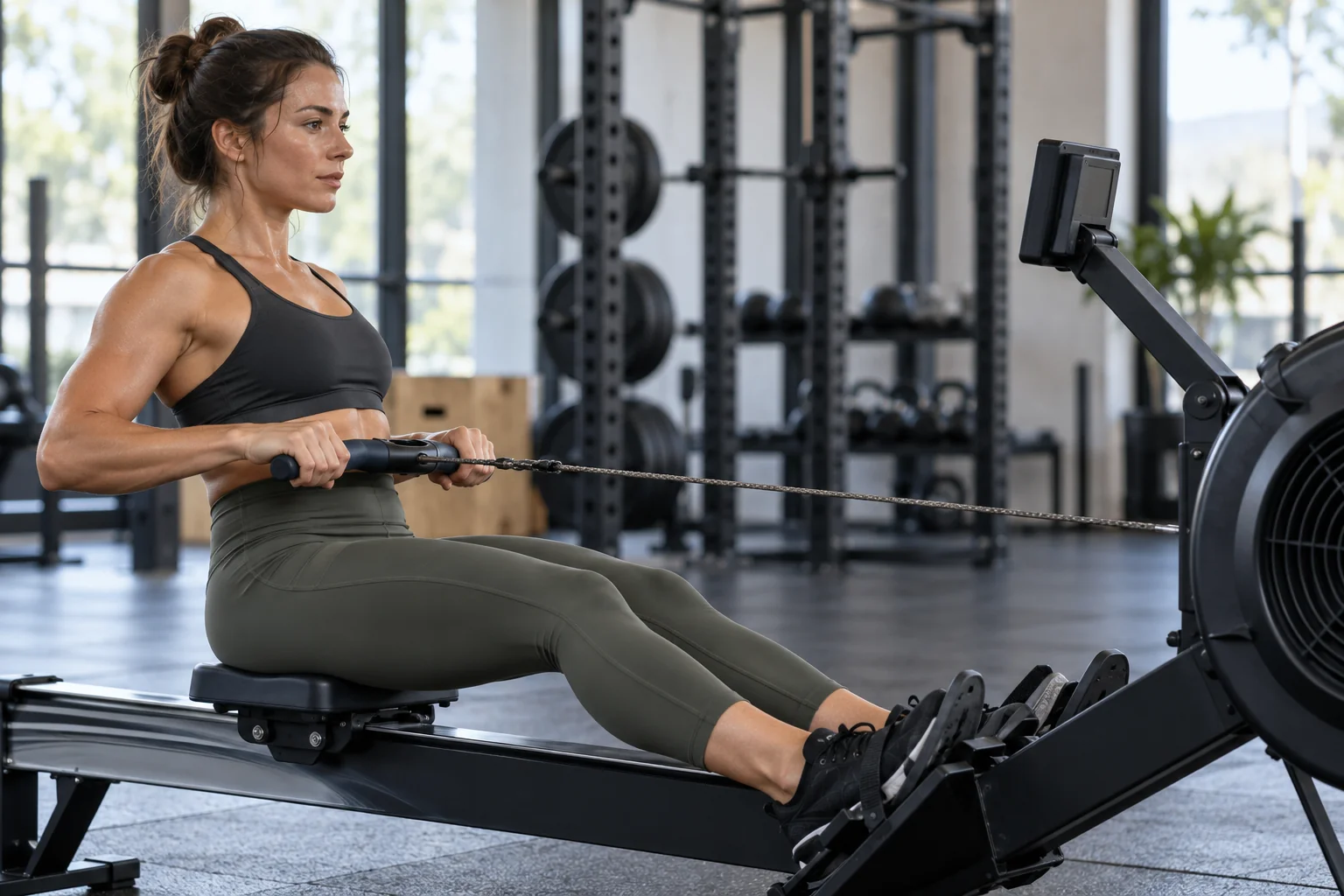
After preparing the equipment, row easily for a few minutes and assess the whole stroke. Can you press through the legs, keep a direct handle path and return without crashing forward? Can you breathe comfortably and relax the shoulders? If the feel disrupts those basics, make a small appropriate adjustment or ask for help. Avoid changing the control after every stroke, because that leaves you little time to learn how the current setup actually feels.
A stable rowing machine floor mat (paid link) may help protect a suitable floor beneath home equipment, but it cannot correct an unsuitable resistance setting or a loose machine assembly. Check support and movement separately. If the machine rocks or slides unexpectedly, stop to address setup rather than continuing the setting test. Physical stability, a clear rail and an appropriate adjustment are different requirements. Solving one does not establish that the others are adequate, even if the workout's display appears normal.
Change effort without changing every control
Once the setting feels comfortable, practice a few easy strokes followed by a modest increase in coordinated pressure. Notice how the monitor responds while you keep the return controlled. This helps distinguish effort from the control's selected position. You do not need to alter resistance at every interval transition unless the workout and machine are designed for that approach. Frequently reaching for a lever during a moving stroke can also make the session awkward and distracting.
Keep preparation and cooling down easy at an appropriate setup. During a harder block, pay attention to whether the stroke remains reliable rather than assuming a setting guarantees the desired intensity. If you use a compatible heart rate chest strap (paid link), it can offer another trend alongside perceived effort, but it cannot certify that a dial choice is safe. Health circumstances, medications and sensor behavior affect interpretation. Use the information to support an appropriate plan, not override symptoms or qualified guidance.
Troubleshoot changes in feel logically
If the same rower suddenly feels different, consider whether you changed the footplates, session pace or stroke pattern. Then check whether another person adjusted the controls. At home, confirm that routine maintenance is current according to the manual. At a gym, report a sticking seat, unusual noise or damaged strap to staff. Avoid forcing a mechanism that seems abnormal. An equipment fault needs attention even if lowering resistance briefly makes it easier to keep moving.
If two different rowers feel unlike each other, that may simply reflect their design. Begin with an easy familiarization period instead of treating the difference as proof that you became less fit. Distances and calorie estimates may also be calculated differently. Keep a record of which machine you used when comparing sessions. A consistent setup helps with repeatability, but it is not a reason to ignore comfort when the model, condition or environment has changed. Use our monitor metrics guide to separate setup changes from output numbers.
Choose settings that serve the session
For easy rowing, use a comfortable feel that allows a relaxed rhythm. For technique practice, reduce demands enough to notice the movement sequence. For a planned harder session, retain a setup you understand unless there is a specific reason to change it. The setting is a tool for the session, not the session's achievement. A low number accompanied by controlled useful work can be more appropriate than a maximum number followed by strained short strokes.
Review whether your chosen setup helps you repeat the intended workout. If it creates avoidable tension, adjust it sensibly or seek instruction. Keep the model's manual accessible and avoid universal advice that ignores air, magnetic, water and hydraulic differences. Understanding what the controls do gives you more useful freedom than memorizing a fashionable setting. The result should be a machine you can operate confidently, with effort selected deliberately rather than inferred from one number.
Practical Options at a Glance
| Situation | Practical option | What to consider |
|---|---|---|
| Air damper | Learn airflow and feel | The control is not a universal intensity dial. |
| Magnetic level | Read the model instructions | Numbered levels differ between machines. |
| New equipment | Start with easy familiarization | Record the model before comparing output. |
Frequently Asked Questions
No. The appropriate setup depends on the machine, session and your control. A maximum setting can make the movement awkward without improving the intended workout. Learn what the control changes, choose a manageable feel and adjust effort deliberately. A higher number is not a measure of your fitness or the session quality.
On compatible air rowers, damper position controls airflow, while drag factor reflects flywheel deceleration measured by the monitor. The same position may not produce the same feel on every machine. Check the specific model instructions. Neither number should be copied as a universal target for all rowers or people.
No universal numbered scale connects every rower. Magnetic levels, air dampers, water arrangements and hydraulic controls can work differently. Start with the new machine instructions and a short easy familiarization period. Record the model when comparing sessions, and avoid treating identical-looking numbers as evidence of equivalent effort or output.
Safety and Personal Needs
Stop rowing and seek appropriate care for chest pain, faintness or unusual shortness of breath. Persistent or worsening joint or back pain needs assessment before progression. Follow individual advice for health conditions, recent surgery or exercise restrictions. Lower impact does not establish that rowing is suitable for every condition.
This is general educational information. Individual needs vary with health, fitness, mobility and training experience.
Sources and Further Reading
- Concept2: Damper Setting and Drag Factor
- Concept2: How to Use the PM5
- Sunny Health & Fitness: Rower Mechanisms
- WaterRower: Equipment Manual