Published by Best Fitness Routine. Editorial standards · Report a correction. Educational guidance; no individual clinical review is claimed unless a qualified reviewer is named.
Choose a prenatal practice for your current needs
Prenatal yoga for beginners can offer a quiet way to practice comfortable movement and breathing, but the word prenatal does not make every class suitable for every pregnancy. Ask your care team whether yoga fits your circumstances, especially if you have restrictions or symptoms. Then look for an instructor who understands pregnancy-specific changes and offers clear alternatives. A useful class explains the purpose of a position and makes it easy to stop or change it.
You do not need to be flexible or familiar with yoga names before beginning. The practical starting point is a supported position, comfortable breathing, and enough time to move without rushing. Avoid selecting a class mainly because it promises a particular delivery outcome or shows the deepest poses. This guide focuses on preparing a manageable practice and recognizing when a position should be adjusted. It is not a treatment plan for pregnancy pain or complications.
Ask useful questions before joining a class
Tell the instructor your stage of pregnancy, previous yoga experience, and any guidance your prenatal clinician has given you. Ask whether the class includes options for standing, seated, and floor work, and whether you can remain upright when a floor transition is uncomfortable. You should be able to understand the alternatives before the class moves on. A crowded format that makes questions difficult may not be the best first experience.
For an online class, check the instructor's pregnancy-specific training and whether the explanation covers changes as pregnancy progresses. A prerecorded video cannot observe your balance, symptoms, or position. Pause it whenever you need to set up support or decide whether a movement fits. Do not treat the video length as a requirement to finish everything. It can be useful to preview the sequence before practicing so unexpected transitions do not become part of the challenge.
Make the practice space stable and accessible
Clear enough room to move your arms and change position without contacting furniture. Keep a stable chair nearby if you may need an upright alternative, and make sure a wall used for support is clear. Consider whether you can reach water and rest comfortably without stepping over props. The simplest space is often the easiest to adapt. You do not need to recreate a studio or purchase a large collection of accessories before learning what helps.
A exercise mat (paid link) can provide grip and a comfortable surface, but it needs to stay flat. Test whether your hands and feet feel secure without moving into a demanding position. Put the mat where its edge will not become an obstacle during standing work. If kneeling is uncomfortable, padding may improve the surface, but padding does not make every kneeling pose appropriate. Ask for another position when discomfort persists rather than assuming thicker equipment is always the answer.
Begin with breathing that stays relaxed
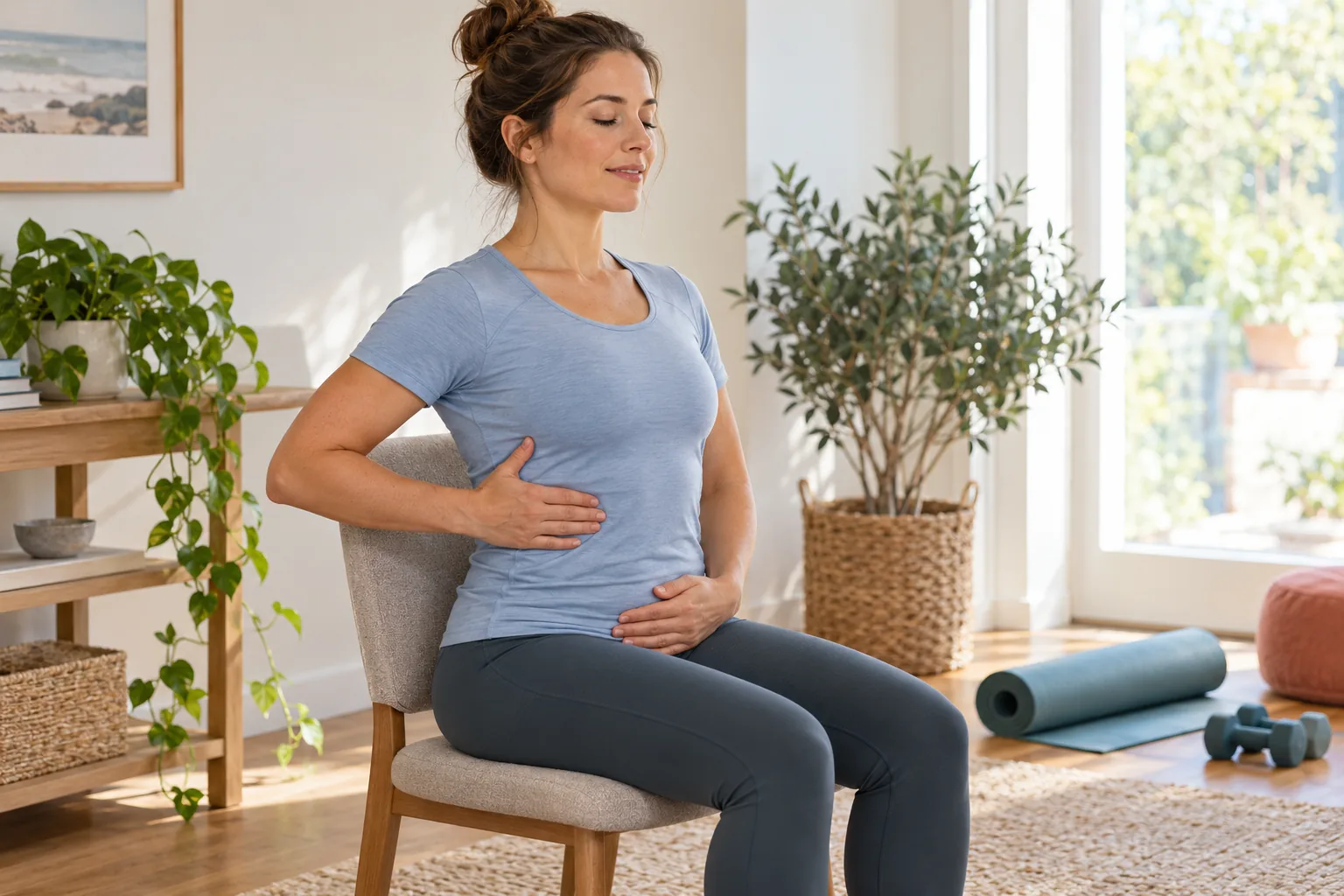
Start in a supported seated or standing position and notice your ordinary breathing. Let the breath remain comfortable rather than forcing a deep inhale or holding it to match a count. The purpose is to create room to notice how the practice feels. If a breathing exercise makes you dizzy, tense, or uncomfortable, return to ordinary breathing and stop that exercise. A calm-looking technique is not automatically suitable just because it is presented as relaxation.
Avoid treating breathing as a test you must perform perfectly before moving. You can use the breath to notice effort and slow a transition. If you need several complicated cues to maintain a position, simplify the position itself. Ask the instructor how to reduce the demand instead of concentrating harder on a difficult breath pattern. A useful beginner practice leaves you with clearer choices rather than a list of techniques you feel pressured to master.
Use props to bring support closer
A set of yoga blocks (paid link) can shorten the distance to a support in some approved positions. The block should rest securely on a suitable surface, and its height should match the position you can maintain comfortably. Blocks are aids, not targets. If reaching a block still requires compressing the abdomen, forcing a twist, or leaning into an unstable posture, use a different arrangement or an upright alternative instead of trying to complete the original shape.
A yoga strap (paid link) may extend reach in an instructor-approved movement without requiring you to pull farther into a stretch. Use it gently and follow instruction about where it belongs. A strap should not be used to force a limb into a position, create abdominal pressure, or substitute for stable support. You can practice without one when the simpler version fits. Buying a prop is only useful if it solves a specific setup issue in the practice you are actually doing.
Keep standing positions comfortable and supported
Choose a stance that gives you enough room and feels stable. A wider or shorter position may be more comfortable than the shape shown by the instructor. Use a stable chair or wall when appropriate, and keep the support within reach before beginning. Avoid making a balance pose into an independent challenge while pregnancy is changing your center of mass. A supported version can serve the purpose without requiring you to prove that you can stand unsupported.
Keep movements slow and use a comfortable range. You should not need to pull hard on furniture, hold your breath, or twist around the abdomen to stay in position. If a standing pose creates pelvic pain or feels uncertain, leave it and ask for another option. Do not assume that the correct response to every discomfort is a deeper stretch. The useful question is whether the position fits the purpose and your current circumstances, not whether it matches the photograph.
Plan floor positions and transitions separately
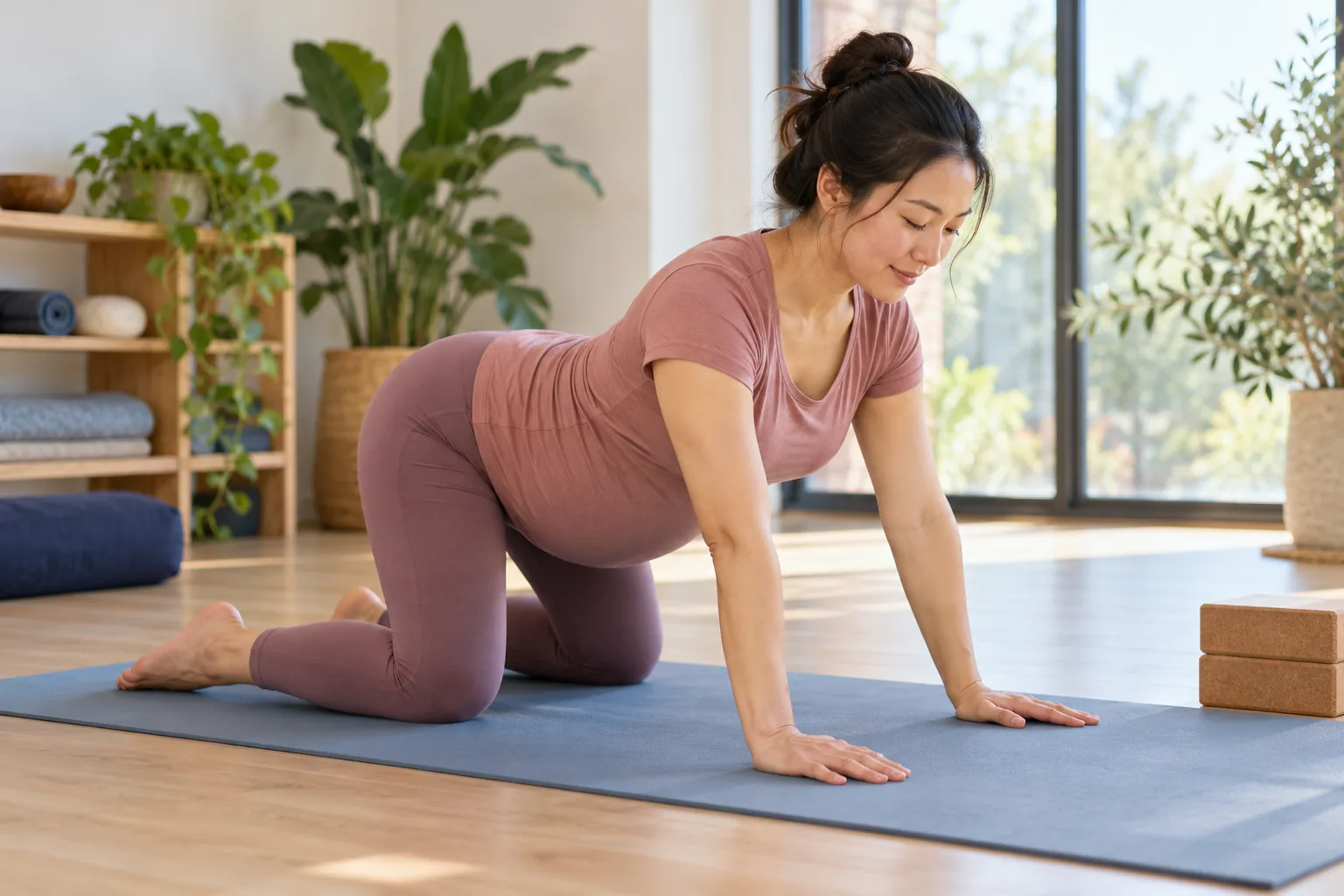
A supported hands-and-knees or side-lying position may fit some people, while others need seated or standing options. Consider the knees, wrists, room around the abdomen, and the effort of getting down and back up. Arrange props before moving so you are not reaching across the mat to retrieve them. The transition can take as much attention as the pose, and it is reasonable to choose a different position when the transition itself feels awkward.
Avoid prolonged flat-on-your-back work later in pregnancy and follow personal advice about position changes. Avoid abdominal compression, deep forced twists, and poses that create instability. If you feel dizzy or unwell, leave the position and obtain guidance when needed. You do not need to complete a particular resting pose at the end of a class. A comfortable supported seat may be a more practical finish than trying to reproduce a floor posture that no longer fits.
Stay away from heat and performance pressure
Choose a normal-temperature practice setting rather than hot yoga. Pregnancy exercise needs attention to overheating, and a heated class is not a necessary way to get the benefits of movement. At home, notice sunlight, airflow, and whether the room becomes uncomfortable as you practice. Change the setting or stop when appropriate instead of interpreting heat tolerance as progress. Loose comfortable clothing and a short manageable session can make the practical setup much easier.
Flexibility is also a poor competition. Avoid bouncing or pressing into the farthest range you can reach. A gentle controlled movement can be useful without a dramatic stretch sensation. If a joint or pelvic area becomes painful, reduce the demand and ask for advice when the problem persists. A prenatal practice should make it easier to respond to the body you have today. It should not encourage you to recreate a pre-pregnancy range or compare yourself with another participant.
Finish with a simple review
After a short practice, notice which positions felt clear, which needed more support, and whether the transitions were comfortable. Take those questions to the next class rather than adding more poses immediately. You might decide that seated breathing and one supported movement are enough for now. A useful habit can begin with a small set of repeatable options. Consistency does not require an identical sequence through every week of pregnancy.
Discuss persistent pain, pelvic symptoms, or unusual fatigue with your prenatal team. If you continue with an instructor, ask them to explain how a suggested modification addresses the issue and whether further assessment is needed. Yoga is one possible activity within a broader pregnancy routine, not a replacement for clinical care. The best beginner practice is one you understand, can leave easily, and can adapt when your comfort, medical advice, or daily demands change.
Practical Options at a Glance
| Situation | Practical option | What to consider |
|---|---|---|
| Reaching toward the floor | Use a suitable prop with instruction | Support should improve access rather than force depth. |
| A pose feels cramped | Ask for an approved alternative | Comfort and transitions matter more than appearance. |
| Choosing a class | Look for qualified prenatal instruction | A general beginner label is not pregnancy clearance. |
Frequently Asked Questions
A general video may include positions or pacing that do not fit your pregnancy. Prefer a qualified prenatal instructor who can explain alternatives and respond to your needs. A video's beginner label describes its usual audience; it does not confirm that every pose is suitable for you or your stage of pregnancy.
Blocks can change the distance to the floor or provide support in a suitable position, but they cannot make an unsuitable pose appropriate. Use props for a specific comfort or access problem. If the pose still feels strained, skip it and ask an instructor for a simpler approved alternative.
Avoid treating depth as the measure of a successful session. A comfortable supported position, ordinary breathing and an easy transition may be more useful than reaching farther. Pregnancy changes how a pose feels, so use present comfort and qualified guidance rather than your earlier flexibility as the target.
Safety and Personal Needs
Discuss exercise with your prenatal care team and follow any individual restrictions. Stop activity and get medical help for concerning pregnancy symptoms. Chest pain, difficulty breathing, fainting, severe headache, vaginal bleeding or fluid leakage need urgent assessment; this is not an exhaustive list. Do not use an exercise modification to delay care.
This is general educational information. Pregnancy and postpartum recovery vary with health, delivery, healing and symptoms. This guide does not replace individualized maternity or physical therapy care.
Sources and Further Reading
- ACOG: Exercise During Pregnancy
- CDC: Physical Activity for Healthy Pregnant or Postpartum Women
- NHS: Exercise in Pregnancy
- CDC: Urgent Maternal Warning Signs