What Are Polyphenols?
Polyphenols include thousands of compounds such as flavonoids, phenolic acids, stilbenes and lignans. Foods contain different mixtures, and their absorption varies. Some are absorbed earlier in digestion, while others pass into the colon and become substrates for microbial metabolism.
This means the relationship goes both ways: diet can influence the microbiome, and the microbiome can influence which polyphenol-derived compounds become available to the body.
Where You Find Them in Food
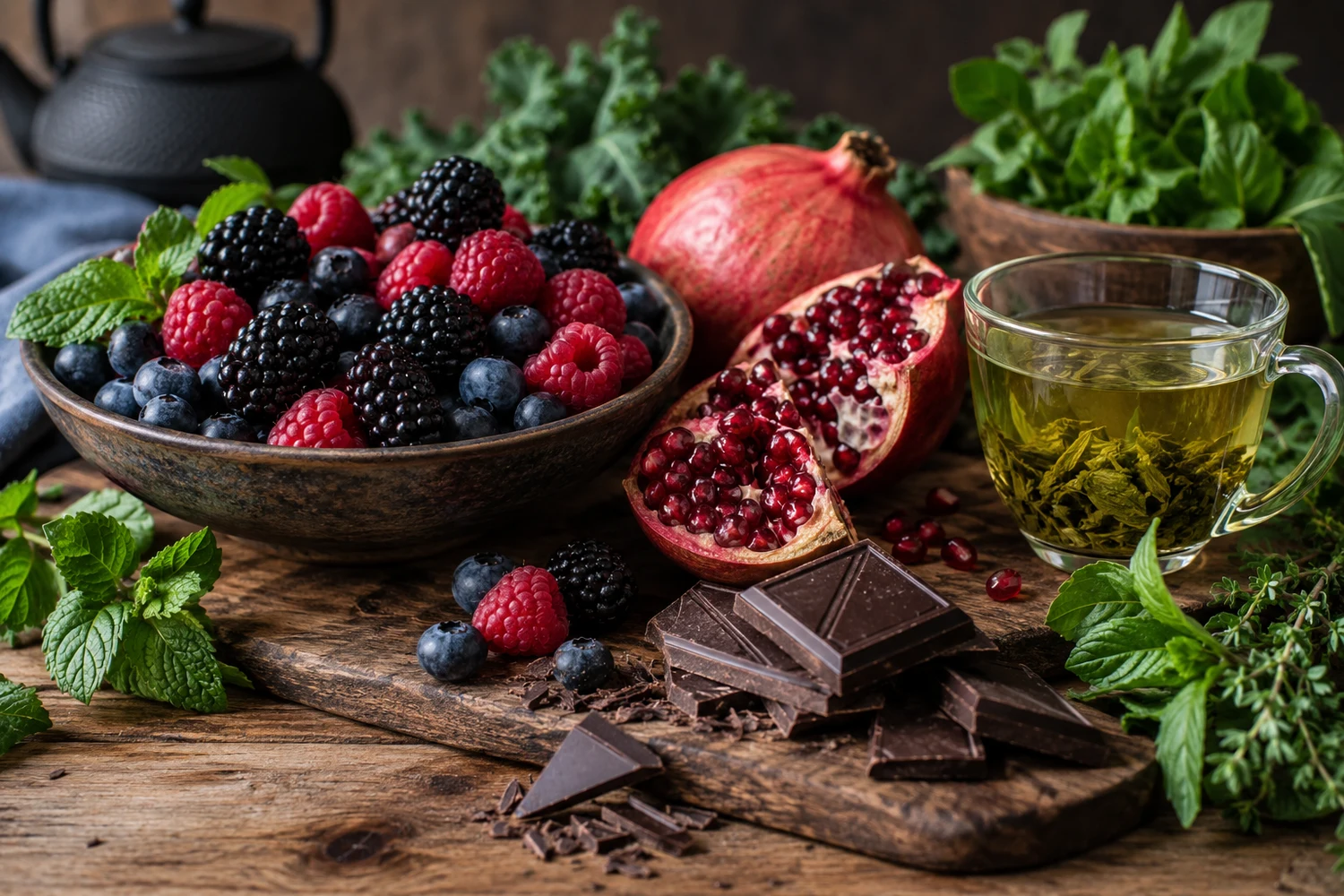
Rich sources include berries, cherries, grapes, apples, cocoa, tea, coffee, olive oil, herbs, spices, onions, leafy vegetables, legumes and nuts. You do not need to memorize polyphenol subclasses. Eating several colors and types of plants naturally provides a broad mixture.
That approach also increases fiber variety, which supports the microbiome through a different mechanism. See our fiber guide for the complementary role of fermentable carbohydrates.
How Gut Microbes Transform Polyphenols
Many polyphenols are modified by gut bacteria into smaller metabolites. These metabolites can sometimes be absorbed more easily than the original compound. Because people have different microbial communities, two people may process the same food differently.
Researchers are studying whether these differences help explain variable responses to foods such as berries, tea or soy. The science is promising, but it is not yet practical to select a diet from a consumer microbiome report.
What Human Research Suggests
Reviews and controlled studies suggest that polyphenol-rich foods can influence microbial composition and microbial metabolites. Some interventions are associated with changes in bacteria often linked with gut health, but results vary by food, dose, duration and baseline diet.
Benefits seen in studies of berries, cocoa or tea may also come from nutrients, fiber and overall dietary replacement. It is difficult to credit one compound in isolation.
Berries as an Easy Starting Point
Blueberries, strawberries, raspberries and blackberries provide anthocyanins and other polyphenols along with fiber and vitamin C. Frozen berries are nutritionally useful and often cheaper than fresh berries, making them an easy year-round option.
Add them to oats, yogurt or a smoothie instead of treating a concentrated berry extract as necessary. A whole-food serving also helps with satiety and overall nutrient intake.
Tea, Coffee and Cocoa
Tea and coffee contribute polyphenols, but preparation and portion sizes matter. Sugar-heavy drinks can change the overall nutritional picture. Cocoa and dark chocolate contain flavanols, while many chocolate products are also high in added sugar and saturated fat.
Choose them for enjoyment and fit them into the full diet. Polyphenols do not make an otherwise unbalanced product automatically “healthy.”
Why Plant Variety Beats a “Superfood” List
The microbiome responds to the overall pattern of foods and substrates entering the colon. Rotating berries, beans, herbs, vegetables, nuts, tea and whole grains gives a wider range of compounds than eating one “superfood” every day.
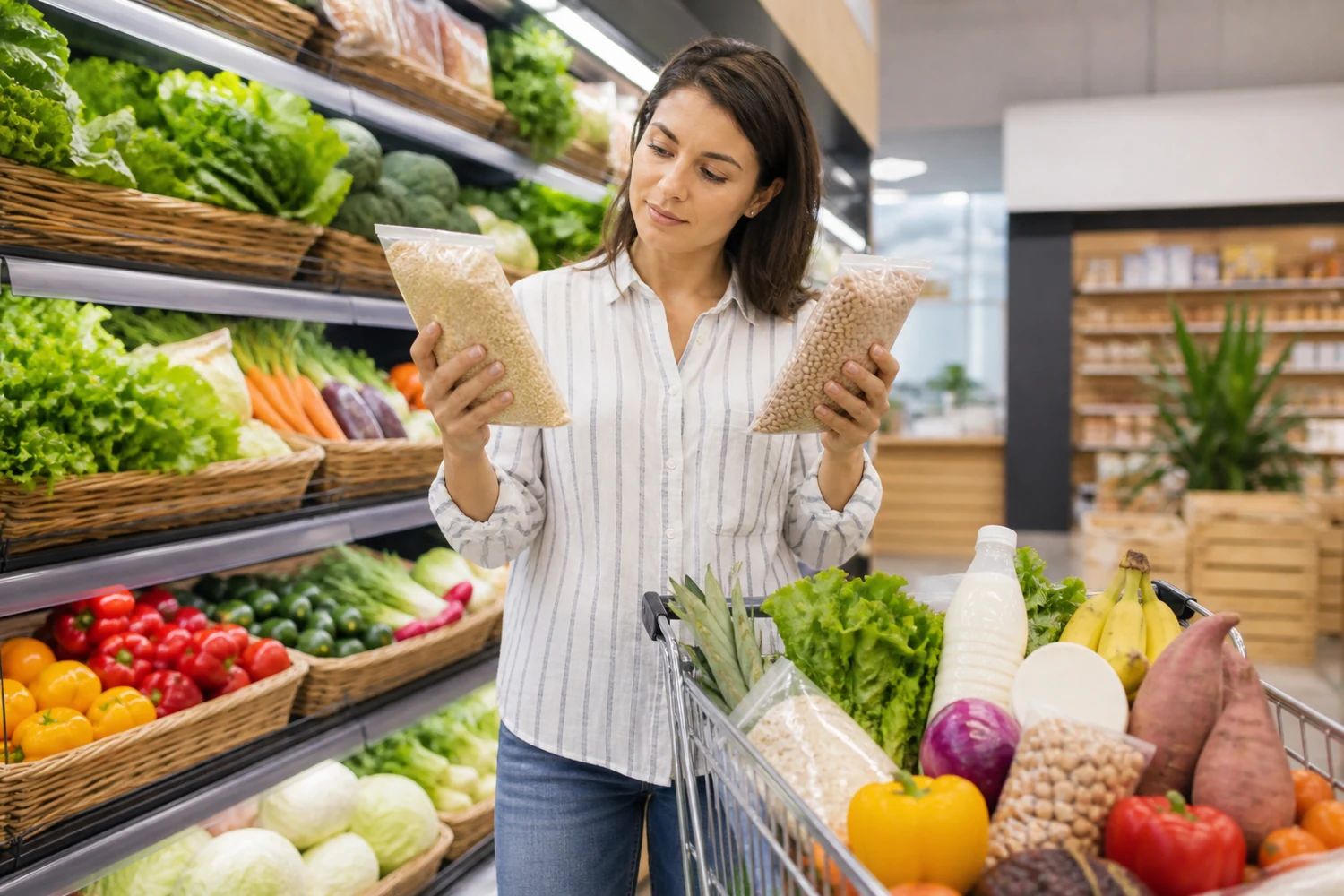
If grocery variety feels difficult, our healthy grocery shopping guide offers a simple way to build a cart across food groups.
What About Polyphenol Supplements?
Concentrated extracts can deliver doses far above normal food intake, and the safety or benefit may differ from the whole food used in studies. Supplements can also interact with medications or vary in quality.
For general gut health, prioritize foods unless a clinician has a specific reason to recommend a supplement. Our medication and supplement safety guide explains why “natural” does not mean interaction-free.
A Polyphenol-Rich Day Without Obsession
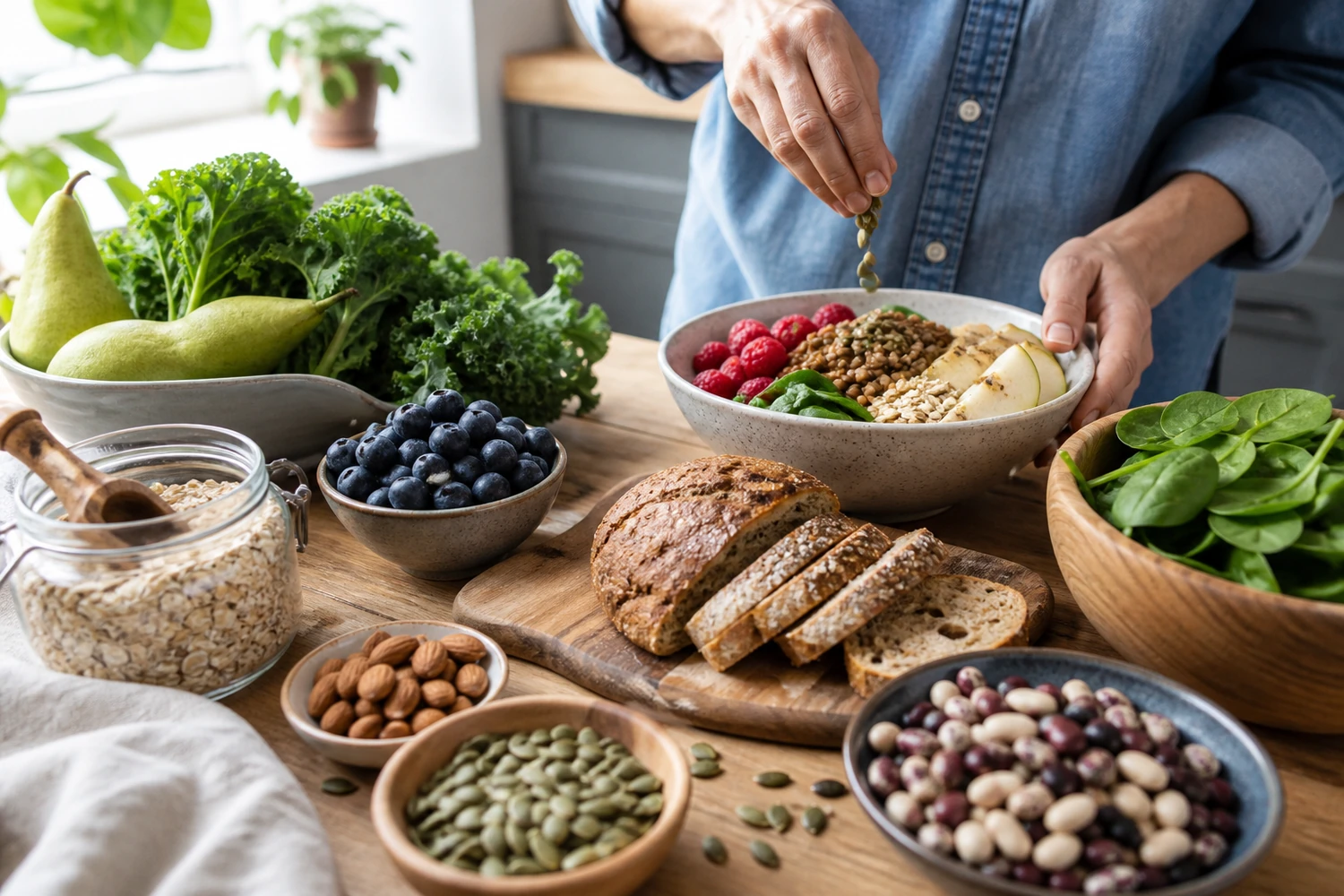
Breakfast might include oats with berries; lunch could use beans, leafy greens and colorful vegetables; dinner might include herbs, olive oil and a whole grain; and tea, coffee or a small portion of dark chocolate can fit according to preference. This is not a prescription—just an example of how normal foods add up.
The same pattern also supports general digestive health, which is more important than maximizing one class of plant chemicals.
Claims to Treat Carefully
Polyphenols are not a detox, and a food does not become medicine simply because it contains a high concentration. Avoid claims that one extract “feeds the right bacteria” for everyone or that a specific berry can cure dysbiosis.
If you want to understand the broader ecosystem, see Gut Microbiome Explained.
Different Polyphenol Families Come From Different Foods
Anthocyanins give many berries and purple foods their color; flavanols are found in cocoa and tea; flavonols occur in onions and many vegetables; phenolic acids are common in coffee, whole grains and fruit. These compounds have different absorption and metabolism, so a single “polyphenol score” hides important differences.
Eating a range of colors and plant types is therefore more sensible than concentrating on one extract. Food variety naturally spreads exposure across several polyphenol families.
How Processing and Cooking Affect Polyphenols
Freezing, chopping, cooking and fermentation can change polyphenol content, sometimes lowering one compound while increasing the availability of another. Frozen berries, canned beans and cooked vegetables can still contribute meaningful plant compounds.
This is important for practicality: you do not need an all-raw diet to obtain polyphenols. Choose preparation methods you enjoy and can sustain.
Why People May Respond Differently
The microbiome helps convert many polyphenols into metabolites, and people differ in their ability to produce some of these compounds. Researchers sometimes call these patterns “metabotypes.” This may help explain why the same food produces different biomarker responses across individuals.
The science is not yet ready for routine consumer testing that tells you which berry or tea is “right” for your microbiome. A diverse diet remains the more evidence-based strategy.
Why “Antioxidant” Is an Incomplete Explanation
Polyphenols are often described only as antioxidants, but many do not circulate in the body at concentrations high enough to act as simple free-radical scavengers. Their effects may involve cell signaling, enzyme activity and microbial metabolism. The older idea that foods can be ranked mainly by antioxidant capacity is therefore too simplistic.
This helps explain why whole-food research is more informative than marketing claims based on a laboratory antioxidant score. The body is responding to a complex mixture of compounds, not one number on a package.
Affordable Ways to Eat More Polyphenol-Rich Foods
You do not need exotic berries or premium powders. Frozen blueberries, apples, onions, beans, tea, coffee, cocoa, herbs and seasonal produce are common sources. Store-brand frozen fruit can be especially useful because it reduces waste and is available year-round.
Using herbs and spices in cooking is another low-cost way to diversify plant compounds while improving flavor without relying on excessive salt or sugar.
Polyphenols Are Not Automatically Easy on the Gut
A polyphenol-rich food can still contain lactose, caffeine, fat, FODMAPs or other components that trigger symptoms in an individual. Coffee may worsen reflux, large berry portions may bother some people with IBS, and cocoa products can be calorie-dense.
Choose foods based on both nutritional value and tolerance. Gut health is not improved by forcing a “superfood” that consistently makes you feel unwell.
Why Concentrated Extracts Deserve More Caution Than Food
Extracts can contain amounts of individual compounds that are difficult to reach through normal food intake. That can change absorption, side effects and medication interactions. Green tea extract, for example, is not the same exposure as drinking a cup of tea, and botanical blends may contain several active ingredients at once.
For general wellness, whole foods provide a wider nutritional package and a longer safety history. Supplements should have a specific reason, not simply a higher milligram number.
Use Food Variety as the Practical Target
If you want a simple target, add one colorful plant food to meals that already fit your routine. Berries at breakfast, herbs or onions at lunch, and beans or leafy vegetables at dinner can raise plant variety without requiring supplements or a specialized “polyphenol diet.”
Practical Takeaway
Polyphenols are one reason plant diversity matters. The best strategy is not a supplement or a score; it is regular intake of varied plant foods such as berries, tea, cocoa, herbs, vegetables, beans and nuts. This gives the microbiome many different compounds to work with while improving the quality of the diet overall.
Frequently Asked Questions
No. Polyphenols are plant compounds, not live microorganisms.
Some polyphenols reach the colon and can be metabolized by gut microbes, while their metabolites can also influence the intestinal environment.
Cocoa contains polyphenols, but chocolate products vary in cocoa content, sugar and calories. Use normal portions rather than treating chocolate as a supplement.
Yes. Frozen berries retain many nutrients and polyphenols and are a practical year-round option.
Most people can obtain a broad range from food. Concentrated supplements are not necessary for general gut health.
Safety and Scope
This article is general nutrition information. Concentrated herbal and polyphenol supplements can interact with medicines or be inappropriate in some medical conditions; discuss high-dose products with a qualified professional.