
Published by Best Fitness Routine. Editorial standards · Report a correction. Educational guidance; no individual clinical review is claimed unless a qualified reviewer is named.
Overview
Plantar fasciitis is a common cause of pain near the inner heel, often worst with the first steps after rest and after long periods of standing. Recovery usually depends on managing load, improving calf and foot tolerance, and wearing supportive footwear—not one instant cure. Similar pain may come from a stress fracture, nerve irritation or inflammatory disease, so the pattern should be confirmed when symptoms are unusual.
Plantar Fasciitis: Recognize the Symptom Pattern
Classic symptoms are sharp or aching pain at the bottom-inside heel during first morning steps or after sitting. Pain may ease as the foot warms and return after prolonged standing or activity. Burning, widespread numbness or night pain suggests another cause. For plantar fasciitis, also consider prescribed care, age, pregnancy, access and usual function. Connect plantar fasciitis: recognize the symptom pattern with a clear follow-up date and a specific clinical question.
For a practical next step, use the walking for health guide, then write down the result and any question it creates for the care team. In a plantar fasciitis plan, note timing, tolerance and the effect on daily life. Keep the step realistic for this foot health topic. Symptoms alone cannot confirm the diagnosis.
Plantar Fasciitis: Get the Right Medical Assessment
A clinician examines the heel, ankle motion, foot strength, walking pattern and recent changes in activity or footwear. Imaging is usually unnecessary at first but may help after trauma, persistent symptoms or concern for a fracture or other condition. For plantar fasciitis, also consider prescribed care, age, pregnancy, access and usual function. Connect plantar fasciitis: get the right medical assessment with a clear follow-up date and a specific clinical question.
Prepare for the appointment with the stretching guide, then write down the result and any question it creates for the care team. In a plantar fasciitis plan, note timing, tolerance and the effect on daily life. Keep the step realistic for this foot health topic. Testing should answer a clinical question rather than be ordered from fear.
Plantar Fasciitis: Use Practical Daily Support
Temporarily reduce the activity that clearly provokes pain while keeping comfortable movement. Supportive shoes, avoiding prolonged barefoot walking on hard floors and short cold applications with skin protection may improve comfort. For plantar fasciitis, also consider prescribed care, age, pregnancy, access and usual function. Connect plantar fasciitis: use practical daily support with a clear follow-up date and a specific clinical question.
Build the daily routine around the low-impact workout guide, then write down the result and any question it creates for the care team. In a plantar fasciitis plan, note timing, tolerance and the effect on daily life. Keep the step realistic for this foot health topic. Change one variable at a time so benefit and side effects remain clear.
Plantar Fasciitis: Understand Medicines and Procedures
Calf and plantar-fascia stretching, progressive foot and calf strengthening, taping or inserts may be used. Injections and surgery have specific risks and are generally not first steps; expensive custom devices are not required for everyone. For plantar fasciitis, also consider prescribed care, age, pregnancy, access and usual function. Connect plantar fasciitis: understand medicines and procedures with a clear follow-up date and a specific clinical question.
Keep treatment decisions organized with the starting exercise when overweight guide, then write down the result and any question it creates for the care team. In a plantar fasciitis plan, note timing, tolerance and the effect on daily life. Keep the step realistic for this foot health topic. Do not start, stop, borrow or change prescribed treatment without professional advice.
Plantar Fasciitis: Reduce Repeat Problems and Flares
Avoid sudden jumps in running, standing or hill work. Replace worn footwear, alternate higher- and lower-load days and rebuild capacity gradually after symptoms settle. Body weight can influence load but should be discussed without blame. For plantar fasciitis, also consider prescribed care, age, pregnancy, access and usual function. Connect plantar fasciitis: reduce repeat problems and flares with a clear follow-up date and a specific clinical question.
Choose one realistic prevention step, define when it will happen and review whether it is sustainable after two weeks. In a plantar fasciitis plan, note timing, tolerance and the effect on daily life. Keep the step realistic for this foot health topic. Prevention lowers risk but cannot guarantee that symptoms will not return.
Plantar Fasciitis: Move Safely When Activity Helps
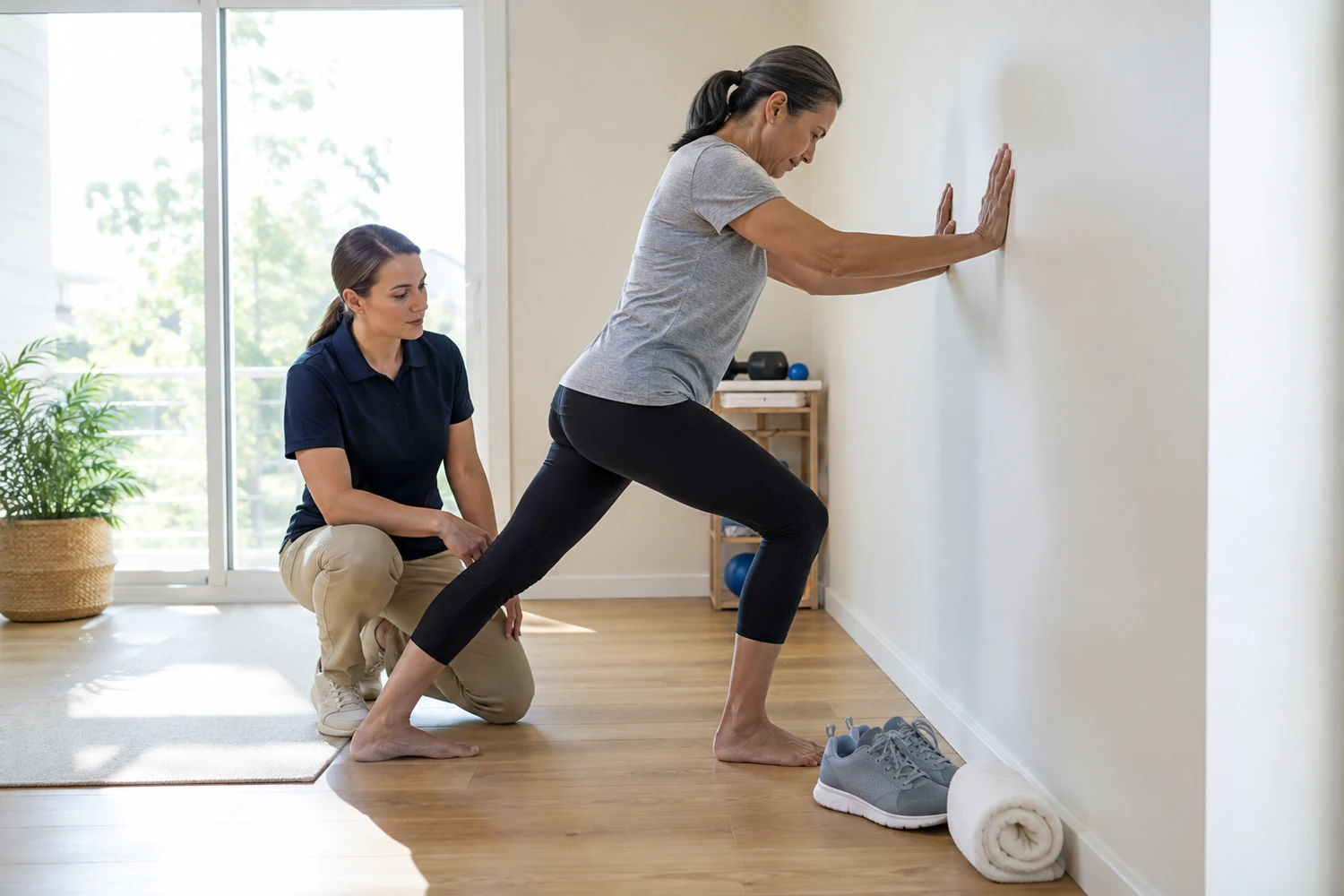
Wall calf stretches, seated plantar-fascia stretches and controlled heel raises can be useful when technique and dose are tolerated. Pain during and the following morning should guide progression rather than forcing a fixed repetition target. For plantar fasciitis, also consider prescribed care, age, pregnancy, access and usual function. Connect plantar fasciitis: move safely when activity helps with a clear follow-up date and a specific clinical question. For routine follow-up, use a symptom journal (paid link) to organize dated observations for your care team.
Use short, comfortable bouts and progress only after symptoms, balance and next-day recovery remain stable. In a plantar fasciitis plan, note timing, tolerance and the effect on daily life. Keep the step realistic for this foot health topic. Exercise should improve function without causing a meaningful flare later that day or the next. A health appointment notebook (paid link) can keep your questions and routine observations together for a planned visit.
Plantar Fasciitis: Know When to Seek Urgent Care
Seek assessment after an injury, inability to bear weight, significant swelling, fever, a wound, numbness, color change or rapidly worsening pain. Diabetes, poor circulation or immune suppression lowers the threshold for foot care. For plantar fasciitis, also consider prescribed care, age, pregnancy, access and usual function. Connect plantar fasciitis: know when to seek urgent care with a clear follow-up date and a specific clinical question.
Keep emergency numbers, allergies, medicines and the nearest appropriate care option easy to find. In a plantar fasciitis plan, note timing, tolerance and the effect on daily life. Keep the step realistic for this foot health topic. Emergency symptoms should never wait for an online self-care plan.
How Clinicians Assess Foot Health
Assessment may include first-step pattern, tenderness location, ankle flexibility, foot strength, neurological and circulation checks, recent training changes and footwear. Imaging is targeted to trauma, atypical features or persistent symptoms. For plantar fasciitis, the examination and history decide which result matters. A single symptom, home reading or online score cannot replace that clinical context.
Bring the timeline for plantar fasciitis: recognize the symptom pattern, notes from plantar fasciitis: get the right medical assessment and any response to plantar fasciitis: understand medicines and procedures. Ask what each test can show, what it cannot show and how the result changes the plantar fasciitis plan.
- When plantar fasciitis symptoms or concerns began
- How plantar fasciitis: recognize the symptom pattern affects work, sleep or self-care
- Previous results, medicines and responses related to foot health
- Who owns the next plantar fasciitis follow-up and when it is due
Build a Two-Week Foot Health Care Plan
Start with one step from plantar fasciitis: use practical daily support and one boundary from plantar fasciitis: know when to seek urgent care. For plantar fasciitis, an easier backup action keeps the plan usable on difficult days. The purpose is to support professional care, not to treat the condition alone.
During week two, review benefit, burden and unwanted effects before adding effort. Link plantar fasciitis: reduce repeat problems and flares with a repeatable routine. A responsible plantar fasciitis plan states what is safe to try, what needs advice and what requires urgent help.
- Days 1–3: establish the plantar fasciitis baseline
- Days 4–7: test one step from plantar fasciitis: use practical daily support
- Days 8–11: review tolerance during plantar fasciitis: move safely when activity helps
- Days 12–14: summarize results for the foot health visit
What to Track for Plantar Fasciitis
Track morning first-step pain, minutes of standing or walking, footwear, exercise dose and next-morning response. Look for improved function over several weeks rather than hour-to-hour changes. Keep the plantar fasciitis record short enough to maintain. Add timing and context only when they help answer a decision.
Review the log at a planned interval. Use it to connect plantar fasciitis: recognize the symptom pattern with plantar fasciitis: understand medicines and procedures and plantar fasciitis: move safely when activity helps. Simplify plantar fasciitis tracking if it creates panic, shame, compulsive checking or avoidance.
Questions for a Foot Health Visit
A focused question makes a short visit more useful. For plantar fasciitis, ask first about immediate safety, then expected benefit, uncertainty, alternatives and follow-up. Request plain-language written instructions when symptoms can change quickly.
- Does my pattern fit plantar fasciitis or another heel condition?
- Which activity can I maintain while reducing irritating load?
- Which stretch and strength dose fits my current tolerance?
- When would imaging, orthotics or physical therapy be useful?
Common Plantar Fasciitis Mistakes to Avoid
Do not assume plantar fasciitis: recognize the symptom pattern proves plantar fasciitis. Do not change prescribed care while testing plantar fasciitis: use practical daily support. Do not delay follow-up connected with plantar fasciitis: know when to seek urgent care. For scheduled care, an optional medical-record organizer (paid link) can keep reports and appointment notes together.
Use the boundaries from plantar fasciitis: get the right medical assessment, plantar fasciitis: understand medicines and procedures and plantar fasciitis: move safely when activity helps. Online plantar fasciitis education can improve questions and organization, but it cannot examine a person or provide emergency treatment.
- Symptoms alone cannot confirm the diagnosis.
- Testing should answer a clinical question rather than be ordered from fear.
- Change one variable at a time so benefit and side effects remain clear.
- Do not start, stop, borrow or change prescribed treatment without professional advice.
- Prevention lowers risk but cannot guarantee that symptoms will not return.
- Exercise should improve function without causing a meaningful flare later that day or the next.
- Emergency symptoms should never wait for an online self-care plan.
A Progressive Heel-Pain Exercise Routine
Start with a gentle wall calf stretch and seated plantar-fascia stretch before first steps. Add slow supported heel raises on level ground when walking and next-morning symptoms are stable. For plantar fasciitis, match activity to current ability, warm up gradually and use support when symptoms or balance can change.
Keep discomfort mild and temporary. Reduce the dose if morning pain rises meaningfully, and stop for sharp pain, new swelling, numbness or inability to bear weight. In a plantar fasciitis routine, increase duration before intensity and change one variable at a time. Same-day and next-day recovery are part of the result.
- Start below maximum effort for plantar fasciitis
- Use a talkable pace or a foot health limit
- Keep suitable support, footwear and hydration nearby
- Review same-day and delayed plantar fasciitis symptoms
- Treat emergency symptoms as immediate stop signals
Frequently Asked Questions
The plantar fascia may be especially sensitive after rest and then briefly warm with movement.
Usually not. Reduce clearly aggravating load while maintaining comfortable activity and a gradual recovery plan.
Not always. Supportive shoes or prefabricated inserts may be enough; individual findings guide the choice.
Improvement is often gradual over weeks to months, especially when the foot is repeatedly overloaded.
Trauma, inability to bear weight, fever, a wound, numbness or color change needs prompt assessment.
Safety and Scope
This guide cannot diagnose heel pain. Seek prompt care for inability to bear weight, major trauma, fever, spreading redness, a foot wound, numbness, color change or severe night pain. People with diabetes, neuropathy or poor circulation should obtain individualized foot advice before self-treatment.