Published by Best Fitness Routine. Editorial standards · Report a correction. Educational guidance; no individual clinical review is claimed unless a qualified reviewer is named.
Overview
The neck has to support the head while allowing a large amount of movement, so it is sensitive to long periods in one position, awkward sleep, sudden loading and stress-related muscle tension. A stiff neck after a long day at a laptop may need a very different response from neck pain after a collision or a fall.
The goal of self-care is to restore comfortable movement while watching for symptoms that suggest more than a routine muscular problem. Pins and needles, a cold or weak arm, worsening numbness, balance changes or significant trauma should move the problem out of the “just stretch it” category.
Common Causes of Neck Pain and Stiffness
Common causes include sleeping in an awkward position, holding the head in one posture for long periods, muscle strain, a pinched or irritated nerve, and whiplash-type injury. Age-related changes in the cervical spine can also contribute. Stress may increase muscle guarding and pain sensitivity even when it is not the original cause.
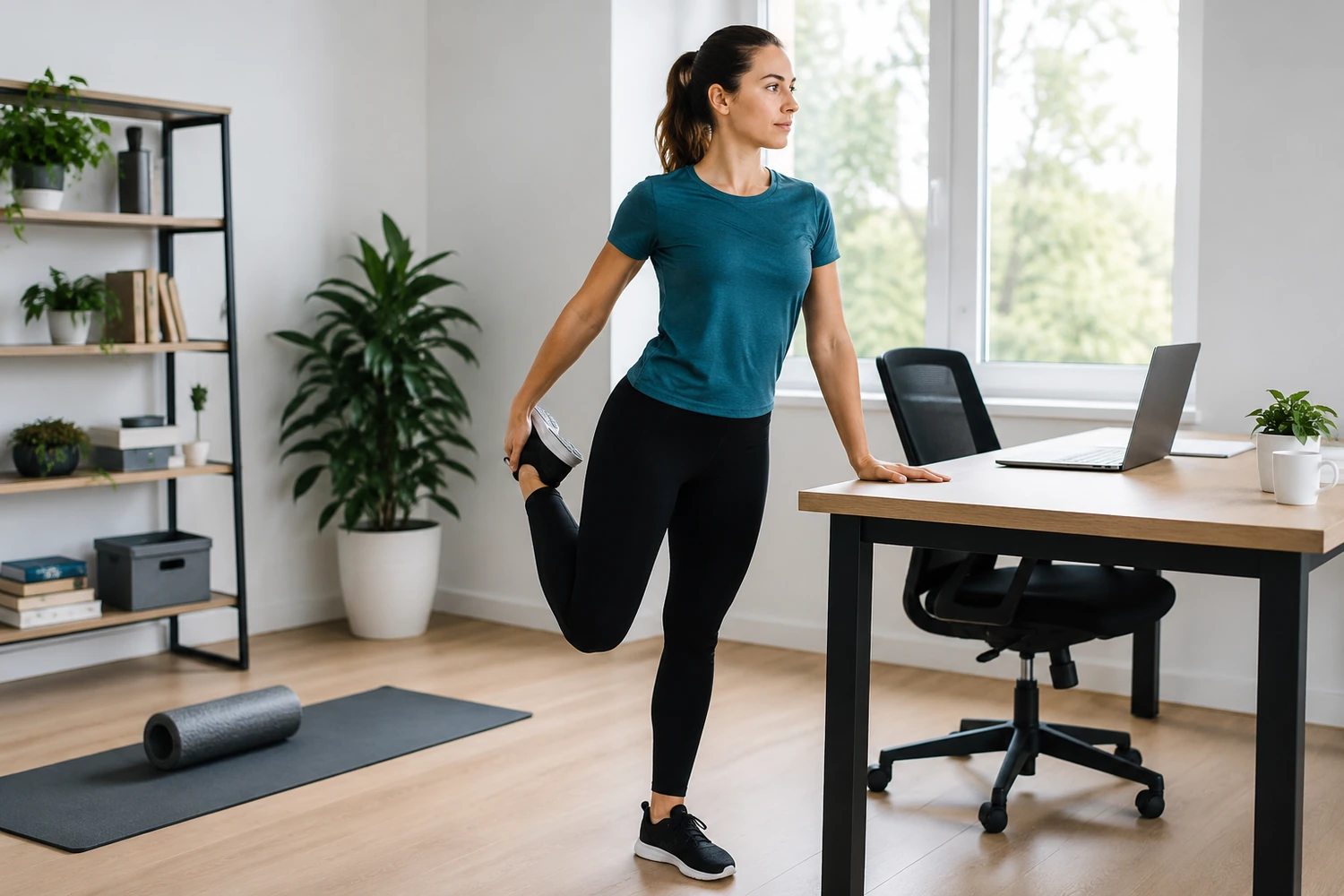
For people who sit for long workdays, desk-worker mobility can help break up prolonged positions throughout the day rather than relying on one long stretching session after work.
Desk Work, Screens and Neck Tension
There is no single “perfect posture” that prevents all pain. A better goal is variety: bring the screen closer to eye level, support the forearms, keep frequently used items within easy reach, and change position before stiffness becomes severe. A timer to stand, walk or move for a minute can be more practical than trying to hold yourself rigidly upright for eight hours.
If your screen habits also contribute to eye fatigue or headaches, the strategies in digital eye strain and screen time can reduce another source of tension during computer-heavy days.
Gentle Neck Mobility
Comfortable movement is usually preferable to keeping the neck completely still unless a clinician has told you otherwise. Try slow turns to each side, gentle nodding, and small side-bending movements within an easy range. You should feel movement—not a sharp pull, electric sensation or worsening arm symptoms. A health appointment notebook (paid link) can keep your questions and routine observations together for a planned visit.
- Move slowly and breathe normally.
- Use a pain-free or mildly uncomfortable range rather than forcing the end position.
- Stop if symptoms spread down the arm or numbness or weakness increases.
- Repeat short sessions during the day instead of one aggressive session.
Strength and Posture Habits
Neck comfort often improves when the upper back and shoulders share the workload. Rows, light band pull-aparts, scapular retraction and controlled shoulder movements can be useful when tolerated. The core stability and posture workout provides a whole-body approach instead of treating posture as a neck-only issue.
A useful cue is to make the body adaptable, not stiff. Strong muscles, regular position changes and a sensible training load matter more than maintaining a textbook pose every minute.
Returning to Exercise
Keep training movements that feel comfortable and temporarily scale movements that clearly reproduce neck or arm symptoms. That may mean reducing overhead load, using a supported row instead of a bent-over row, shortening a cycling position, or avoiding high-impact contact until movement is easier. Gradual reloading is usually more useful than testing the painful movement at full intensity every day.
For general flexibility work, stretching before or after a workout explains when mobility work is most useful and why a warm-up should prepare you for movement rather than exhaust you.
Mistakes That Can Keep the Neck Irritated
- Forcefully cracking or manipulating the neck to chase temporary relief.
- Holding one “correct” posture for hours instead of changing position.
- Stretching harder when tingling or arm pain is increasing.
- Sleeping with the neck in a sharply rotated position when it reliably aggravates symptoms.
- Returning immediately to full contact or heavy overhead work after a significant injury.
When Neck Pain Needs Medical Assessment
Seek prompt assessment after significant trauma, especially if pain is severe or movement is markedly limited. New or worsening weakness, numbness, loss of coordination, problems with walking, severe headache with neck stiffness, fever with feeling very unwell, or changes in bladder or bowel control require urgent medical attention.
If ordinary neck pain or stiffness lasts for several weeks, repeatedly wakes you, or does not respond to simple self-care, a clinician or physical therapist can check for nerve irritation, joint problems and other causes. Keep questions and reports together in a medical-record organizer (paid link) for your next planned appointment.
What to Track
- When symptoms started and whether there was an injury.
- Whether pain stays in the neck or travels into the shoulder, arm or hand.
- Pins and needles, numbness, weakness or a cold arm.
- Positions that aggravate or ease symptoms.
- Headaches, dizziness, fever or balance changes.
- Any previous neck injury or known spinal condition.
A Simple Workday Plan
Set up the screen so you do not need to lean forward to read, take brief movement breaks every 30 to 60 minutes, and use two or three gentle neck movements during those breaks. Add a few upper-back strengthening sets two or three times per week if comfortable. The broader daily mobility routine can help you spread mobility work across the whole body.
Long-Term Outlook
Most uncomplicated neck pain improves with time, movement and sensible adjustments. Recurrences are common when the same workload returns suddenly, so the long-term goal is not to fear movement but to build tolerance gradually. Sleep, stress, general fitness and upper-body strength all influence how resilient the neck feels during busy periods.
How to Judge Progress
Progress may show up as easier turning while driving, fewer workday flare-ups, less need to constantly change position, and better tolerance for normal exercise. Do not judge the neck by whether it feels completely loose every morning. The more useful trend is whether ordinary tasks are becoming easier and whether arm symptoms, if present, are settling rather than spreading.
Questions to Ask a Clinician or Physical Therapist
- Do my arm symptoms suggest nerve involvement?
- Which movements are safe for me to keep doing?
- Would physical therapy or an ergonomic change be useful?
- What symptoms would require urgent reassessment?
Frequently Asked Questions
Unless a clinician has told you to immobilize the neck, gentle movement and normal activity within a comfortable range are usually preferred to prolonged complete rest.
Long periods in one position can contribute to neck stiffness and pain. Frequent position changes, screen setup and regular movement breaks can reduce that load.
Be cautious. Spreading pain, tingling, numbness or weakness may involve a nerve, and forceful stretching can aggravate symptoms. Consider professional assessment.
There is no single best pillow for everyone. The practical goal is a pillow that keeps your head reasonably aligned and allows comfortable sleep rather than forcing a sharply bent position.
Urgent assessment is important after major trauma or with progressive weakness or numbness, walking or coordination problems, severe systemic illness, or bladder or bowel changes.
Safety and Scope
Do not use forceful neck manipulation as a substitute for assessment. New weakness, progressive numbness, walking or coordination problems, significant trauma, fever with severe neck stiffness, severe headache, or bladder/bowel changes require prompt medical care.