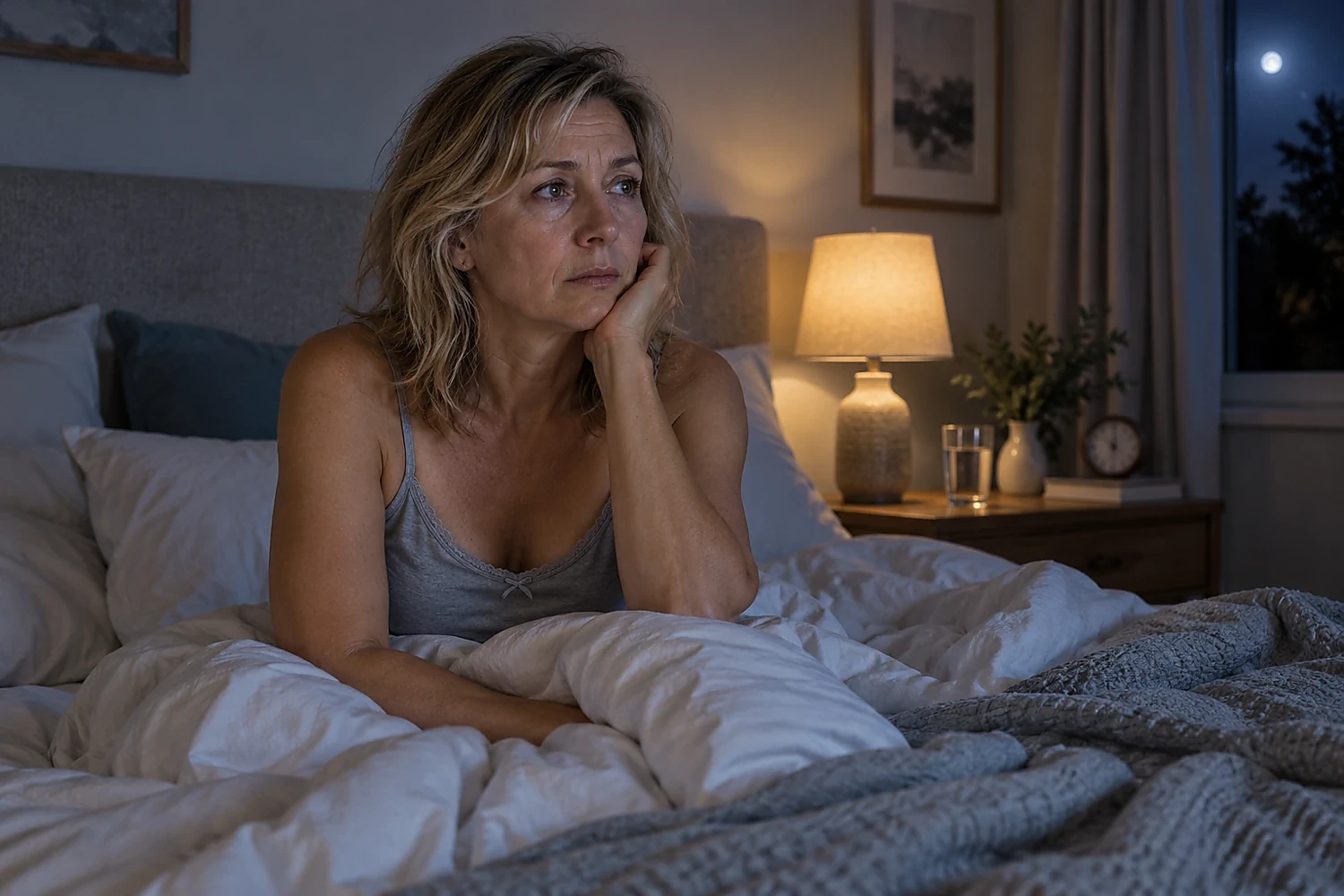
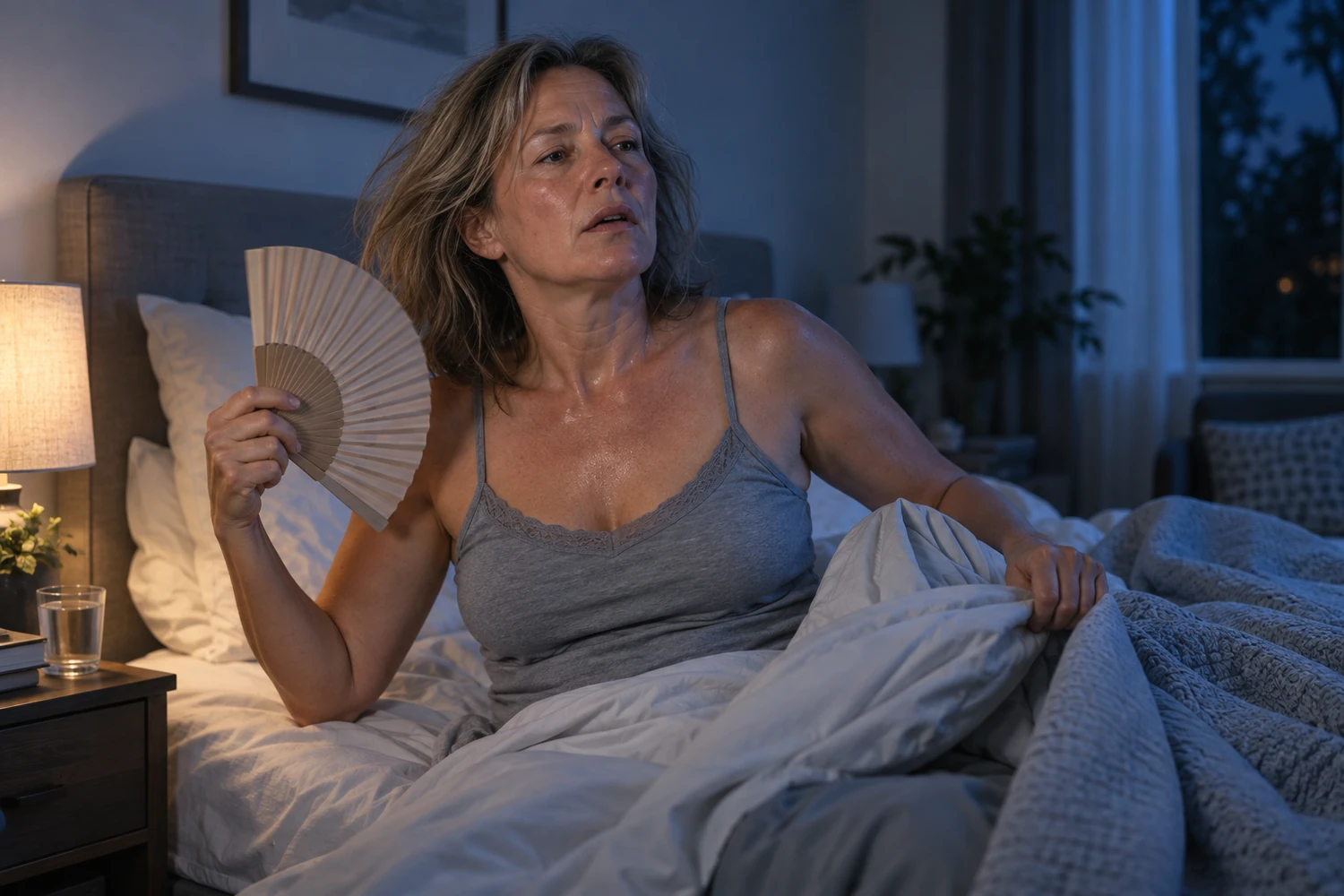
What a Hot Flash Feels Like
A hot flash is a sudden wave of heat that often affects the face, neck and chest and may be accompanied by sweating, flushing, palpitations or chills afterward. Night sweats are hot flashes that occur during sleep and may wake you or leave bedding damp.
These symptoms are part of the broader menopause transition described in our perimenopause signs and stages guide. The experience varies widely; frequency alone does not define how disruptive a symptom is.
Why Hot Flashes Happen
Changing estrogen levels affect brain systems involved in temperature regulation. The body’s comfort zone for temperature appears to narrow, so small changes can trigger sweating and blood-vessel dilation. This is why a room that feels normal to someone else may suddenly feel intensely hot.
Hot flashes are real physiological events, not simply anxiety or poor stress tolerance. Anxiety can amplify the distress of an episode, but treating the symptom as “all in your head” is not appropriate.
Common Triggers and Why They Are Individual
Alcohol, hot rooms, spicy food, hot drinks, emotional stress and heavy bedding can trigger symptoms in some people. Others notice no consistent trigger. A short symptom log can help identify a pattern without requiring major restrictions.
If alcohol seems to worsen symptoms or sleep, the alcohol and health support guide offers practical ways to reduce intake without all-or-nothing thinking.
Simple Cooling Strategies That Can Make Episodes Easier
Dress in removable layers, keep the bedroom cool, use breathable bedding, carry water, and use a fan when useful. These measures do not change the underlying menopause transition, but they can reduce discomfort and sleep disruption.
At night, consider moisture-wicking sleepwear and keep a change of clothing nearby if night sweats are frequent. If sleep remains poor even when night sweats are controlled, use the menopause sleep guide to look for other contributors.
Hormone Therapy for Hot Flashes
Systemic menopause hormone therapy is the most effective treatment for vasomotor symptoms for people who are appropriate candidates. The decision depends on age, timing since menopause, whether you have a uterus, medical history and the route of therapy.
Our menopause hormone therapy guide explains benefits, risks and questions to discuss with a clinician.
Nonhormonal Treatment Options
Several prescription nonhormonal medications can reduce hot flashes, including certain antidepressants and other agents specifically used for vasomotor symptoms. These are important options for people who cannot use hormones or prefer not to.
Treatment choice should account for other symptoms, medication interactions and side effects. Herbal products marketed for menopause are not automatically safer and can interact with medicines or have inconsistent evidence.
Why Night Sweats Can Create a Sleep Cycle
Night sweats may wake you directly, but repeated awakenings can also make it harder to return to sleep. Over time, worry about sleep itself can become part of the problem. A consistent sleep schedule and a cool room are reasonable starting points.
If you snore loudly, wake gasping or remain very sleepy during the day, consider another sleep disorder. Our sleep apnea warning-signs guide explains symptoms that deserve assessment.
Not Every Episode of Sweating Is Menopause
Fever, thyroid disease, medication side effects, infection, low blood sugar and some other conditions can cause sweating or heat sensations. New severe symptoms, unexplained weight loss, persistent fever or symptoms that do not fit the usual pattern should be evaluated.
Palpitations can accompany hot flashes, but new chest pain, fainting or sustained rapid heart rate needs separate medical attention rather than being attributed automatically to menopause.
A Simple Hot-Flash Tracking Method
For one or two weeks, note roughly when episodes occur, whether they wake you, and any obvious trigger such as alcohol, a hot room, stress or exercise. You do not need to record every meal or minute of the day. The goal is to identify repeatable patterns that can be changed without making life overly restrictive.
Rate the disruption as well as the number of episodes. Ten mild flashes may be less important than two night sweats that repeatedly wake you and impair work the next day. Treatment decisions should reflect quality of life, not just a symptom count.
Exercise, Fitness and Hot Flashes
Regular activity supports cardiovascular health, mood, sleep and body composition during menopause, even though exercise is not a guaranteed hot-flash cure. Some people experience temporary heat or sweating during a workout, which is normal and different from a vasomotor episode.
If heat makes exercise uncomfortable, train in a cooler environment, use breathable clothing and hydrate appropriately. The weekly exercise guide can help you build a balanced routine without overtraining.
Managing Hot Flashes During Work, Travel and Social Events
Carry a light layer you can remove quickly, choose aisle seating when practical, keep water available and identify a cooler location before long meetings or events. These small preparations can reduce anxiety about having a visible episode in public.
If embarrassment itself becomes a major source of distress, remember that hot flashes are a common physiological symptom. A practical plan plus appropriate medical treatment is usually more useful than avoiding travel, exercise or social situations altogether.
Food and Drink: Focus on Personal Triggers, Not Universal Bans
Some women notice hot flashes after alcohol, spicy foods or very hot drinks, but others do not. There is little value in eliminating multiple nutritious foods “just in case.” Instead, look for a repeatable pattern. If a trigger is obvious and the symptom is bothersome, reduce exposure and see whether it helps.
Hydration is useful when sweating is frequent, but drinking extreme amounts of water does not stop vasomotor symptoms. The hydration guide explains how to use thirst, activity and climate as practical cues.
How to Decide Whether Symptoms Need Medical Treatment
Treatment is reasonable when hot flashes or night sweats interfere with sleep, work, exercise or quality of life. You do not need to wait until symptoms are “unbearable” before discussing options. On the other hand, mild symptoms that are manageable with simple adjustments do not automatically require medication.
Bring a clear description of frequency, severity and impact to the appointment. That helps the clinician compare hormone therapy, nonhormonal medication and lifestyle measures based on your goals instead of using a one-size-fits-all approach.
Using a Short Trigger Log
Hot flashes can feel unpredictable, but a short two-week log may reveal practical patterns. Record the approximate time, what you were doing, room temperature, alcohol or caffeine intake, stress level and whether the episode disrupted sleep. The goal is not to eliminate every possible trigger; it is to identify the few changes that may make daily life easier.
For example, some women find that a cooler bedroom, layered clothing, lighter bedding and less alcohol near bedtime reduce disruption. Others notice no clear food trigger at all. If symptoms are frequent, severe or affecting work and sleep, discuss evidence-based prescription options rather than relying only on supplements or unproven remedies.
What to Discuss With Your Clinician
If hot flashes are disrupting sleep, concentration or daily comfort, ask about both hormonal and nonhormonal treatment options. The right choice depends on symptom severity, medical history, age, time since menopause and personal preferences. Bring a short symptom log so the conversation can focus on frequency, nighttime disruption and which situations make symptoms worse.
Do not assume that “natural” products are automatically safer. Supplements can interact with medicines and their evidence is often less consistent than prescription therapies. A clear discussion of benefits, risks, expected time to improvement and follow-up can help you make a more informed choice.
Practical Takeaway
Hot flashes and night sweats are common and treatable. Start with practical cooling and trigger awareness, but do not assume you must simply tolerate severe symptoms. Hormonal and nonhormonal treatments can help, and a clinician can tailor the choice to your health history and goals.
Frequently Asked Questions
Many last a few minutes, but duration and intensity vary from person to person.
Usually, yes. Night sweats are vasomotor symptoms that occur during sleep and can cause repeated awakenings.
It can trigger episodes in some people, but triggers are individual and avoiding every possible trigger is usually unnecessary.
Systemic menopause hormone therapy is the most effective treatment for appropriate candidates; nonhormonal prescription options are also available.
Seek evaluation when sweating is new, severe, associated with fever or unexplained weight loss, or otherwise does not fit a typical menopause pattern.
Safety and Scope
This article provides general health education and is not a diagnosis or individualized treatment plan. Menopause symptoms can overlap with other medical conditions. Seek professional care for severe, persistent, unusual or rapidly changing symptoms, and use urgent services for emergency warning signs.