
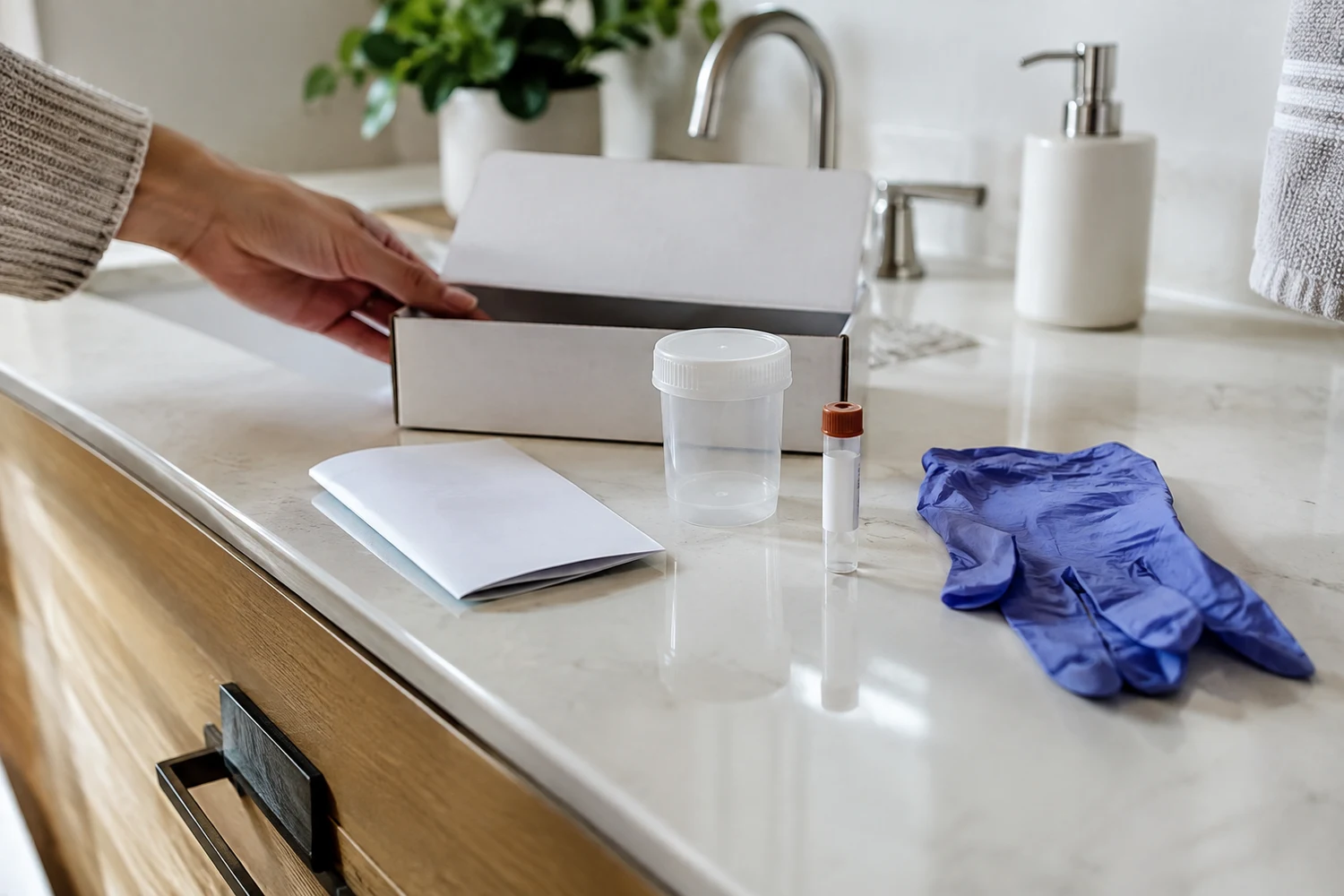
What Consumer Microbiome Tests Measure
Most consumer tests analyze microbial DNA in a stool sample using sequencing methods such as 16S rRNA sequencing or metagenomic sequencing. The report may estimate which bacterial groups are present and their relative abundance. Some companies compare your results with an internal database and generate a diversity score or food recommendations.
That laboratory step can be technically sophisticated, but a precise list of organisms does not automatically translate into a diagnosis. The healthy human microbiome varies substantially between people, and scientists have not established one universal reference microbiome for clinical wellness testing.
Why One Stool Sample Is Only a Snapshot
Microbial composition can change with recent meals, travel, illness, bowel transit time, medications and antibiotics. Stool also represents what is shed into the intestinal contents; it does not capture every organism attached to the intestinal lining or living in other parts of the digestive tract.
If a repeat sample gives a different percentage for a bacterial group, that does not necessarily mean your health changed dramatically. Small analytic and biological shifts can create a report that looks more different than the clinical meaning actually is.
What These Tests Cannot Diagnose Reliably
Consumer microbiome tests should not be used to diagnose IBS, inflammatory bowel disease, celiac disease, food allergy, “leaky gut,” infection, depression or a nutrient deficiency. Those conditions are evaluated with symptoms, medical history and validated clinical tests chosen for a specific question.
For example, persistent digestive symptoms may require blood tests, celiac testing, stool pathogen testing, inflammatory markers, imaging or endoscopy—not a wellness diversity score. Our digestive health guide lists symptoms that deserve medical follow-up.
What Expert Consensus Says
An international consensus statement on microbiome testing in clinical practice has emphasized major limitations in current routine use. Laboratories differ in collection methods, sequencing pipelines, reference databases and interpretation. That makes it difficult to compare results across companies or define universal “normal” ranges.
The field is advancing quickly, and microbiome testing is valuable in research and selected clinical contexts. The caution is about using broad consumer reports as if they were established diagnostic tools.
Why Personalized Food Recommendations Are Hard
Many foods affect the microbiome, but the response is highly individual and influenced by the rest of the diet. A company may label certain foods as “good” for your bacteria based on algorithms, yet those suggestions are not equivalent to a dietitian’s assessment of nutrition needs, allergies, kidney disease, diabetes, eating disorders or medication interactions.
If you want to improve diet quality, start with proven basics such as plant variety, adequate fiber and a balanced plate. The balanced plate guide gives a safer starting point than removing foods because of a single microbiome score.
When Microbiome Testing Can Be Useful
Microbiome sequencing is valuable in scientific research and may eventually support more clinical decisions. In medicine today, targeted stool tests are already useful for specific pathogens, inflammation markers and other questions—but those are not the same as broad consumer microbiome panels.
If your clinician orders a stool test, ask what condition is being evaluated, how the result will change treatment and whether the laboratory method is validated for that use.
Before Spending Money on a Home Test
Ask yourself what decision you expect the result to change. If the answer is simply “I want to eat healthier,” you can usually act without testing. If you have symptoms, money may be better spent on a medical visit or registered dietitian who can assess the full picture.
Also read the company’s privacy policy. Microbiome data can be considered sensitive biological information, and users should understand how samples and data are stored, shared or used for research.
Symptoms That Need Standard Medical Evaluation
Blood in stool, black stools, persistent fever, unexplained weight loss, recurrent vomiting, anemia, severe abdominal pain, nighttime symptoms or dehydration are not situations for a wellness test. Seek medical care. Likewise, new persistent bowel changes in an older adult may need structured evaluation.
If symptoms sound like IBS but red flags are absent, our IBS self-care article explains how clinicians think about symptom patterns and lifestyle support.
Questions to Ask a Testing Company
- Which sequencing method is used?
- How stable are results if I repeat the sample?
- What evidence supports the reference ranges?
- Are food recommendations clinically validated?
- How are my sample and genetic/microbial data stored?
- Can a healthcare professional interpret the report?
A Better “Gut Health Check” for Most People
Track symptoms, bowel pattern, food variety, fiber intake, activity, sleep and medication changes. These everyday signals often provide more actionable information than a long list of bacterial percentages. If symptoms persist, bring that record to a clinician or dietitian.
For understanding what microbiome diversity means in the first place, see Gut Microbiome Explained.
How Clinical Stool Tests Differ From Consumer Microbiome Reports
Clinical stool tests are ordered to answer a defined question. A clinician might test for a bacterial or parasitic infection, C. difficile toxin, occult blood, pancreatic function or inflammatory markers depending on the symptoms. These tests have validated methods and interpretation tied to a clinical decision.
A broad consumer microbiome profile is different. It may identify hundreds of organisms but still not tell you whether those organisms are causing symptoms. More data is not automatically more actionable data.
Privacy and Data Questions to Ask
A stool sample contains biological information, and microbiome companies may store both the physical sample and digital sequencing data. Before ordering, read the privacy policy and ask whether data can be used for research, shared with partners, sold in de-identified form or deleted on request.
Privacy may matter more than consumers expect because microbial data can be combined with health questionnaires and lifestyle information. A low-cost test is not necessarily low-risk if the data policy is unclear.
What to Bring to a Medical Appointment Instead
If symptoms are the reason you considered testing, bring a one- to two-week log of bowel frequency, stool consistency, pain, meals, medications, recent antibiotics, travel and red-flag symptoms. This can help a clinician choose targeted tests more efficiently.
Also note family history of celiac disease, inflammatory bowel disease or colorectal cancer. Those details often influence clinical decisions more than a diversity score.
Why Sequencing Method Changes the Result
16S rRNA sequencing usually identifies bacteria at broader taxonomic levels by reading selected genetic regions, while shotgun metagenomic sequencing can capture a wider range of microbial genes and may identify organisms more precisely. Different extraction methods, primers, databases and bioinformatics pipelines can still produce different abundance estimates from the same sample.
This technical variability is normal in a rapidly developing field, but it limits how confidently a consumer can compare results between companies or track small changes over time.
If You Already Bought a Test, What Should You Do With the Report?
Treat the report as educational rather than diagnostic. Avoid removing many foods, starting multiple supplements or worrying about a single “low” organism without professional context. If the report identifies a pattern that concerns you, bring it to a clinician or dietitian along with your symptoms and medical history.
The most useful conversation may be about whether any standard testing is indicated—not about trying to normalize every percentage in the report.
Who Is Most Likely to Feel Disappointed by a Consumer Test?
People expecting a clear diagnosis, a guaranteed personalized diet or proof of why they feel tired are most likely to be disappointed. The report may generate dozens of numbers without resolving the original question. If your goal is curiosity and you understand the limitations, the experience may still be interesting; if your goal is medical certainty, standard evaluation is usually more appropriate.
Practical Takeaway
At-home microbiome tests can measure microbial DNA, but current consumer reports often provide more precision than clinical certainty. They are not validated replacements for medical diagnosis, and personalized food scores should be treated as exploratory rather than authoritative. For most people, symptoms and standard health measures should guide care.
Frequently Asked Questions
There is no universally accepted clinical definition or consumer test threshold for “dysbiosis” that diagnoses a disease.
No. IBS is diagnosed from symptom patterns and clinical evaluation, not from a consumer microbiome profile.
Collection methods, sequencing methods, databases, algorithms and normal biological variation can all produce different results.
No. Microbiome sequencing is extremely useful in research and may have expanding clinical applications. The limitation is routine consumer interpretation.
Avoid major restriction based solely on one report. Discuss significant changes with a qualified clinician or dietitian.
Safety and Scope
Do not use a consumer microbiome report to delay evaluation of bleeding, weight loss, severe pain, persistent diarrhea, fever, anemia, recurrent vomiting or other concerning symptoms.