Published by Best Fitness Routine. Editorial standards · Report a correction. Educational guidance; no individual clinical review is claimed unless a qualified reviewer is named.
A Practical Starting Point
As an Amazon Associate I earn from qualifying purchases. This guide includes paid Amazon links.
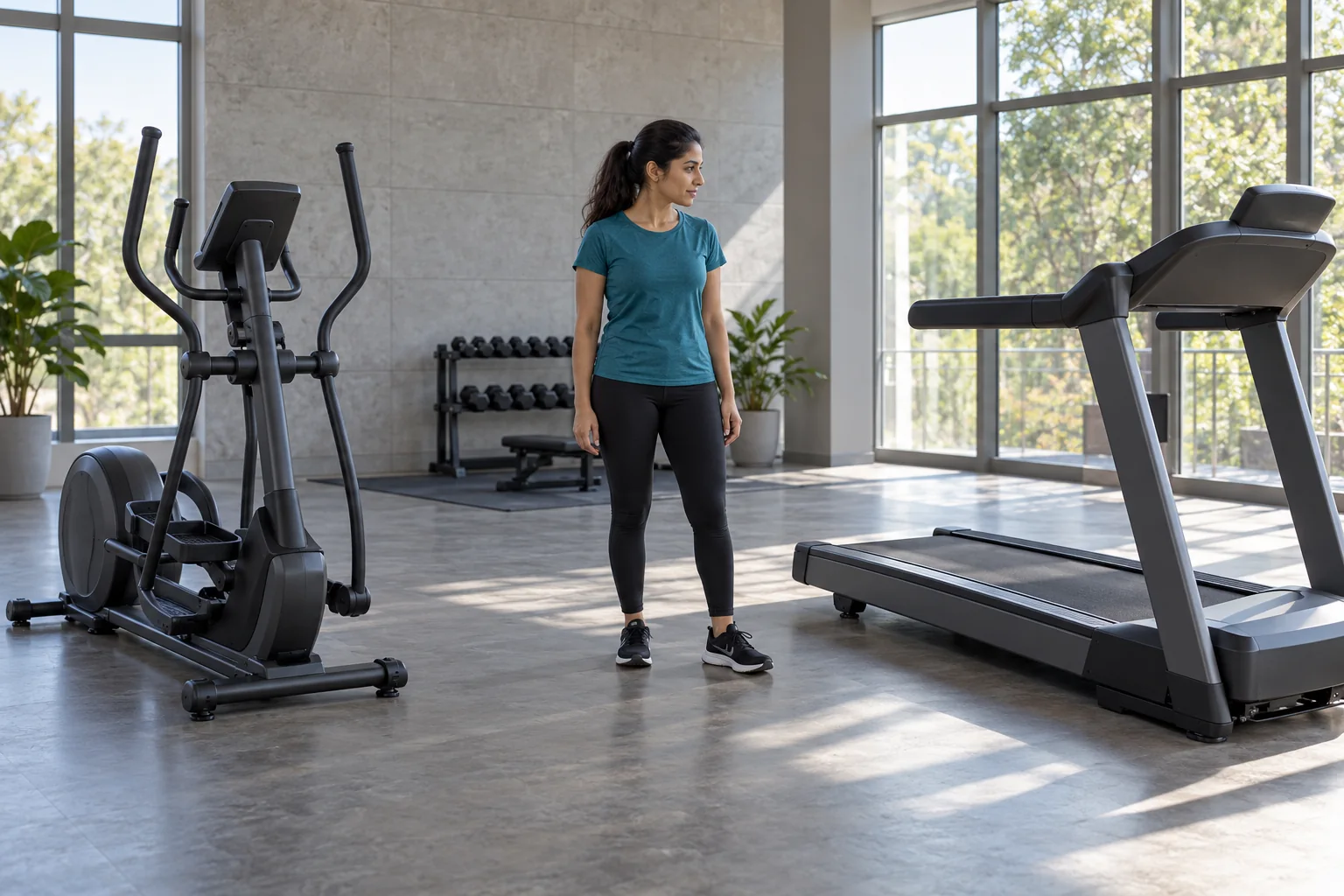
Choosing between an elliptical and incline walking is partly a question of which movement you can control and repeat. An elliptical, often called a cross-trainer in the UK, guides your feet along a set path. A treadmill belt moves beneath you while you walk. Both allow changes in effort, but the controls and balance demands differ.
This comparison is for adults choosing general fitness activity, rather than treatment for a knee, hip or heart condition. Start with the equipment you can use comfortably, ask for an orientation and judge the session by more than a calorie display.
Compare the movement before comparing the numbers
On an elliptical, the feet stay on moving platforms. That removes the repeated step landing of walking, but it does not remove load from the legs or make the machine comfortable for everyone. The pedal spacing, stride path, handle reach and entry height can all affect your experience.
Incline walking retains a walking pattern while adding an uphill setting. A moving treadmill belt also demands attention: controls, emergency stopping and getting on or off need an introduction. Holding on tightly to keep up is a reason to reduce the setting and reassess. Neither machine earns an automatic advantage because its movement looks familiar.
Use a comparable effort rather than matching settings
An elliptical resistance level is not the equivalent of a treadmill incline percentage. Even two elliptical machines can feel different at the same displayed level. Compare your breathing, control and ability to speak instead of treating the screens as a shared scale. The CDC talk-test guidance describes moderate activity as being able to talk but not sing; it is a general intensity guide, not a target you must reach on the first visit.
Choose a pace that leaves room to learn the controls. If you need to lean heavily, shorten your trial or make the setting easier before deciding whether the whole activity suits you.
Try the machines on separate, manageable visits
An exhausting treadmill session followed by a brief elliptical trial is an uneven comparison. If practical, try each on a different day when you have a similar amount of energy. Begin with an orientation, then a short easy period; stop sooner if the movement feels awkward or symptoms appear.
Record three observations: could you keep a controlled posture, could you change or stop the machine without rushing, and would you willingly repeat this session? There is no requirement to complete equal distances. A treadmill mile and an elliptical mile are machine measurements of different movements, so they do not establish equal work.
An optional training notebook (paid link) can keep your trial notes in one place; a phone note works too.
Make fit and balance part of the choice
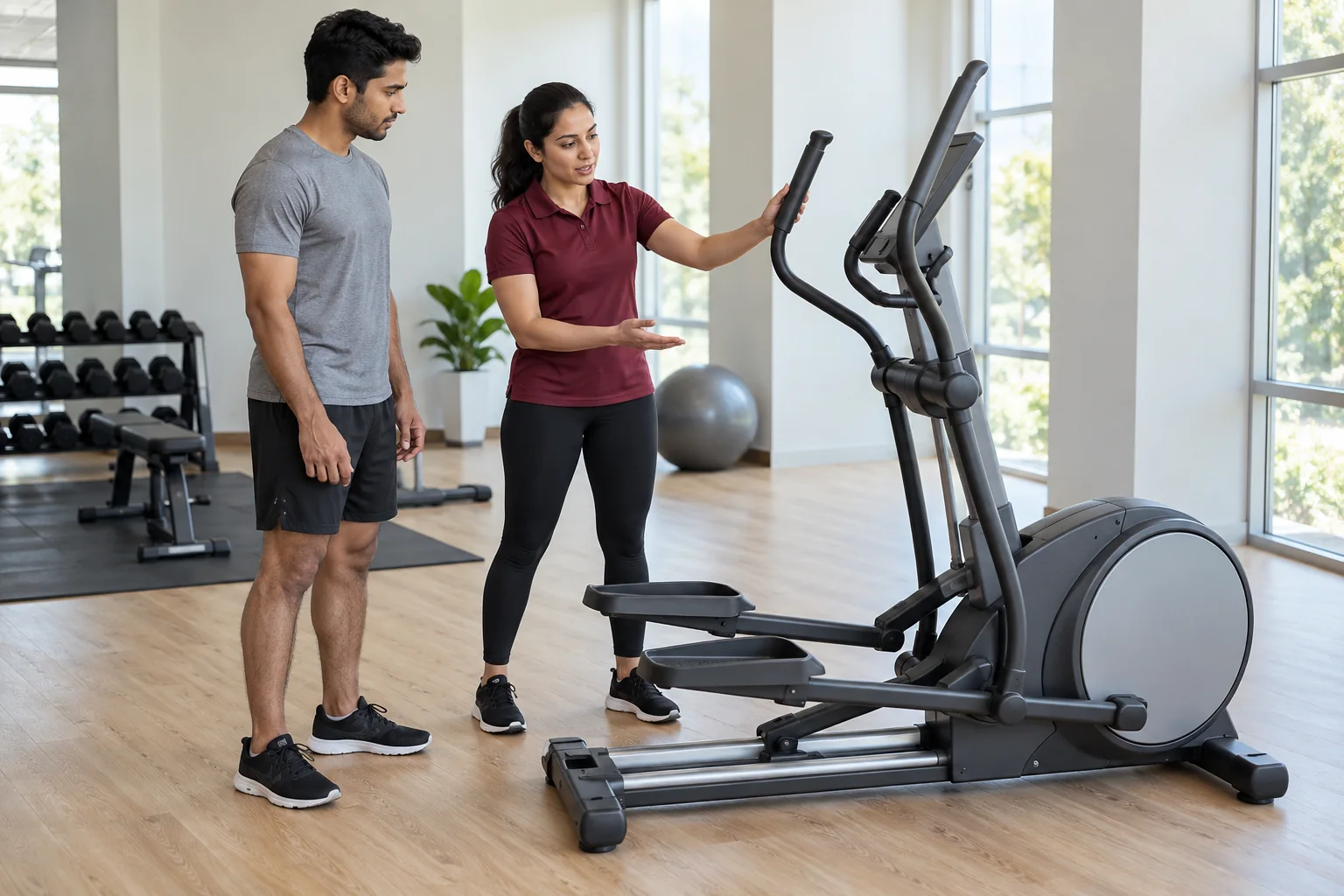
A tall elliptical step-up or a fixed stride can be a barrier even when its resistance feels light. On a treadmill, belt speed may be the more difficult feature to manage. Speak to a gym instructor before increasing incline or leaving familiar supports. Follow the actual model's mounting and stopping instructions.
For the elliptical trial, use our machine setup and technique guide. If repeated discomfort, dizziness or instability makes either trial difficult, do not solve it by pushing through. Individual assessment may be more useful than another comparison article. Lower impact describes a movement feature; it does not certify that a machine is suitable for a particular condition.
Check the practical reasons a routine succeeds
A machine that is available at a convenient time may be more useful than one you use only when the gym is empty. Compare queue times, confidence with the controls, travel and how the session fits around strength training. Enjoyment matters because you need a reason to return. Heart and Stroke Canada encourages choosing activities that you enjoy and can incorporate into life.
You can also alternate activities. This need not mean doubling your exercise: replace a planned session first, then assess the week. A mix can provide variety without turning each day into an unfamiliar challenge.
If you need a reusable water bottle (paid link), check the holder fit so it stays secure during either activity.
Choose the next step from the trial
After a few manageable trials, favour the option that supports controlled movement and a realistic schedule. Keep duration, effort and frequency modest enough that you can judge the result. Change one feature at a time instead of increasing speed, incline or resistance together.
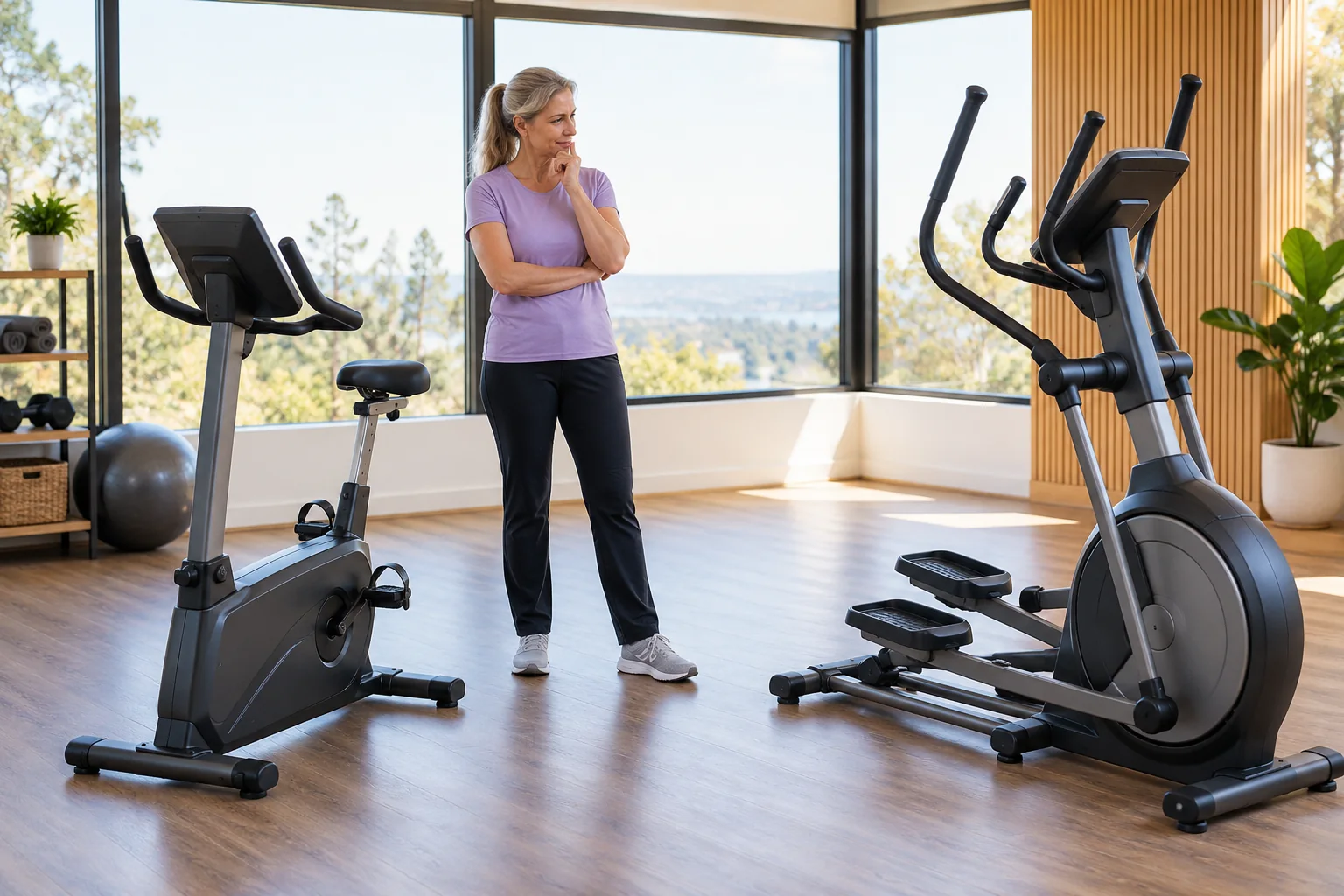
If standing exercise itself is the obstacle, read the separate elliptical and stationary bike comparison. If the elliptical feels comfortable but the levels are confusing, use the beginner resistance guide. A decision to try another activity is useful information. You do not need to force yourself onto the apparent winner of a generic equipment ranking.
Practice and Setup Checklist
- Get an orientation for the actual machine, including stopping and entry.
- Try a short, easy session with no distance or calorie target.
- On another comparable day, try the alternative if it is practical.
- Write down comfort, movement control and willingness to repeat.
- Choose a repeatable option and adjust one setting at a time.
Practical Options at a Glance
| Question | Elliptical trial | Incline-walking trial |
|---|---|---|
| Movement | Guided foot platforms; check stride and reach | Walking on a moving belt; check speed control |
| Effort control | Resistance and sometimes ramp; model specific | Speed and incline; controls vary |
| Balance and access | Check step-up and fixed supports | Learn belt entry, exit and stopping |
| Useful outcome | Comfortable, controlled repeatable minutes | Comfortable, controlled repeatable minutes |
Common Mistakes and Useful Adjustments
Display estimates do not establish which session caused more useful training.
Try another suitable model or activity rather than adapting to repeated discomfort.
Compare on similar days when possible, with easy introductory efforts.
Frequently Asked Questions
No. Its foot platforms remove a repeated walking landing, but joint comfort also depends on fit, effort and your circumstances. Persistent or concerning pain needs individual assessment.
No. The speed units and movement differ. Use controlled movement and a comparable comfortable effort instead.
Neither guarantees a particular result. Repeatable activity, eating patterns and other personal factors matter more than an isolated machine ranking.
Yes, if the total schedule is manageable. Consider replacing a session before adding extra work, then review recovery.
Safety and Personal Needs
This is general fitness education, not a personalized exercise or rehabilitation plan. Learn the actual model’s entry, controls, supports and stopping procedure with gym staff or the manufacturer’s instructions. Stop for pain, dizziness, instability or unusual breathlessness. Chest pain, fainting or severe unexpected breathlessness needs urgent appropriate help. Follow individual guidance for a medical condition, pregnancy, recent surgery or injury. A written guide and illustrative image cannot assess your movement or establish whether a machine suits you.
Sources and Further Reading
- CDC: measuring physical activity intensity
- Heart and Stroke Canada: choosing activity
- Precor: EFX 700 model instructions
Prepared by the Best Fitness Routine Editorial Team. The example sessions are educational frameworks; they have not been individually tested for every reader. Images are AI-generated illustrations.