Published by Best Fitness Routine. Editorial standards · Report a correction. Educational guidance; no individual clinical review is claimed unless a qualified reviewer is named.
A Practical Starting Point
As an Amazon Associate I earn from qualifying purchases. This guide includes paid Amazon links.
Whether to use the elliptical before or after weights depends on what you need from that visit. A few easy minutes before lifting serve a different purpose from a demanding cardio workout. If learning lifts or improving strength is today's priority, keep the opening elliptical work easy and do the main cardio afterward or separately. If an elliptical endurance session is the priority, give it your fresher attention. For general fitness, choose an order you can perform consistently with comfortable technique and manageable fatigue.
Distinguish warming up from completing a cardio workout
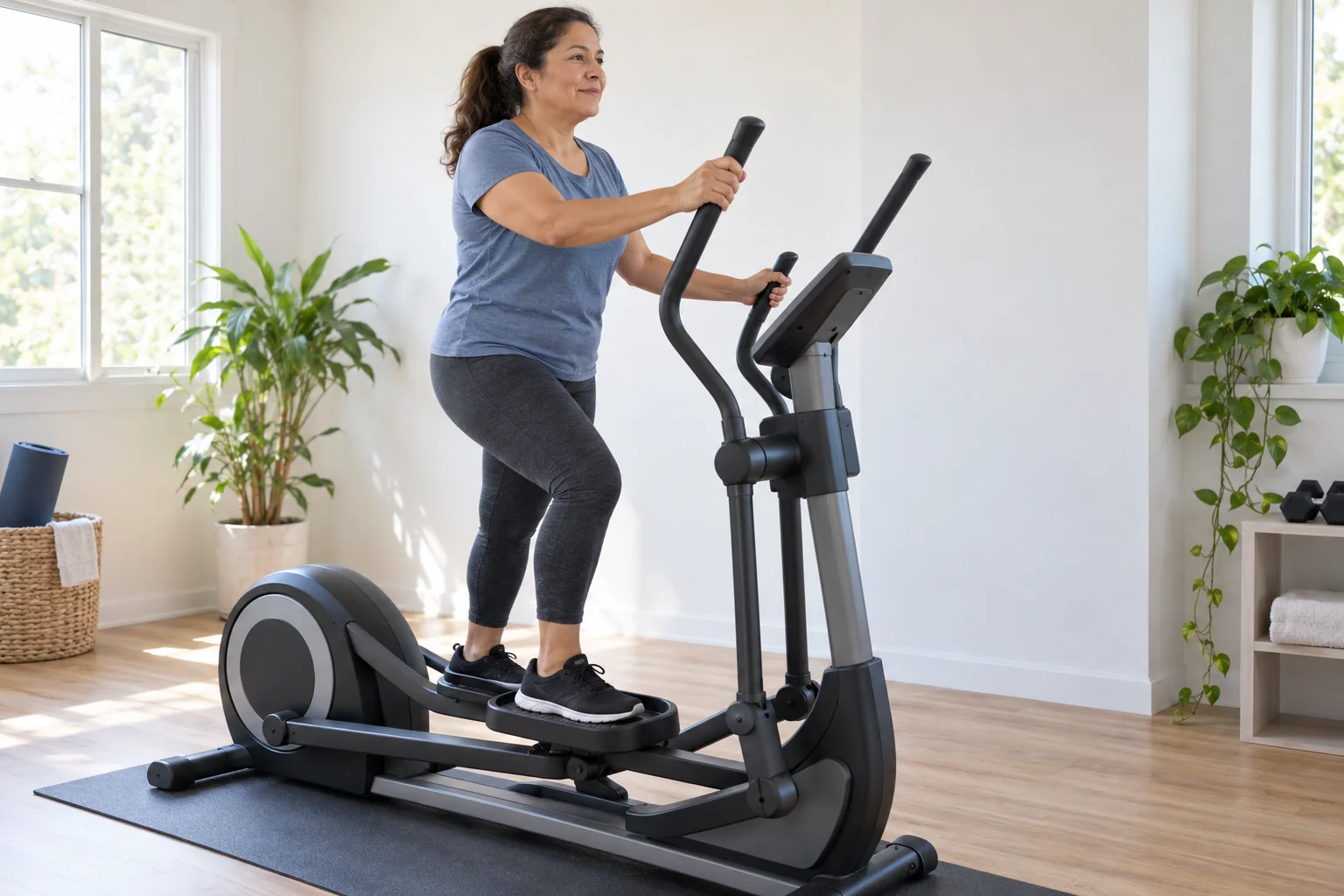
An easy elliptical opening can help you transition from sitting or travelling into a gym session. It should leave you ready to practise the next task rather than tired before it begins. For example, you might use a few gentle minutes, step off with the manufacturer's controlled procedure and then prepare the movements you plan to lift. The exact length depends on how you feel and what follows.
A twenty-minute steady session or a set of brisk intervals is a separate training block. Putting that before weights is a decision about priorities, not simply an extended warm-up. An elliptical also does not rehearse the grip, balance or movement pattern of every lift. Keep appropriate lighter practice sets and exercise-specific preparation in the weights portion. Calling all early cardio a warm-up hides the difference between arriving ready and arriving fatigued.
When strength or lifting skill matters most, protect that work
If your main task is learning a squat pattern, practising a new dumbbell exercise or completing planned strength sets, begin that work after suitable preparation while you can concentrate well. Keep any opening elliptical minutes easy. If a longer cross-trainer block leaves your legs heavy or lifting movement less controlled, move the cardio later or to another day.
This is a practical scheduling approach rather than a promise of a particular strength gain. ACE's discussion of exercise order emphasises that goals should shape sequencing rather than one universal rule. Record which work mattered most before arriving at the gym. A small training notebook can help compare whether that priority was completed comfortably, instead of judging the session only by total minutes.
A small training notebook (paid link) can record the session priority and whether both blocks remained manageable; an existing notebook is enough.
When elliptical endurance matters most, give it a clear place
If the main goal is a comfortable longer elliptical session, doing it first after an easy opening can keep it from becoming an afterthought. Plan the weights portion around the energy and concentration left afterward. Choose familiar, manageable work and be willing to reduce it if movement quality has changed. Completing every item on a long checklist is less useful than carrying out the important work well.
For example, someone practising a controlled twenty-minute cross-trainer session might do that first on one visit and keep later strength work shorter. On another day, the order can reverse because lifting is the priority. Do not assume a harder cardio block makes you better prepared for complicated weights exercises. The 20-minute beginner elliptical workout provides an adjustable option, including shorter versions when the combined visit becomes too much.
For general fitness, choose an order that survives real life
When neither component is a performance priority, consider equipment availability, concentration and appointment length. If you regularly postpone cardio until after weights and then run out of time, place a manageable cardio block earlier on some visits. If early cardio consistently leaves you too tired to lift comfortably, reduce it or reverse the order. Keep the decision tied to an observed problem.
A simple timer can help reserve time for both blocks, but do not rush sets or hurry a dismount to meet a schedule. Keep the actual weekly pattern in view. The NHS adult activity guidance includes aerobic and strengthening activity. It does not require every form of exercise in one gym visit. A workable division across the week can be easier to maintain than one crowded session.
An optional simple workout timer (paid link) can help schedule both blocks, but never rush technique or equipment changes to meet it.
Separate sessions when both deserve more attention
Two substantial blocks can compete for time and energy, especially when both heavily involve the legs. If you keep reducing the second block or losing control as a visit progresses, put the main elliptical workout and the main weights workout on different days where your schedule allows. Another option is keeping one block deliberately short and easy rather than treating both as maximal priorities.
There is no single required gap in hours that this general guide can prescribe. Look at total activity, sleep, work demands and how the next session feels. A Tuesday strength visit with a brief easy opening and a Friday elliptical session is one organisational example, not a complete individual programme. The cardio and strength weekly plan offers a broader framework, while the four-week beginner elliptical plan keeps the cardio starting point manageable.
Use a short comparison to choose your own order
Try a familiar modest combined session with the priority first. Record whether you completed that work with control, what happened to the second block and how you felt afterward. On another suitable visit, a different order may reveal a more convenient arrangement. Keep the tasks similar enough to learn something; comparing a short easy pedal with a hard interval day tells you little about order alone.
Do not choose the sequence because someone promises extra fat burning, a calorie guarantee or a universal hormonal advantage. The useful question is whether order supports repeatable training. Stop for pain, dizziness or abnormal breathlessness. Severe or persistent chest discomfort, fainting during exercise or severe breathing difficulty warrants urgent medical help. This is ordinary healthy-adult education; symptoms, injury or a health condition may require individual advice about both exercise choice and scheduling.
Practice and Setup Checklist
- Name the main purpose of today's visit.
- Separate a brief easy opening from the main cardio block.
- Do priority work while you can perform it with good control.
- Shorten or separate the second block if fatigue changes technique.
- Record completion and recovery, then keep the order that works.
Practical Options at a Glance
| Today's priority | Useful starting arrangement | Reason to adjust |
|---|---|---|
| Lifting technique or strength work | Easy preparation, weights, optional manageable elliptical block | Lifting becomes less controlled after early cardio |
| Elliptical endurance practice | Easy opening, main elliptical session, manageable weights afterward | The second block is repeatedly too demanding |
| General fitness | Choose the order that fits consistently | One component is routinely skipped |
| Two substantial sessions | Consider separate days | Neither block receives useful attention |
Common Mistakes and Useful Adjustments
A demanding block can leave less energy for what follows. Keep an opening easy when its purpose is preparation.
Order alone does not justify a guaranteed weight or calorie result. Use it to organise manageable training.
Plan a smaller combined visit or separate sessions instead of rushing equipment changes and technique.
Frequently Asked Questions
Yes, if the easy opening leaves you ready rather than tired. Follow it with preparation specific to the lifts you intend to perform.
No. Put the day's main goal first after preparation. For general fitness, practical consistency and controlled movement can determine order.
No. Its effort still matters. A hard cross-trainer session adds work, while even an easy one may be unnecessary if you are already fatigued.
No. Separate days can give each part more attention and may make the weekly schedule easier to sustain.
Safety and Personal Needs
This is general fitness education, not a personalized exercise or rehabilitation plan. Learn the actual model’s entry, controls, supports and stopping procedure with gym staff or the manufacturer’s instructions. Stop for pain, dizziness, instability or unusual breathlessness. Chest pain, fainting or severe unexpected breathlessness needs urgent appropriate help. Follow individual guidance for a medical condition, pregnancy, recent surgery or injury. A written guide and illustrative image cannot assess your movement or establish whether a machine suits you.
Sources and Further Reading
- ACE: Which should come first, cardio or strength training?
- NHS: Physical activity guidelines for adults
- NHS: Chest pain warning signs
- NHS: Severe breathing difficulty
Prepared by the Best Fitness Routine Editorial Team. The example sessions are educational frameworks; they have not been individually tested for every reader. Images are AI-generated illustrations.