General health education from our editorial team. Read our editorial policy.
As an Amazon Associate I earn from qualifying purchases. Optional equipment links are paid affiliate links; use suitable items you already own.
About This Guide
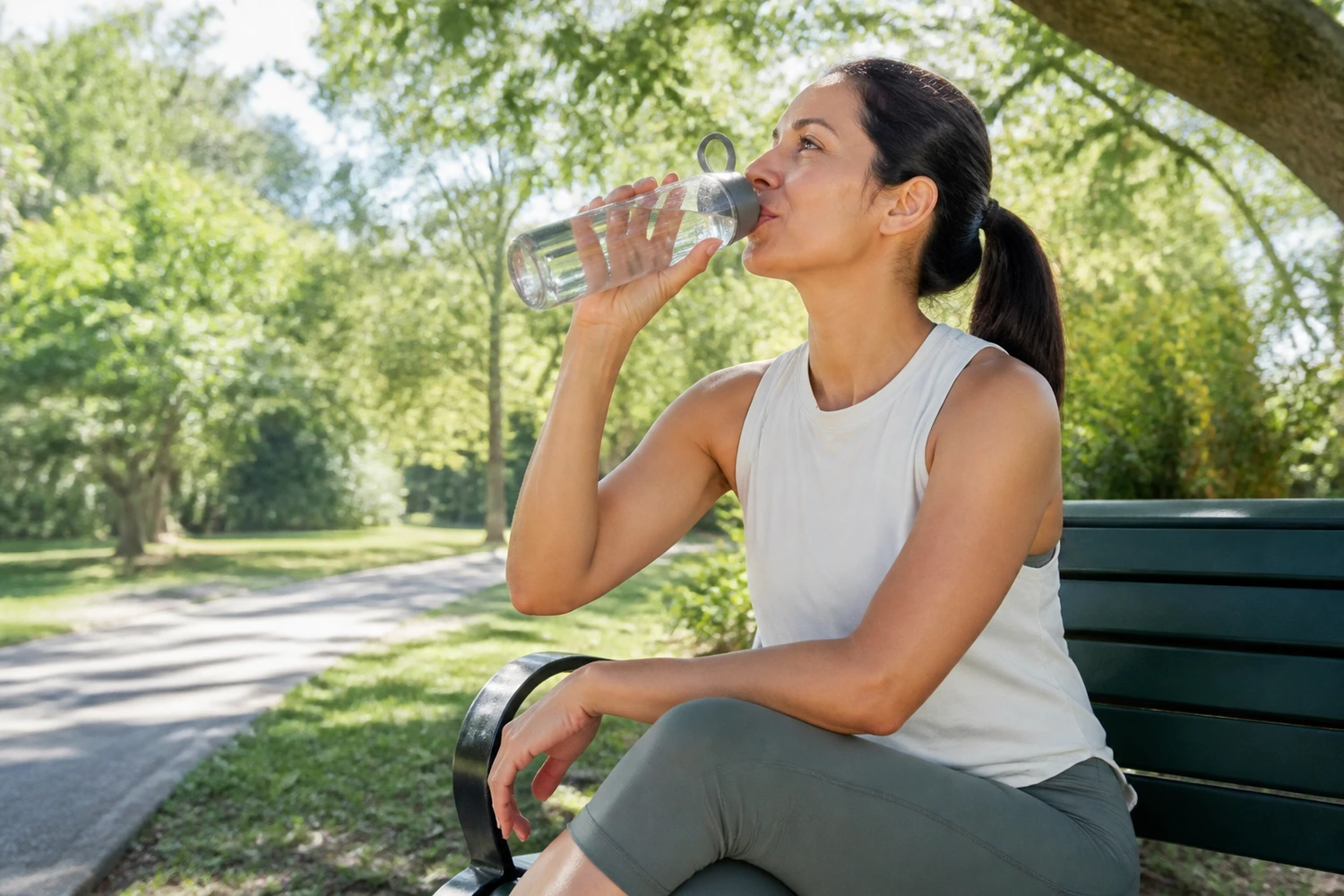
Does drinking water help you lose weight? It can help when it replaces a drink that supplies extra calories, but adding more water is not a dependable fat-loss method by itself. The useful question is what changes in your usual eating and drinking pattern. This guide focuses on that decision rather than prescribing a bottle quota or promising a faster metabolism.
Start with what water replaces
Water contributes fluid without adding calories. If your usual lunch includes a sugary drink, choosing plain water changes that meal’s energy intake without removing food. If you already drink water or unsweetened tea, adding another glass is a different intervention. It does not recreate the effect of replacing a caloric beverage. Start with your current habit rather than assuming that every person needs the same change.
The CDC water and healthier drinks guide identifies replacing sugary drinks as a practical way to reduce calorie intake. That is a reason to consider a substitution, not a guarantee of a particular amount of weight loss. Food choices, activity, medicines and health circumstances still influence the longer-term result.
What the research can and cannot establish
Studies of water and body weight do not all test the same question. Some ask participants to drink more before meals; others replace sweetened drinks or include a wider dietary program. A result from one of those settings cannot establish that a certain temperature, timing or number of glasses will work for everyone. The comparison group and accompanying changes matter.
A 2024 review of randomized trials on water and adiposity found no clear overall body-weight benefit across its included interventions, while suggesting possible modest benefit from replacing sugary drinks. Another 2024 review of water-intake trials reported weight-loss benefits in some studies. Together, these findings support a cautious conclusion: water can fit useful habits, but the effect is not uniform or a stand-alone treatment.
Review one ordinary drink before changing everything
Choose a drink you have regularly, such as a weekday soda, sweetened coffee or fruit drink. Read the label for serving size and servings in the container. A bottle can contain more than the serving used for the headline nutrition numbers. For a café drink without a package, check the shop’s information for the actual size and additions you order.
As an arithmetic example, replacing a drink labelled 150 calories with water removes those 150 calories from that occasion. It does not predict a fixed weekly fat loss: you may eat or drink differently later, and real energy needs change. Avoid turning this simple comparison into a promise that one swap produces a particular body size. Review the habit over time rather than weighing immediately afterward.
Use water alongside meals, not to erase hunger
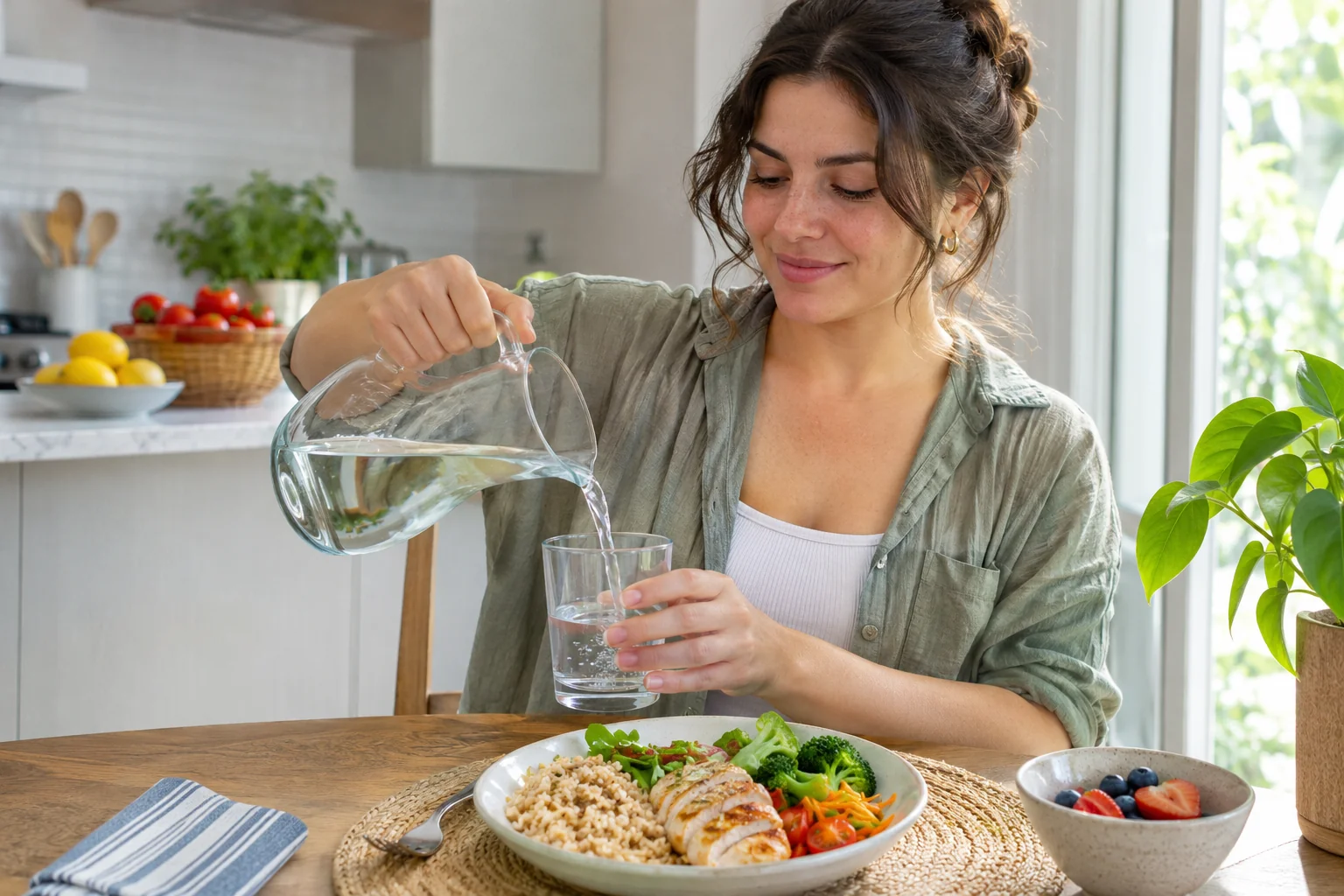
Having water available with a meal can be convenient. It should not become a rule that you must finish a large amount before being allowed to eat. Hunger, food enjoyment, chewing and a satisfying meal still deserve attention. If you keep delaying meals with drinks and then become ravenous later, reconsider the routine rather than drinking more to overcome the same problem.
Build the meal itself from suitable foods and manageable portions. Our balanced-plate guide addresses that separate task. A water habit cannot make up for repeatedly skipping meals or excluding foods that provide energy and nutrients. Children, teenagers, pregnant or breastfeeding readers, and people with eating concerns need advice appropriate to their circumstances rather than an adult weight-loss experiment.
Why there is no weight-loss water quota
The amount of fluid you need varies with activity, weather, food and health. More water is not automatically better, and water from food and other drinks also contributes. Keep the question of adequate hydration separate from the question of reducing an unnecessary source of calories. Our healthy hydration guide explains fluid needs and practical hydration clues in more detail.
Do not force a large volume quickly or use a bottle’s printed schedule as a medical target. Follow any fluid restriction or treatment plan you have received. Heart or kidney conditions, certain medicines, illness and substantial exercise losses can change what is appropriate. Ask your clinician about your situation if general drinking advice conflicts with the instructions you were given.
Make the replacement enjoyable enough to repeat
Try still water, plain sparkling water or an unsweetened drink you enjoy. A slice of citrus, cucumber or a few berries can add flavour without needing a special recipe or product. Check labels on flavoured waters: the name and packaging do not tell you whether sugar has been added. If you prefer a sweetened drink occasionally, one choice does not invalidate the rest of your routine.
You can make the comparison practical: keep the replacement chilled, put it where you normally reach for the usual drink, or decide what to order before arriving at a café. Canada’s Food Guide advice on sugary drinks also emphasizes replacing sugary drinks with water. Choose a change you can repeat without making social meals or travel unnecessarily difficult.
Do not confuse sports hydration with a weight-loss trick
An exercise session changes the context. Water access, heat, duration, intensity and individual needs determine drinking choices; the goal is to support the activity, not manipulate the next scale reading. Sweating more does not prove you have lost more body fat. Replacing fluid after a sweaty session can bring weight back up without reversing a workout benefit.
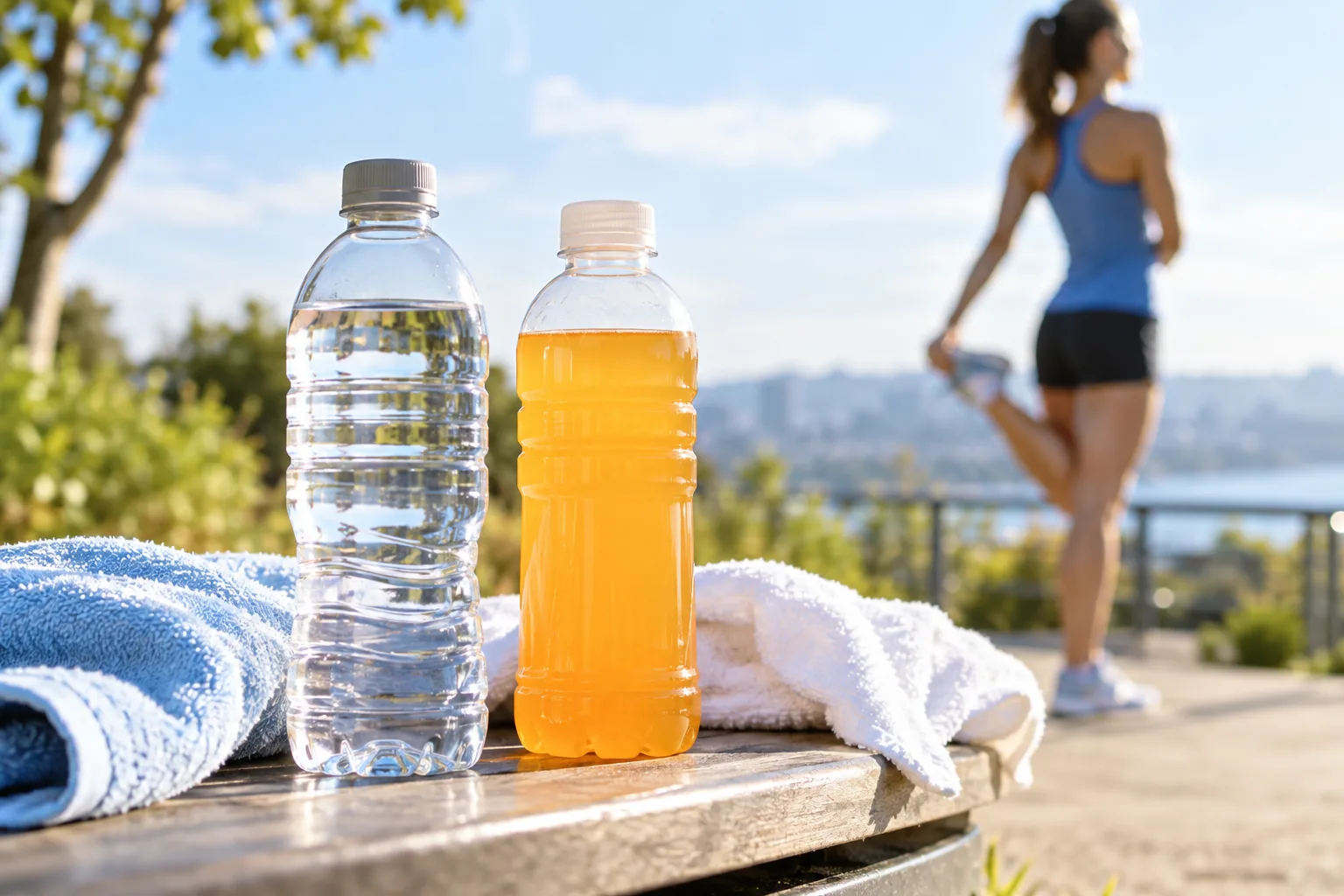
A sports drink and an everyday sugary drink are not always the same decision. Some prolonged or demanding exercise situations require a specific fueling strategy. Read our sports drinks versus water guide before assuming that either is required for every workout. Do not restrict fluid during exercise to make a weight-loss chart look better.
Try a small beverage experiment without chasing the scale
For several ordinary days, note what you usually drink and when. Pick one substitution that seems worthwhile, then arrange for the alternative to be available. Leave your meals regular and review whether the change is comfortable, affordable and realistic. This is a habit experiment, not a challenge to drink a set volume or eliminate all enjoyment from drinks.
At the review, ask whether the substitution actually happened, whether you were satisfied and whether another drink replaced the same calories later. A difficult day may reveal a practical issue such as limited water access or an inconvenient bottle. Solve that issue before adding another rule. If you want a wider plan, use our safe weight-loss guide instead of expecting a drinking habit to carry the entire process.
Keep equipment simple and optional
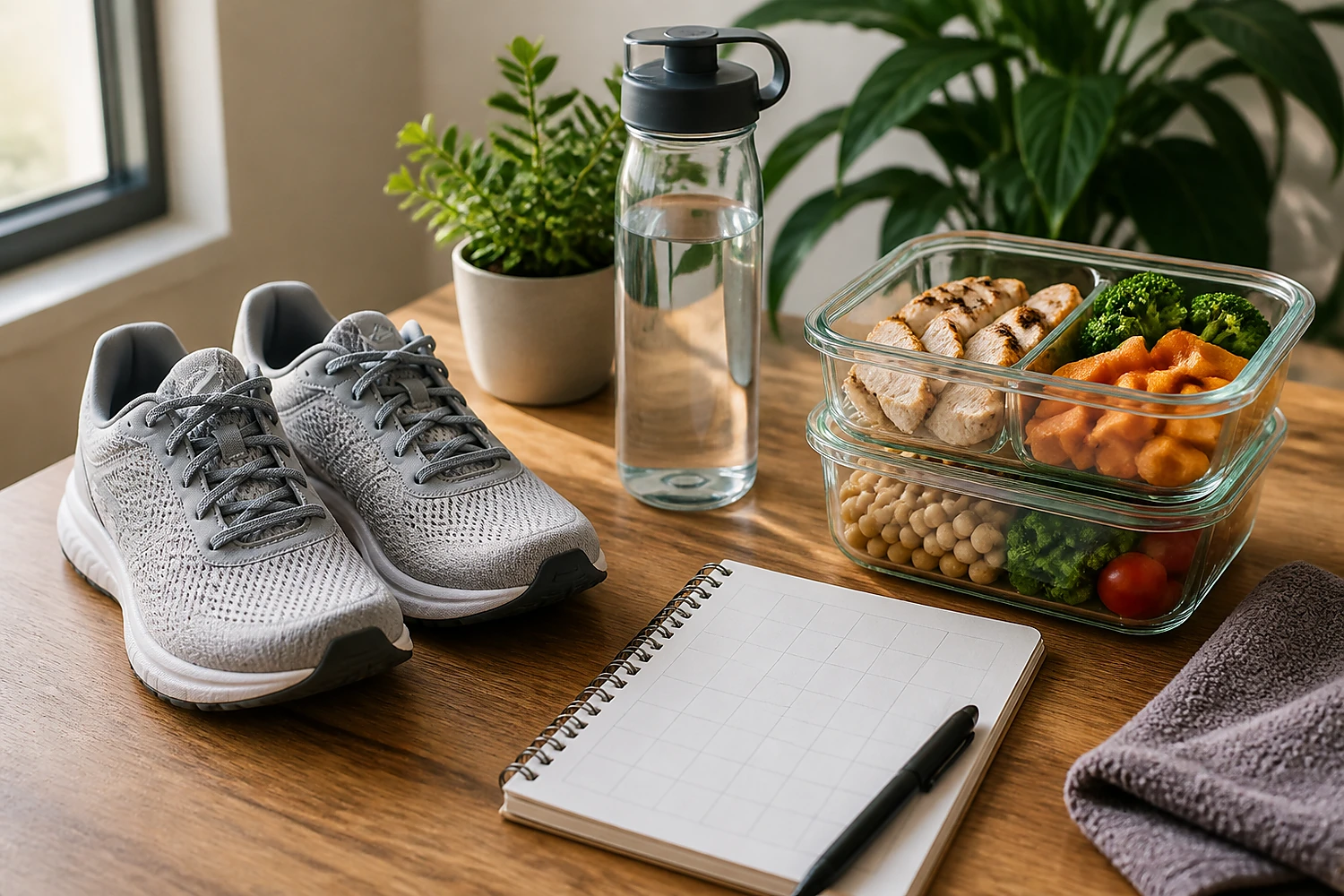
A glass and tap water may be all you need. If carrying water would make the chosen swap easier, compare a reusable bottle with easy cleaning access (paid link) for its lid, weight and cleaning instructions. A large bottle is not a better weight-management product; choose a size that fits your bag and ordinary use.
If you enjoy flavouring water at home, a fruit-infuser pitcher (paid link) is an optional convenience. A normal jug with sliced fruit does the same basic job. Wash equipment according to its instructions and do not buy anything on the assumption that a branded bottle, filter or supplement makes water burn fat. The main decision remains the drink you choose in a real situation.
Frequently Asked Questions
There is no established water amount that guarantees weight loss. Meet your hydration needs in a way appropriate to your health, and consider replacing a regular sugary drink if relevant. Follow prescribed fluid limits and avoid forcing large amounts.
Neither temperature is a dependable fat-loss strategy. Choose a temperature you enjoy and can drink comfortably. Claims about a special water temperature should not replace attention to the overall eating and activity pattern.
You can drink with or before meals if comfortable, but it is not a compulsory weight-loss rule. Do not use large amounts of water to delay eating or suppress persistent hunger. Research results from structured trials do not establish one suitable routine for every reader.
The water itself has mass while it is in your body. An immediate change after a drink cannot measure body-fat gain. Compare weight only under similar conditions if weighing is useful for you; do not avoid fluid to obtain a smaller number.
Sources and Further Reading
- CDC: About water and healthier drinks
- Water intake and adiposity: 2024 systematic review of randomized trials
- Outcomes in trials changing daily water intake: 2024 systematic review
- Canada’s Food Guide: Sugary drinks
Prepared by the Best Fitness Routine Editorial Team. Sources checked November 4, 2026. This article provides general education and has not received individual clinical review. The image is an AI-generated editorial illustration. Follow qualified professional advice for your individual health needs.