Published by Best Fitness Routine. Editorial standards · Report a correction. Educational guidance; no individual clinical review is claimed unless a qualified reviewer is named.
What This Calisthenics Leg Workout Guide Covers
A calisthenics leg workout can be challenging without barbells when you use unilateral exercises, full range of motion, pauses and controlled tempo. Squats provide the base, while lunges, split squats, step-ups, bridges and calf raises distribute the work across the quads, glutes, hamstrings and calves. Advanced single-leg skills can come later.
The most useful way to think about calisthenics leg workout is as a repeatable training process. You need a variation that is challenging enough to create effort but not so difficult that every repetition looks different. That middle zone lets you accumulate useful practice, compare sessions and make small changes based on real progress rather than guesswork.
Bodyweight training is sometimes described as equipment-free, but leverage is effectively your load. Moving the hands lower in a push-up, making the body more horizontal in a row, using one leg instead of two or increasing the unsupported range can all make an exercise significantly harder. Because those changes can be large, use small steps and keep a simple training log (paid link).
If you are building a complete bodyweight program, combine this topic with calisthenics workouts, pistol squat progression, calisthenics workout at home and calisthenics workout for beginners. For movement quality and general strength context, the site also has a complete Functional Fitness and Mobility collection and a practical strength training for beginners guide.
Calisthenics Leg Workout Benefits
Builds lower-body strength with minimal equipment Improves single-leg balance and control Scales from basic squats to advanced unilateral work Works well at home or outdoors Supports running, hiking, stairs and everyday movement. These are training advantages rather than guarantees. Results depend on exercise selection, total weekly work, recovery, nutrition, previous training and the consistency of your progression.
Calisthenics also rewards technical improvement. A rep can become more useful even when the number on the page does not change, because better control, deeper comfortable range and less unnecessary momentum increase the quality of the work. That makes form a measurable part of progress rather than a cosmetic detail.
Step-by-Step Exercises and Progressions
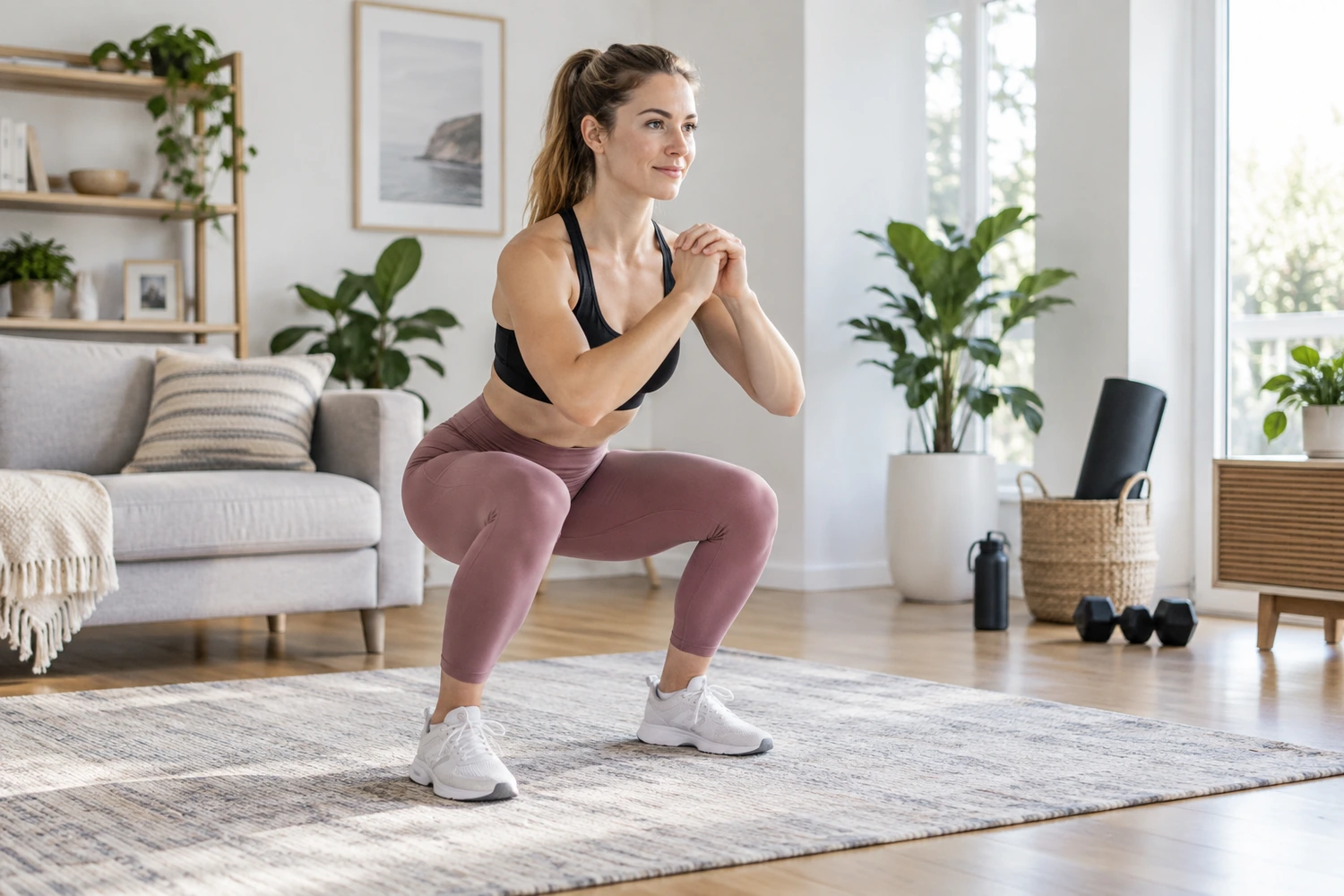
1. Bodyweight squat
Sit between the hips with the feet fully planted and stand smoothly. Use a chair target if depth changes from rep to rep. Use a controlled tempo, stop before technique changes, and choose a range that you can repeat from one session to the next.
2. Reverse lunge
Step backward and lower under control, keeping the front foot planted. Use support if balance limits effort. Use a controlled tempo, stop before technique changes, and choose a range that you can repeat from one session to the next.
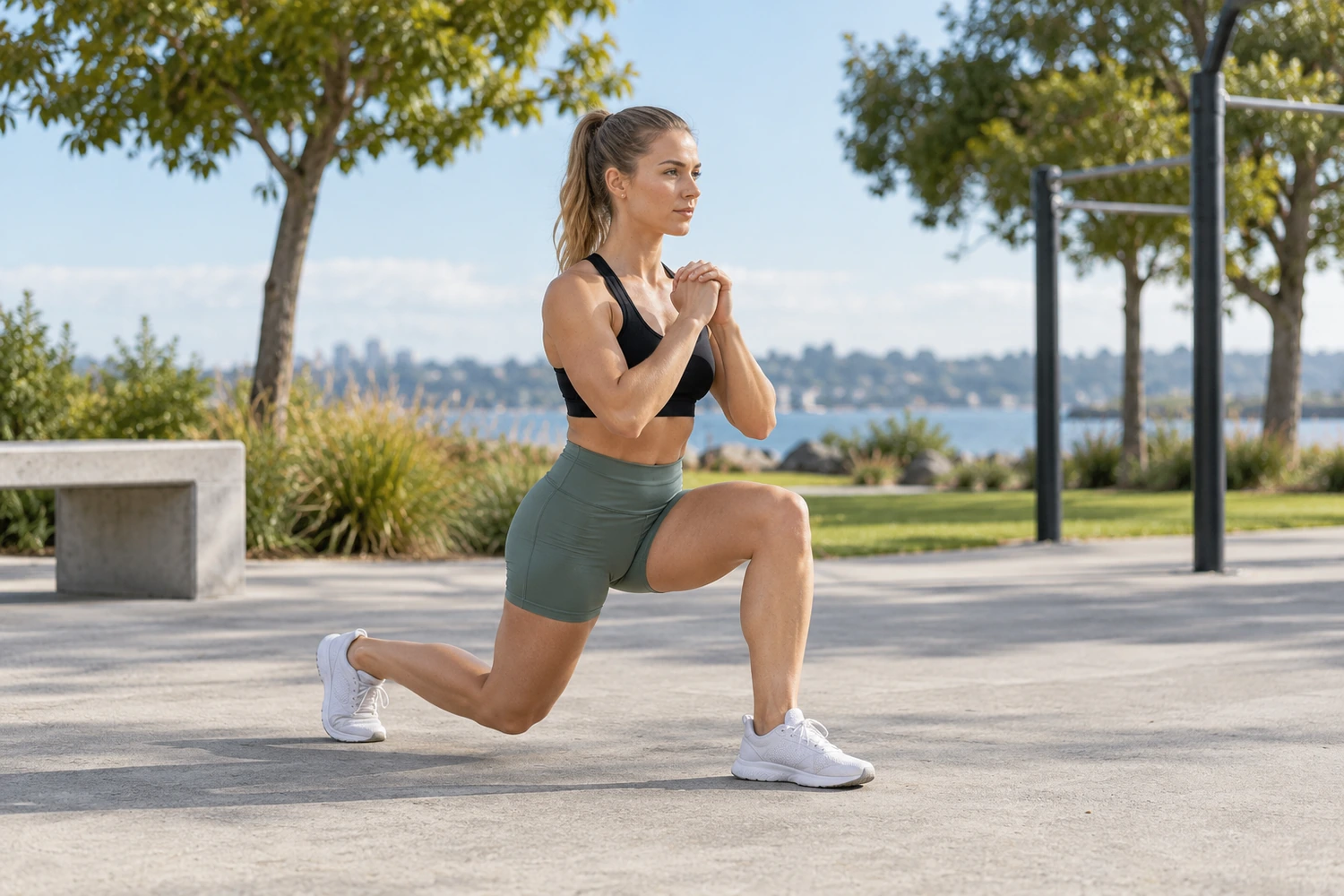
3. Split squat
Stay in a staggered stance and move vertically. A shorter range is fine while you learn the position. Use a controlled tempo, stop before technique changes, and choose a range that you can repeat from one session to the next.
4. Step-up
Place the whole foot on a sturdy step and stand using the top leg. Avoid pushing off aggressively from the trailing foot. Use a controlled tempo, stop before technique changes, and choose a range that you can repeat from one session to the next.
5. Single-leg glute bridge
Press through one foot and extend the hip while the pelvis stays level. Start with two-leg bridges if hamstrings cramp. Use a controlled tempo, stop before technique changes, and choose a range that you can repeat from one session to the next.
6. Calf raise
Rise onto the ball of the foot, pause and lower slowly. Progress from two legs to one. Use a controlled tempo, stop before technique changes, and choose a range that you can repeat from one session to the next.
7. Lateral lunge
Step to the side and sit into one hip while the other leg stays straighter. Keep the working foot planted. Use a controlled tempo, stop before technique changes, and choose a range that you can repeat from one session to the next.
8. Wall sit
Hold a comfortable squat depth against the wall while breathing steadily. Use a controlled tempo, stop before technique changes, and choose a range that you can repeat from one session to the next.
9. Tempo squat
Use a three-second descent and brief pause to make a regular squat harder without load. Use a controlled tempo, stop before technique changes, and choose a range that you can repeat from one session to the next.
10. Assisted pistol squat
Hold a support and practice a deeper single-leg squat only if the basic exercises are already controlled. Use a controlled tempo, stop before technique changes, and choose a range that you can repeat from one session to the next.
How to Program Calisthenics Leg Workout
Perform the first eight exercises as two alternating blocks. Block A: squat, reverse lunge, single-leg bridge and calf raise. Block B: split squat, step-up, lateral lunge and wall sit. Use 2 to 3 sets of 8 to 15 reps for dynamic exercises and 20 to 40 seconds for the wall sit.
Consistency also matters more than novelty. Repeat the same core variation for at least two to four weeks unless it causes discomfort or is clearly inappropriate. Track the number of clean repetitions, the range you used and how much assistance was required. If two sessions in a row are strong and the final reps still look controlled, that is a reasonable time to make the next small progression.
Recovery supports skill and strength. Hard calisthenics sets challenge muscles, tendons, joints and coordination, so more practice is not always better. Sleep, adequate food, hydration and easier days between demanding sessions help the next practice feel more productive. A program that you can repeat week after week usually beats a dramatic routine that leaves you too sore to train.
Common Mistakes to Avoid
Doing hundreds of easy squats instead of progressing leverage
This mistake usually appears when the variation is too hard, fatigue is too high or the setup is inconsistent. Regress the exercise, reduce the rep target and rebuild the movement with a cleaner position before adding difficulty.
Rushing lunges and losing foot pressure
This mistake usually appears when the variation is too hard, fatigue is too high or the setup is inconsistent. Regress the exercise, reduce the rep target and rebuild the movement with a cleaner position before adding difficulty.
Using a step that is too high for controlled step-ups
This mistake usually appears when the variation is too hard, fatigue is too high or the setup is inconsistent. Regress the exercise, reduce the rep target and rebuild the movement with a cleaner position before adding difficulty.
Ignoring hamstring and glute work
This mistake usually appears when the variation is too hard, fatigue is too high or the setup is inconsistent. Regress the exercise, reduce the rep target and rebuild the movement with a cleaner position before adding difficulty.
Jumping to pistols before basic single-leg strength is ready
This mistake usually appears when the variation is too hard, fatigue is too high or the setup is inconsistent. Regress the exercise, reduce the rep target and rebuild the movement with a cleaner position before adding difficulty.
Progression Strategy
Progress one variable at a time: more reps, slower tempo, more range, longer pauses or a shift toward single-leg work. The pistol squat is a skill option, not the only way to make bodyweight leg training effective.
A useful progression should make the target muscles and movement pattern work harder without suddenly changing the exercise into something else. If a new variation reduces range, creates joint discomfort or forces you to use momentum, return to the previous level and build more capacity there.
A Simple Four-Week Practice Plan
At the end of Week 4, do not automatically jump to the hardest possible version. Review your notes. If repetitions are cleaner, the same work feels easier and recovery is good, choose one small next step. If technique is still inconsistent, repeat the block with the same variation and aim for better execution.
How It Fits a Complete Calisthenics Program
A complete program needs more than one skill. Balance pushing and pulling, include both bilateral and single-leg lower-body work, and use a small amount of targeted core training. Add walking, cycling or other aerobic activity for general fitness and use mobility drills where they help you access the positions your exercises require.
Skill-focused work such as handstands, L-sits or pull-up practice generally fits early in a session when coordination is fresh. Higher-rep accessory work can come later. If you train three full-body days, rotate the hardest emphasis so the same joints are not pushed to the limit every session.
For a broader plan, pair this guide with Push-Up Progression: From Wall Push-Ups to Strict Reps and Pull-Up Progression: How to Build Your First Strict Pull-Up. These complementary topics help distribute training stress and reduce the temptation to repeat only your favorite movement.
Safety Tips
Use a step or chair that is stable and appropriate for body weight. Knee travel over the toes is not automatically unsafe, but range should remain comfortable and controlled. Reduce depth or use support if joints feel irritated.
Warm up with several minutes of easy movement and a few low-effort repetitions of the pattern you plan to train. Progress volume gradually, especially for wrists, elbows and shoulders because connective tissues may need more time than muscles to adapt. General exercise information cannot replace individual assessment after injury or with a medical condition.
Frequently Asked Questions
Yes. Unilateral variations, tempo, range of motion and higher-rep sets can create substantial lower-body training stimulus.
No. Plyometrics can be useful, but they are not required for strength and should be introduced only when landing mechanics are ready.
Two focused lower-body sessions per week works well for many people, with at least one recovery day between hard sessions.
Use split squats, step-ups, slower tempo, pauses or assisted single-leg squats.
Most beginners should first build strength with squats, split squats, step-ups and assisted single-leg variations.
Key Takeaways
- Use calisthenics leg workout practice as part of a balanced bodyweight program, not as a daily max-effort test.
- Choose the easiest variation that lets you keep the intended body position and range of motion.
- Progress one variable at a time: leverage, range, repetitions, hold time or assistance.
- Pair pushing with pulling and combine skill work with lower-body and core training.
- Stop and seek individualized guidance if an exercise causes sharp pain, numbness, instability or persistent worsening symptoms.
Evidence-Based Resources
Related Health Articles