Overview
The Achilles tendon connects the calf muscles to the heel and handles large forces during walking, running and jumping. Tendinopathy describes a painful tendon problem that often develops after the tendon has been overloaded relative to its current capacity. Morning stiffness and pain when first moving after rest are common.
Achilles tendinopathy is different from an acute rupture. A sudden snap or pop with immediate loss of push-off ability is a red flag and should not be managed as routine overuse pain.
Typical Symptoms
Pain may be felt a few centimeters above the heel or where the tendon attaches to the heel bone. The tendon can feel stiff on the first steps in the morning, settle somewhat as you warm up, then ache again after a run or long walk. Swelling or thickening may be present.
Pain under the heel has a different pattern. If the tenderness is mainly on the sole near the heel, see the separate guide to plantar fasciitis and heel pain.
Common Training Triggers
A sudden increase in running distance, hills, speed work, court sports or long walks can overload the tendon. Reduced calf strength, limited ankle motion, inconsistent training and a return to exercise after a break may also contribute. The important idea is that the load change—not one “bad” movement—often matters most.
Runners can use the gradual principles in strength training for runners to build calf, hip and whole-leg capacity alongside their running plan.
Relative Rest Instead of Complete Rest
Temporarily reduce the running, jumping or long walking that creates the strongest flare, but keep fitness with options such as cycling, swimming or upper-body training if those are comfortable. Complete inactivity can reduce tendon capacity, which makes the return harder later.
A short period of active recovery can keep your routine consistent while the Achilles is being reloaded.
Progressive Calf and Tendon Loading
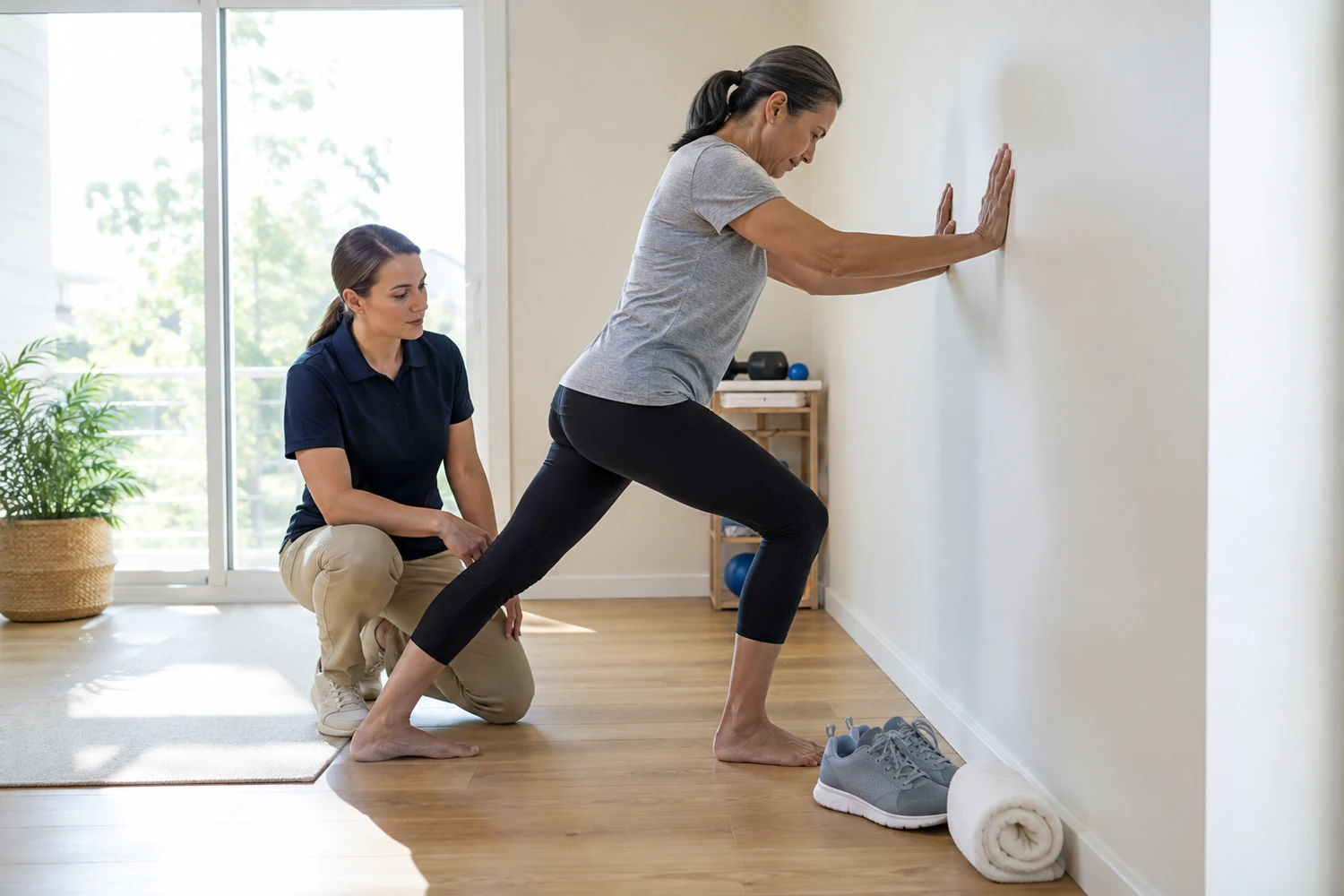
Calf-strengthening is a central part of rehabilitation. A starting point may be a double-leg calf raise or an isometric heel-rise hold, progressing toward single-leg and heavier resistance as tolerated. The exact exercise and range depend on where the tendon is painful, because insertional symptoms near the heel can react differently to deep heel-lowering off a step.
- Begin with a load you can control.
- Use slow, deliberate repetitions.
- Progress resistance before adding large amounts of running.
- Monitor how the tendon feels the next morning as well as during the session.
Returning to Running
Return to running when ordinary walking is comfortable enough and calf loading is progressing. Start with flat, easy sessions and leave space between runs. Add distance before speed and hills. If symptoms are clearly worse the next morning after every run, the current running dose may be too high.
Lower-leg overuse problems can occur together. The new guide to shin splints and return to running explains another common load-related pattern.
Footwear and Training Surface
Comfortable supportive footwear may help short-term symptoms, but shoes do not replace progressive rehabilitation. A sudden switch in shoe style or running surface can be another load change, so introduce major changes gradually.
Common Mistakes
- Stretching aggressively off a step when pain is right at the heel insertion.
- Resting until pain disappears, then returning directly to full mileage.
- Increasing calf-strength load and running volume aggressively in the same week.
- Treating every Achilles pain as tendinopathy after a sudden traumatic event.
- Judging recovery only by pain during one exercise instead of next-day function.
Achilles Rupture and Other Red Flags
Seek urgent assessment for a sudden snap or pop in the back of the ankle, severe acute pain, rapid swelling or bruising, or a new inability to push off, stand on tiptoe or walk normally after an injury. These symptoms can occur with an Achilles rupture.
Persistent swelling, warmth or pain that does not improve despite appropriate rehabilitation also deserves clinical assessment.
What to Track
- Exact pain location: mid-tendon or at the heel insertion.
- Morning stiffness and how long it lasts.
- Recent increases in mileage, hills, speed or court sport.
- Ability to perform calf raises on each side.
- Pain during exercise and the next morning.
- Any sudden pop, bruising or loss of strength.
Recovery Outlook
Achilles rehabilitation often takes months rather than days. Progress is rarely perfectly linear; short flare-ups can happen. The useful trend is a gradual increase in walking, calf strength and sport-specific load. The recovery principles in rest days and recovery can help you balance the rest of your training while the tendon rebuilds capacity.
How to Judge Progress
Morning stiffness, walking comfort and calf-raise capacity are useful markers. A common positive trend is that the tendon warms up more quickly, tolerates heavier calf work and returns to baseline by the next morning. Repeated next-day deterioration after the same load suggests that progression is too fast.
Questions to Ask a Clinician or Physical Therapist
- Is the pain mid-tendon or insertional, and does that change exercise selection?
- What calf-loading level is appropriate for me now?
- How should I stage my return to running?
- Are there any signs that make rupture or another diagnosis more likely?
Frequently Asked Questions
Tendinopathy often feels stiff after rest. The first steps can be uncomfortable, then symptoms may ease as the tendon warms up.
Often yes, if walking does not cause a major flare or limp. Reduce duration and intensity when symptoms clearly worsen.
Gentle calf mobility may be useful for some people, but aggressive heel-drop stretching can aggravate insertional pain near the heel. Exercise choice should match the pain location.
Return gradually when everyday walking and calf loading are tolerated. Start easier than your previous training and build distance, speed and hills in stages.
A rupture often happens suddenly with a pop or snap, acute pain and a marked loss of push-off strength. That needs urgent assessment.
Safety and Scope
A sudden pop or snap, rapid bruising or swelling, or new inability to push off or stand on tiptoe can indicate an Achilles rupture and needs urgent assessment. Do not force deep heel-drop stretching through insertional heel pain.