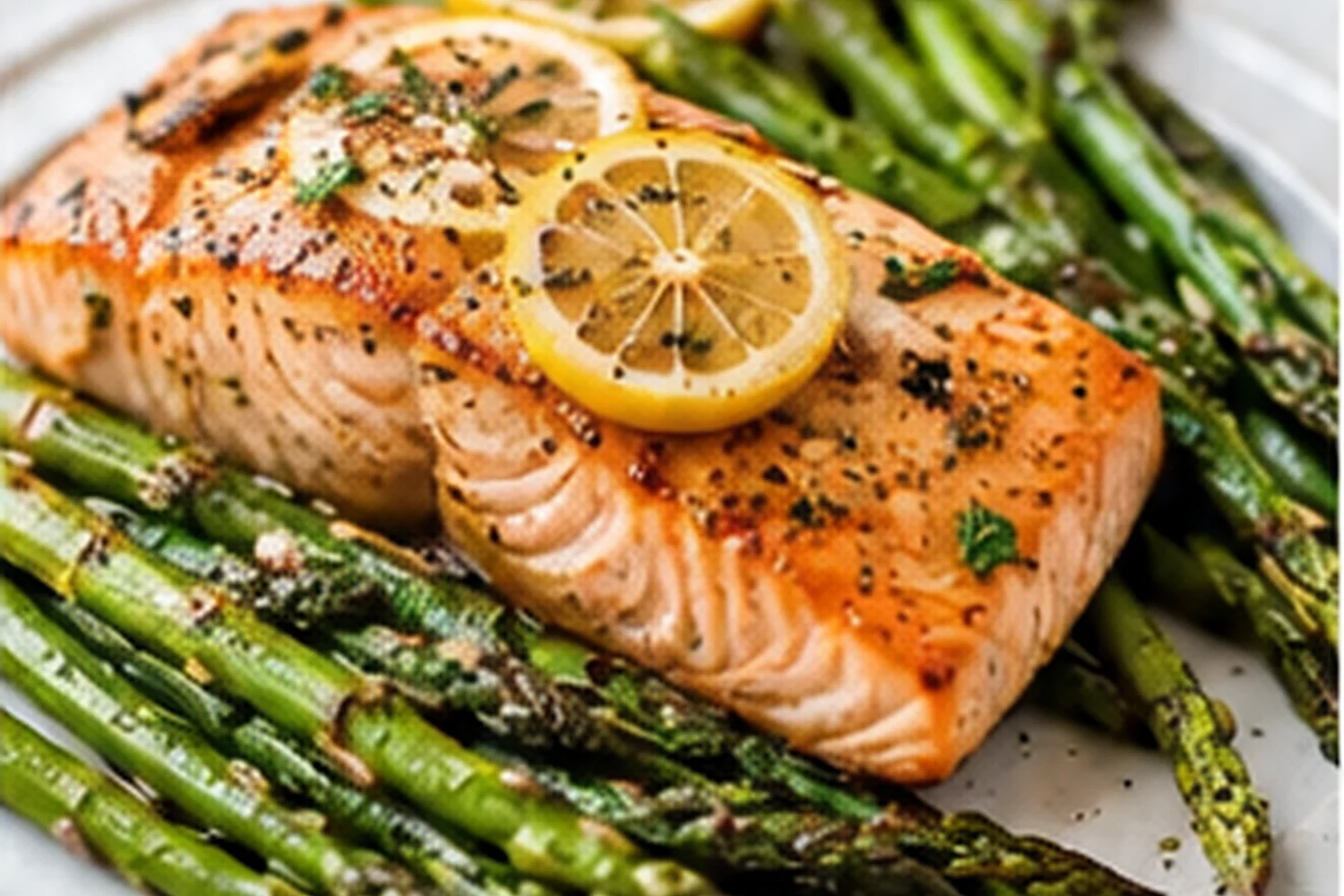
About This Healthy Recipe
An easy sheet-pan salmon dinner with cannellini beans, asparagus, cherry tomatoes, lemon, garlic, and olive oil for a protein- and fiber-focused meal.
This recipe is built for a practical U.S. home kitchen using ingredients that are widely available at mainstream supermarkets. The ingredient list gives both household measures and gram weights so cooks can reproduce the base recipe instead of relying on vague portions.
The nutrition values are estimates rather than laboratory results. Brand, drained weight, produce size, cooking loss, substitutions, and extra toppings can change the final numbers, so use the package labels on the exact foods you buy when precision matters.
Why Readers May Like It
- 1Salmon provides protein and omega-3 fats.
- 2White beans and asparagus increase fiber compared with a fish-only dinner.
- 3The sheet-pan method keeps preparation simple and uses a single main cooking pan.
Recipe Summary and Estimated Nutrition
The values below are calculated from the ingredient weights in the base recipe and divided by 4 servings. The four main cards show calories, protein, carbohydrates, and total fat per serving; the detailed table shows how the ingredients contribute to the full recipe.
4 servings
Calculated from measured ingredient weights and divided by 4 servings. Values are evidence-informed estimates rather than laboratory-tested results.
Estimated energy per serving
Calculated from all listed ingredients
Includes fiber and naturally occurring sugars
Includes saturated and unsaturated fat
*Packaged sauces or flavored products can contain added sugars. Values are calculated before display rounding; brand and preparation differences can change the final result.
Ingredient-by-Ingredient Nutrition Breakdown
Household measurements and gram weights are shown together so readers can reproduce the recipe and compare the estimate with the labels on the exact products they buy.
| Ingredient | Amount used | Weight | Calories | Protein | Carbs | Fat |
|---|---|---|---|---|---|---|
| Salmon, Raw | 4 fillets, about 5.3 ounces each | 600 g | 1248 kcal | 122.4 g | 0.0 g | 80.4 g |
| Cannellini Beans, Cooked | 3 cups drained | 480 g | 610 kcal | 41.8 g | 109.4 g | 2.4 g |
| Asparagus | 1 large bunch | 450 g | 90 kcal | 9.9 g | 17.6 g | 0.5 g |
| Cherry Tomatoes | 2 cups | 300 g | 54 kcal | 2.7 g | 11.7 g | 0.6 g |
| Olive Oil | about 2 tablespoons | 25 g | 221 kcal | 0.0 g | 0.0 g | 25.0 g |
| Lemon Juice | ¼ cup | 60 g | 13 kcal | 0.2 g | 4.1 g | 0.1 g |
| Garlic | 4 cloves | 12 g | 18 kcal | 0.8 g | 4.0 g | 0.1 g |
| Parsley | ⅓ cup chopped | 20 g | 7 kcal | 0.6 g | 1.3 g | 0.2 g |
| Calculated full-recipe total | 4 servings | 1947 g | 2261 kcal | 178.4 g | 148.1 g | 109.2 g |
How This Nutrition Estimate Was Prepared
- Every ingredient is assigned a specific gram weight instead of relying only on a cup, spoon, or item count.
- Standard unbranded food-composition values are aligned with comparable foods in USDA FoodData Central.
- Ingredient values are totaled for the full recipe, divided by the listed yield, and rounded only for display.
- Optional toppings are excluded unless a measured amount is included in the base recipe.
Accuracy note: These numbers are credible estimates, not laboratory analysis. Weigh ingredients and calculate from the labels on the exact brands you use when precision is important.
Ingredients
Salmon and vegetables
Lemon-herb finish
Professional Step-by-Step Preparation
Equipment
Use a large cutting board, chef knife, measuring cups and spoons, mixing bowls, and the pan, skillet, baking sheet, blender, or pot needed for the preparation below.
Before You Start
Wash produce, keep raw animal proteins separate from ready-to-eat foods, and use a clean food thermometer whenever meat, poultry, seafood, or eggs are included.
Heat the oven
Preheat the oven to 425°F (218°C) and line a large sheet pan.
Success tip: Keep the measured ingredient amounts consistent if you want the displayed nutrition estimate to remain comparable.
Start the vegetables
Spread asparagus, beans, and tomatoes on the pan and toss with part of the olive oil, garlic, and black pepper.
Success tip: Keep the measured ingredient amounts consistent if you want the displayed nutrition estimate to remain comparable.
Add the salmon
Nestle salmon fillets among the vegetables and brush with the remaining olive oil and lemon juice.
Success tip: Keep the measured ingredient amounts consistent if you want the displayed nutrition estimate to remain comparable.
Roast safely
Roast until the vegetables are tender and salmon reaches at least 145°F (63°C) in the thickest part.
Success tip: Keep the measured ingredient amounts consistent if you want the displayed nutrition estimate to remain comparable.
Rest briefly
Let the salmon rest for a few minutes while the pan juices settle.
Success tip: Keep the measured ingredient amounts consistent if you want the displayed nutrition estimate to remain comparable.
Finish and portion
Top with parsley and fresh lemon and divide into four servings.
Success tip: Keep the measured ingredient amounts consistent if you want the displayed nutrition estimate to remain comparable.
How to Know It Is Ready
Use the safe internal temperature stated in the preparation steps when the recipe includes animal protein.
Cook until the intended texture is reached without unnecessarily overcooking fresh vegetables.
The finished meal should be easy to portion, evenly seasoned, and not watery or greasy.
Potential Benefits and Things to Consider
Potential Benefits
- Salmon provides protein and omega-3 fats.
- White beans and asparagus increase fiber compared with a fish-only dinner.
- The sheet-pan method keeps preparation simple and uses a single main cooking pan.
Things to Consider
- Canned beans can contribute sodium; rinse and drain them or choose no-salt-added beans.
- Fish is a major allergen.
- Portion size and added oil affect the calorie estimate.
These points describe the ingredients and practical use of the meal; they are not guaranteed medical outcomes. Individual needs vary with age, activity, health history, medications, allergies, pregnancy, and other factors.
Who May Enjoy This Healthy Meal?
It May Work Well For
- Active adults and gym-goers who want a structured meal with a meaningful protein source.
- Busy households looking for familiar ingredients and repeatable preparation.
- Health-conscious readers who value measured portions, vegetables, and transparent nutrition estimates.
Best Times to Eat It
- Weeknight dinner or meal prep
- A balanced meal around work, school, or training
- Meal prep when stored and reheated safely
How to Adjust It for Different Goals
For fewer calories
Use slightly less oil and add more asparagus and tomatoes.
For more protein
Increase salmon or beans.
For more energy
Serve with brown rice, farro, or whole-grain bread.
Any adjustment changes calories and macronutrients. Recalculate using the actual ingredient weights and product labels rather than assuming the original estimate still applies.
Substitutions, Dietary Notes, and Allergens
Practical Substitutions
- Use green beans instead of asparagus.
- Use chickpeas instead of cannellini beans.
- Use cod if salmon is not preferred, adjusting cooking time.
- Add dill instead of parsley.
Allergen Information
Contains fish. Check canned bean labels for sodium and any cross-contact information.
Always check every packaged ingredient label because formulations, sodium levels, and cross-contact statements can change.
Storage and Meal Preparation
Refrigerate cooked salmon and vegetables for up to 3 days. Reheat gently or enjoy chilled over greens.
Keep perishable food at 40°F (4°C) or below. As a general food-safety rule, discard perishable food left at room temperature for more than 2 hours, or 1 hour when the temperature is above 90°F (32°C).
Frequently Asked Questions
Refrigerate cooked salmon and vegetables for up to 3 days. Reheat gently or enjoy chilled over greens.
Increase salmon or beans.
Use slightly less oil and add more asparagus and tomatoes.
Yes. Use the substitution ideas on this page, but remember that changing ingredients also changes allergens, calories, macros, sodium, and cooking behavior.
Each ingredient is assigned a gram weight. Standard food-composition estimates are multiplied by those weights, totaled for the full recipe, and divided by the listed yield before display rounding.
No. This recipe is for general education and everyday meal planning. It does not diagnose, treat, or replace individualized advice from a qualified healthcare or nutrition professional.
Nutrition and Safety Note
This page is for general education. It does not diagnose, treat, or provide individualized diet advice. People with allergies, medical conditions, pregnancy, or specific nutrition requirements should seek qualified professional guidance.
Nutrition Data Source
For a clear explanation of ingredient weights, data sources, rounding, substitutions, and estimate limitations, read our Nutrition Calculation Methodology.