Published by Best Fitness Routine. Editorial standards · Report a correction. Educational guidance; no individual clinical review is claimed unless a qualified reviewer is named.
About This Healthy Recipe
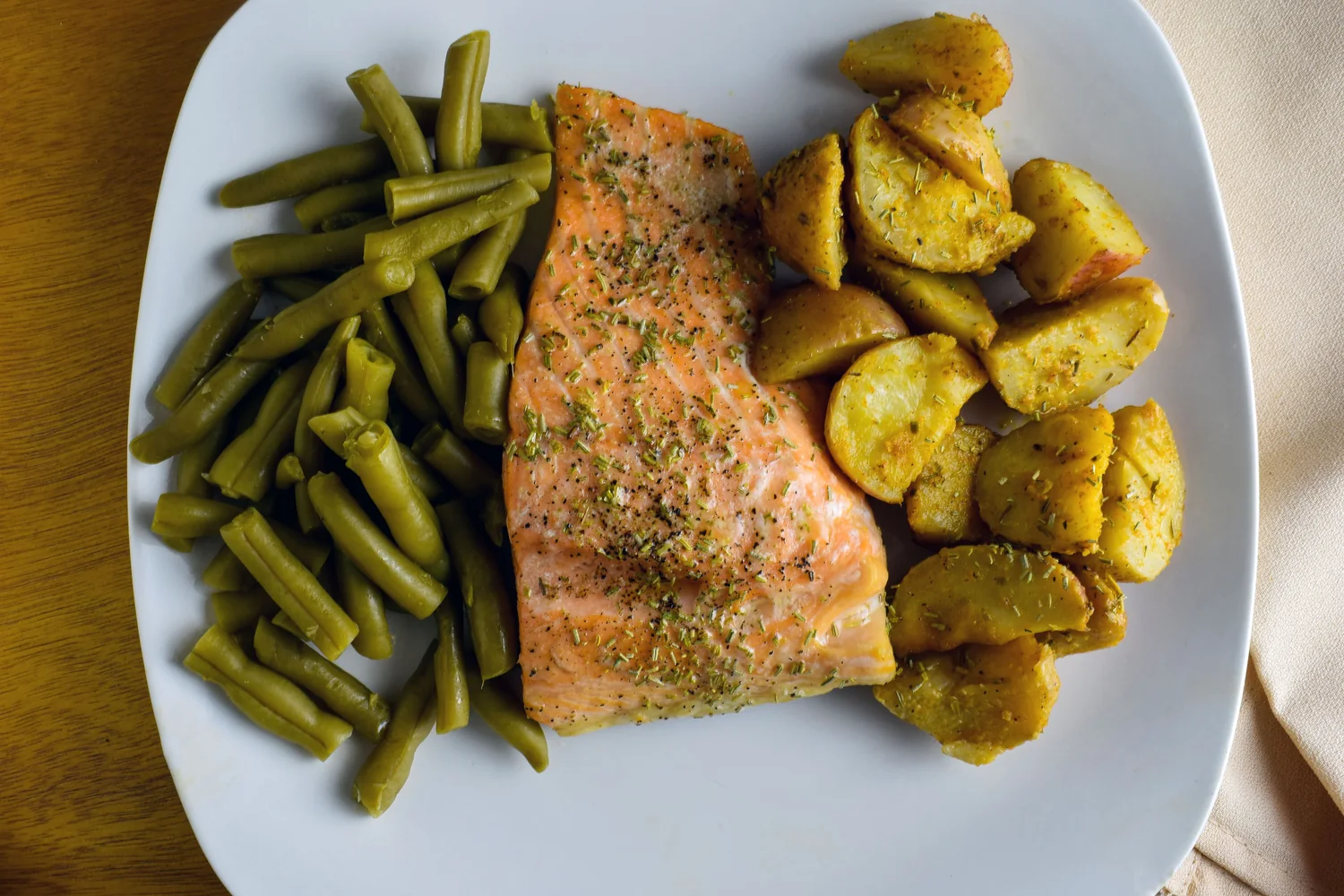
This healthy sheet-pan salmon dinner is designed for home cooks who want a complete meal without preparing three separate pans. Baby potatoes begin roasting first, green beans join after the potatoes have softened, and the salmon is added only for the final portion of the cooking time. That order matters: salmon can dry out when it is exposed to the full potato-roasting time.
The lemon-Dijon coating is intentionally light. It seasons the fish and vegetables without covering them in a heavy sauce, while dried dill, smoked paprika, garlic, and black pepper provide enough aroma to make the meal feel finished. The measured oil is divided across four servings so the nutrition estimate remains realistic and reproducible.
The recipe uses raw ingredient weights, not cooked weights, so readers can follow it from the grocery package to the oven without guessing. Salmon thickness and oven calibration still affect cooking time, so the temperature check is more reliable than relying only on the clock.
This meal offers protein from salmon, carbohydrate and potassium-containing food from potatoes, and a generous vegetable serving from green beans. It is presented as a practical healthy recipe rather than a treatment, guaranteed weight-loss plan, or substitute for individualized medical nutrition advice.
Why Readers May Like It
- 1One sheet pan and limited cleanup.
- 2Uses raw weights that match the actual cooking steps.
- 3Provides seafood, vegetables, and a starchy side in one meal.
- 4Works for family dinner or four portioned lunches.
Recipe Summary and Estimated Nutrition
The values below are calculated for the exact ingredient weights listed in the base recipe. The four primary cards show calories, protein, carbohydrates, and total fat per serving; the detailed table shows how the ingredients contribute to the full recipe total.
1 of 4 servings
Calculated from measured ingredient weights and divided by the listed yield. Values are evidence-informed estimates rather than laboratory-tested results.
Estimated energy per serving
Calculated from all listed ingredients
Includes fiber and naturally occurring sugars
Includes saturated and unsaturated fat
Values are calculated before display rounding. Product labels, produce size, trimming, cooking loss, and substitutions can change the final result.
Ingredient-by-Ingredient Nutrition Breakdown
Household measurements and gram weights are shown together so readers can reproduce the recipe and compare the estimate with another reliable database or the labels on the exact products they buy.
| Ingredient | Amount used | Weight | Calories | Protein | Carbs | Fat |
|---|---|---|---|---|---|---|
| Raw wild salmon | 4 fillets | 680 g | 966 kcal | 134.9 g | 0 g | 43.1 g |
| Baby yellow potatoes | 1⅓ pounds | 600 g | 462 kcal | 12.3 g | 104.9 g | 0.5 g |
| Fresh green beans | 12¾ ounces | 360 g | 112 kcal | 6.6 g | 25.1 g | 0.8 g |
| Extra-virgin olive oil | 1½ tablespoons | 20 g | 177 kcal | 0 g | 0 g | 20.0 g |
| Fresh lemon juice | 2 tablespoons | 30 g | 7 kcal | 0.1 g | 2.1 g | 0.1 g |
| Garlic | 4 cloves | 12 g | 18 kcal | 0.8 g | 4.0 g | 0.1 g |
| Dijon and dry seasonings | Measured amounts | 12.9 g | 14 kcal | 0.8 g | 2.5 g | 0.6 g |
| Full recipe estimate | 4 servings | — | 1756 kcal | 155.5 g | 138.6 g | 65.2 g |
How This Nutrition Estimate Was Prepared
Each listed food was assigned a gram weight and a generic food-composition value. The ingredient totals were added for the complete recipe, divided by the stated yield, and rounded only for display. The estimate does not include optional garnishes unless they are explicitly listed as included.
Use the nutrition label from the exact brand when it differs materially from a generic database item. Any changed ingredient, drained weight, cooking oil amount, serving number, or substitution requires a fresh calculation.
These totals sum the displayed ingredient estimates and divide by the listed servings. They are approximate, not independently verified nutrition analysis. Raw versus cooked weights, brands, seasoning and substitutions can change the result.
The batch footer adds the displayed ingredient estimates. Serving values divide that batch by the stated yield; brands and preparation can change the estimate.
Ingredients
Salmon and vegetables
Lemon-herb coating
Seasoning
Professional Step-by-Step Preparation
As an Amazon Associate I earn from qualifying purchases. Tool links below are paid links.
Equipment
Have the equipment ready before starting so measuring, cooking, and serving steps remain organized.
- Large rimmed sheet pan (paid link)
- Parchment paper or reusable baking mat
- Small mixing bowl
- Chef’s knife (paid link) and cutting board (paid link)
- Measuring spoons (paid link)
- Instant-read food thermometer (paid link)
Before You Start
Move the oven rack to the center, preheat fully to 425°F (220°C), and dry the salmon and vegetables. Water on the food creates steam and slows browning. Keep raw salmon and its utensils away from cooked food and ready-to-eat garnishes.
Preheat and prepare the potatoes
15 minutesHeat the oven to 425°F (220°C). Toss the quartered potatoes with 8 g of the olive oil, half the paprika, half the dill, one-quarter of the salt, and black pepper. Spread them cut-side down on one half of the lined sheet pan (paid link), leaving space between pieces. Weigh the listed ingredient quantities with a digital kitchen scale (paid link) before starting this step.
Give the potatoes a head start
15 minutesRoast the potatoes for 15 minutes. They will not be fully tender yet, but the cut sides should begin to color. While they roast, whisk (paid link) the remaining olive oil, lemon juice, garlic, Dijon, remaining paprika, remaining dill, and remaining salt.
Add the green beans
8 minutesTurn the potatoes with a thin spatula (paid link). Add the dry green beans to the open side of the pan and toss them with about one-third of the lemon-herb mixture. Return the pan to the oven for 8 minutes.
Add and bake the salmon
10–12 minutesMove the beans slightly to create four spaces. Place the salmon skin-side down when skin is present and brush the tops with the remaining lemon-herb mixture. Bake until the thickest part reaches 145°F (63°C) or the endpoint recommended by local food-safety guidance.
Rest, portion, and serve
5 minutesRest the salmon for 3 to 5 minutes. Divide one salmon fillet, one-quarter of the potatoes, and one-quarter of the green beans onto each plate. Add optional parsley and lemon wedges immediately before serving.
How to Know It Is Ready
The thickest part is opaque, separates into moist flakes with light pressure, and reaches 145°F (63°C) or the applicable local endpoint.
Potatoes are tender through the center with browned edges; green beans remain bright and crisp-tender rather than shriveled.
The finished plate tastes lemony and savory without a pool of oil. Add fresh lemon after tasting rather than adding more salt automatically.
Potential Benefits and Things to Consider
Potential Benefits
- Salmon supplies complete protein and naturally occurring omega-3 fats.
- Green beans add vegetable volume, fiber, folate, and vitamin C-containing food.
- Potatoes provide carbohydrate that can be useful around active days and contribute potassium-containing food.
- The sheet-pan method uses a measured oil quantity and does not require breading or deep-frying.
Things to Consider
- Salmon is a fish allergen and must be handled separately for anyone with an allergy.
- The exact fat content varies by salmon species; wild and farmed products can differ meaningfully.
- Dijon mustard and added salt affect sodium, so labels and personal requirements should guide adjustments.
- Pregnant people and others with specific seafood guidance should follow advice from their qualified clinician and local public-health authority.
Health value depends on the complete eating pattern, portion, preparation method, and individual needs. A single meal should not be presented as a cure or a guaranteed route to a particular body-composition or medical outcome.
Who May Enjoy This Recipe?
It May Work Well For
- Families wanting a straightforward seafood dinner.
- Active adults who prefer protein with a measured carbohydrate side.
- People preparing four lunches that can be reheated gently.
- Cooks who want a complete meal with one main pan.
Best Times to Eat It
- Weeknight dinner.
- Meal-prep lunch within the safe storage period.
- Post-training meal when the portion suits the person’s overall plan.
A recipe can be nutritious and still require changes for allergies, medical conditions, pregnancy, cultural preferences, medications, or a professionally prescribed eating plan.
How to Adjust It for Different Goals
For fewer calories
Use 500 g potatoes instead of 600 g and serve extra non-starchy vegetables. Keep the salmon portion adequate rather than removing the main protein source.
For more energy
Increase potatoes to 800 g for the full recipe or add a whole-grain side. Recalculate the added carbohydrate and calories.
For more protein
Use 200 g salmon per person. Thicker portions may need additional cooking time, so rely on internal temperature.
Any adjustment changes calories and macronutrients. Recalculate from the actual gram weights and product labels rather than assuming the original numbers still apply.
Substitutions, Dietary Notes, and Allergens
Practical Substitutions
- Use trout or Arctic char with a similar thickness, checking the safe endpoint.
- Replace baby potatoes with 600 g sweet-potato cubes; cut them to about ¾ inch and start them first.
- Use asparagus or broccoli florets instead of green beans, adjusting the vegetable roasting time.
- Use lime, cilantro, and cumin instead of lemon, dill, and paprika for a different flavor profile.
Allergen Information
Contains fish and mustard. The base recipe contains no wheat or dairy, but packaged mustard and seasonings should be checked for cross-contact statements when those matter.
Always check packaged ingredient labels because formulations, advisory statements, and cross-contact information can change.
Storage and Meal Preparation
Cool leftovers promptly and refrigerate within two hours in shallow, covered containers.
Use refrigerated leftovers within 3 to 4 days, following local food-safety guidance.
Reheat the salmon gently so it does not become dry; leftovers should be reheated until steaming hot and reach 165°F (74°C) where that standard applies.
Freeze cooked salmon and potatoes for up to about two months for best quality. Green beans soften after freezing, so fresh refrigerated portions usually have better texture.
Discard food that has been held at unsafe temperatures, smells unusual, shows spoilage, or has exceeded a safe storage period. When in doubt, do not taste it to test safety.
Frequently Asked Questions
Yes. Cook, cool promptly, and refrigerate up to 3 to 4 days. The best texture is usually within the first two days. Reheat gently or serve the salmon chilled over greens.
Yes, but thaw them safely in the refrigerator first and pat them dry. Baking from frozen changes timing and can release enough water to affect the potatoes and beans.
Potatoes need substantially more oven time than a 6-ounce salmon fillet. Staggering the additions prevents dry fish while allowing the potato centers to become tender.
Yes. Use the same 600 g raw weight, cut the pieces evenly, and begin roasting them first. The nutrition estimate will change slightly.
Each ingredient was assigned a gram weight and a standard generic food-composition value. The full recipe totals were divided by four before display rounding. Brand labels, salmon species, trimming, and substitutions can change the result.
No. It is general educational content and a practical cooking guide. People with allergies, medical conditions, pregnancy, or prescribed nutrition requirements should seek qualified guidance.
Nutrition and Safety Note
This page is for general education. It does not diagnose, treat, or provide individualized diet advice. People with allergies, medical conditions, pregnancy, or specific nutrition requirements should seek qualified professional guidance.
Nutrition Data Source
For a clear explanation of ingredient weights, data sources, rounding, substitutions, and estimate limitations, read our Nutrition Calculation Methodology.
General Nutrition References
Recipe development note: this page does not claim independent kitchen testing. The image is illustrative and does not document a tested result. Ingredient-based nutrition estimates can change with brands, weighing state, preparation and serving size; use exact labels when precision matters.