About This Healthy Recipe
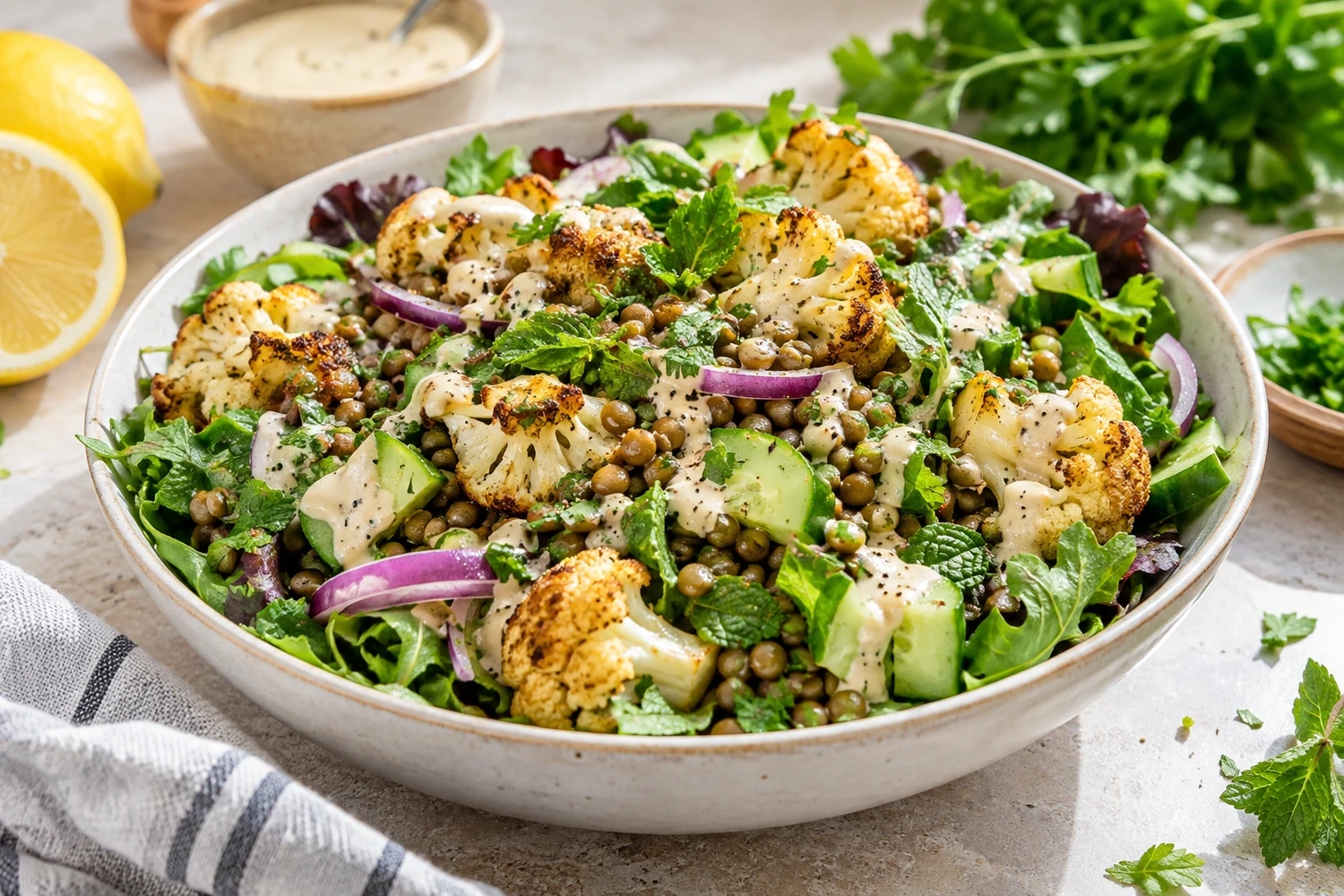
Roasted cauliflower lentil salad with lemon tahini pairs tender lentils with caramelized cauliflower, crisp cucumber and plenty of herbs. The lemon tahini dressing gives the salad richness without needing cheese or mayonnaise.
It fits the Anti-Inflammatory Recipes topic because it emphasizes legumes, vegetables, olive oil and sesame rather than ultra-processed ingredients. The category name does not imply medical treatment.
If you enjoy sturdy plant-based lunches, compare this recipe with our Crispy Kale Quinoa Chickpea Salad, White Bean Kale Skillet, Baked Feta Chickpeas, and Healthy Meals.
Why Readers May Like It
- 1Meal-prep friendly lunch with strong texture contrast.
- 2Good balance of plant protein, fiber and healthy fats.
- 3Works well warm, room temperature or chilled.
Recipe Summary and Estimated Nutrition
The values below are calculated from the listed base-recipe ingredients and divided by the stated number of servings. Use them as practical estimates rather than medical or laboratory measurements.
4 servings
Calculated from measured ingredient weights and divided into the listed yield. Each serving is roughly about 350 g per serving.
Estimated energy per serving
Main protein sources in this meal
Mostly from whole-food ingredients
Includes naturally occurring fats and added oil
Nutrition estimates can vary with brands, exact produce size, drained weight, cooking loss, and substitutions.
Ingredient-by-Ingredient Nutrition Breakdown
The table shows approximate contributions from the full base recipe. Values are rounded and designed for transparency, not clinical nutrition planning.
| Ingredient | Amount used | Weight | Calories | Protein | Carbs | Fat |
|---|---|---|---|---|---|---|
| Cauliflower | 1 head | 650 g | 162 kcal | 12.7 g | 31.0 g | 2.0 g |
| Cooked lentils | 2 cups | 330 g | 380 kcal | 29.5 g | 66.0 g | 1.2 g |
| Tahini | 3 tbsp | 45 g | 267 kcal | 7.6 g | 9.0 g | 24.0 g |
| Olive oil | 1 tbsp | 14 g | 119 kcal | 0 g | 0 g | 13.5 g |
| Cucumber, onion and greens | combined | 300 g | 64 kcal | 3.0 g | 13.0 g | 0.7 g |
| Lemon, garlic and herbs | combined | ~55 g | 24 kcal | 0.8 g | 4.0 g | 0.2 g |
| Calculated full-recipe total | 4 servings | — | 1324 kcal | 60.8 g | 142.8 g | 60.0 g |
How This Nutrition Estimate Was Prepared
- Base ingredients were matched to standard nutrition references or typical label values.
- Recipe totals were divided by 4 servings.
- Cooking changes water weight more than the listed macronutrient estimate.
- Salt, sauces, cheese, and packaged products are major sources of variation.
Accuracy note: These numbers are credible estimates, not laboratory analyses. For exact personal needs, use the labels on the products you buy and guidance from a qualified professional.
Ingredients
Salad base
Lemon tahini dressing
Professional Step-by-Step Preparation
Equipment
•, •, •.
Before You Start
Roast the cauliflower on a large enough pan so the florets have space to brown rather than steam. Use fully cooled or lukewarm cooked lentils so the salad holds its texture.
Roast the cauliflower
About 3 minutesToss the cauliflower with a little oil and roast at 425°F until tender and browned.
Kitchen cue: Keep the pan or oven hot enough for good texture, but reduce heat if the food starts to scorch.
Prepare the dressing
About 3 minutesWhisk tahini, lemon juice, water, olive oil, garlic and pepper until smooth and pourable.
Kitchen cue: Use visual texture and the written doneness cues rather than rushing the step.
Build the salad base
About 3 minutesIn a large bowl, combine the lentils, cucumber, onion, herbs and greens.
Kitchen cue: Use visual texture and the written doneness cues rather than rushing the step.
Add the cauliflower
About 3 minutesFold the roasted cauliflower into the salad while it is still warm or let it cool first for a colder version.
Kitchen cue: Use visual texture and the written doneness cues rather than rushing the step.
Dress and toss
About 3 minutesAdd the lemon tahini dressing and toss gently until everything is lightly coated.
Kitchen cue: Use visual texture and the written doneness cues rather than rushing the step.
Serve
About 3 minutesServe immediately or chill for meal prep. Add extra herbs or lemon just before eating.
Kitchen cue: Taste before serving and adjust acidity, herbs, pepper, or salt only as needed.
How to Know It Is Ready
Look for the texture and doneness cues described in the steps. For eggs, seafood, poultry, meat, or other animal proteins, follow safe food-handling practices and use a food thermometer when appropriate rather than judging doneness only by color.
Potential Benefits and Things to Consider
Potential Benefits
- Lentils provide plant protein and fiber, which makes the salad more filling than a greens-only salad.
- Roasted cauliflower adds warmth and texture, so the recipe feels substantial.
- The salad travels well for lunch and does not wilt as quickly as delicate salads.
Things to Consider
- Tahini is nutritious but energy-dense, so measure it if you are tracking intake.
- The salad is naturally plant-based but moderate in protein; add extra lentils or a separate protein source if needed.
- If you are sensitive to raw onion, use less or rinse the slices in cold water first.
No single recipe determines health on its own. Overall eating pattern, portions, activity, sleep, medical needs, and consistency matter more than one meal.
Who May Enjoy This Recipe?
It May Work Well For
- Adults who want a practical, balanced healthy meal.
- People who prefer meals built around mostly whole-food ingredients.
- Home cooks looking for predictable portions and clear instructions.
- Meal-prep users who can store components safely.
Best Times to Eat It
Lunch or light dinner. This page may suit people who want more plant-based lunches, meal-prep salads that hold up well, or flexible meatless meals with a satisfying texture.
How to Adjust It for Different Goals
Higher protein
Add extra lentils, tofu or grilled chicken.
More calories
Serve with pita, quinoa or extra tahini dressing.
Lower calories
Use slightly less tahini and more greens.
Substitutions, Dietary Notes, and Allergens
Practical Substitutions
- Use chickpeas instead of lentils.
- Swap cauliflower for roasted broccoli.
- Use dill or cilantro instead of mint.
- Use yogurt-lemon dressing if you do not want tahini.
Allergen Information
Check every packaged ingredient for allergens and cross-contact statements. Depending on the recipe, common allergens may include fish, shellfish, dairy, egg, soy, peanuts, tree nuts, sesame, or gluten.
Storage and Meal Preparation
Store the salad up to 4 days in the refrigerator. If possible, keep the dressing separate and toss it in shortly before serving.
For meal prep, cool cooked food promptly and portion it into covered containers rather than leaving a large batch at room temperature. Most cooked leftovers are best used within 3–4 days when refrigerated at 40°F (4°C) or below. Keep fresh toppings, avocado, herbs, crunchy components, or yogurt-based sauces separate when that improves texture.
Frequently Asked Questions
Yes. Rinse and drain them well before adding to the salad.
Yes. It is very good slightly warm right after the cauliflower comes out of the oven.
Yes. It holds up well and is especially good for lunches.
No. They are approximate and vary with ingredient brands and portion sizes.
Yes. Add more water and lemon juice until it reaches the consistency you like.
Start with measured portions of oil, cheese, nuts, avocado, sauces, grains, or bread while keeping vegetables and protein substantial.
Nutrition and Safety Note
This recipe is general educational information, not individualized medical nutrition advice. People with kidney disease, diabetes, food allergies, gastrointestinal conditions, pregnancy-related needs, or other medical concerns may need different portions or ingredient choices.
Nutrition Data Source
Estimates are informed by typical values from USDA FoodData Central and standard packaged-food labels, then rounded for practical display.