About This Healthy Recipe
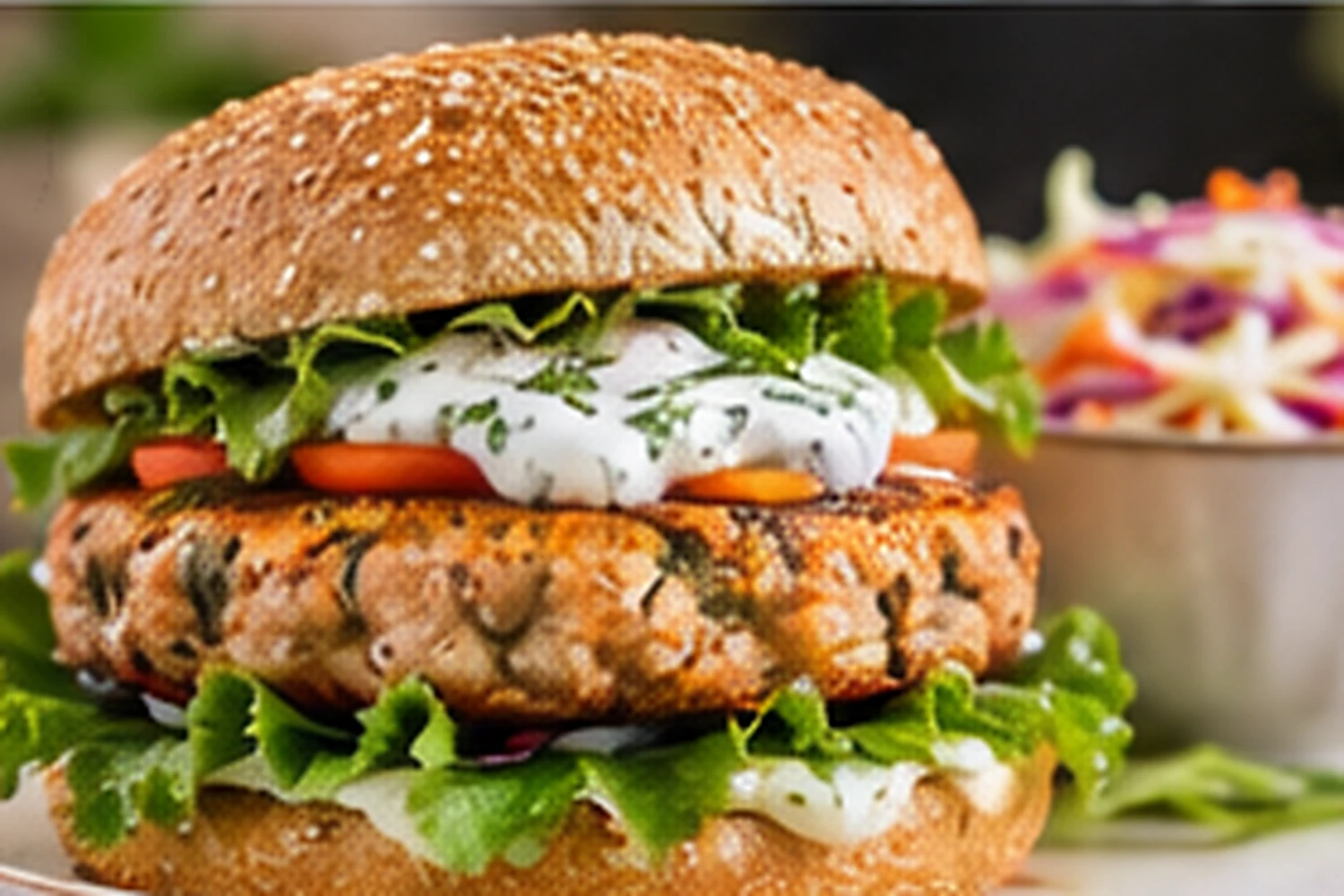
These salmon burgers are designed to taste like salmon rather than breadcrumbs. Chopped fresh salmon is bound with egg, a small amount of oats, lemon, and herbs, then cooked until browned on the outside and just done in the center.
A cool Greek yogurt dill slaw adds crunch and acidity without a heavy mayonnaise dressing. Serve the patties on whole-grain buns, in lettuce cups, or over greens depending on the meal you want.
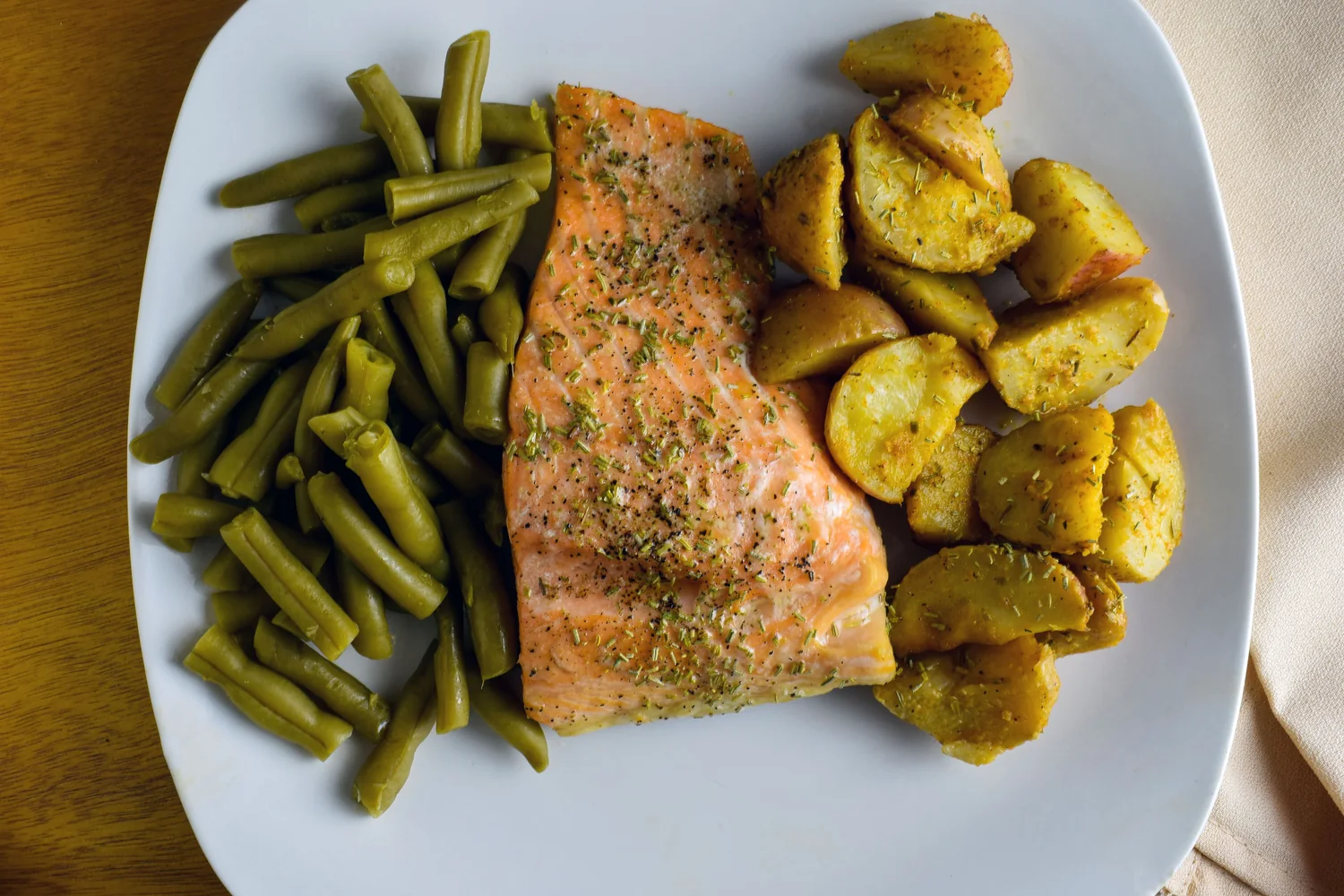
This recipe is written with familiar supermarket ingredients, measured quantities, and practical home-kitchen methods. It is intended as general food and fitness education rather than individualized diet treatment. If you like this style of meal, you may also enjoy Air Fryer Salmon Bites with Cucumber Edamame Rice Salad or Healthy Sheet-Pan Salmon with Green Beans and Potatoes from our healthy-meals library.
Why Readers May Like It
- 1Fresh salmon provides protein plus omega-3 fats.
- 2Greek yogurt keeps the slaw creamy while adding extra protein.
- 3The patties cook in about 10 minutes and can be formed ahead.
Recipe Summary and Estimated Nutrition
Values are calculated from the listed ingredient weights and divided by 4 servings. Product labels, produce size, cooking loss, drained weight, and substitutions can change the result.
4 servings
USDA-aligned generic food estimates divided by the listed yield.
Estimated energy per serving
Calculated from listed ingredients
Includes fiber and sugars
Includes unsaturated and saturated fat
Ingredient-by-Ingredient Nutrition Breakdown
| Ingredient | Amount used | Weight | Calories | Protein | Carbs | Fat |
|---|---|---|---|---|---|---|
| Skinless salmon fillet, finely chopped | 24 oz | 680 g | 1414 kcal | 136 g | 0 g | 88 g |
| Egg | 1 large | 50 g | 72 kcal | 6.3 g | 0.4 g | 4.8 g |
| Rolled oats, pulsed into coarse crumbs | 1/2 cup | 45 g | 171 kcal | 5.8 g | 30 g | 3.1 g |
| Lemon juice | 2 tablespoons | 30 g | 7 kcal | 0.1 g | 2 g | 0 g |
| Chopped fresh dill and parsley | 2 tablespoons | 16 g | 6 kcal | 0.5 g | 1 g | 0.1 g |
| Shredded cabbage and carrot | 3 cups | 210 g | 70 kcal | 3 g | 15 g | 0.5 g |
| Plain nonfat Greek yogurt | 3/4 cup | 170 g | 100 kcal | 18 g | 6 g | 0.5 g |
| Dijon mustard | 1 teaspoon | 5 g | 3 kcal | 0.2 g | 0.3 g | 0.2 g |
| Extra-virgin olive oil | 2 teaspoons | 9 g | 80 kcal | 0 g | 0 g | 9 g |
| Calculated full-recipe total | 4 servings | 1215 g | 1923 kcal | 169.9 g | 54.7 g | 106.2 g |
| Calculated full-recipe total | 4 servings | 1215 g | 1923 kcal | 169.9 g | 54.7 g | 106.2 g |
How This Nutrition Estimate Was Prepared
- Each ingredient has an explicit gram weight.
- Generic food-composition estimates are aligned with USDA FoodData Central.
- Full-recipe values are divided by the listed yield before display rounding.
- Optional ingredients are excluded unless measured in the base recipe.
Accuracy note: These numbers are credible estimates, not laboratory analysis. Use exact package labels when precision is important.
Ingredients
Salmon burgers
Slaw
Cooking
Professional Step-by-Step Preparation
Equipment
Cutting board, chef knife, measuring tools, mixing bowls, and the cookware described in the directions.
Before You Start
Wash produce, keep raw animal proteins separate from ready-to-eat foods, and use a food thermometer where appropriate. Read the whole method once before you begin so the meal comes together smoothly.
Prepare the salmon mixture
Pat the salmon dry, chop it finely with a sharp knife, and combine it with egg, oat crumbs, lemon juice, dill, parsley, and black pepper.
Success tip: Do not process the salmon into a paste; small pieces give the finished burger a better texture.
Shape the patties
Divide the mixture into four equal portions and shape into patties about 3/4 inch thick. Chill for 10 minutes if the mixture feels very soft.
Success tip: Wet hands lightly before shaping so the mixture does not stick.
Mix the yogurt slaw
Stir Greek yogurt, Dijon, extra dill, lemon zest, and pepper together. Fold through the cabbage and carrot and refrigerate while the burgers cook.
Success tip: Dress the slaw shortly before serving if you prefer maximum crunch.
Cook the salmon burgers
Heat the oil in a nonstick skillet over medium heat. Cook patties 4 to 5 minutes per side, until browned and the center reaches a safe temperature.
Success tip: Turn only once if possible so the patties stay intact.
Rest and assemble
Rest the burgers for 2 minutes, then serve with the yogurt dill slaw.
Success tip: Whole-grain buns add carbohydrate; lettuce cups or a salad base keep the meal lighter.
Potential Benefits and Things to Consider
Potential Benefits
- Salmon is rich in protein and provides EPA and DHA omega-3 fats.
- Cabbage and carrots add crunchy vegetables and fiber.
- Greek yogurt replaces a heavier mayonnaise-based slaw dressing.
Things to Consider
- Salmon contains fish, and Greek yogurt contains milk.
- Fresh salmon should be kept cold and cooked promptly.
- Restaurant-style buns and sauces can add substantial sodium, so build the meal to your needs.
Healthy eating is about the overall pattern rather than one “perfect” dish. This recipe can fit into a varied diet when portions, sides, and frequency match your appetite, activity level, and individual needs.
Who May Enjoy This Recipe?
It May Work Well For
- Active adults looking for balanced, practical meals with a clear protein source.
- Health-conscious readers who value vegetables, whole foods, and transparent nutrition estimates.
- Busy households in the U.S., Canada, UK, Australia, and similar markets that want familiar grocery-store ingredients.
Best Times to Eat It
- Dinner at home or packed for later when storage is appropriate
- Meal prep when the components can be cooled and refrigerated safely
- Before or after training according to individual preference, timing, and energy needs
How to Adjust It for Different Goals
For More Protein
Increase the main protein-rich ingredient by about 20–25% or add a measured protein-rich side. Recalculate nutrition if precise tracking matters.
For Lower Calories
Keep vegetables generous and reduce calorie-dense oil, cheese, nuts, seeds, or grain portions slightly rather than removing the protein source.
For More Carbohydrate
Add a measured serving of whole grains, potatoes, fruit, or whole-grain bread around training or higher-energy days.
Substitutions, Dietary Notes, and Allergens
Practical Substitutions
- Use canned salmon that is very well drained if fresh salmon is unavailable.
- Use whole-wheat panko instead of pulsed oats.
- Replace dill with parsley and chives for a milder herb flavor.
Allergen Information
Contains fish, egg, and milk. Oats should be certified gluten-free if required.
Always check packaged ingredient labels because formulations and cross-contact statements can change between brands and countries.
Storage and Meal Preparation
Refrigerate cooked salmon patties for up to 3 days and the slaw for up to 2 days. Reheat patties gently in a skillet or air fryer; keep the slaw cold.
Cool cooked food promptly, refrigerate within 2 hours, and reheat leftovers until steaming hot where appropriate. When packing food for work or travel, keep cold components at 40°F (4°C) or below.
Frequently Asked Questions
Refrigerate cooked salmon patties for up to 3 days and the slaw for up to 2 days. Reheat patties gently in a skillet or air fryer; keep the slaw cold.
Increase the main protein-rich ingredient modestly or add a measured side such as Greek yogurt, cottage cheese, edamame, eggs, beans, poultry, seafood, or tofu that fits the recipe.
Use canned salmon that is very well drained if fresh salmon is unavailable.
Each listed ingredient is assigned a generic USDA-aligned food-composition estimate by gram weight. Ingredient values are totaled for the full recipe and divided by the stated yield.
It is a general healthy-meal idea. Individual nutrition needs differ, especially with allergies, medical conditions, pregnancy, prescribed diets, or sport-specific fueling requirements.
No. This page is educational and does not diagnose, treat, or provide individualized nutrition advice.
Nutrition and Safety Note
This page is for general education. It does not diagnose, treat, or provide individualized diet advice. People with allergies, medical conditions, pregnancy, or specific nutrition requirements should seek qualified professional guidance.
Nutrition Data Source
Read our Nutrition Calculation Methodology for details on weights, estimates, rounding, and limitations.