About This Healthy Recipe
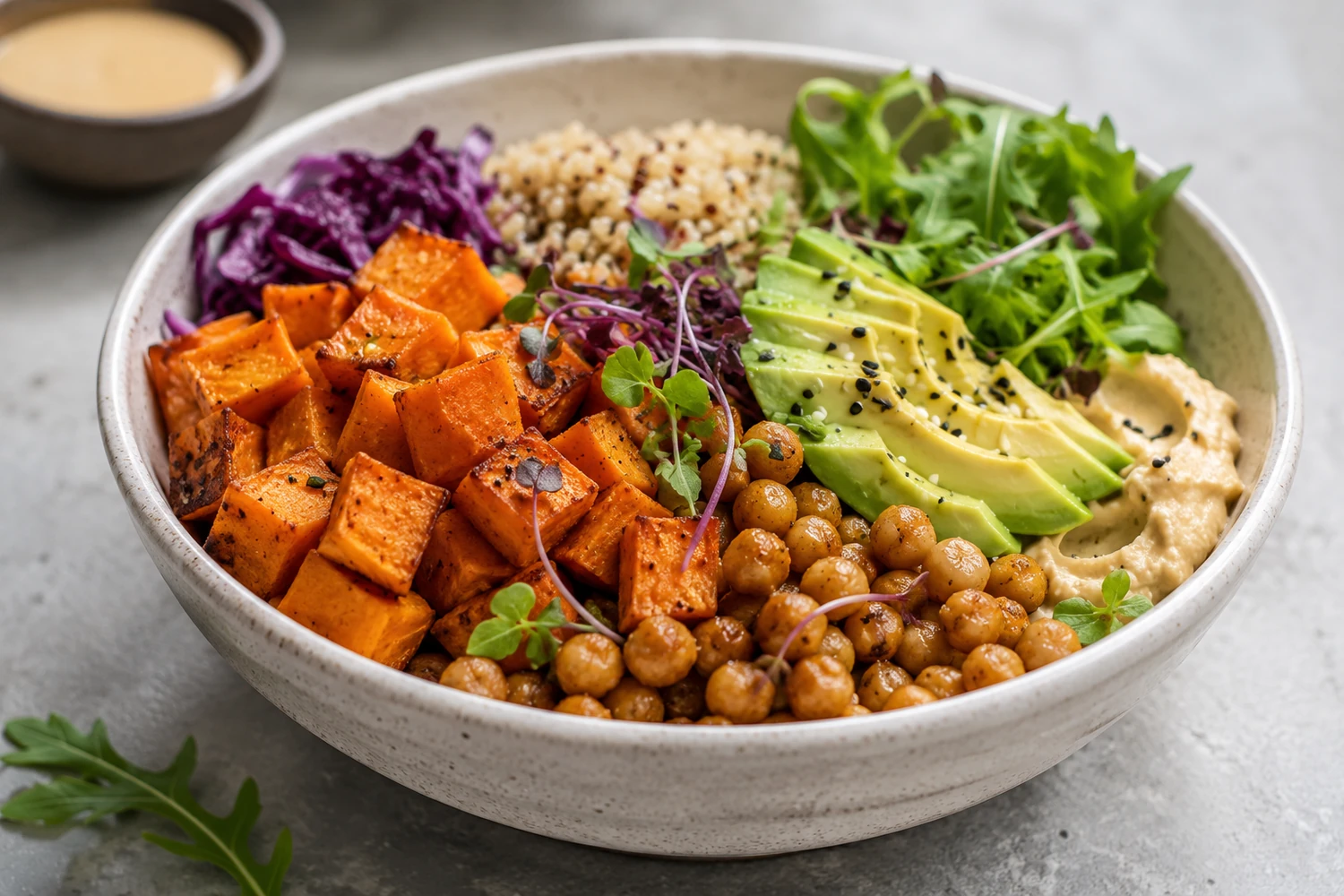
Roasted sweet potato and chickpeas served with quinoa, spinach, red cabbage, carrot, and a measured tahini-lemon sauce. The bowl is colorful, plant-based, and designed for practical meal prep.
Roasting the sweet potato and chickpeas on one pan creates caramelized edges, while the raw vegetables add crunch. Tahini is calorie-dense, so the sauce is measured and thinned with lemon and water rather than poured freely.
This chickpea sweet potato power bowl uses measured ingredients, realistic quantities, and practical preparation steps for home cooking. It is a healthy meal idea, not a cure, guaranteed weight-loss method, or substitute for individualized nutrition care.
Why Readers May Like It
- 1Combines warm and cool textures.
- 2Makes four portable bowls.
- 3Uses a sauce with no added sugar in the base version.
Recipe Summary and Estimated Nutrition
The values below are calculated for the exact ingredient weights listed in the base recipe. The four primary cards show calories, protein, carbohydrates, and total fat per serving; the detailed table shows how every ingredient contributes to the full recipe total.
4 bowls
Calculated from measured ingredient weights and divided by 4 servings. Values are evidence-informed estimates rather than laboratory-tested results.
Estimated energy per serving
Calculated from all listed ingredients
Includes fiber and naturally occurring sugars
Includes saturated and unsaturated fat
Values are calculated before display rounding. Product labels, produce size, drained weight, cooking loss, and substitutions can change the final result.
Ingredient-by-Ingredient Nutrition Breakdown
Household measurements and gram weights are shown together so readers can reproduce the recipe and compare the estimate with another reliable database or the labels on the exact products they buy.
| Ingredient | Amount used | Weight | Calories | Protein | Carbs | Fat |
|---|---|---|---|---|---|---|
| Cooked sweet potato cubes | 3 cups | 600 g | 540 kcal | 12 g | 124 g | 0.9 g |
| Cooked chickpeas, drained | 3 cups | 500 g | 820 kcal | 44.5 g | 137 g | 13 g |
| Extra-virgin olive oil | 1 tablespoon | 14 g | 124 kcal | 0 g | 0 g | 14 g |
| Cooked quinoa | 2 cups | 370 g | 444 kcal | 16.3 g | 78.8 g | 7 g |
| Baby spinach | 4 cups | 120 g | 28 kcal | 3.5 g | 4.3 g | 0.5 g |
| Shredded red cabbage | 2 cups | 180 g | 56 kcal | 2.5 g | 13.3 g | 0.4 g |
| Shredded carrot | 1 cup | 120 g | 49 kcal | 1.1 g | 11.5 g | 0.2 g |
| Tahini | ¼ cup | 60 g | 357 kcal | 10.2 g | 12.7 g | 32.3 g |
| Fresh lemon juice | 3 tablespoons | 45 g | 10 kcal | 0.2 g | 3.1 g | 0.1 g |
| Warm water | 3 tablespoons | 45 g | 0 kcal | 0 g | 0 g | 0 g |
| Pumpkin seeds | 2 tablespoons | 18 g | 101 kcal | 5.4 g | 1.9 g | 8.8 g |
| Cumin, smoked paprika, garlic powder, salt, and pepper | As listed in the method | 10 g | 0 kcal | 0 g | 0 g | 0 g |
| Calculated full-recipe total | 4 bowls | 2082 g | 2528 kcal | 95.7 g | 387 g | 77.2 g |
How This Nutrition Estimate Was Prepared
- Every ingredient is assigned a specific gram weight instead of relying only on a cup, spoon, or item count.
- Standard unbranded food-composition values are aligned with the closest matching foods in USDA FoodData Central.
- Ingredient values are added for the full recipe, divided by the listed yield, and rounded only for display.
- Optional ingredients are included only when the ingredient list says they are part of the estimate.
Accuracy note: These numbers are credible estimates, not laboratory analysis. For the closest personal result, weigh the ingredients and calculate from the labels on the exact brands used.
Ingredients
Roasted base
Bowl ingredients
Tahini-lemon sauce
Topping
Professional Step-by-Step Preparation
Equipment
Have the listed equipment ready before preparing chickpea sweet potato power bowl so measuring, cooking, and serving steps stay organized.
- Oven
- Rimmed sheet pan
- Mixing bowl
- Chef’s knife
- Measuring cups and spoons
Before You Start
Dry chickpeas well before roasting. Read all steps once, measure the ingredients, and keep raw animal proteins separate from ready-to-eat foods when applicable.
Preheat and prepare
About 7 minutesHeat the oven to 425°F and line a large sheet pan.
Combine the ingredients
About 7 minutesToss sweet potatoes and chickpeas with olive oil, cumin, paprika, garlic powder, salt, and pepper.
Roast until tender
25–30 minutesSpread the mixture in one layer and roast for 25 to 30 minutes, stirring halfway, until sweet potatoes are tender and chickpeas have crisp edges.
Whisk tahini lemon juice optional maple
About 7 minutesWhisk tahini, lemon juice, optional maple syrup, and warm water until smooth and pourable.
Divide quinoa and greens among four
About 7 minutesDivide quinoa and greens among four bowls.
Roast until tender
Until safely cookedAdd cabbage, carrot, roasted sweet potato, and chickpeas.
Finish and serve
About 7 minutesDrizzle with tahini sauce and finish with pumpkin seeds.
How to Know It Is Ready
The sweet potato should be fork-tender with browned edges, and the chickpeas should be hot with a slightly crisp exterior.
Whisk warm water into tahini gradually because the sauce thickens before it loosens.
Divide the finished recipe into 4 equal servings so the nutrition estimate remains meaningful.
Potential Benefits and Things to Consider
Potential Benefits
- Chickpeas and quinoa contribute plant protein and fiber.
- Sweet potato, cabbage, spinach, and carrot add a range of colors and textures.
- Tahini and pumpkin seeds provide unsaturated fats and minerals.
Things to Consider
- Sesame in tahini is a major allergen in some regions.
- The bowl is energy-dense when sauce or seed portions are increased.
- Chickpeas may cause digestive discomfort for people not accustomed to legumes.
Who May Enjoy This Recipe?
It May Work Well For
- Plant-based eaters wanting a complete bowl.
- People who enjoy batch-cooked lunches.
- Active adults needing carbohydrate and fiber from whole-food sources.
Best Times to Eat It
- Lunch.
- Dinner.
- A post-workout meal when a plant-based, higher-carbohydrate option is useful.
A recipe can be nutritious and still require changes for allergies, medical conditions, pregnancy, cultural preferences, medications, or a professionally prescribed eating plan.
How to Adjust It for Different Goals
For fewer calories
Use half the tahini sauce and increase leafy greens and cabbage.
For more protein
Add baked tofu, edamame, or extra chickpeas and recalculate the serving.
For more energy
Increase quinoa and keep the full sauce and pumpkin-seed portions.
Any adjustment changes calories and macronutrients. Recalculate the recipe from the actual gram weights and product labels rather than assuming the original numbers still apply.
Substitutions, Dietary Notes, and Allergens
Practical Substitutions
- Use brown rice or farro instead of quinoa.
- Replace tahini with a yogurt-lemon sauce when sesame must be avoided and dairy is tolerated.
- Use roasted cauliflower or winter squash instead of sweet potato.
- Swap pumpkin seeds for sunflower seeds.
Allergen Information
Contains sesame. The base recipe is vegan and gluten-free when all packaged ingredients are verified.
Always check every packaged ingredient label because formulations and cross-contact statements can change.
Storage and Meal Preparation
Refrigerate the roasted ingredients and quinoa for up to four days.
Keep greens, cabbage, seeds, and sauce separate until serving.
Reheat only the quinoa, chickpeas, and sweet potato; add fresh components afterward.
Discard food that has been held at unsafe temperatures, smells unusual, shows spoilage, or has exceeded a safe storage period. When in doubt, do not taste it to test safety.
Frequently Asked Questions
Refrigerate the roasted ingredients and quinoa for up to four days. Keep greens, cabbage, seeds, and sauce separate until serving.
Use brown rice or farro instead of quinoa. Replace tahini with a yogurt-lemon sauce when sesame must be avoided and dairy is tolerated.
Add baked tofu, edamame, or extra chickpeas and recalculate the serving. Recalculate the nutrition using the label or database value for any changed ingredient.
The sweet potato should be fork-tender with browned edges, and the chickpeas should be hot with a slightly crisp exterior.
Each ingredient is assigned a gram weight. Standard unbranded food-composition values are multiplied by those weights, added for the full recipe, and divided by the listed number of servings before display rounding. Brands and substitutions can change the result.
No. This recipe page provides general educational information and does not replace individualized guidance from a qualified health or nutrition professional.
Nutrition and Safety Note
This page is for general education. It does not diagnose, treat, or provide individualized diet advice. People with allergies, medical conditions, pregnancy, or specific nutrition requirements should seek qualified professional guidance.
Nutrition Data Source
For a clear explanation of ingredient weights, data sources, rounding, substitutions, and estimate limitations, read our Nutrition Calculation Methodology.