Published by Best Fitness Routine. Editorial standards · Report a correction. Educational guidance; no individual clinical review is claimed unless a qualified reviewer is named.
Compare actual servings, not the front of the package
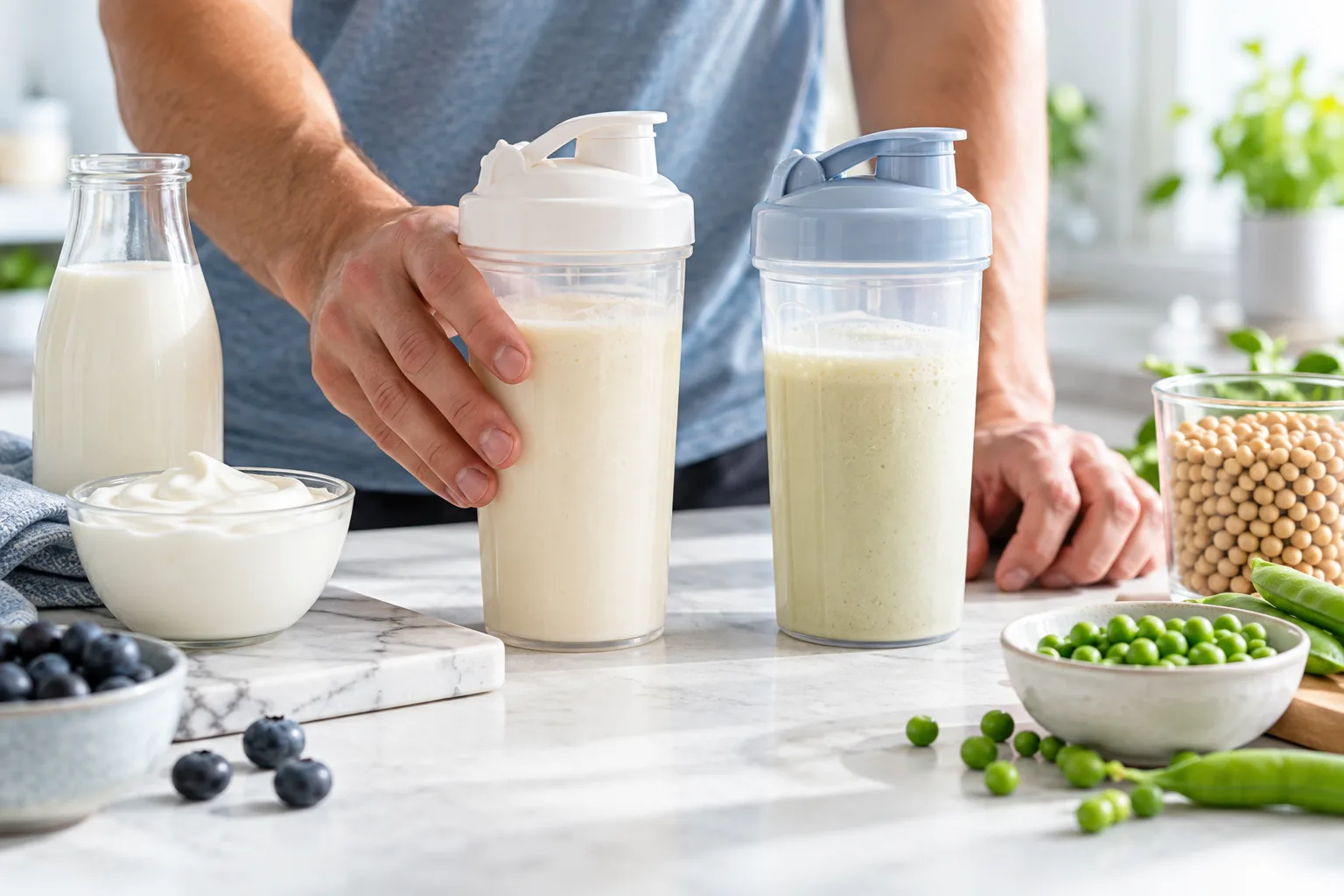
Whey is a milk-derived protein. Plant products may use soy, pea, rice or blends, and their composition varies. Start with the protein grams per serving, ingredient list and allergens. Two containers with the same scoop size can provide different amounts of protein.
Check whether a label states a serving in grams or scoops. A digital kitchen scale can help you understand that amount without assuming a heaped scoop is the listed serving. This is a label-reading tool, not a reason to measure every meal indefinitely.
Amino acid quality and the evidence
Essential amino acid content and digestibility help explain differences between proteins. Whey generally provides a rich essential-amino-acid profile; some plant blends are formulated to improve that profile. It is inaccurate to treat every plant powder as identical or dismiss plant foods as incapable of supporting training.
One small trial in trained adults compared a particular plant blend with whey after exercise. Its findings concern that formulation and study setting, not every powder or long-term outcome in all ages. Daily food intake and progressive training still matter more than marketing a single ingredient as a recovery shortcut.
Tolerance, diet preference and convenience
Milk allergy makes whey inappropriate. Lactose tolerance depends partly on the formulation and individual response; “whey” is not a guarantee of a symptom-free product. Plant blends also have possible allergens and may contain sweeteners or thickeners that some users do not tolerate.
If you use a powder, a protein shaker bottle can make preparation convenient when food is unavailable. Mix according to the label, clean it promptly and do not leave a dairy-based drink warm for long periods. A meal-prep container set offers an equally practical way to bring yogurt, tofu or another suitable food.
Choose the simplest option that meets the need
First decide whether your ordinary meals already supply adequate protein. A supplement may be convenient, but buying both whey and plant powder is not necessary for a comparison. Consider preference, cost per usable serving, ingredient transparency and independent sport testing when relevant.
Avoid products that promise rapid muscle gain without training or that combine protein with unclear stimulant blends. Competitive athletes should follow their sport’s supplement-risk guidance. A recovery drink cannot compensate for repeatedly missing meals or an unsuitable training load.
Compare the serving rather than the marketing name
The label whey or plant protein tells you something about the source, but it does not describe the entire product. Two tubs may differ in protein per serving, serving size, added ingredients, allergens and cost. Start with those concrete details. A large scoop is not automatically a high-protein serving, and a product described as natural is not automatically better suited to your needs. Use the nutrition panel and ingredients list instead of relying on front-of-pack promises.
Compare like with like. If one product lists nutrition for thirty grams of powder and another for forty grams, the printed protein figures describe different amounts. You can compare the same powder weight or calculate the cost of a serving that supplies the protein you intend to use. This does not establish which product produces better results, but it prevents a basic shopping mistake. Package conventions vary between US, Canadian, UK and Australian products, so check the actual measurement. A digital kitchen scale (paid link) can help compare equal powder weights when the manufacturers use different scoop sizes.
Keep ordinary protein foods in the picture
A powder is one possible way to add protein, not the foundation of every recovery meal. Yogurt, milk, eggs, fish, poultry, tofu, tempeh and beans can all contribute within different dietary patterns. Their other nutrients, texture and preparation differ, which can be useful when planning meals. A person who enjoys a normal lunch after training may have no practical reason to add a shake. Start with what is already eaten before deciding that a supplement solves a problem.
For someone who travels directly from the gym to work, a convenient mixed drink might fill a temporary gap until a meal is available. For another person, yogurt and fruit or a sandwich may be simpler. These choices can both be reasonable. Assess whether the option improves your routine, fits your budget and agrees with your stomach. A recovery plan should not become dependent on a particular brand when ordinary supermarket foods are accessible and enjoyable.
Understand allergies and digestive tolerance
Whey comes from milk, so it is relevant to a milk allergy even when the product contains little lactose. Lactose intolerance and milk allergy are different issues. Do not assume a whey isolate is safe for someone with a milk allergy because the marketing focuses on low lactose. Plant products also need careful checking: soy is an allergen, and a blend may include other ingredients that do not suit you. Read the complete label, including any cross-contact information.
Digestive comfort can depend on serving size, sweeteners, added fiber and the drink used for mixing, as well as the protein source. If you normally tolerate the ingredients, begin with an ordinary labelled serving rather than combining several scoops with unfamiliar additions. Do not keep using a product that causes concerning symptoms simply because it is popular. A known allergy calls for an appropriate safe alternative, and recurring digestive problems may need assessment instead of repeated trial-and-error purchases. If you choose a mixed drink, a protein shaker bottle (paid link) is an optional convenience rather than a requirement for recovery.
Plant-based choices and everyday meal planning
Plant proteins are not all identical. Soy, pea and mixed-source products have different compositions, and brands can vary in how much protein the finished serving provides. A varied plant-based eating pattern can include tofu, tempeh, beans, lentils, soy drinks and other foods alongside any powder you choose. Look at the full day rather than judging the diet from one shake. Variety also helps keep meals enjoyable, which matters when you are trying to follow a routine for months.
If the product will replace milk in a smoothie, check both components. A protein powder mixed with a low-protein almond drink is different from the same powder mixed with a soy drink. Likewise, a fruit smoothie without a meaningful protein ingredient should not be assumed to have the same role as a protein-rich snack. Use the label to understand what is actually in your chosen combination. You can adjust the recipe without turning every drink into a complicated list of supplements.
Use a clear budget comparison
Work out how many usable servings are in the package, then divide the price by that number. If your preferred serving is different from the manufacturer's scoop, use the amount you intend to prepare. Compare products in your local currency and include delivery costs where relevant. A discounted large tub may offer a low price per serving, but it is poor value if you dislike the flavour or cannot tolerate the ingredients. A small initial purchase can reduce that waste.
Avoid assuming that expensive packaging, a long ingredient list or a celebrity endorsement proves better recovery. Decide what problem the purchase is meant to solve: convenience, dietary preference or difficulty getting a suitable snack at a particular time. If it does not solve a practical problem, you can leave it out. Competitive athletes should also consider relevant supplement-safety and anti-doping guidance, because a nutrition label alone does not eliminate the risk associated with supplement contamination.
Make the final choice fit your routine
Try writing a short decision list before shopping: suitable for my dietary needs, acceptable ingredients, enough protein for the intended use, comfortable taste and texture, and a manageable cost. The winner does not have to be the same product for everyone. A milk-tolerant person may prefer whey; a vegan may choose an appropriate plant product; another exerciser may prefer to get protein from meals and never buy powder. These are different workable routines rather than a ranking of people or diets.
Once you find an option that suits you, avoid repeatedly switching because of minor marketing claims. Keep the rest of your recovery meal in view, including carbohydrate foods and normal hydration. If you are unsure about total protein intake or have a medical condition affecting food choices, get individualized advice. The aim is to support training with a sustainable eating pattern. Selecting a convenient powder can be a small part of that pattern, but it is not a guarantee of muscle growth. A meal-prep container set (paid link) may be more useful if your preferred recovery option is an ordinary packed meal.
Evaluate a product without relying on endorsements
Pick two locally available options and place the labels side by side. Check the protein source, allergens, serving weight, protein per serving and any additional ingredients. Then note price and the number of servings you would actually use. This gives you a concrete comparison even if you have never tried either brand. Do not assume an unfamiliar imported product is superior to an ordinary local option. Equally, a familiar name does not guarantee that every new flavour or reformulated version has the same composition or agrees with your stomach.
Next, describe how the product would fit your day. Will you drink it after a session when lunch is delayed, add it to a familiar recipe or simply buy it because you think exercising requires it? The first two uses identify a practical role that can be tested. The last is a reason to review ordinary meals before purchasing. Check mixing directions and food storage, especially when using milk or another perishable ingredient. A shake left warm in a bag is a food-safety issue regardless of whether its protein source is whey or plant-based.
Finally, assess the experience after an appropriate trial. Was the serving comfortable, the taste acceptable and the preparation easy enough to repeat? Did it solve the meal-access problem you identified? If not, an ordinary snack may be a better choice. Avoid interpreting a single impressive gym session as proof of a powder's effectiveness, because many factors influence training. A product comparison is most helpful when it focuses on suitability and convenience. Your wider diet, exercise program and recovery habits remain more informative than a claim printed on the front of a tub.
Practical Options at a Glance
| Situation | Practical option | What to consider |
|---|---|---|
| Milk allergy | Avoid whey | Read every allergen declaration |
| Vegan preference | Suitable plant food or protein blend | Compare protein per serving and ingredients |
| Convenience need | Either tolerated option | Consider cleaning, storage and actual cost |
Frequently Asked Questions
Some appropriately formulated plant options can support recovery. Composition, total intake and the outcome being studied matter; there is no universal answer for every product.
No. Protein foods, adequate overall eating and progressive resistance training can support muscle gain.
Not necessarily. Check the grams of protein in the labeled serving, not scoop appearance.
Safety and Personal Needs
Do not use this comparison to change a medically prescribed protein restriction. Seek dietetic advice for kidney disease, multiple food allergies or persistent digestive symptoms.
This is general educational information. Individual needs vary with health, medications, training and food tolerance.
Sources and Further Reading
- ISSN position stand: protein and exercise
- Trial: plant protein blend versus whey after resistance exercise