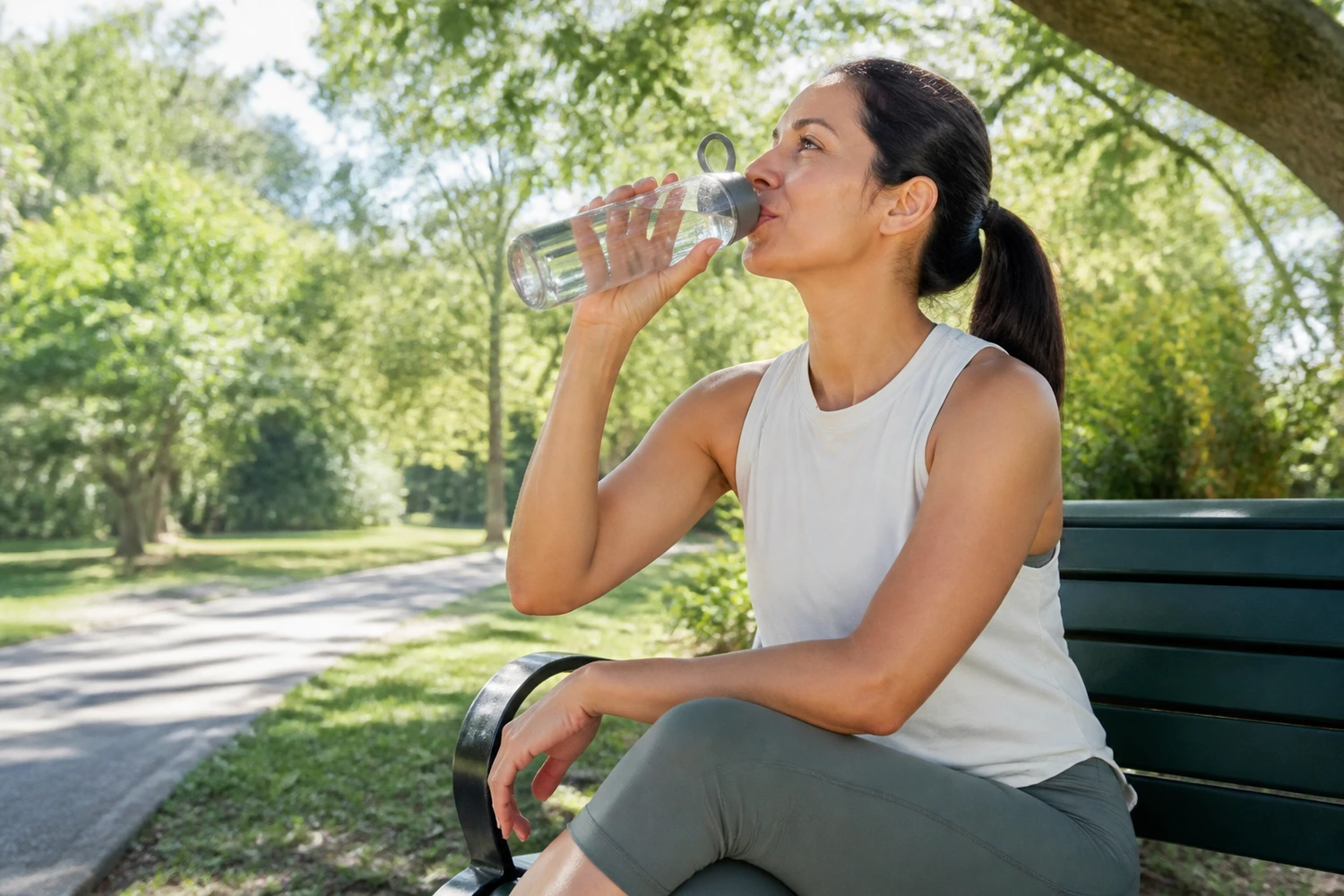
General health education from our editorial team. Read our editorial policy.
About This Guide
A quick change on the scale does not tell you how much body fat has changed. Water, food in the digestive system and normal variation can move the number over a short period. Understanding water weight vs body fat helps you avoid reacting to every reading with another diet rule. It also matters to recognize when a new weight change or swelling needs medical attention rather than a fitness explanation.
The scale measures total mass, not a diagnosis
A home scale adds together everything being weighed. It does not separate fat tissue, muscle, body water, food, drink and clothing. Drinking a glass of water or eating dinner adds mass before the body processes it; that immediate change is not a measurement of new body fat. Equally, a lower reading after sweating does not demonstrate a corresponding reduction in fat.
Some scales display estimated body-fat percentages using an electrical measurement and an algorithm. Those estimates are affected by conditions including hydration and should not be used to label every overnight change as fat or muscle. Use the device’s instructions and recognize its limits. A number that looks precise can still be an estimate, especially when the conditions differ between readings.
Why body water changes without a new fat-loss result
The body continually takes in and loses fluid. Drinks and food, sweating, urine, illness and exercise all affect that balance. A hot walk followed by drinking is not the same measurement setting as a cool morning before breakfast. Short-term changes can have several contributors at once, so the scale alone cannot identify which one accounts for the difference.
Carbohydrate stored as glycogen is associated with water, which helps explain some early changes when carbohydrate intake changes substantially. The Endotext discussion of dietary treatment and body-weight change describes water changes accompanying losses of glycogen and protein. This physiology does not make carbohydrates a problem to eliminate, nor does it turn an early scale drop into proof of continuing fat loss at the same rate.
Interpret a salty meal in context
Sodium helps regulate fluid balance, and a change in sodium intake can affect water-related weight patterns. The FDA hypertension information explains that sodium attracts water. That does not let you calculate a person’s fluid retention from a restaurant meal or diagnose a medical problem from the following morning’s weight.
After an unusually salty meal, return to your ordinary suitable eating and drinking pattern instead of trying to “flush” the meal out. Compare packaged-food labels when choosing everyday options, and follow any individualized advice about sodium or fluid. Abruptly removing food groups, forcing water or taking a potassium supplement creates a different health decision and should not be an improvised response to a scale reading.
Look at the circumstances before drawing a conclusion
Timing, clothing and a different scale can explain part of an apparent change. So can weighing before versus after a meal, a bowel movement or a training session. Menstrual-cycle changes and certain medicines may also affect fluid patterns. Several of these influences can overlap, which is why a single number provides so little information about its cause.
Write down relevant context only if weighing is useful for you. An ordinary note such as “travel day, later meal, different scale” is enough; you do not need to monitor every sensation. Avoid inventing a precise explanation for a change simply because it follows one unusual event. If a medicine or a health condition might be involved, ask your clinician rather than changing treatment yourself.
Compare similar conditions and a broader pattern
If you choose to weigh, use the same scale on a firm level surface and broadly similar conditions. A comparable morning routine can be easier to repeat than measurements scattered across a busy day. Do not weigh repeatedly to find the lowest number. A pattern over time is more informative than comparing the lightest reading from one day with the heaviest from another.
There is no need for everyone to use a scale, and weighing more often is not always more helpful. If it encourages food restriction, fluid avoidance, anxiety or repeated checking, pause that approach and seek appropriate support. Our safe weight-loss guide includes wider health habits, and our weight-loss plateau guide addresses sustained progress rather than a single fluctuation.
Why a three-day water-weight challenge is the wrong response
A short deadline invites people to change the number rather than understand it. Dehydration, deliberate sweating, laxatives and unsupervised diuretics do not establish lasting body-fat loss and can cause harm. Avoid changing prescribed medicines or using a product marketed as a water-loss shortcut. The fact that a scale moves quickly is not evidence that the method improved health.
A sensible next step is often less dramatic: keep regular meals, drink appropriately for your circumstances, use manageable activity and review what the pattern shows. Our hydration guide explains why forcing extra water is also not the answer. A temporary reading does not create a debt to repay with a harder workout or a missed meal.
Separate visible swelling from an ordinary scale fluctuation
Swelling is not a body-composition calculation. New puffiness or an enlarged ankle, leg, face or abdomen may need assessment, particularly when you do not know the cause. NHS guidance on swelling describes several possible causes and distinguishes persistent swelling from symptoms needing urgent help. A home scale cannot tell you whether a new swelling pattern is harmless.
Seek prompt medical advice for unexplained one-sided leg swelling, swelling that is sudden, severe, painful, hot or red, or swelling that keeps worsening. If swelling occurs with chest pain, difficulty breathing, coughing blood, faintness or serious illness, seek emergency care. These examples are not a complete list. Pregnancy and the postpartum period also have specific warning signs; follow maternity advice rather than assuming every change is normal fluid retention.
Follow existing medical plans when fluid changes are expected
Some people have instructions to monitor weight because of a heart, kidney or other condition. That is different from weighing for a general fitness goal. Use the thresholds and contact plan your care team provided, including when to call about a rapid change. Do not substitute a website’s idea of a normal fluctuation for those instructions.
If you think a medicine is causing swelling, tell the prescriber or pharmacist. MedlinePlus guidance on leg and ankle swelling advises against stopping medicines on your own. Bring a useful description: when the change started, whether one or both sides are affected, any pain or breathing change, and the medicines you take. Do not delay urgent help while collecting a detailed weight log.
Choose a next step that matches the actual concern
For an isolated reading without symptoms, check whether conditions were comparable and avoid a drastic response. For a repeated pattern you cannot explain, arrange a discussion with a healthcare professional. For swelling or urgent symptoms, the symptom determines the action; waiting for another scale reading is not a useful test. These choices address different situations rather than treating all weight changes as one issue.
Keep the wider goal visible. Comfortable movement, adequate food, appropriate hydration and following treatment advice matter even when the scale is less predictable than you expected. A meaningful body-composition change is assessed through a suitable longer-term approach, not by proving that water can be removed quickly. This article explains interpretation; it cannot determine the composition or cause of a specific person’s weight change.
Frequently Asked Questions
Not from a scale reading alone. Water, food, timing and other factors can contribute to short-term change. Use comparable conditions and a broader pattern if weighing is useful, and seek advice for unexplained change or accompanying symptoms.
A lower reading immediately after sweating can reflect fluid loss. Rehydration can restore that mass without reversing a body-fat change. Do not restrict fluid or deliberately overheat to obtain a smaller number.
Do not force water as a way to change the scale. Follow hydration advice appropriate to your health, especially if you have a prescribed fluid limit. Unexplained swelling or rapid changes may need assessment rather than a change in drinking volume.
New unexplained one-sided, sudden, severe, painful, hot or red swelling needs prompt advice. Swelling with chest pain, difficulty breathing, coughing blood or faintness can be an emergency. Use your local emergency service for serious symptoms and follow any condition-specific care plan.
Sources and Further Reading
- Endotext: Dietary treatment of obesity
- FDA: High blood pressure information
- NHS: Swollen ankles, feet and legs
- MedlinePlus: Foot, leg and ankle swelling
Prepared by the Best Fitness Routine Editorial Team. Sources checked November 4, 2026. This article provides general education and has not received individual clinical review. The image is an AI-generated editorial illustration. Follow qualified professional advice for your individual health needs.