Published by Best Fitness Routine. Editorial standards · Report a correction. Educational guidance; no individual clinical review is claimed unless a qualified reviewer is named.
Choose movement for comfort and control
Third trimester exercises often work best when they are easy to adjust and do not depend on moving quickly between positions. A growing abdomen, changing balance, interrupted sleep, and the effort of daily tasks can all affect the session. Begin by asking what feels comfortable today and what your prenatal care team has advised. A routine that fit earlier in pregnancy may need a shorter duration, more support, or a different setting now.
This stage does not require a workout designed to prove endurance before childbirth. Useful goals may include maintaining comfortable movement, taking a break from sitting, and keeping a manageable activity habit. Exercise cannot guarantee a particular labor experience or delivery outcome. Choose the plan because its movements and practical demands fit your situation, rather than because a video promises to prepare every body for the same birth experience.
Make the room easier to navigate
Before starting, consider the entire route through the space. Leave a clear path from the doorway to your support and resting place. Avoid stepping over weights, moving around a loose mat, or reaching behind a chair for water. If you are using furniture, check that it will stay in place when you put a hand on it. A rolling office chair or a lightweight object that shifts is not reliable support for an exercise.
Keep the setup small enough that you can put it away without an additional strenuous task. A exercise mat (paid link) may be useful for a comfortable supported position, but you do not need floor work in every session. Position it so the edge cannot catch a foot during standing movement. If getting down or up feels awkward, choose an upright option or ask for help adapting the plan. The transition itself belongs in the assessment of whether the session fits.
Shorten walking routes before tiredness becomes a problem
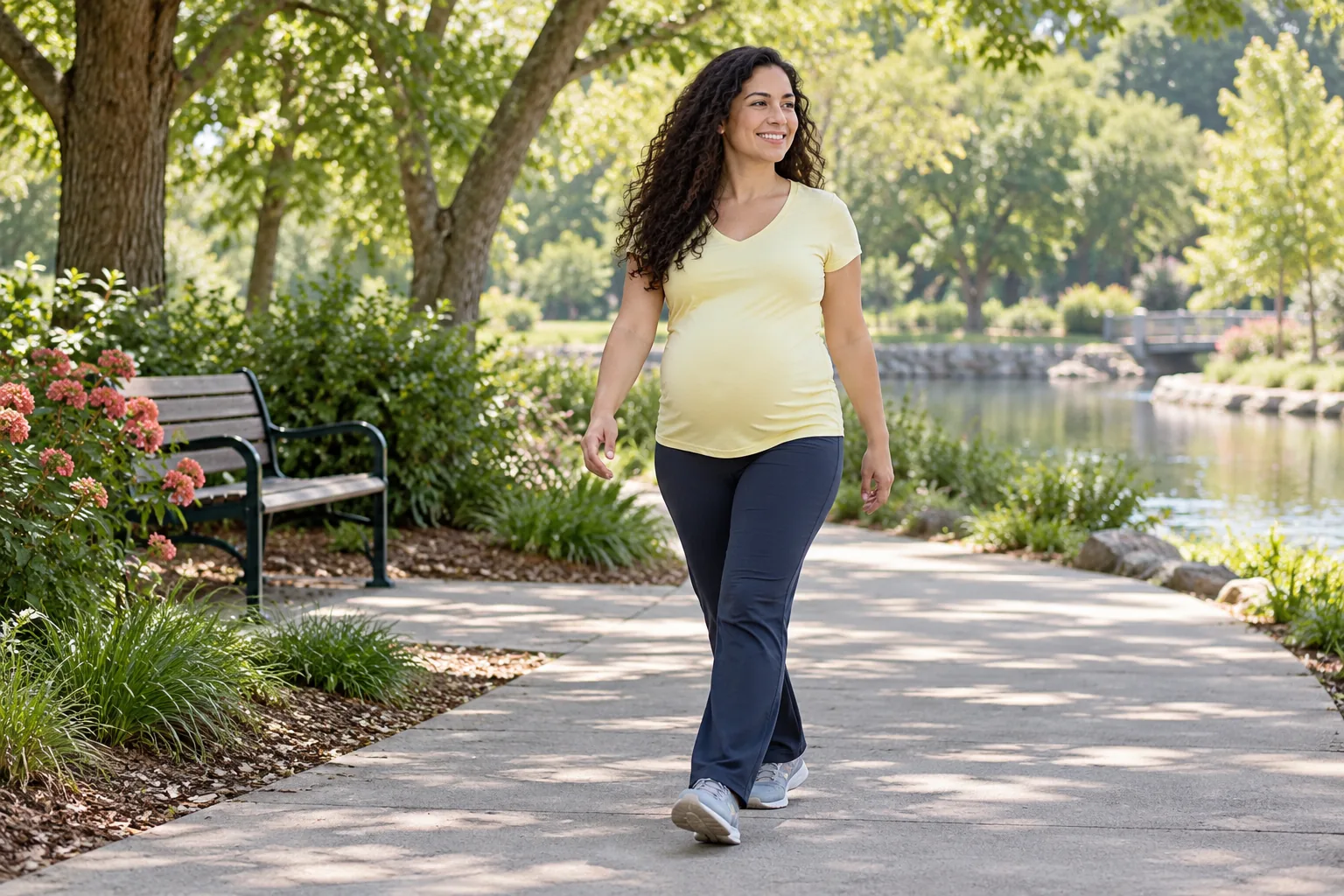
Try a level route with a nearby bench, restroom access where practical, and a convenient place to stop. A shorter loop can be repeated if you feel comfortable; a long route cannot always be shortened once you are far from home. Consider shade, surface condition, and the time of day. The route that feels manageable on a mild morning may be a poor choice in afternoon heat or when your energy is lower.
Walk at an effort that lets you talk comfortably and avoid rushing to maintain an old pace. If the walk creates pain, pelvic pressure, or symptoms that continue afterward, pause the plan and discuss them with your care team. A slower pace may help with effort, but it does not solve every cause of discomfort. An alternative activity or a more specific assessment may be needed, especially when ordinary walking has become repeatedly painful.
Use support for approved standing movements
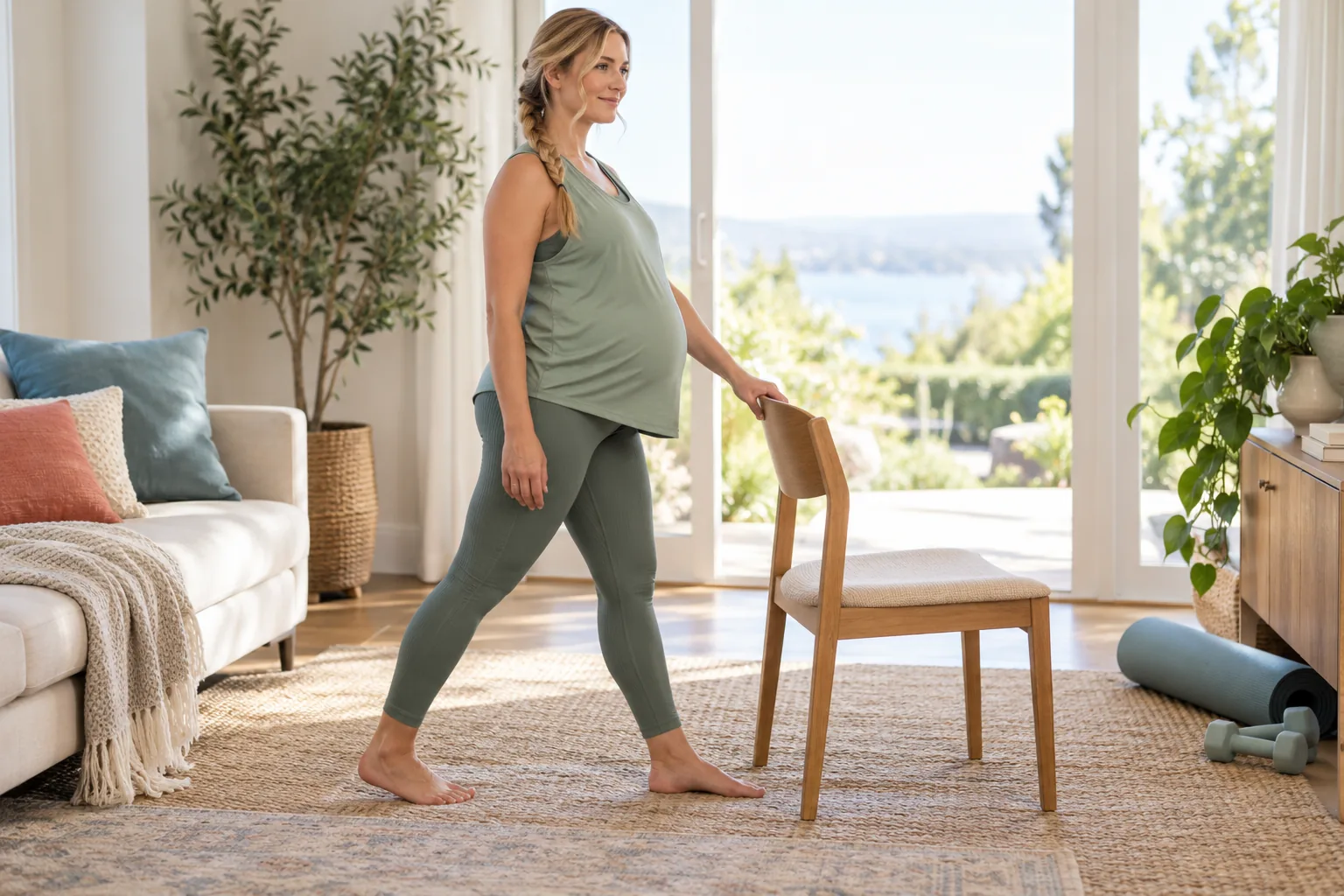
Standing work can reduce the need for floor transitions, but balance still matters. For a clinician-approved movement, a stable chair or counter can give you a place to rest a hand. Examples to discuss include small comfortable weight shifts or a supported rise from a chair. Begin in a position where your feet feel secure and where the support is within reach without leaning far forward or twisting to find it.
Keep the range small enough to remain controlled. Avoid turning a supported movement into a deep stretch or a balance test. You should not need to hold your breath or pull hard on the support to finish. If the exercise feels uncertain, stop and ask for another option. There is no rule that a movement needs to look impressive to be useful, and no requirement to repeat an exercise that feels less comfortable as pregnancy progresses.
Reduce repeated position changes
A sequence that alternates standing, kneeling, and floor positions can become tiring even if each exercise seems gentle. Group compatible activities together, allow unhurried transitions, or replace the floor portion with an appropriate seated version. Do not try to catch up with a video while also figuring out how to move safely. Pausing the video is a normal part of adapting it; the instructor's pace is not an obligation.
Avoid prolonged flat-on-your-back exercise later in pregnancy and ask about position choices when you are unsure. If any position makes you dizzy, nauseated, or short of breath, change it and contact your care team when symptoms warrant advice. Do not continue an uncomfortable posture because it is described as a recovery position. Comfort, symptoms, and your clinician's instructions matter more than the label attached to a pose or exercise.
Keep stretching comfortable rather than maximal
An easy movement through a comfortable range can feel different from trying to create the largest possible stretch. Move slowly and avoid bouncing, forced end positions, or using your body weight to press deeper. A range that was familiar before pregnancy may not be the best target now. If you feel pelvic or joint pain, reducing the stretch is a sensible first response, and persistent symptoms should be discussed rather than repeatedly challenged.
Choose a position you can leave easily. A seated shoulder movement or a gentle supported upper-back motion may be simpler to organize than a deep floor stretch. Keep breathing and leave room around the abdomen. The point is to find an appropriate movement for the purpose, not to complete a catalog of flexibility exercises. A pregnancy-informed instructor can help distinguish a useful modification from a position that should be replaced entirely in your circumstances.
Plan fluids and cooling before the session
Use a cooler indoor room or a mild outdoor time whenever you can. Late-pregnancy activity should not become an exercise in tolerating heat. If a session feels warmer than expected, shorten it, reduce effort, or move to a more comfortable setting. Clothing, airflow, direct sun, and the pace of the activity all affect the experience. A fan may be helpful, but equipment should not be used to justify continuing in conditions that feel unsuitable.
Put a water bottle (paid link) beside your resting place and keep it easy to open. If you are going out, check where you can drink and turn back rather than assuming the route has services. Take normal opportunities to drink and follow any personal medical guidance. Fluid access is one part of preparation. Persistent lightheadedness, inability to keep fluids down, or feeling unwell calls for a change of plan and, when appropriate, clinical advice.
Build an easier version into every plan
Write a main option and a reduced option for the day. A planned walk might have a shorter loop ready; a home session might have one upright movement instead of several floor transitions. You can choose the reduced version before starting rather than waiting until you feel overwhelmed. Making that decision early can leave enough capacity for ordinary tasks and recovery later in the day, which matters as much as finishing the session itself.
Avoid using a weekly streak as a reason to continue when you need rest. Missed sessions do not create an exercise debt. If work, appointments, and sleep disruption make the routine difficult, review the arrangement instead of blaming your motivation. A practical late-pregnancy plan may use several brief opportunities on some days and no planned workout on others. Its value comes from fit and adaptability, not from making every day look the same.
Take useful observations to prenatal visits
A training journal (paid link) can hold a brief note about the activity, the support used, and any symptoms during or afterward. Record the information you would want to explain at an appointment, such as discomfort on a hill, dizziness in a particular position, or difficulty getting off the floor. Avoid tracking simply to measure whether you are doing more than last week. The record is useful when it helps your care team answer a specific question.
Ask which activities remain appropriate as your circumstances change, and what symptoms should lead you to call before the next visit. Bring up persistent pain or unusual fatigue even if you have already reduced the workout. Do not wait for a general exercise article to provide a diagnosis. The best third-trimester routine can change several times. Keeping the communication clear is part of making those changes thoughtfully rather than forcing an earlier plan to continue.
Practical Options at a Glance
| Situation | Practical option | What to consider |
|---|---|---|
| Long route feels demanding | Use a short loop with somewhere to sit | Do not walk farther just to meet an old target. |
| Uncomfortable transition | Choose an approved standing option | The way into an exercise also matters. |
| Frequent fatigue | Leave space for rest between activities | Errands and household activity affect total demand. |
Frequently Asked Questions
Shorten the route, choose a level surface and discuss persistent discomfort with your maternity team. You may need a different activity or more rest rather than a faster walking pace. Do not keep extending the route simply because it was comfortable earlier in pregnancy; your current response matters more.
This guide does not recommend exercise as a way to induce labor or promise a particular delivery. The purpose is comfortable everyday activity within your prenatal advice. Questions about labor, changes in fetal movement or other pregnancy concerns belong with your maternity care team, even if they arise during a walk.
Brief opportunities may fit better when transitions, fatigue or changing comfort make a longer session difficult. Treat each opportunity as optional and consider your total day, including errands and other activity. Splitting a workout is helpful only if it reduces strain; it should not become a reason to keep adding extra sessions.
Safety and Personal Needs
Discuss exercise with your prenatal care team and follow any individual restrictions. Stop activity and get medical help for concerning pregnancy symptoms. Chest pain, difficulty breathing, fainting, severe headache, vaginal bleeding or fluid leakage need urgent assessment; this is not an exhaustive list. Do not use an exercise modification to delay care.
This is general educational information. Pregnancy and postpartum recovery vary with health, delivery, healing and symptoms. This guide does not replace individualized maternity or physical therapy care.
Sources and Further Reading
- ACOG: Exercise During Pregnancy
- CDC: Physical Activity for Healthy Pregnant or Postpartum Women
- NHS: Exercise in Pregnancy
- CDC: Urgent Maternal Warning Signs