
Published by Best Fitness Routine. Editorial standards · Report a correction. Educational guidance; no individual clinical review is claimed unless a qualified reviewer is named.
Overview
Shingles is caused by reactivation of the varicella-zoster virus, the same virus that causes chickenpox. It often begins with pain, burning, tingling or itching before a one-sided blistering rash appears. Risk increases with age and weakened immunity, and prompt assessment is especially important when the face or eye is involved.
Early Symptoms Before the Rash
Some people feel pain, tingling, itching or unusual skin sensitivity for several days before the rash appears. Fever or headache can occur. The rash usually develops in a band on one side of the body or face rather than crossing widely to both sides.
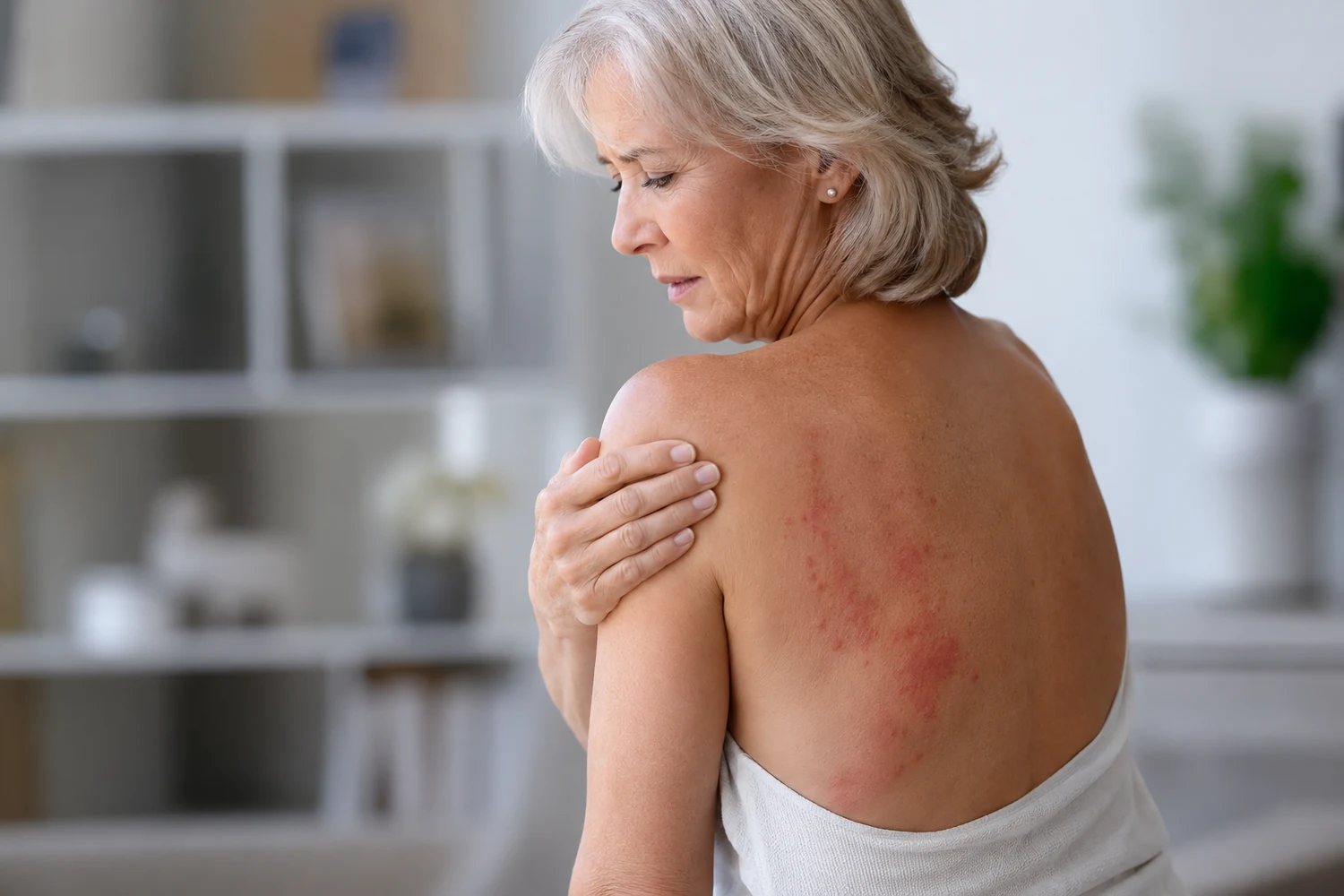
What the Shingles Rash Looks Like
The rash forms groups of fluid-filled blisters that usually crust over. Because many rashes look similar, photos online cannot reliably diagnose shingles. A clinician can assess the distribution, timing and other symptoms.
Who Has a Higher Risk?
Shingles becomes more common with age. Risk is also higher when the immune system is weakened by disease or treatments. Stress can affect well-being, but shingles is not simply caused by “being stressed.”
For general immune-support habits, focus on sleep, nutrition, activity and preventive care rather than unproven “immune boosters.” See healthy habits that last.
Why Early Medical Assessment Matters
Antiviral medicines are most useful when started promptly, so contact a clinician when shingles is suspected. Pain management varies with age, severity, other medicines and kidney function. Do not apply harsh home remedies to open blisters.
Use the medication safety guide to keep prescriptions and over-the-counter products organized.
Postherpetic Neuralgia and Other Complications
Long-lasting nerve pain after the rash is the most common complication. Shingles around the eye can threaten vision, and shingles affecting the ear or facial nerves can cause hearing or facial movement problems. Widespread rash is more concerning in people with weakened immunity.
Can You Give Shingles to Someone Else?
A person with shingles cannot directly give another person “shingles,” but fluid from the blisters can transmit the varicella-zoster virus to someone who has never had chickenpox or vaccination, causing chickenpox. Cover the rash, avoid scratching, wash hands and follow medical advice about contact precautions until lesions crust.
Shingles Vaccination
Vaccination is the main prevention strategy. In the United States, CDC recommends a two-dose recombinant shingles vaccine for adults age 50 and older and for adults age 19 and older with weakened immune systems due to disease or therapy. Recommendations vary by country, so use your local immunization schedule.
Our preventive health checkup guide can help you review vaccines alongside other age-based care.
Rest During Acute Illness, Then Return Gradually
There is no exercise that treats shingles. If you have fever, significant pain or feel unwell, rest and follow medical advice. Once symptoms improve, return to normal activity gradually while protecting irritated skin from friction.
When Shingles Needs Urgent Care
Seek prompt care for a rash near the eye, vision changes, facial weakness, ear symptoms, severe headache, confusion, widespread rash, pregnancy with exposure concerns, or shingles in a person with significant immune suppression. Severe weakness or signs of serious infection require urgent assessment.
What to Track Before You Seek Care
Keep the record short and decision-focused. Note when symptoms started, how often they occur, what makes them better or worse, new medicines or supplements, relevant medical conditions and any effect on sleep, work, exercise or daily function. Bring photos or home measurements only when they are relevant and reliable.
A two-week log can be useful for stable symptoms, but do not delay care to complete a diary when symptoms are severe or worsening.
Questions for Your Next Health Visit
- What diagnosis best explains this symptom pattern?
- Which tests are useful, and which are unnecessary?
- What can I safely do at home while we monitor it?
- What change would mean I should contact you sooner?
- Could any medicine, supplement or other condition be contributing?
Health information changes as evidence improves. When a claim promises a guaranteed cure, rapid fix or universal answer, compare it with guidance from major medical organizations and ask how the recommendation applies to your situation.
- “You can catch shingles directly from another person.” False—you can acquire varicella-zoster virus and develop chickenpox if susceptible.
- “Once you have shingles, it can never return.” False—recurrence is possible.
- “Exercise or supplements can clear the virus.” False—antiviral treatment and medical care are the evidence-based approach when indicated.
Common Myths and Better Context
Pick one or two meaningful outcomes instead of tracking every possible symptom. Good monitoring should reduce uncertainty and support decisions; it should not create compulsive checking or delay care.
The rash should gradually crust and heal, but nerve pain may last longer. Persistent pain after the skin clears is not a failure of willpower and deserves treatment. The goal is to reduce acute complications, protect vulnerable contacts and manage pain enough to maintain sleep and daily function.
How to Judge Progress
Individual risk can also change with pregnancy, age, recent surgery, immune status and access to follow-up care. When several factors apply at once, use professional advice rather than combining several internet remedies. For routine follow-up, use a symptom journal (paid link) to organize dated observations for your care team.
People with weakened immunity, adults with a rash on the face, pregnant people with exposure concerns, and anyone with severe neurologic symptoms need more urgent individualized care. Age matters because the risk of postherpetic neuralgia rises as people get older.
Who Needs Extra Care
At the end of the week, keep the steps that are useful and easy to repeat. If symptoms are worsening, skip the experiment and contact a clinician sooner. A health appointment notebook (paid link) can keep your questions and routine observations together for a planned visit.
- Contact a clinician early when shingles is suspected
- Keep lesions clean, dry and covered as advised
- Use prescribed antivirals and pain treatment exactly as directed
- Review contact precautions until lesions have crusted
- Check your local shingles-vaccine recommendation after recovery or as part of preventive care
Use a short plan to organize the next step without trying to solve everything in one day. This is not a treatment prescription; it is a way to collect useful information and make safer decisions.
A Practical One-Week Plan
- Waiting several days to seek help when a painful one-sided rash appears near the eye
- Scratching or deliberately opening blisters
- Using someone else’s antiviral medicine
- Assuming previous shingles means vaccination is never needed
- Exposing susceptible pregnant or immunocompromised people to uncovered active lesions
Most problems become harder to manage when a reasonable self-care step turns into an extreme rule. Avoid these common mistakes:
Common Mistakes to Avoid
During recovery, prioritize sleep, adequate nutrition, hydration and gentle activity as tolerated. There is no need for a special detox or restrictive diet. The goal is to recover while protecting the rash from friction and avoiding transmission of blister fluid to susceptible contacts.
How This Fits Into a Healthy Lifestyle
Most shingles rashes heal over several weeks, but nerve pain can persist after the skin clears. Follow-up is important when pain disrupts sleep or daily activity. Prevention after recovery includes reviewing vaccination eligibility according to your country’s schedule and your immune status. For scheduled care, an optional medical-record organizer (paid link) can keep reports and appointment notes together.
Long-Term Outlook
At the first visit, report exactly when pain or tingling began and when the rash appeared. Mention whether lesions involve the face, eye or ear, whether you are immunocompromised, and which medicines suppress immunity. Early timing matters because antiviral treatment is most useful when started promptly.
How to Prepare for an Appointment
Frequently Asked Questions
Yes. Having shingles does not guarantee that it will never recur.
The blister fluid can spread varicella-zoster virus to a susceptible person, causing chickenpox rather than shingles.
Blisters often crust within about 7 to 10 days and the rash may clear over 2 to 4 weeks, although pain can last longer.
Recommendations differ by country. In the United States, CDC recommends it for adults 50 and older and certain immunocompromised adults 19 and older.
Eye involvement can threaten vision and needs prompt medical treatment.
Safety and Scope
A shingles-like rash near the eye, facial weakness, hearing changes, widespread lesions, severe headache, confusion or significant immune suppression requires prompt medical care. This guide does not replace antiviral treatment or vaccination advice from a clinician.