
Published by Best Fitness Routine. Editorial standards · Report a correction. Educational guidance; no individual clinical review is claimed unless a qualified reviewer is named.
Overview
Sciatica describes symptoms from irritation or compression involving the sciatic nerve roots, not a single disease. Pain may travel from the lower back or buttock down one leg with tingling, numbness or weakness. Most cases improve without surgery, but exercise must match the cause and direction of symptoms. Progressive weakness or loss of bladder or bowel control requires emergency attention.
Sciatica: Recognize the Symptom Pattern
Sciatic pain commonly follows a narrow path down one side and may worsen with sitting, coughing or particular spinal positions. Back pain without leg symptoms, hip disease and peripheral nerve problems can feel different, so location and neurological changes matter. For sciatica, also consider prescribed care, age, pregnancy, access and usual function. Connect sciatica: recognize the symptom pattern with a clear follow-up date and a specific clinical question.
For a practical next step, use the low-back-pain movement guide, then write down the result and any question it creates for the care team. In a sciatica plan, note timing, tolerance and the effect on daily life. Keep the step realistic for this back and nerve health topic. Symptoms alone cannot confirm the diagnosis.
Sciatica: Get the Right Medical Assessment
Assessment includes strength, reflexes, sensation, walking and movements that reproduce or ease symptoms. Imaging is not required for every early uncomplicated case, but it may be needed for severe, progressive, traumatic or persistent problems. For sciatica, also consider prescribed care, age, pregnancy, access and usual function. Connect sciatica: get the right medical assessment with a clear follow-up date and a specific clinical question.
Prepare for the appointment with the chronic pain self-management guide, then write down the result and any question it creates for the care team. In a sciatica plan, note timing, tolerance and the effect on daily life. Keep the step realistic for this back and nerve health topic. Testing should answer a clinical question rather than be ordered from fear.
Sciatica: Use Practical Daily Support
Avoid prolonged bed rest. Change position regularly, use short walks or comfortable lying positions and return gradually to ordinary tasks. Heat or cold may help comfort, but skin protection and time limits prevent burns or injury. For sciatica, also consider prescribed care, age, pregnancy, access and usual function. Connect sciatica: use practical daily support with a clear follow-up date and a specific clinical question.
Build the daily routine around the walking for health guide, then write down the result and any question it creates for the care team. In a sciatica plan, note timing, tolerance and the effect on daily life. Keep the step realistic for this back and nerve health topic. Change one variable at a time so benefit and side effects remain clear.
Sciatica: Understand Medicines and Procedures
Pain relievers, physical therapy, injections or surgery may be considered according to the cause, duration, weakness and functional loss. Medicines have stomach, kidney, sedation and interaction risks; stronger treatment is not automatically better. For sciatica, also consider prescribed care, age, pregnancy, access and usual function. Connect sciatica: understand medicines and procedures with a clear follow-up date and a specific clinical question.
Keep treatment decisions organized with the strength training guide, then write down the result and any question it creates for the care team. In a sciatica plan, note timing, tolerance and the effect on daily life. Keep the step realistic for this back and nerve health topic. Do not start, stop, borrow or change prescribed treatment without professional advice.
Sciatica: Reduce Repeat Problems and Flares
Lift close to the body, vary sitting, build hip and trunk capacity and address work demands without blaming posture alone. A flare plan should include an easier activity option and a timeline for reassessment rather than complete avoidance. For sciatica, also consider prescribed care, age, pregnancy, access and usual function. Connect sciatica: reduce repeat problems and flares with a clear follow-up date and a specific clinical question. A health appointment notebook (paid link) can keep your questions and routine observations together for a planned visit.
Choose one realistic prevention step, define when it will happen and review whether it is sustainable after two weeks. In a sciatica plan, note timing, tolerance and the effect on daily life. Keep the step realistic for this back and nerve health topic. Prevention lowers risk but cannot guarantee that symptoms will not return.
Sciatica: Move Safely When Activity Helps
Gentle walking, directional movements and trunk or hip strengthening can help when they centralize pain or improve function. Stop an exercise that sends symptoms farther down the leg, increases numbness or causes new weakness. For sciatica, also consider prescribed care, age, pregnancy, access and usual function. Connect sciatica: move safely when activity helps with a clear follow-up date and a specific clinical question.
Use short, comfortable bouts and progress only after symptoms, balance and next-day recovery remain stable. In a sciatica plan, note timing, tolerance and the effect on daily life. Keep the step realistic for this back and nerve health topic. Exercise should improve function without causing a meaningful flare later that day or the next.
Sciatica: Know When to Seek Urgent Care
New bladder retention or incontinence, bowel control loss, numbness around the saddle area or rapidly worsening leg weakness may indicate cauda equina syndrome. Major trauma, fever, cancer history or unexplained weight loss also changes urgency. For sciatica, also consider prescribed care, age, pregnancy, access and usual function. Connect sciatica: know when to seek urgent care with a clear follow-up date and a specific clinical question.
Keep emergency numbers, allergies, medicines and the nearest appropriate care option easy to find. In a sciatica plan, note timing, tolerance and the effect on daily life. Keep the step realistic for this back and nerve health topic. Emergency symptoms should never wait for an online self-care plan.
How Clinicians Assess Back and Nerve Health
A clinician may assess pain distribution, strength, reflexes, sensation, gait, hip movement, pulses and bowel or bladder symptoms. Imaging and electrodiagnostic testing are selected when they are likely to change management. For sciatica, the examination and history decide which result matters. A single symptom, home reading or online score cannot replace that clinical context.
Bring the timeline for sciatica: recognize the symptom pattern, notes from sciatica: get the right medical assessment and any response to sciatica: understand medicines and procedures. Ask what each test can show, what it cannot show and how the result changes the sciatica plan.
- When sciatica symptoms or concerns began
- How sciatica: recognize the symptom pattern affects work, sleep or self-care
- Previous results, medicines and responses related to back and nerve health
- Who owns the next sciatica follow-up and when it is due
Build a Two-Week Back and Nerve Health Care Plan
Start with one step from sciatica: use practical daily support and one boundary from sciatica: know when to seek urgent care. For sciatica, an easier backup action keeps the plan usable on difficult days. The purpose is to support professional care, not to treat the condition alone.
During week two, review benefit, burden and unwanted effects before adding effort. Link sciatica: reduce repeat problems and flares with a repeatable routine. A responsible sciatica plan states what is safe to try, what needs advice and what requires urgent help.
- Days 1–3: establish the sciatica baseline
- Days 4–7: test one step from sciatica: use practical daily support
- Days 8–11: review tolerance during sciatica: move safely when activity helps
- Days 12–14: summarize results for the back and nerve health visit
What to Track for Sciatica
Record which positions move pain toward or away from the foot, walking tolerance, numbness, sleep disruption, medicine response and any change in strength or bladder and bowel function. Keep the sciatica record short enough to maintain. Add timing and context only when they help answer a decision. For routine follow-up, use a symptom journal (paid link) to organize dated observations for your care team.
Review the log at a planned interval. Use it to connect sciatica: recognize the symptom pattern with sciatica: understand medicines and procedures and sciatica: move safely when activity helps. Simplify sciatica tracking if it creates panic, shame, compulsive checking or avoidance.
Questions for a Back and Nerve Health Visit
A focused question makes a short visit more useful. For sciatica, ask first about immediate safety, then expected benefit, uncertainty, alternatives and follow-up. Request plain-language written instructions when symptoms can change quickly.
- Which finding suggests the source of my symptoms?
- Which movements should improve or centralize pain?
- What new weakness or numbness should trigger urgent contact?
- When would imaging, physical therapy or specialist review change care?
Common Sciatica Mistakes to Avoid
Do not assume sciatica: recognize the symptom pattern proves sciatica. Do not change prescribed care while testing sciatica: use practical daily support. Do not delay follow-up connected with sciatica: know when to seek urgent care. For scheduled care, an optional medical-record organizer (paid link) can keep reports and appointment notes together.
Use the boundaries from sciatica: get the right medical assessment, sciatica: understand medicines and procedures and sciatica: move safely when activity helps. Online sciatica education can improve questions and organization, but it cannot examine a person or provide emergency treatment.
- Symptoms alone cannot confirm the diagnosis.
- Testing should answer a clinical question rather than be ordered from fear.
- Change one variable at a time so benefit and side effects remain clear.
- Do not start, stop, borrow or change prescribed treatment without professional advice.
- Prevention lowers risk but cannot guarantee that symptoms will not return.
- Exercise should improve function without causing a meaningful flare later that day or the next.
- Emergency symptoms should never wait for an online self-care plan.
A Gentle Sciatica Movement Menu
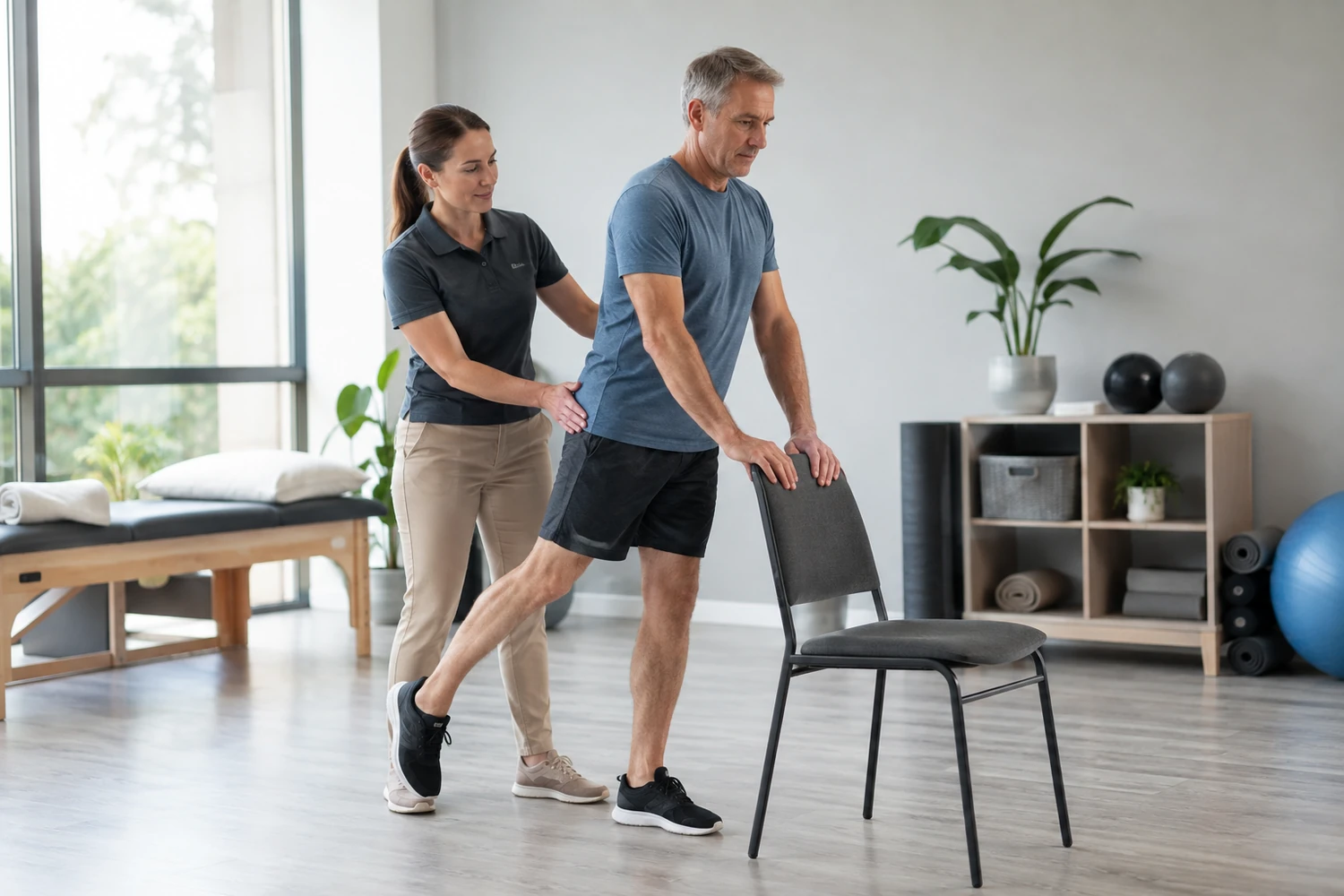
Begin with several short walks and one clinician- or therapist-approved directional movement. Add supported hip hinges, bridges or bird-dog variations only when symptoms remain stable or move out of the lower leg. For sciatica, match activity to current ability, warm up gradually and use support when symptoms or balance can change.
Stop if pain travels farther down the leg, numbness expands, the foot begins to drag or weakness appears. Avoid aggressive hamstring stretching and heavy twisting during an irritable phase. In a sciatica routine, increase duration before intensity and change one variable at a time. Same-day and next-day recovery are part of the result.
- Start below maximum effort for sciatica
- Use a talkable pace or a back and nerve health limit
- Keep suitable support, footwear and hydration nearby
- Review same-day and delayed sciatica symptoms
- Treat emergency symptoms as immediate stop signals
Frequently Asked Questions
It is a symptom pattern; a clinician looks for the condition affecting a nerve root or sciatic nerve.
Prolonged bed rest is generally not recommended; relative rest and gradual activity are usually more useful.
No. Imaging is reserved for red flags, significant deficits, persistent symptoms or when results would change treatment.
The best movement reduces or centralizes symptoms and improves function without new numbness or weakness.
New bladder or bowel dysfunction, saddle numbness or rapidly progressive weakness requires emergency evaluation.
Safety and Scope
This article cannot identify the cause of leg pain. Call emergency services for new bladder or bowel control loss, inability to urinate, saddle-area numbness or rapidly progressive weakness. Prompt evaluation is also needed after major trauma or with fever, cancer history, severe night pain or unexplained weight loss.