Published by Best Fitness Routine. Editorial standards · Report a correction. Educational guidance; no individual clinical review is claimed unless a qualified reviewer is named.
Compare a routine rather than a calorie contest
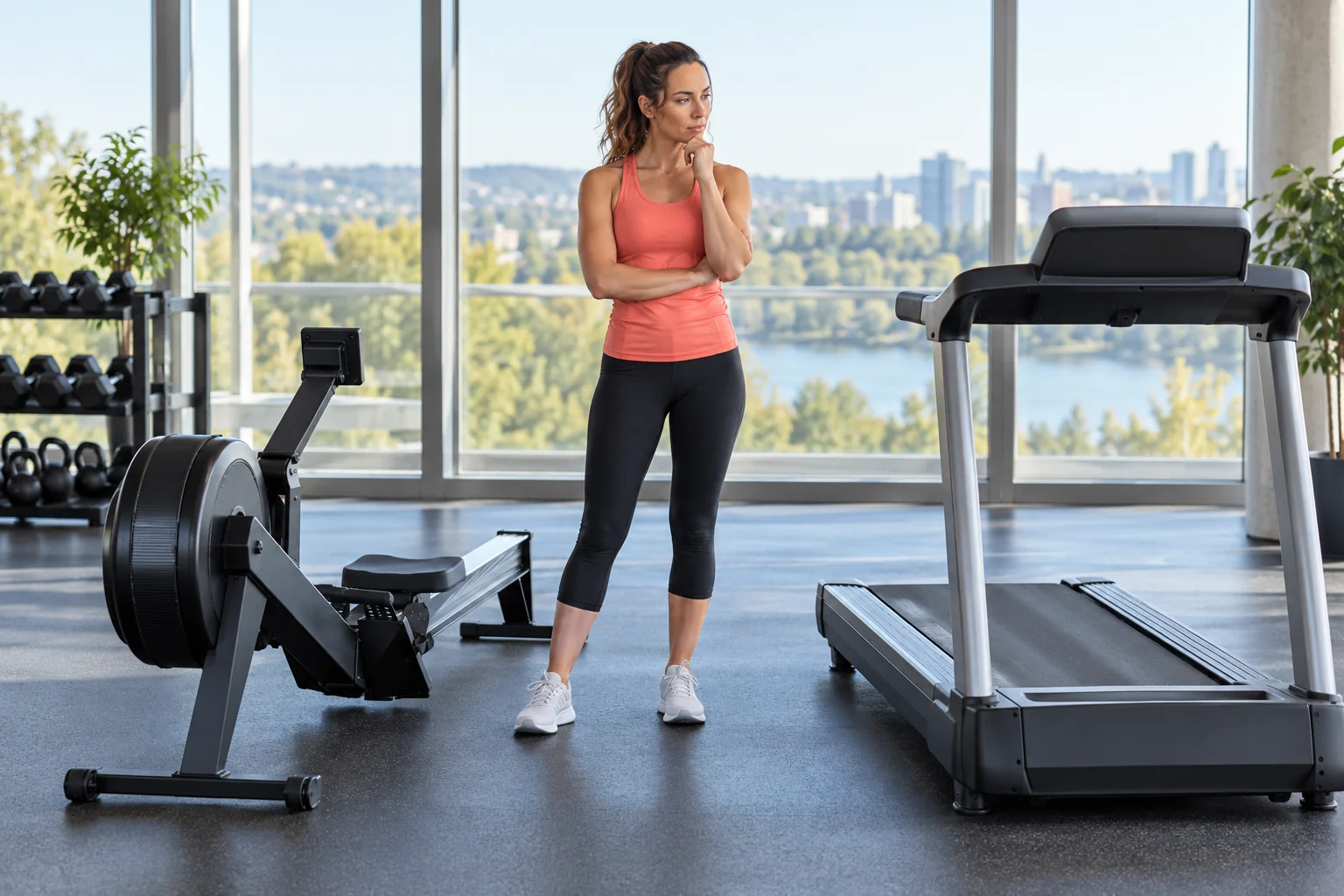
Rowing machine vs. treadmill is a useful comparison when you are choosing a gym routine or considering equipment for home. It becomes less useful when reduced to which machine always burns more calories. Effort, duration, body size, technique and the machine's calculation all influence the displayed estimate. A demanding row cannot fairly be compared with an easy walk and used to declare a winner. Begin with the activity you can perform comfortably and regularly at an appropriate level.
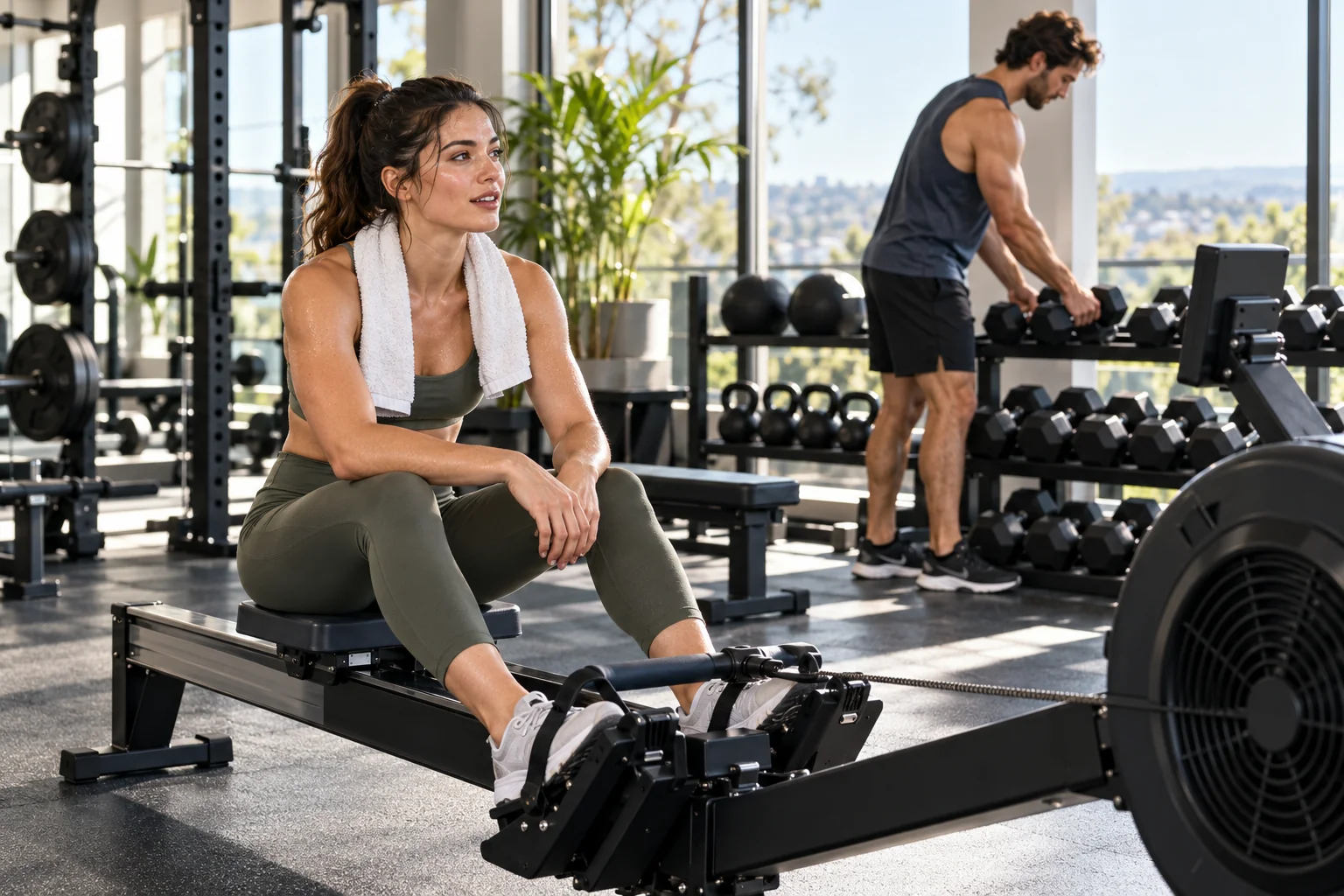
Both machines can support indoor aerobic activity, but they offer different experiences. A treadmill allows walking or running on a moving belt, while a rower uses a repeated seated stroke involving the legs, torso and arms. One may feel more natural, enjoyable or practical in your space. This guide compares those differences without assuming every person wants intense training. The decision can also be both machines, used for different sessions, rather than one permanent choice for every fitness goal.
Consider the skill you need to learn
Most people already know how to walk, although walking on a moving treadmill still requires care. Learn the start and stop controls, the emergency system and the manufacturer's instructions before changing speed. Running adds another level of demand and is not a necessary starting point. Set a pace that lets you stay centered on the belt. If you need to grip the rails continuously to manage it, reduce the demand and ask staff about a suitable setup.
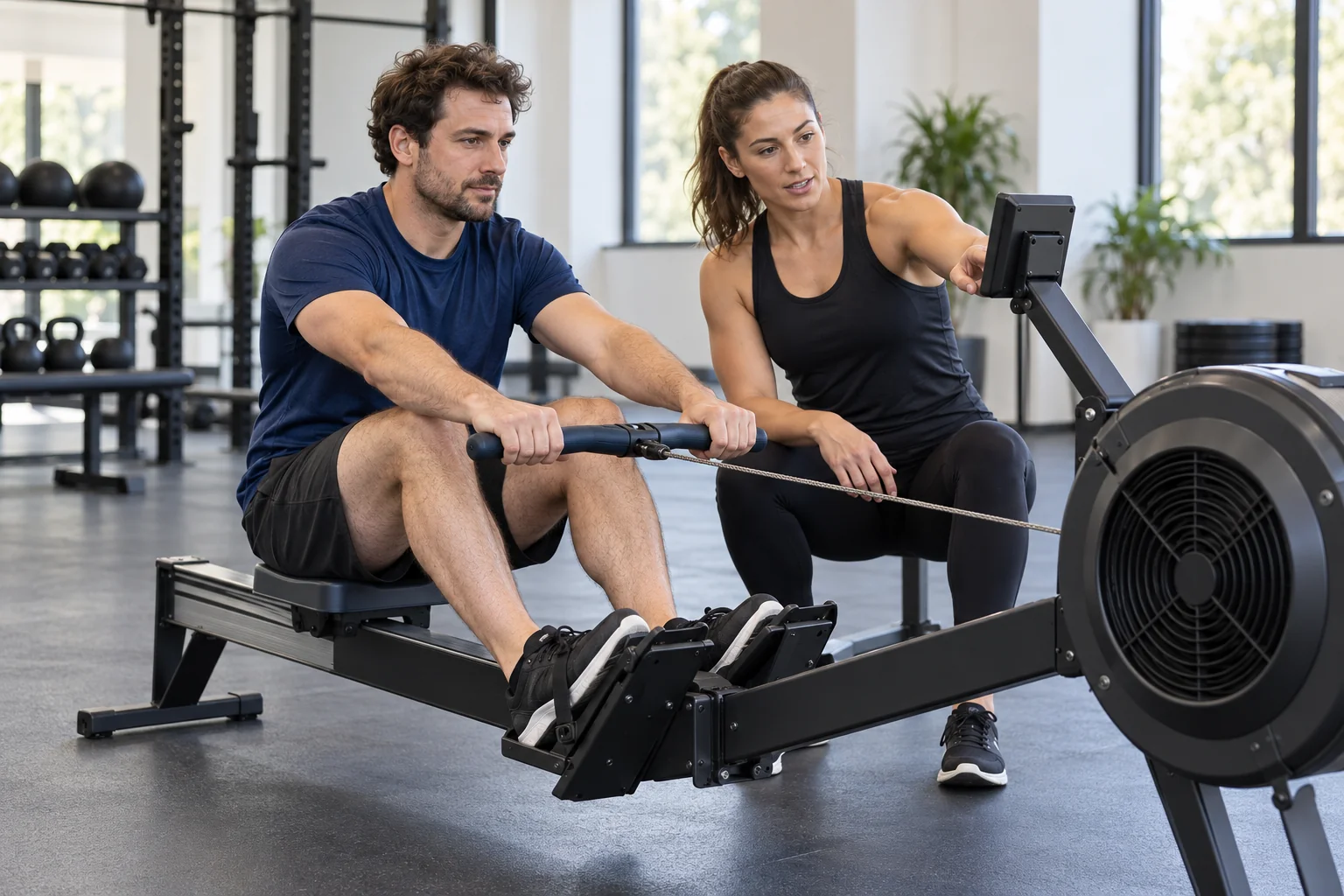
Rowing usually requires more deliberate practice at first. The moving seat, fixed feet and handle need to work together, and rushing the return can disrupt the stroke. Allow a few sessions to learn before judging the machine solely by a difficult first attempt. A coach's instruction may be worth more than an upgraded monitor. The learning period is not a reason to reject rowing, but it is a real part of the time and attention involved in choosing it.
Distinguish low impact from no physical demand
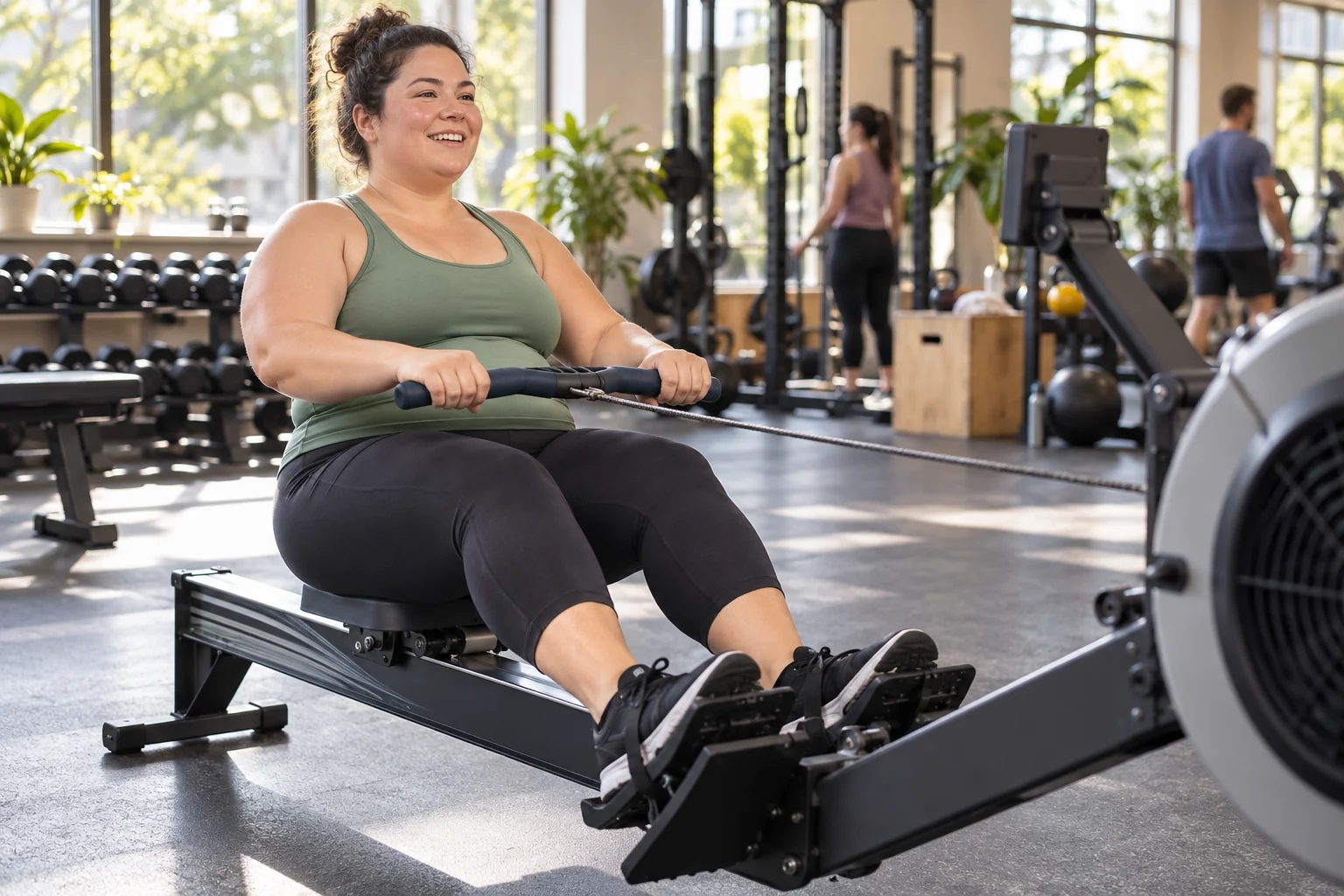
Indoor rowing generally avoids the repeated landing impacts of running, because you stay seated with the feet connected to the machine. That difference can appeal to someone seeking another cardio option. It does not establish that rowing is painless, suitable after every injury or easier for every joint. Repeated bending at the hips and knees, reaching forward and controlling the trunk still create demands. Consider the actual movement instead of treating the term low impact as medical clearance.
Treadmill walking is also different from treadmill running. Speed, incline, stride and individual health affect the experience. Someone comfortable walking may prefer that option while learning rowing gradually. Someone whose back dislikes repeated rowing positions may find a suitable walk more manageable. If you have ongoing symptoms, discuss the two movements with a relevant professional. There is no need to abandon an activity that works for you merely because another machine is promoted as the joint-friendly choice.
Match each machine to your preferred session
A treadmill (paid link) can suit a familiar steady walk while listening to audio, a controlled incline session or a running workout when appropriate. A rowing machine (paid link) can suit technique practice, steady rhythmic work or intervals once the stroke is reliable. Neither machine requires maximum effort. Choose the session first: a comfortable twenty-minute visit, a longer aerobic block or a brief practice. Then ask which machine makes that purpose easiest to carry out without fighting the controls or your current ability.
For a trial period, use several similar-length easy sessions on each machine rather than one competitive test. Notice enjoyment, comfort, setup time and how you feel afterward. Write those observations in a training journal (paid link) instead of recording only the calorie display. You may discover that the rower feels engaging on one day and walking fits better on another. A comparison grounded in your repeatable experience is more useful than a ranking based on someone else's fitness level or preferred sport. If you choose the rower, begin with our beginner rowing plan.
Check space beyond the storage photograph
Measure the area required during operation, not only the machine's folded dimensions. Rowers commonly need a long clear footprint and room around the moving rail. Treadmills need space for the belt and the manufacturer's specified surrounding clearance. Some models fold, stand upright or separate for storage, but others do not. Follow the specific instructions rather than assuming all equipment with a similar appearance can be stored in the same position or moved by one person.
A rowing machine floor mat (paid link) may help protect a suitable floor underneath an indoor rower, but it should not be used to hide uneven support. For a treadmill, check the maker's guidance on flooring and mats separately. Think about power sockets, ventilation, doorways and access for maintenance. In apartments or upstairs rooms, seek appropriate advice if structural suitability is uncertain. A machine that technically fits against a wall may still leave too little room for safe use, cleaning or getting on and off.
Think about sound and shared spaces
An air rower produces fan noise that often changes with effort. Water rowers have their own moving-water sound, and magnetic designs may have different operating characteristics. None should be called silent without checking the model. A treadmill adds motor, belt and footfall sounds, especially during running. Listen to the actual equipment when possible. A showroom visit or demonstration can reveal whether its sound suits early morning use, nearby sleeping rooms or a shared living area.
Consider who else needs the space while you train. Children and pets should be kept away from moving mechanisms on either machine. Loose cables, toys and clothing can create hazards around a rower rail or treadmill belt. A quiet-looking machine is not safe to leave operating unattended. At home, plan the room and timing before purchasing, and confirm how the equipment should be stored when unused. Practical household fit can determine whether the machine becomes a regular tool or an inconvenient obstacle.
Evaluate features you will actually use
A clear display and easy controls can matter more than a large entertainment screen. On a rower, you may want time, distance and stroke rate visible together. On a treadmill, accessible speed controls and an understandable stop system may be your priorities. Subscription classes and connected features can be enjoyable, but include recurring costs in your decision. Check whether the equipment remains usable in the way you need if a subscription ends or the internet connection is unavailable.
If you want feedback beyond the built-in display, a compatible heart rate chest strap may help track heart-rate trends. Verify compatibility with the exact machine and app before buying. It is optional, and its reading does not replace how you feel or individualized health advice. Do not spend money on a sensor just to make a machine comparison look more scientific. Consistent session duration, observed effort and comfort may provide enough information to choose a practical routine.
Keep strength training outside the machine choice
Rowing uses the upper and lower body together, while treadmill work primarily involves locomotion. That does not make rowing a complete replacement for strength training or walking a complete fitness program. Consider separate strengthening activities appropriate to your ability and goals. A machine's marketing may emphasize the number of muscles involved, but participation and progressive strength development are not identical. Your wider week matters more than winning an argument about which cardio machine does the most things.
At the gym, one option is to choose a familiar machine for easy cardio after a manageable strength session, or to separate the two on different days. At home, keep enough space for any additional exercises you plan to do. If buying a large machine removes every usable floor area, the purchase may make the rest of your routine harder. Plan the complete training environment instead of treating the machine as the only equipment or movement you will ever need. Our rowing and weight-management guide explains why machine calorie totals are not a complete decision.
Make the final decision with a short trial
Try the machines at a local gym, community center or demonstration facility before making a substantial purchase. Ask about the model, adjustments, maintenance and support, not just headline features. If you are choosing gym sessions rather than buying, give each activity a few manageable attempts. Select the one that fits your health circumstances, schedule and preferences. You can change the decision later as skills, goals or available equipment change; a cardio choice is not a permanent identity.
If both work well, use them for variety without making every session harder. Rowing might be your focused technique day, and treadmill walking your familiar steady day. Keep comparisons fair by acknowledging different session purposes. The best practical outcome is a routine you can repeat with confidence and recover from adequately. Calories on a display, social-media rankings and fashionable equipment names should support that decision only when they provide relevant information, rather than replace your own experience.
Practical Options at a Glance
| Situation | Practical option | What to consider |
|---|---|---|
| New to gym cardio | Trial easy sessions on each | Compare comfort and practical access. |
| Small home room | Measure operating clearance | Folded dimensions do not describe use. |
| Different calorie totals | Check effort and calculation differences | Do not declare a winner from unlike sessions. |
Frequently Asked Questions
Neither machine guarantees a weight outcome. Session effort, duration, eating patterns, health and consistency all matter. Choose a comfortable activity you can maintain and consider the whole routine. Comparing one machine at hard effort with the other at an easy pace does not establish a fair or universal winner.
Yes, if both activities are suitable and the combined demand fits your recovery. Give them clear roles, such as an easy walk and a separate rowing technique session. Variety does not require every visit to become harder. Keep strengthening activity and ordinary movement in the wider plan as well.
No. Check the full operating footprint, required surrounding clearance and the actual storage instructions for the exact model. You also need comfortable access, ventilation and room for maintenance. A product photograph showing folded equipment cannot tell you whether the machine can be safely used in your available space.
Safety and Personal Needs
Stop rowing and seek appropriate care for chest pain, faintness or unusual shortness of breath. Persistent or worsening joint or back pain needs assessment before progression. Follow individual advice for health conditions, recent surgery or exercise restrictions. Lower impact does not establish that rowing is suitable for every condition.
This is general educational information. Individual needs vary with health, fitness, mobility and training experience.