Published by Best Fitness Routine. Editorial standards · Report a correction. Educational guidance; no individual clinical review is claimed unless a qualified reviewer is named.
Plan around duration and access
Write down expected time on feet, likely effort, weather and access to food or fluids. A route with frequent fountains is different from a remote trail. The aim is to carry a practical plan that you have tested, not to copy another runner’s product collection.
For longer endurance exercise, AIS guidance uses duration-based carbohydrate ranges. Start with a tolerable plan and develop it in training. Very high hourly intakes used by experienced athletes are not a beginner starting point. Your pre-run meal and gastrointestinal comfort also influence what works.
A worked 90-minute example
Suppose your practiced plan is 30 grams of carbohydrate per hour for a 90-minute run. The planned total is 45 grams. You could distribute tolerated portions across the run rather than consuming all 45 grams at the end. This is an arithmetic example, not a personal prescription.
Count grams from package labels for gels or snacks. A sports drink contributes to the same carbohydrate total. Ordinary foods have variable portions, so use labels or reliable food data when accuracy matters. Separate the food plan from the fluid plan rather than drinking extra just to meet a carbohydrate target.
Pack food you can actually eat while moving
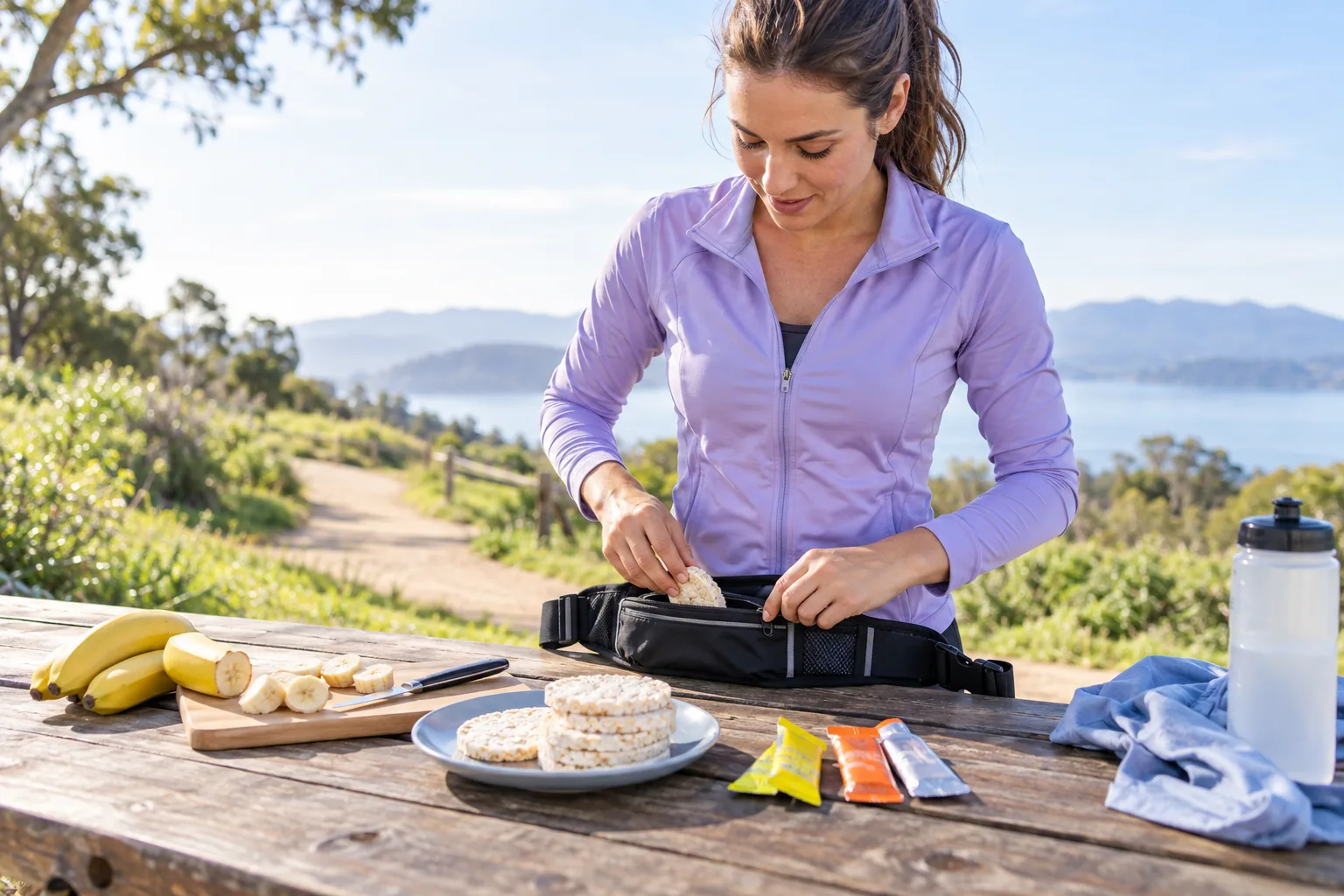
Soft banana pieces, suitable rice-based snacks or gels may work; texture, packaging and temperature matter. Use a running belt with accessible pockets and test it with the amount you will carry. Check that wrappers can be opened without dropping food or distracting you from traffic.
Bring a water bottle or identify reliable water points. A training journal can record food timing, energy, gut symptoms and conditions. If you repeatedly skip planned fuel because it is inconvenient to open or chew, change the carrying method or food rather than relying on willpower.
Rehearse and adjust one step at a time
Test the route and food at a manageable pace. Keep the initial plan simple, then change amount, timing or food type individually if needed. Rehearsal is especially useful when heat or race-day intensity may make eating harder.
Do not force food through persistent nausea or severe abdominal pain. Slow down and reassess symptoms and conditions. After the run, note whether the plan supported the session, then arrange ordinary recovery food; a successful fueling experiment does not remove the need for meals.
Map the run before choosing food
Begin with expected duration, route and effort. A long easy loop near home provides different opportunities from a point-to-point trail with limited facilities. Identify water access, safe places to pause and the point where you could shorten the run if you feel unwell. Check the weather and whether food will sit in direct heat. These details influence what is practical to carry. A nutrition plan that assumes a shop or fountain is available should be checked before you depend on it.
Your pace affects how long you will be out, so use your realistic training duration instead of the distance alone. A ten-mile run can take quite different amounts of time for different people. Route planning also helps avoid carrying either too little or an unnecessarily heavy collection of supplies. Choose a manageable combination based on the run you are doing. For unusually long events or difficult conditions, get individualized preparation advice rather than treating a recreational training example as a complete expedition plan. Try the fit of a running belt (paid link) before relying on it to carry food throughout a long run.
Choose food by portability and tolerance
Portable carbohydrate options vary in texture and convenience. Banana pieces, small portions of familiar bread-based food, sports chews and gels may suit different runners and different efforts. Some foods are easier to eat during a pause than while moving. Consider whether you can open, chew and swallow the choice comfortably, as well as how it will be packed. A food that is easy to eat at your desk may become awkward when your hands are wet or you are breathing hard.
Test small, manageable portions under ordinary training conditions. Keep ingredients familiar and avoid adding a rich topping simply to make a snack seem more nutritious during the run. Everyday dietary balance can be handled across meals; during-run choices have a specific practical role. If you have allergies, inspect both homemade ingredients and packaged products. When running with a group, do not assume that another person's shared snack is suitable for you or nutritionally equivalent to the food in your plan.
Include drinks in the carbohydrate total
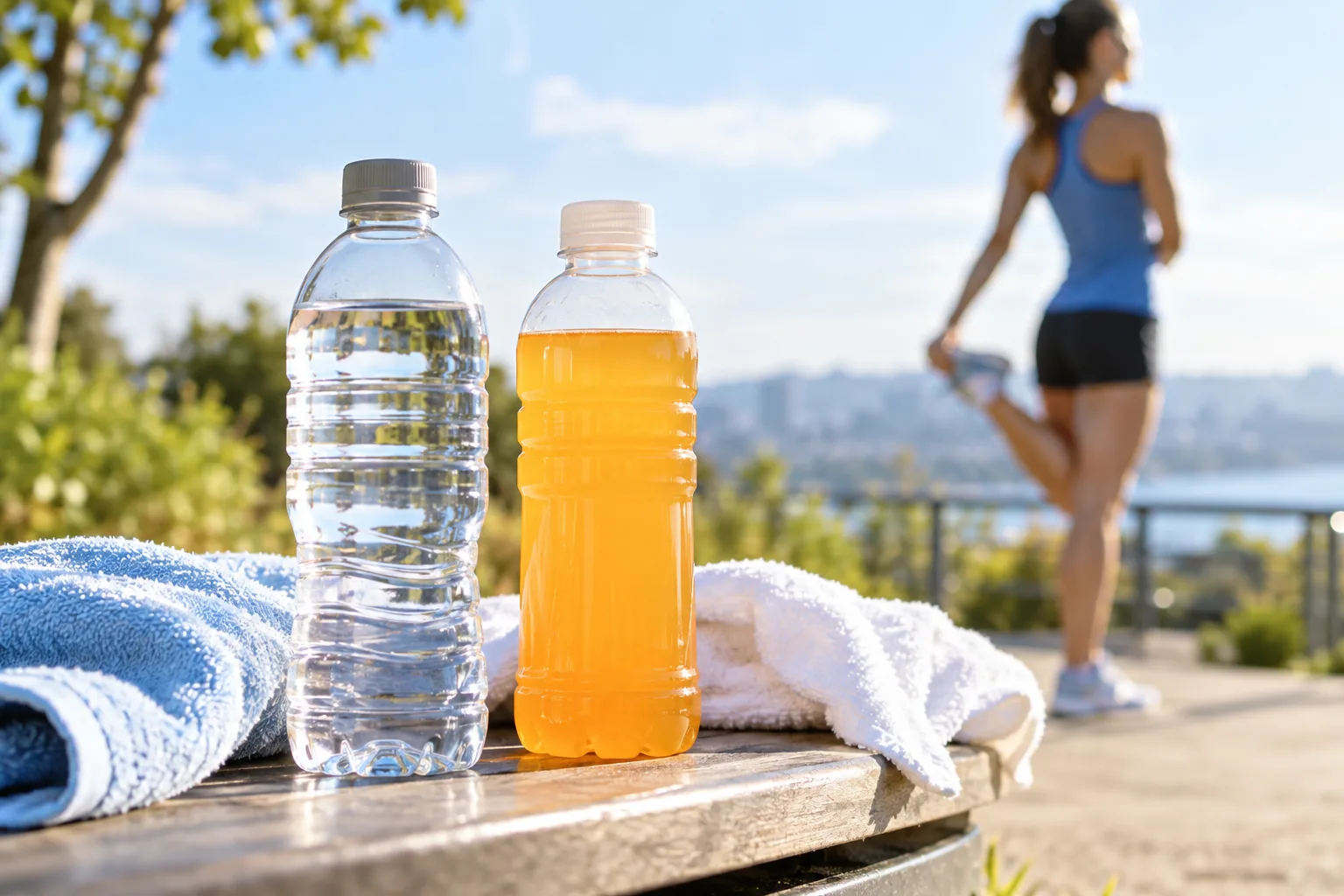
A sports drink may supply carbohydrate as well as fluid, while water does not. If you use both food and a carbohydrate-containing drink, count them together when reviewing your chosen fueling plan. The label amount may refer to a portion smaller than the entire bottle. Conversely, a powder label may describe the finished drink only when mixed exactly as directed. Read the relevant serving and preparation information before doing the arithmetic. A water bottle (paid link) with useful volume markings can make it easier to track what you actually drink.
Avoid combining a concentrated drink with several new snacks without testing the combination. The overall mix is what your stomach encounters, rather than each product in isolation. A simple example can help: if food supplies one part of the planned carbohydrate and a drink supplies the rest, you may not need the same gel schedule used with plain water. That calculation does not establish a personal target, but it prevents accidentally stacking several complete plans on top of one another.
Build a realistic training trial
Choose a route you know and a long run already appropriate to your training schedule. Use your usual pre-run meal and select one during-run option to test. Note the amount, timing and accompanying drink. Keep the first experiment straightforward rather than testing several flavours and a new breakfast together. You are looking for a workable routine, not proof that you can imitate the highest intake mentioned in elite-racing discussions.
Review more than whether you finished. Did the food remain accessible? Was it comfortable to swallow? Did your pocket bounce or did the wrapper become difficult to open? Were symptoms present before eating or only afterward? These observations point toward specific fixes. Move food to a more accessible pocket, choose a different texture or simplify the combination before changing the entire plan. If you repeatedly feel unwell despite reasonable adjustments, obtain advice instead of repeatedly forcing the same experiment.
Prepare for climate and event differences
Warm weather can affect storage, drinking access and the effort of the session, while cold conditions can make packaging harder to handle with gloves. Think through those practical issues before leaving. A snack that melts or becomes extremely firm may be less convenient than expected. For a Canadian winter run, practise opening supplies with the gloves you use; for an Australian summer morning, consider exposure to heat and whether shortening the session is more sensible than adding supplies.
Organized events create another layer of planning. Check what foods and drinks will be offered, but avoid relying on an unfamiliar product simply because it is free at a station. If permitted, carry your tested option and know where you can dispose of packaging. Course information can change, so confirm details close to the event. A practical plan combines food tolerance with actual access. It should also leave room to stop or change course when conditions become unsafe.
Recover and learn from the long run
Plan a normal meal afterward so that during-run snacks do not become the entire day's eating strategy. A carbohydrate and protein combination with familiar foods can fit your usual dietary pattern. If you are returning directly to work or travelling home, carry something manageable until a fuller meal is available. Keep perishable food appropriately cooled. The planning work should extend to the end of the session rather than stopping with the final gel or drink.
Write a brief note after comparable runs and look for patterns over several sessions. One uncomfortable outing may reflect pace, weather, illness or meal timing rather than a particular snack. Consistent difficulties deserve attention, while consistent comfort gives you a useful routine to repeat. You do not need to replace a successful, affordable plan just because another product becomes popular. Long-run fueling is most useful when it makes training more predictable and supports the exercise you have prepared to do. A training journal (paid link) is one optional way to preserve those observations for the next comparable session.
Prepare one long-run plan you can rehearse
Write the plan around a run that is already appropriate to your training. Include your expected start and finish, route, tested pre-run meal, planned fuel and reliable drinking access. Keep the food list short enough to understand. If you use a combination, note which part supplies carbohydrate and which part is mainly fluid. This prevents confusion when you change a bottle or snack. Add a simple option for shortening the run if conditions or symptoms make the original route unsuitable. Planning should support safe training, not make you feel obliged to finish at any cost.
Pack according to the actual route and the food's condition. Protect food from being crushed or leaking, and check whether warm or cold weather alters the texture. Use suitable hygiene when preparing homemade snacks and avoid relying on perishable food kept warm for a long period. When training with others, agree on likely stops without assuming everyone has the same fueling needs. A group can share route planning while each person uses a tested food routine. That is often simpler than trying to make one product or schedule fit every runner.
After the session, save a short review for the next similar run. Include comfort, access and what remained uneaten, rather than only pace. If a large amount of food came home because you could not manage it during movement, test a different texture or safe stopping point. If the plan worked well, do not complicate it without a reason. Over time, a few reliable options give you flexibility for different routes and event formats. The aim is to have enough practical experience that long-run fueling becomes an ordinary part of preparation rather than a repeated last-minute experiment.
Practical Options at a Glance
| Situation | Practical option | What to consider |
|---|---|---|
| 60-minute easy run | Consider prior meal and effort | Extra carbohydrate may be unnecessary |
| 90-minute endurance run | Example: 30 g/h × 1.5 h = 45 g | Practice distribution and tolerance |
| Longer race rehearsal | Individualized carbohydrate and route plan | Do not copy elite intakes untested |
Frequently Asked Questions
Use familiar portable carbohydrate if it suits the session. Gels are optional; tolerated foods and drinks can contribute. Practice before racing.
Carbohydrate-containing drinks count toward the carbohydrate total. Plain water does not supply carbohydrate.
A planned schedule is easier to test than waiting for a major energy drop. Adjust it to tolerance and route access.
Safety and Personal Needs
The worked example is for planning education. Medical conditions, medication, significant gut symptoms and remote or very hot events may require individualized professional support.
This is general educational information. Individual needs vary with health, medications, training and food tolerance.